
Previous Year Questions 2026
Q1. Two statements are given below. They are Assertion (A) and Reason (R). Read both the statements carefully and choose the correct option :
Assertion (A) : Both, Sri Lanka and Belgium faced challenges of ethnic and linguistic diversity.
Reason (R) : Sri Lanka had majority of Tamils whereas Belgium had majority of French speaking people. [1 Mark]
Options :
(A) Both, (A) and (R) are true, and (R) is the correct explanation of (A).
(B) Both, (A) and (R) are true, but (R) is not the correct explanation of (A).
(C) (A) is true, but (R) is false.
(D) (A) is false, but (R) is true.
Ans: (C) (A) is true, but (R) is false.
Q2. Read the given source carefully and answer the questions that follow : [4 Marks]
Power Sharing
Power sharing arrangements can also be seen in the way political parties, pressure groups and movements control or influence those in power. In a democracy, the citizens must have freedom to choose among various contenders for power. In contemporary democracies, this takes the form of competition among different parties. Such competition ensures that power does not remain in one hand. In the long run, power is shared among different political parties that represent different ideologies and social groups. Sometimes this kind of sharing can be direct, when two or more parties form an alliance to contest elections. If their alliance is elected, they form a coalition government and thus share power. In a democracy, we find interest groups, such as those of traders, businessmen, industrialists, farmers and industrial workers. They also will have a share in governmental power, either through participation in governmental committees or bringing influence on the decision-making process.
(a) How do pressure groups influence the government ? [1 Mark]
Ans:
(i) Pressure groups represent different ideologies and social groups in governmental committees.
(ii) They create awareness among public about certain programs.
(iii) They influence decision making process.
(Any one point to be explained)
(b) How do social groups benefit from power sharing ? [1 Mark]
Ans:
(i) Protection of interests of different social groups such as linguistic and cultural groups.
(ii) Fair representation of minors.
(iii) Reduces conflict.
(iv) Ensures stability.
(v) Socially weaker section and women are represented in the legislature and administration.
(vi) The system of reserved constituencies in the State Assemblies and the Parliament of our country give space to diverse social groups in the government.
(Any one point to be explained)
(c) Explain the contributions of citizens in the power sharing process. [2 Marks]
Ans:
(i) Participate in governmental committees and branches.
(ii) Influence the decision-making process.
(iii) Participation in interest groups or civil society organizations.
(iv) Monitor government actions.
(Any Two points to be explained)
Q3. In Sri Lanka, which one of the following changes to the 1956 law gave rise to the possibility of civil war ? [1 Mark]
(A) Ensuring power sharing among all sections.
(B) Declaring Sinhala as the official language.
(C) Declaring Tamil as the official language.
(D) Implementing a policy of preference for Sinhalese in government jobs.
Ans: (B) &(D)
(B) Declaring Sinhala as the official language.
(D) Implementing a policy of preference for Sinhalese in government jobs.
If the examinee marks either option B or D, mark be awarded.
Q4. (a) Compare the Belgian model and the Sri Lankan model of power sharing. [5 Marks]
Ans (a):
Belgian Model
(i) The Belgian government applied the model of accommodation.
(ii) They recognised the existence of regional differences and cultural diversity.
(iii) They amended the Constitution four times between 1970 and 1993 so as to work out an arrangement that would enable everyone to live together.
(iv) They respected the feelings and interests of different communities.
(v) The State Governments are not subordinate to the Central Government.
(vi) The French majority in Brussels accepted equal number of Dutch and French ministers at the state level of government.
(vii) The Dutch majority in Belgium accepted equal number of French and Dutch ministers at the central government level.
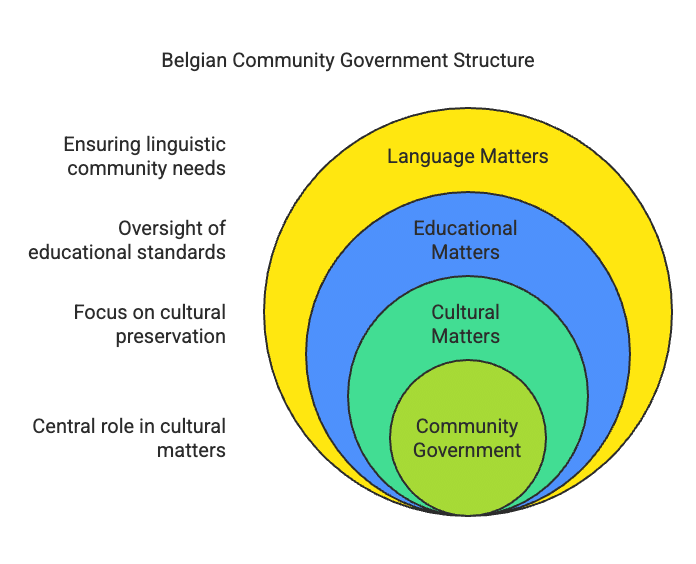
(viii) A third kind of government- 'community government' ensured German minority does not feel alienated.
(ix) The community government looked after culture, education and language related issues of the three ethnic groups.
(x) No single community can make decisions unilaterally.
(xi) They mutually accepted arrangements of power sharing.
(Any five points of difference to be explained)
Sri Lankan Model
(i) The Sri Lankan government applied the model of Majoritarianism.
(ii) They overlooked the existence of regional differences and cultural diversity.
(iii) An Act was passed in 1956 to fulfil the wish of majority population.
(iv) They recognise Sinhala as the only official language.
(v) The governments followed preferential policies that favoured Sinhala applicants for university positions and government jobs.
(vi) A new Constitution stipulated that the state shall protect and foster Buddhism.
(vii) They suppressed the feelings of minority.
(viii) They refused to share power.
(ix) The Sri Lankan Tamils struggled to demand for the recognition of Tamil as an official language, for regional autonomy and equality of opportunity in securing education and jobs.
(x) By 1980s, several political organisations demanded a separate Tamil Eelam (state).
(xi) The distrust between the two communities turned into a Civil War that ended in 2009.
(Any five points of difference to be explained)
Q4. (b) Why is power sharing necessary in a democracy ? Explain. [5 Marks]
Ans (b):
(i) It helps to reduce the possibility of conflict between social groups.
(ii) It is a good way to ensure the stability of political order.
(iii) It accommodates majority as well as minority.
(iv) It is the very spirit of democracy.
(v) People have a right to be consulted on how they are to be governed.
(vi) A legitimate government is one where citizens, through participation, acquire a stake in the system.
(vii) It strengthens unity of the country.
(viii) It reinforces trust of people in democracy.
(Any five points to be explained)
Q5. Identify the correct statement regarding Belgium. [Marks: 1]
(A) Small country of Europe
(B) Big country of Asia
(C) Big country of North America
(D) Small country of Africa
Ans: (A) Small country of Europe
Q6. Read the given source carefully and answer the questions that follow:
Forms of power sharing
The idea of power sharing has emerged in opposition to the notions of undivided political power. For a long time, it was believed that all power of a government must reside in one person or group of persons located at one place. It was felt that if the power to decide is dispersed, it would not be possible to take quick decisions and to enforce them. But these notions have changed with the emergence of democracy. One basic principle of democracy is that people are the source of all political power. In a democracy, people rule themselves through institutions of self-government. In a good democratic government, due respect is given to diverse groups and views that exist in a society. Everyone has a voice in the shaping of public policies. Therefore, it follows that in a democracy, political power should be distributed among as many citizens as possible.
(a) Why should all the powers of the government not be in the hands of one person? [Marks: 1]
Ans:
(i) The basic principles of democracy believe in power sharing, so power should be shared.
(ii) It might lead to dictatorship.
(Any One point to be explained)
(b) Why is power sharing necessary? [Marks: 1]
Ans:
(i) To accommodate social diversity.
(ii) To avoid conflicts.
(Any One point to be explained)
(c) How does governing through institutions of self-government strengthen democracy? Explain. [Marks: 2]
Ans:
(i) It strengthens the right of the people.
(ii) It makes govt more accountable.
(iii) Local people have better knowledge of problems in their localities.
(iv) It helps people to directly participate in decision making.
(Any Two points to be explained)
Q7. Read the given source carefully and answer the questions that follow : [4 Marks]
Power Sharing
Power is shared among different organs of government, such as the legislature, executive and judiciary. Let us call this horizontal distribution of power because it allows different organs of government placed at the same level to exercise different powers. Such a separation ensures that none of the organs can exercise unlimited power. Each organ checks the others. This results in a balance of power among various institutions. Last year, we studied that in a democracy, even though ministers and government officials exercise power, they are responsible to the Parliament or State Assemblies. Similarly, although judges are appointed by the executive, they can check the functioning of executive or laws made by the legislatures. This arrangement is called a system of checks and balances.
(a) Explain the term 'Balance of Power'. [1 Mark]
Ans: None of the organs can exercise unlimited power. Each organ checks the others.
(b) Why is the judiciary considered independent in a democracy ? [1 Mark]
Ans: Judges are appointed by the executive, they can check the functioning of executive or laws made by the legislatures.
(c) How is power shared among different organs of government ? [2 Marks]
Ans:
(i) There are three organs of the government - Legislative, Executive and Judiciary.
(ii) It allows different organs of government placed at the same level to exercise different powers.
(iii) The function of legislature is to formulate law.
(iv) The function of executive is to implement the law.
(v) The function of judiciary is to interpret the laws and resolve the disputes.
(Any two points to be explained)
Q8. Two statements are given below. They are Assertion (A) and Reason (R). Read both the statements carefully and choose the correct option : [1 Mark]
Assertion (A) : Belgium's power sharing arrangements were designed to accommodate its linguistic and cultural divisions.
Reason (R) : Belgian leaders recognized the existence of regional differences and cultural diversities.
Option :
(A) Both (A) and (R) are true and (R) is the correct explanation of (A).
(B) Both (A) and (R) are true, but (R) is not the correct explanation of (A).
(C) (A) is true, but (R) is false.
(D) (A) is false, but (R) is true.
Ans: (A) Both (A) and (R) are true and (R) is the correct explanation of (A).
Q9. Read the given source carefully and answer the questions that follow :
Forms of Power-sharing
The idea of power-sharing has emerged in opposition to the notions of undivided political power. For a long time, it was believed that all power of a government must reside in one person or group of persons located at one place. It was felt that if the power to decide is dispersed, it would not be possible to take quick decisions and to enforce them. But these notions have changed with the emergence of democracy. One basic principle of democracy is that people are the source of all political power. In a democracy, people rule themselves through institutions of self-government. In a good democratic government, due respect is given to diverse groups and views that exist in a society. Everyone has a voice in the shaping of public policies. Therefore, it follows that in a democracy, political power should be distributed among as many citizens as possible.
(a) How does power sharing promote stability of political order ? [1 Mark]
Ans:
(i) Through power sharing people directly participate in the political system. This gives legitimacy and stability to the government.
(ii) Due respect is given to diverse groups and views that exist in society by reducing the possibility of conflicts and violence. This ensures political stability.
(iii) Power sharing gives everyone a voice in shaping public policies. Thus, it ensures stability of political order.
[Any one point to be explained.]
(b) How are pressure groups part of the power sharing mechanism ? [1 Mark]
Ans:
(i) In a democracy, there are interest groups, such as those of traders, businessmen, industrialists, farmers and industrial workers. These groups influence the policies of the government.
(ii) They also participate in governmental committees and also influence the decision-making process.
[Any one point to be explained.]
(b) How does power sharing contribute to the spirit of democracy ? [2 Marks]
Ans:
(i) Power sharing is the very spirit of democracy.
(ii) A democratic rule involves sharing power with those affected by its exercise, and who have to live with its effects.
(iii) Power sharing gives legitimacy to the government and a legitimate government is one where citizens through participation, acquires a stake in the system.
(iv) Power sharing is good because it helps to reduce the possibility of conflict between social groups. Since social conflict often leads to violence and political instability, power sharing is a good way to ensure the stability of political order.
(v) Power sharing ensures citizens' direct participation in government, gives everyone a voice in shaping public opinion and thus prevents tyranny of the majority.
[Any two points to be explained.]
Previous Year Questions 2025
Q1: Belgium solved its problem of majoritarianism by strengthening which of the following types of government? (1 Mark)
(a) Unitary
(b) Presidential
(c) Federal
(d) Parliamentary
Ans: (c) Federal
Explanation: Belgium solved its problem of majoritarianism by dividing powers between the central and state governments, creating a federal form of government. By assigning important powers to regional and community governments, the federal arrangement prevented the domination of one linguistic group over another and helped maintain political stability and unity.
Q2: "Power sharing is the very spirit of democracy." Support the statement by giving suitable arguments. (3 Marks)
Ans: Power sharing is the very spirit of democracy because it ensures wider participation, fairness and respect for diversity in decision-making.
- Involvement of People: In a democracy, people are the source of political power. Power sharing ensures that citizens are consulted and have a role in how they are governed.
- Legitimacy of Government: When power is shared, more people gain a stake in the system. This gives the government greater legitimacy because decisions reflect wider interests.
- Respect for Diverse Views: Power sharing recognises different groups and opinions in society, so that minority voices are heard and accommodated.
Therefore, power sharing strengthens democracy by promoting participation, inclusion and peaceful coexistence among diverse groups.
Or
Why is power sharing essential for the success of democracy? Explain. (3 Marks)
Ans: Power sharing is essential for the success of democracy because it promotes fairness, reduces conflict and strengthens stability.
- Prevents Concentration of Power: Dividing powers among different organs and levels of government prevents misuse of authority by any single person or group.
- Protects Interests of All Groups: Power sharing gives minorities and weaker sections a voice in governance, making them feel included and reducing grievances.
- Maintains Unity and Harmony: When different groups share power, trust builds up and tensions are reduced, making democracy more stable and effective.
In short, power sharing makes democracy more inclusive, stable and responsive to citizens' needs.
Q3: "Political power cannot be divided." Analyse suitable arguments against the statement. (3 Marks)
Ans: The statement "Political power cannot be divided" is incorrect because dividing power is a key safeguard in democratic systems.
- Prevents Concentration of Power: Distributing powers among different institutions and levels of government ensures that no single person or body can exercise unlimited authority.
- Promotes Checks and Balances: Horizontal sharing among the legislature, executive and judiciary creates mutual checks, which maintains accountability.
- Ensures Participation and Stability: Vertical sharing among national, state and local governments and sharing among social groups encourages inclusion and reduces the likelihood of conflict.
Thus, dividing political power strengthens democracy, protects rights and contributes to political stability.
Q4: Which one of the following organisations has its headquarter in Brussels? (1 Marks)
(a) United Nations Organisation
(b) European Union
(c) Non-Alignment Movement
(d) South Asian Association for Regional Co-operation
Ans: (b) European Union
Explanation: Brussels, the capital of Belgium, is the headquarters of the European Union. Belgium's experience of accommodating linguistic and regional diversity through power sharing helped make Brussels an important centre for international cooperation.
Q5: Which of the following countries is an example of sharing of power between the national and state governments to account for internal diversity? (1 Mark)
(a) United States of America
(b) Australia
(c) Belgium
(d) Switzerland
Belgium shares power between the central government and state governments of its regions to accommodate linguistic and cultural diversity. This federal division of power helped prevent conflicts between Dutch-speaking and French-speaking communities and ensured representation for each group.
Q6: "The government measures gradually increased the feeling of alienation among the Sri Lankan Tamils." Explain the statement. (3 Marks)
Ans: Certain measures taken by the Sri Lankan government after independence made Tamils feel excluded and discriminated against.
- In 1956, Sinhala was made the only official language, which disadvantaged Tamil speakers in dealings with the state.
- The government introduced preferential policies that gave more jobs and educational opportunities to Sinhala speakers.
- The Constitution gave special recognition to Buddhism, while Tamil cultural and religious concerns were not given equal importance.
These measures made many Tamils feel neglected and discriminated against, increasing their sense of alienation from the state and contributing to rising tensions.
Q7: Which of the following group is in majority in Sri Lanka? (1 Mark)
(a) Tamil-speakers
(b) Sinhala-speakers
(c) Telugu-speakers
(d) English-speakers
Ans: (b)
In Sri Lanka, about 74% of the population speaks Sinhala, making Sinhala-speakers the majority group, while Tamil-speakers constitute around 18% of the population.
Q8: Explain the effectiveness of vertical distribution of 'power sharing' in the context of India. (2 Marks)
Ans: In India, vertical distribution of power means sharing authority among different levels of government - the Central Government, State Governments, and local bodies such as panchayats and municipalities.
This system is effective because:
- It allows governments at each level to make decisions for their own areas, ensuring efficient administration tailored to local needs.
- It increases public participation by bringing government closer to the people and helps address local problems more directly.
Thus, vertical power sharing in India strengthens democracy by making governance more responsive, decentralised and effective.
Q9: "Sharing of power between the Union Government and the State Governments is basic to the structure of the Indian Constitution." Analyse the statement with suitable arguments. (3 Marks)
Ans: Power sharing between the Union and the States is fundamental to India's Constitution because it organises authority clearly and prevents conflicts.
- The Constitution provides a clear division of powers. The Union List includes subjects like defence and foreign affairs, while the State List covers subjects like police and public health. The Concurrent List contains subjects like education where both can legislate.
- This division allows both levels to function independently and smoothly within their spheres, reducing interference and disputes.
- It also enables people to participate in decision-making at different levels - national, state and local - which deepens democratic governance.
Hence, sharing power between the Union and States preserves federal balance, promotes cooperation and ensures better governance.
Q10: Explain the effectiveness of horizontal distribution of power in the context of India. (2 Marks)
Ans: Horizontal distribution of power in India means sharing duties among the three organs of government - the Legislature, Executive and Judiciary.
This system is effective because:
- Each organ checks the others: For example, the judiciary can review laws made by the legislature, and the legislature can hold the executive accountable.
- Maintains balance and accountability: This arrangement prevents any one organ from becoming too powerful and ensures that power is exercised responsibly and within limits.
Thus, horizontal power sharing preserves democratic institutions and promotes fair governance.
Q11: How does the Indian Constitution ensure the division of powers between the Union and State Governments? Explain. (3 Marks)
Ans: The Indian Constitution ensures division of powers between the Union and the States through clear lists, constitutional provisions and federal structure.
- Three Lists: The Constitution specifies the Union List, State List, and Concurrent List to allocate subjects between the two levels.
- The Union List covers subjects such as defence and foreign affairs.
- The State List includes matters like police and public health.
- The Concurrent List contains fields like education where both Centre and States may legislate.
- Clarity of Powers: This division clarifies responsibilities and helps both levels work independently and efficiently within their domains.
- Federal Structure: These arrangements preserve a federal balance and prevent concentration of power at one level.
Thus, the Constitution combines lists, authority allocation and federal principles to ensure a fair and effective division of powers.
Q12: How is the distribution of power among different social groups beneficial for democracy? Explain. (2 Marks)
Ans: Distribution of power among different social groups makes democracy more inclusive and fair.
- It ensures that minorities and weaker sections have representation and a voice in decision-making, so they do not feel neglected.
- It helps to reduce social conflict and promotes harmony among different religious, linguistic and cultural groups.
By sharing power among social groups, democracy becomes stronger, more equal and more peaceful.
Q13: Two statements are given below. They are Assertion (A) and Reason (R). Read both the statements and choose the correct option:
Assertion (a): The French-speaking community was rich in comparison to the Dutch-speaking community in Belgium.
Reason (R): Dutch-speaking community got the benefit of economic development and education much later. (1Mark)
(a) Both (a) and (R) are correct and (R) is the correct explanation of (a).
(b) Both (a) and (R) are correct but (R) is not the correct explanation of (a).
(c) (a) is correct but (R) is incorrect.
(d) (a) is incorrect but (R) is correct.
Ans: (a) Both (a) and (R) are correct and (R) is the correct explanation of (a).
In Belgium, the French-speaking community was wealthier and more influential because they benefited earlier from education and economic opportunities, while the Dutch-speaking community received those benefits later. This historical difference in access to resources and education explains the economic gap between the two communities.
Q14: Which of the following is an example of horizontal power sharing in Indian democracy? (1 Mark)
(a) Division of power between Central and State Governments.
(b) Division of power between Rural and Urban Governments.
(c) Division of power among Administration, Judiciary, and Army.
(d) Division of power among Legislative, Executive, and Judiciary.
Ans: (d) Division of power among Legislative, Executive, and Judiciary.
Horizontal power sharing in India refers to the separation of powers among the three organs of government - the Legislature, Executive and Judiciary - so that each organ can check the others and prevent misuse of power.
Q15: Choose the correct option to fill the blank. (1 Mark)
The Belgian leaders took a different path than Sri Lanka. They recognised the existence of regional differences and ____________
(a) Religious diversities
(b) Historical diversities
(c) Cultural diversities
(d) Administrative diversities
Ans: (c) Cultural diversities
- The Belgian leaders recognised regional and cultural diversities and amended their Constitution to ensure fair power sharing among Dutch, French, and German-speaking communities.
Q16: Two statements are given below. They are Assertion (A) and Reason (R). Read both the statements and choose the correct option:
Assertion (a): There was civil war in Sri Lanka.
Reason (R): An Act was passed in 1956 to secure dominance of Sinhala community on the government. (1 Mark)
(a) Both (a) and (R) are correct and (R) is the correct explanation of (a).
(b) Both (a) and (R) are correct, but (R) is not the correct explanation of (a).
(c) (a) is correct, but (R) is incorrect.
(d) (a) is incorrect, but (R) is correct.
Ans: (a) Both (a) and (R) are correct and (R) is the correct explanation of (a).
The 1956 Act made Sinhala the only official language, which marginalised Tamils and was part of a series of majoritarian measures. These actions increased Tamil alienation and distrust, ultimately contributing to the outbreak of civil war in Sri Lanka.
Q17: Belgium took some measures to solve its problem. Read the following measures and choose the correct option:
I. Formation of community government.
II. Following majoritarian policy.
III. By providing equal representation of language groups.
IV. By providing additional powers to local governments. (1 Mark)
(a) Only I, II, and III are correct.
(b) Only I, III, and IV are correct.
(c) Only I, II, and IV are correct.
(d) Only II, III, and IV are correct.
Ans: (b) Only I, III, and IV are correct.
Belgium addressed its problems by:
- forming a community government,
- giving equal representation to Dutch and French-speaking groups, and
- providing more powers to state and local governments.
It did not follow a majoritarian policy as Sri Lanka did.
Q18: "The law enacted in 1956 and other Constitutional Provisions led to major conflict between the two communities in Sri Lanka." Support the statement. (5 Marks)
Ans:
After independence in 1948, a series of majoritarian measures by the Sri Lankan government favoured the Sinhala majority and ignored Tamil concerns. These measures deepened distrust and led to prolonged conflict.
Sinhala as the Only Official Language (1956):
The government passed an Act making Sinhala the only official language, excluding Tamil from official use. This made it harder for Tamils to obtain government jobs and access services.Preferential Policies for Sinhalas:
The state introduced policies that gave preference to Sinhala applicants in university admissions and government employment, which reduced opportunities for Tamils.Protection of Buddhism:
The Constitution gave Buddhism a special status, while the cultural and religious rights of Tamils were not equally protected.Denial of Political and Cultural Rights:
Tamil leaders demanded equal political rights, regional autonomy and recognition of Tamil language, but these demands were repeatedly rejected.Rise of Conflict and Civil War:
As a consequence, some Tamil groups began demanding an independent Tamil state (Tamil Eelam). The resulting distrust and violence escalated into a civil war, causing severe loss of life and property.
Thus, the 1956 language law and related constitutional measures created a sense of injustice and alienation among Tamils, which played a central role in the eruption of long-term ethnic conflict in Sri Lanka.
Q19: "Power sharing increases trust between different groups." Support the statement. (5 Marks)
Ans: Power sharing builds trust and cooperation among different social groups by making governance more fair and inclusive.
Representation of All Groups:
When power is shared, all social, linguistic and religious groups get a role in governance. Participation reduces feelings of neglect and increases confidence in public institutions.Reduces Social Conflicts:
Fair power sharing lowers the risk of anger and violence between communities. For example, Belgium avoided major conflict by accommodating Dutch and French-speaking groups.Promotes Unity and Stability:
Power sharing helps preserve the unity of the country because different groups see their interests respected.Encourages Cooperation:
Sharing power enables groups to work together, promoting mutual understanding and compromise.Strengthens Democracy:
When everyone has a voice, democracy becomes stronger and more stable, which builds long-term trust and confidence among citizens.
Therefore, power sharing increases trust by ensuring fairness, promoting participation and reducing the causes of conflict.
Previous Year Questions 2024
Q1: Identify the primary objective of power-sharing arrangements in Belgium from the following options.
(a) Establishing a unitary form of government.
(b) Centralized political control of government.
(c) Establishing cultural and educational matters of Dutch.
(d) Accommodating linguistic and regional interest. (CBSE 2024)
Ans: (d) Accommodating linguistic and regional interest.
The primary objective of Belgium's power-sharing arrangements was to accommodate the diverse linguistic and regional interests of the population - Dutch-speaking, French-speaking and a small German-speaking community. The system ensured representation for each group so that social harmony and political stability could be maintained.

Q2: Why is power sharing desirable? Explain. (CBSE 2024)
Ans: Power sharing is desirable because it maintains peace, fairness and democratic participation. Key reasons are:
- Prevents Conflict: By ensuring no single group dominates, power sharing reduces tensions between communities.
- Promotes Democracy: It allows diverse groups to participate in decision-making, making governance inclusive.
- Encourages Cooperation: Shared power encourages groups to work together for common interests.
- Protects Minority Rights: It gives minorities representation, preventing their interests from being ignored.
- Ensures Political Stability: Inclusion of different groups leads to greater stability and less chance of unrest.
Overall, power sharing supports a fair and stable democratic system.
Q3: Which of the following was the primary objective of Belgium to form the separate government in Brussels? (CBSE 2024)
(a) Promoting cultural events.
(b)Managing international relations.
(c) Enforcing local laws.
(d) Ensuring linguistic accommodation.
Ans: (d) Ensuring linguistic accommodation.
Belgium created a separate government in Brussels primarily to ensure linguistic accommodation between the Dutch-speaking Flemish and the French-speaking Walloons. Brussels is bilingual and required a structure that could manage its linguistic diversity and represent both communities fairly.
 | Get additional INR 200 off today with EDUREV200 coupon. | Avail Offer |
Previous Year Questions 2023
Q4: Two statements are given below as Assertion (A) and Reason (R). Read the statements and choose the correct option:Assertion (A): Sri Lanka adopted 'Tamil' as the official language of the State.
Reason (R): The Government of Sri Lanka adopted a series of majoritarian measures. (2023)
(a) Both (A) and (R) are true and (R) is the correct explanation of (A).
(b) Both (A) and (R) are true but (R) is not the correct explanation of (A).
(c) (A) is true but (R) is false.
(d) (A) is false but (R) is true.
Ans: (d) (A) is false but (R) is true.
Assertion (A): This is false. Sri Lanka adopted Sinhala, not Tamil, as the sole official language in 1956 through the Sinhala Only Act.
Reason (R): This is true. The Government did adopt majoritarian measures favouring the Sinhala majority, which marginalised the Tamil minority and led to tensions.
Q5: Consider the following statements on Power Sharing and choose the correct option.
I. It deepens democracy.
II. It helps to reduce conflicts among social groups.
III. It is a way to ensure political stability.
IV. It brings socio-economic struggles. (2023)
(a) I, II and III
(b) III, Ill and IV
(c) I, III and IV
(d) I, II and IV
Ans: (a) I, II and III
I. It deepens democracy: Power sharing allows different groups to participate in governance, making the system more inclusive.
II. It helps to reduce conflicts among social groups: By giving different groups a stake in power, it lowers the chances of conflict.
III. It ensures political stability: Inclusion of diverse groups prevents dominance by one group and promotes stability.
IV. This is incorrect: Power sharing aims to reduce socio-economic struggles rather than create them.
Q6: Consider the following statements on Power Sharing and choose the correct option :
(I) Majoritarianism is the real spirit of democracy.
(II) It creates balance and harmony in different groups.
(III) It reduces the possibility of conflict among social groups.
(IV) Power sharing is the essence of democracy. (2023)
(a) I, II and III
(b) II, III and IV
(c) I, III and IV
(d) I, II and IV
Ans: (b) II, III and IV
II. It creates balance and harmony: Power sharing helps different groups coexist peacefully by giving them representation.
III. It reduces the possibility of conflict: Sharing power addresses grievances of various groups and prevents tensions from escalating.
IV. Power sharing is the essence of democracy: Democracy requires that different groups have a voice in decision-making.
I is incorrect because majoritarianism concentrates power in the majority and can undermine minority rights.
Previous Year Questions 2022
Q7: Which one of the following elements is NOT included in the Belgium model? (Term-1,2021-22)(a) Dutch and French speaking ministers shall be equal in the government.
(b) Many powers of the central government have been given to state governments.
(c) Brussels has a separate government in which both the communities have equal representation.
(d) There is a community government which has special powers of administration.
Ans: (d) There is a community government which has special powers of administration.
There are community governments in Belgium, but they are mainly responsible for cultural, educational and language matters rather than having broad 'special powers of administration' in the way the option implies. The community governments' main role is to protect the identity and cultural rights of each language community.
Q8: Two statements are given below as Assertion (A) and Reason (R). Read the statements and choose the most appropriate option.
Assertion (A): Majority community is dominant in a few democratic states.
Reason (R): Dominance can undermine the unity of the country. (Term-1, 2021-22)
(a) Both A and R are correct, and R is the correct explanation of the A.
(b) Both A and R are correct, but R is not the correct explanation of the A.
(c) A is correct, but R is incorrect.
(d) A is incorrect, but R is correct.
Ans: (a) Both A and R are correct, and R is the correct explanation of the A.
Assertion (A): This is true. In some democratic states a majority community may dominate political life, marginalising minorities.
Reason (R): This is true. When dominance excludes minorities, it can produce dissatisfaction and conflict that threaten national unity. Thus R explains A.
Q9: Two statements are given below as Assertion (A) and Reason (R). Read the statements and choose the most appropriate option.
Assertion (A): The distrust between Sinhalese and Tamil communities turned into widespread conflict in Sri Lanka
Reason (R): 1956 Act recognised Sinhala as the only official language. (Term-1, 2021-22)
(a) Both A and R are correct, and R is the correct explanation of the A.
(b) Both A and R are correct, but R is not the correct explanation of the A.
(c) A is correct, but R is incorrect.
(d) A is incorrect, but R is correct.
Ans: (a) Both A and R are correct, and R is the correct explanation of the A.
Assertion (A): True. Distrust between the Sinhalese and Tamil communities escalated into widespread conflict, culminating in civil war.
Reason (R): True. The 1956 Act made Sinhala the sole official language; this majoritarian measure marginalised Tamils and was a key cause of the conflict, so R explains A.
Q10: Two statements are given below as Assertion (A) and Reason (R). Read the statements and choose the most appropriate option.
Assertion (A): Power-sharing is good.
Reason (R): It helps to reduce the possibility of conflicts between social groups. (Term-1, 2021-22)
(a) Both A and R are correct, and R is the correct explanation of the A.
(b) Both A and R are correct, but R is not the correct explanation of the A.
(c) A is correct, but R is incorrect.
(d) A is incorrect, but R is correct.
Ans: (a) Both A and R are correct, and R is the correct explanation of the A.
Assertion (A): True. Power sharing is beneficial because it distributes influence and representation.
Reason (R): True. By giving different groups a stake in governance, power sharing reduces the likelihood of conflict. R explains why power sharing is considered good.
Q11: What is NOT an integral part of the government? (Term-1, 2021-22)
(a) Office of the Prime Minister
(b) Legislature
(c) Executive
(d) Judiciary
Ans: (a) Office of the Prime Minister
While the Office of the Prime Minister is an important position within the executive, it is not a separate branch of government. The three integral branches are the Legislature (makes laws), the Executive (implements laws) and the Judiciary (interprets laws).
Also read: Short Answer Questions: Power-sharing |
Previous Year Questions 2021
Q12: 59 percent of the total population of Belgium live in the ______ region. (2021 C)
Ans: 59 percent of the total population of Belgium live in the Flemish region.
Q13: How did the Belgium government accommodate the social differences? (2021 C)
Ans: The Belgian government adopted several measures to accommodate social differences:
- Equal representation: Dutch and French-speaking populations have equal representation in central institutions.
- Federal structure: Belgium became a federal state, granting significant powers to regional governments.
- Independent state governments: State governments operate with autonomy and are not subordinate to the central government in many matters.
- Community governments: Separate governments represent language communities and handle cultural and educational affairs.
Previous Year Questions 2020
Q14: Which one of the following is a major religious group of Sri Lanka? (2020)
(a) Christian and Tamil
(b) Buddhist and Hindu
(c) Sinhali and Tamil
(d) Sinhali and Christian
Ans: (b) Buddhist and Hindu
In Sri Lanka the major religious groups are Buddhism and Hinduism. Note that options such as 'Sinhali' and 'Tamil' refer to ethnic or linguistic groups, not religions.
Q15: Under which of the following is power shared in the 'Community Government' of Belgium? (2020)
(a) Different social groups
(b) Different organs of government
(c) Central and State government
(d) State government and Community government
Ans: (a) Different social groups
Community Governments in Belgium are organised to represent and share power among different social groups, especially linguistic communities (Dutch, French and German speakers). They focus on cultural, educational and language-related matters for their community members.
Q16: State any one step taken in Belgium to rule out the problem of regional differences and cultural diversities. (2020)
Ans: Equal representation in the central government is a key step Belgium took to address regional and cultural diversities. For example, the number of Dutch and French-speaking ministers is kept equal to prevent domination by one group.
- The constitution requires equal or balanced representation of language groups in central institutions.
- Certain important decisions require the support of a majority from each linguistic community.
Q17: The Belgium model of 'Community government' worked well because_______ (2020 C)
Ans: The model worked well because it recognised individuals' belonging to particular language communities and provided institutions to protect their cultural and educational rights.
Advantages:
- It preserves cultural identity by acknowledging different languages.
- It allows policies tailored to each community's needs.
- It reduces inter-community tensions and promotes stability.
Q18: Describe the horizontal power-sharing arrangements. (2020)
Ans: Horizontal power-sharing means distributing power among different branches of government so that each branch can check the others.
- Power is shared among the Legislature, Executive and Judiciary.
- Each organ has distinct functions and can limit the powers of the others, preventing concentration of power and abuse.
Q19: Why is there a need to give space to diverse social groups in the administration of a democratic country? Give any one reason. (CBSE 2020)
Ans: Giving space to diverse social groups prevents majoritarian domination and reduces the risk of social conflict, thereby maintaining political stability and social harmony.
Previous Year Questions 2019
Q20: Why was there an acute problem in Brussels during 1950s and 1960s between the two communities? (2019 C)
Ans: During the 1950s and 1960s, tensions in Brussels arose because:
- The French-speaking community in the capital was relatively wealthy and influential despite being a minority nationally.
- The Dutch-speaking community felt resentful because it had gained economic development and education later than the French speakers.
- Brussels was a special case: Dutch speakers were the majority nationally but a minority in the capital, creating competing claims over language and public life.
Q21: Explain the major repercussions of passing Sinhala as the only official language in Sri Lanka in 1956. (2019 C)
Ans: The major repercussion of making Sinhala the only official language in 1956 was increased alienation among Sri Lankan Tamils. This law reduced Tamils' access to government jobs and services and heightened demands for Tamil rights, ultimately fuelling political mobilisation and conflict.
Q22: Explain any one benefit of 'Power-Sharing'. (AI2019)
Ans: Power-sharing reduces the possibility of conflicts between different social groups. By giving various communities a stake in governance, it lowers the risk of violence and political instability, thereby helping maintain an orderly political system.
Q23: How did the idea of power-sharing emerge? Explain different forms that have common arrangements of power-sharing. (Delhi 2019)
Ans: Power-sharing emerged as a response to the dangers of undivided political power. It became clear that concentrating all authority in one person or body can lead to abuse and unrest, whereas sharing power helps protect liberty and stability.
Common forms of power-sharing:
- Horizontal power-sharing: Distribution among the branches of government - legislature, executive and judiciary - so they can check one another.
- Vertical power-sharing: Division between central and regional governments to address local diversity and needs.
- Power-sharing among social groups: Reserving representation for linguistic, religious or other groups to ensure minorities are included.
- Role of political parties and pressure groups: Competition and cooperation among parties and groups also distributes influence and prevents concentration of power.
Q24: Explain with examples the accommodative experience of Belgium for peace and harmony. (CBSE 2019)
Ans: The accommodative measures in Belgium included:
- Equality for Dutch and French-speaking ministers so both communities had an equal say in central government.
- Devolution of many powers from the central government to state governments.
- State governments that were no longer subordinate to the Centre, allowing local decision-making.
- A separate government for Brussels with equal representation for both communities.
- A community government for each language group (Dutch, French and German) responsible for cultural and educational matters.
These arrangements recognised linguistic identities and distributed authority to reduce conflict and preserve national unity.
 | Attention! Sale expiring soon, act now & get EduRev Infinity at 40% off! | Claim Offer |
Previous Year Questions 2017
Q25: Explain the three measures taken by Sri Lanka, as per the Act passed in 1956. (2017)
Ans: Three measures under the 1956 Act were:
- Declaring Sinhala as the only official language, excluding Tamil from official use.
- Implementing preferential policies favouring Sinhala applicants for university places and government jobs.
- Amending the constitution to give a special status to Buddhism, which alienated non-Buddhist communities.
Previous Year Questions 2016
Q26: How and when was Sinhala recognised as the official language of Sri Lanka? (2016)
Ans:
- Sinhala was recognised as the only official language of Sri Lanka by an Act passed in 1956.
- This decision excluded Tamil from official status and had major political and social consequences.
- Subsequent policies tended to favour Sinhala speakers in education and employment.
Q27: What is the prudential reason behind power-sharing? (2016)
Ans: The prudential reason for power-sharing is to avoid the concentration of power in one individual or group.
Why this matters:
- It helps prevent authoritarian rule.
- It reduces the risk of oppression of minorities.
- It promotes political stability and peaceful governance.
Q28: What does 'the system of checks and balances' ensure in power-sharing? (2016)
Ans: The system of checks and balances ensures that:
- No single person or institution can hold unlimited power.
- Power is distributed so abuse by any branch is minimised.
- The rights and interests of different groups are better protected through mutual oversight.
Q29: Mention any one characteristic of power-sharing. (2016)
Ans: One key characteristic of power-sharing is the distribution of authority either among different levels of government or among different social groups, ensuring that no single group dominates decision-making.
Q30: How is the ethnic composition of Belgium very complex? Explain. (2016)
Ans: Belgium's ethnic and linguistic composition is complex because:
- About 59% of the population lives in the Flemish region and speaks Dutch.
- About 40% live in Wallonia and speak French.
- Only around 1% speak German.
- In Brussels, the capital, roughly 80% speak French while about 20% speak Dutch, making the city bilingual.
Q31: How did Sri Lanka and the Belgium government try to solve the ethnic problem? (2016)
Ans: Sri Lanka and Belgium adopted very different approaches:
(i) Belgium recognised regional and linguistic differences and moved towards a federal structure with power-sharing among regions, communities and the central government.
(ii) Sri Lanka followed a majoritarian approach, notably by enacting the 1956 law that made Sinhala the only official language and by favouring Sinhala applicants in education and employment, which increased Tamil alienation.
Q32: "Attempts at forced integration often sow the seeds of disintegration". Support the statement with suitable arguments. (2016)
Ans: Forced integration can cause disintegration because:
- It breeds resentment when people feel their identity and rights are ignored.
- Communities resist domination, which can lead to social conflict and separatist tendencies.
- Historical examples, such as the breakup of large states where integration was imposed, show that coercion can produce fragmentation rather than unity.
Integration works best when based on consent, respect and accommodation rather than force.
Q33: "Sharing of powers makes a country more powerful and united." Do you agree with this statement and why? (2016)
Ans: Yes. Sharing power contributes to unity and strength because:
- It prevents any single community from dominating decision-making.
- It ensures diverse interests are represented in government decisions.
- It reduces marginalisation and conflict, promoting social cohesion.
- It reinforces democratic principles such as participation, accountability and checks on power.
Q34: Why is power-sharing necessary in democracy? Explain. (2016)
Ans: Power-sharing is necessary because:
- Conflict Reduction: It helps minimise conflicts between different groups.
- Political Stability: Sharing power promotes stability by preventing domination and unrest.
- Unity Preservation: It preserves national unity by accommodating diverse groups.
- Prevents Majority Tyranny: It protects minority rights and prevents oppression.
- Democratic Spirit: It ensures those affected by decisions have a voice.
- Legitimacy: Governments gain legitimacy when people participate and share power.
Also read: Short Answer Questions: Power-sharing |
Previous Year Questions 2015
Q35: Which factor is responsible for increasing the feeling of alienation among the Sri Lankan Tamil? (2015)
Ans: The majoritarianism policy in Sri Lanka increased feelings of alienation among the Sri Lankan Tamils.
Key points:
- The policy favoured the Sinhalese community and marginalised Tamils.
- It led to discrimination in political rights and job opportunities for Tamils.
- Government actions often ignored Tamil interests, raising resentment.
Q36: Which type of powers does the community government of Belgium enjoy? (CBSE 2015)
Ans: The community governments of Belgium enjoy powers over cultural and educational matters and issues relating to language.
Q37: State any two measures adopted by Sri Lanka in 1956 as part of their majoritarian policy. (2015)
Ans: Two measures in 1956 were:
- Declaring Sinhala as an official language.
- Promoting Buddhism through constitutional recognition and state support.
Q38: What system of power-sharing is called "Checks and Balances"? (2015)
Ans: The system called "Checks and Balances" is the distribution of powers among different institutions (legislature, executive and judiciary) so that each organ can limit the powers of the others and prevent abuse.
Q39: Give reasons why power-sharing is desirable. (2015)
Ans: Power-sharing is desirable because:
- Prevents domination: It stops one community from overpowering others.
- Encourages inclusivity: It accommodates diverse interests and identities.
- Reduces conflict: It lowers chances of disputes between groups.
- Strengthens democracy: It ensures participation, accountability and checks on power.
- Improves governance: It provides better representation and responsiveness to citizens' needs.
Q40: What is a Homogenous Society? (CBSE 2015)
Ans: A homogenous society is one which shares a common language, ethnicity and culture. Examples include Japan and South Korea.
Previous Year Questions 2014
Q41: Who formed the majority in terms of population in Sri Lanka? (2014)
Ans: The majority of the population in Sri Lanka is formed by the Sinhala community.
Q42: What is the state religion of Sri Lanka? (2014)
Ans: The state religion of Sri Lanka is Buddhism.
Q43: In which city is the headquarters of the European Union located? (2014)
Ans: The headquarters of the European Union is located in Brussels.