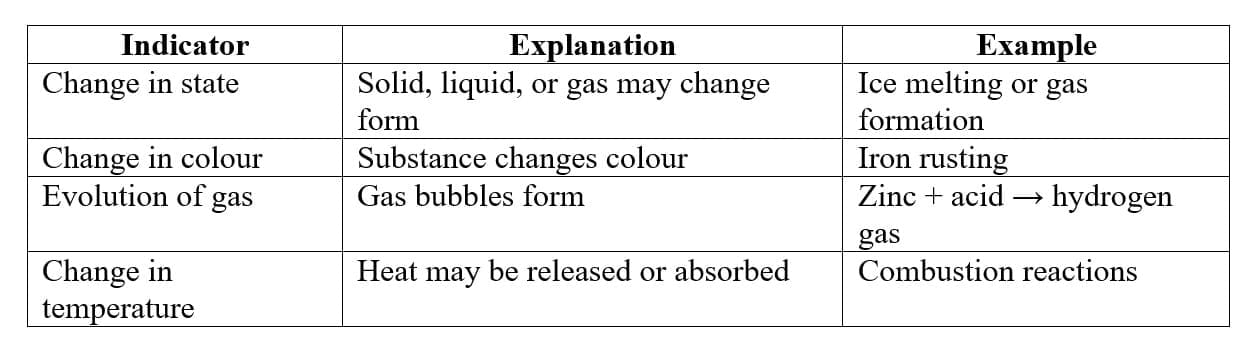
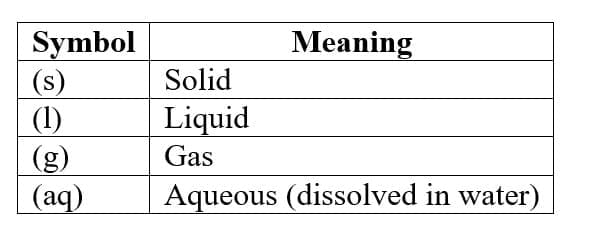
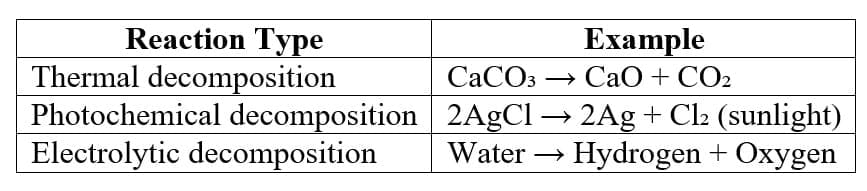
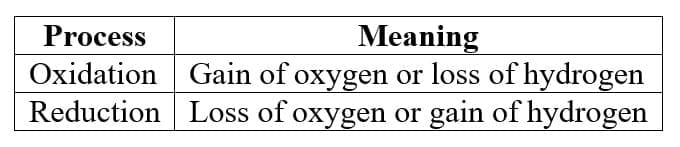
Diagram Based Questions: Chemical Reactions and Equations

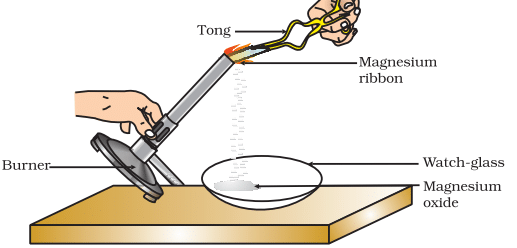
Q1: Answer the following questions based on the diagram given below:
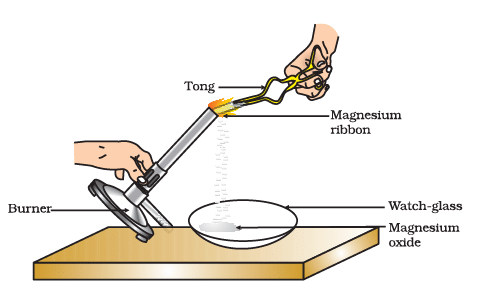
(i) What is the purpose of burning a magnesium ribbon in air in this experiment?

(ii) Describe the appearance of the magnesium ribbon before it is burnt.

(iii) What happens to the magnesium ribbon when it is burnt in air?

(iv) How is magnesium oxide collected in this experiment?

(v) Write the balanced chemical equation for the reaction that takes place when magnesium burns in air.


Ans: (i) The purpose of burning a magnesium ribbon in air is to observe the reaction of magnesium with oxygen and to collect the product, which is magnesium oxide.

(ii) Before burning, the magnesium ribbon appears as a shiny, silver-colored metal strip.

(iii) When the magnesium ribbon is burnt in air, it reacts with oxygen to form magnesium oxide. During this reaction, the magnesium ribbon glows brightly and produces a white powder (magnesium oxide).

(iv) Magnesium oxide is collected in a watch-glass. It is the white powder that forms on the surface of the watch-glass as a result of the reaction between magnesium and oxygen.
(v) The balanced chemical equation for the reaction is:
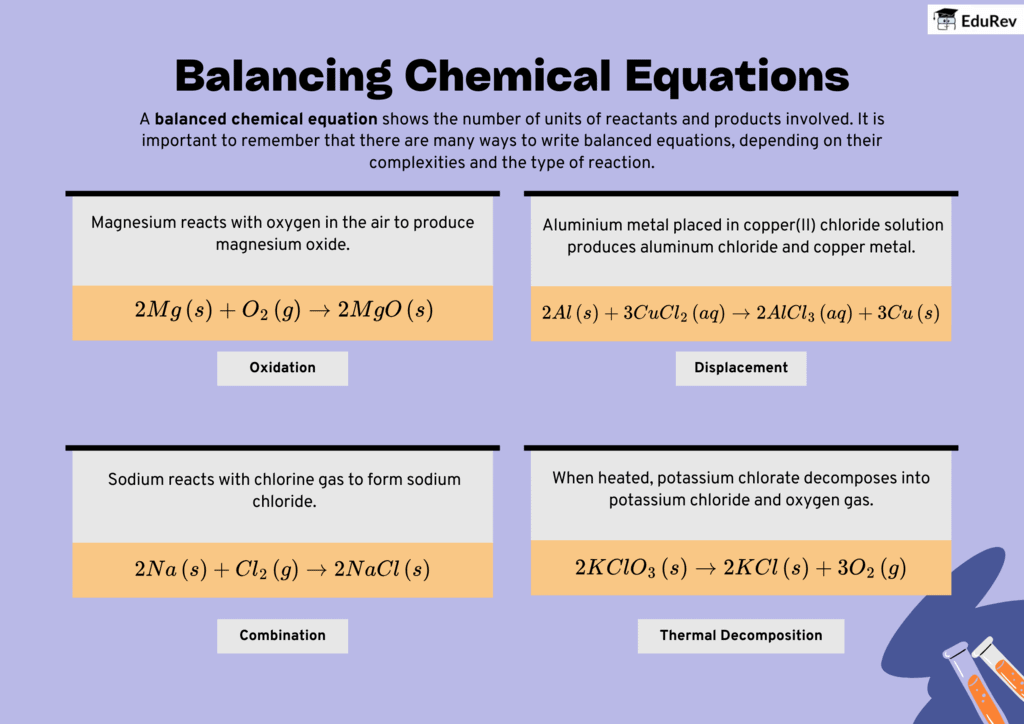
2Mg(s) + O2(g) -> 2MgO(s)

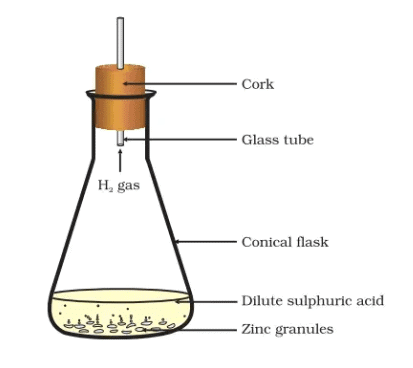
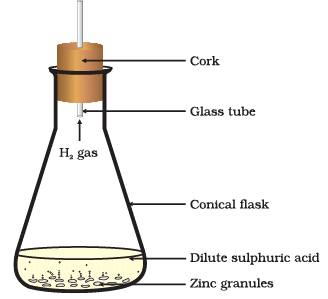
Q2: Answer the following questions based on the diagram given below:

(i) What is the chemical reaction that occurs when dilute sulfuric acid reacts with zinc?

(ii) How can we test the presence of hydrogen gas during this experiment?

(iii) What is the role of zinc in this reaction?

(iv) Why do we use dilute sulfuric acid in this experiment instead of concentrated sulfuric acid?

(v) What is the significance of the "↑" symbol in the chemical equation for this reaction?


Ans: (i) The chemical reaction between dilute sulfuric acid and zinc is represented as:
Zn + H2SO4 -> ZnSO4 + H2
In this reaction, zinc displaces hydrogen from sulfuric acid, forming zinc sulfate and hydrogen gas.

(ii)  To test the presence of hydrogen gas, you can bring a burning splint near the mouth of the test tube where the reaction is happening. If you hear a "pop" sound and see a flame, it indicates the presence of hydrogen gas.

(iii) Zinc acts as a reducing agent in this reaction. It donates electrons to hydrogen ions in sulfuric acid, leading to the production of hydrogen gas.

(iv) We use dilute sulfuric acid because it is safer and less reactive than concentrated sulfuric acid. Concentrated sulfuric acid is highly corrosive and can produce a vigorous reaction with zinc, making it
(v) The "↑" symbol indicates that hydrogen gas is produced as a gas and is released into the air during the reaction. It helps us understand that hydrogen gas is one of the products of the reaction and is liberated in the form of bubbles.

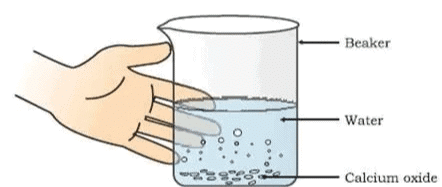
Q3: Answer the following questions based on the diagram given below:

(i) What are the reactants in the experiment for the formation of slaked lime?

(ii) Describe the appearance of calcium oxide (CaO) before the reaction with water.

(iii) What is the chemical formula of the product formed in this experiment, and what is its common name?

(iv) Explain how the appearance of the mixture changes during the reaction between calcium oxide and water.

(v) Why is the formation of slaked lime considered a combination reaction?


Ans: (i) The reactants in this experiment are calcium oxide (CaO) and water (H2O).

(ii) Calcium oxide appears as a white, powdery substance before the reaction with water.

(iii) The chemical formula of the product formed is calcium hydroxide (Ca(OH)2), and its common name is slaked lime.

(iv)  During the reaction, the mixture changes from a white, powdery substance (calcium oxide) to a thick, white, and pasty substance (slaked lime or calcium hydroxide).
(v) The formation of slaked lime is considered a combination reaction because it involves the combination of two substances, calcium oxide and water, to form a single product, calcium hydroxide, without the release of any additional substances.

Q4: Answer the following questions based on the diagram given below:

(i) What is the purpose of heating the boiling tube containing crystals of ferrous sulfate in this experiment?

(ii) What is the appearance of ferrous sulfate crystals before heating, and how does it change after heating?

(iii) Why is it important to observe the odor during this experiment?

(iv) Describe the odor you would expect when heating ferrous sulfate crystals, and explain the chemical reaction responsible for it.

(v) How would you test the presence of sulfur dioxide gas in this experiment?


Ans: (i) To observe the effect of heating on the crystals of ferrous sulfate.

 (ii) Before heating, the ferrous sulfate crystals are usually green in color. After heating, they turn white and lose their water of crystallization.

(iii) Odor observation helps identify the presence of sulfur dioxide gas, which is released when ferrous sulfate is heated.

(iv) The odor would be of burning sulfur or a pungent, rotten egg smell. This is due to the decomposition of ferrous sulfate, which releases sulfur dioxide gas (SO2) when heated.
(v) You can pass the gas produced during heating through a glass tube into a solution of sodium hydroxide (NaOH). If sulfur dioxide gas is present, it will react with NaOH to form sodium sulfite (Na2SO3), which can be detected by the formation of a white precipitate.

Q5: Answer the following questions based on the diagram given below:

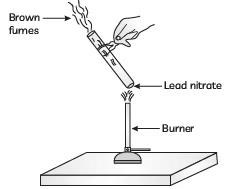
(i) What is the initial substance in the experiment shown in Figure?

(ii) What is the evidence that a chemical reaction has occurred during heating?

(iii) Write the chemical equation for the thermal decomposition of lead nitrate.

(iv) What is the role of heat in this experiment?

(v) Why is it important to use tongs while heating the boiling tube?


Ans: (i) The initial substance in the experiment is lead nitrate (Pb(NO3)2).

(ii)  The evidence of a chemical reaction is the emission of brown fumes, which are identified as nitrogen dioxide (NO2). This indicates that a chemical change has taken place.

(iii) The chemical equation for the thermal decomposition of lead nitrate is:
2Pb(NO3)2(s) → 2PbO(s) + 4NO2(g) + O2(g). This equation represents the conversion of lead nitrate into lead oxide, nitrogen dioxide, and oxygen.

(iv) Heat is used as an energy source to break the chemical bonds in lead nitrate (Pb(NO3)2). This process, known as thermal decomposition, results in the formation of lead oxide (PbO), nitrogen dioxide (NO2), and oxygen (O2).
(v) Tongs are used to hold the boiling tube because the experiment involves high temperatures, and it can become very hot. Using tongs ensures the safety of the experimenter by preventing direct contact with the hot glass, which could cause burns or injuries.

Q6: Answer the following questions based on the diagram given below:

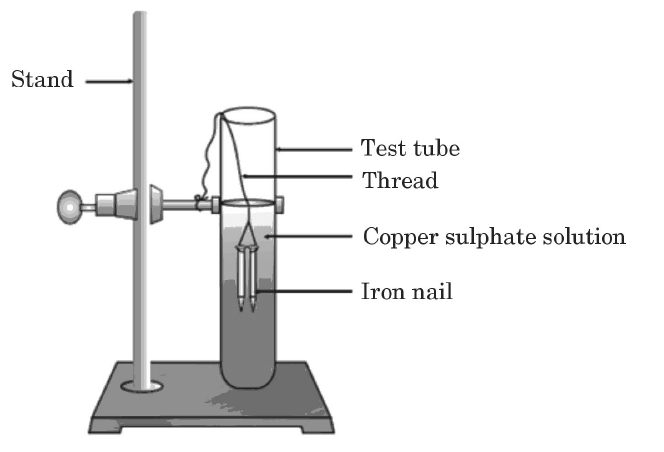
(i) Describe the setup of the experiment where iron nails are dipped in copper sulfate solution.

(ii) What is the initial color of the copper sulfate solution, and what happens to it as the experiment proceeds?

(iii) Explain the chemical reaction that occurs when iron nails are dipped in copper sulfate solution.

(iv) What is the solid substance that forms on the surface of the iron nails during the experiment?

(v) How can you confirm the presence of copper in the final solution after the experiment?


Ans: (i)  In the experiment, take a beaker and fill it with copper sulfate solution. Place some iron nails in the solution and observe the changes over time. Ensure that the nails are fully immersed in the solution.

(ii)  Initially, the copper sulfate solution is blue in color. As the experiment proceeds, the blue color of the solution starts to fade, and the solution turns greenish due to the formation of a new compound.

(iii) When iron nails are dipped in copper sulfate solution, a displacement reaction occurs. The iron in the nails reacts with copper sulfate to form iron sulfate and copper metal. The chemical equation for this reaction is:
Iron (Fe) + Copper Sulfate (CuSO4) → Iron Sulfate (FeSO4) + Copper (Cu)

(iv) A reddish-brown solid substance, which is copper, forms on the surface of the iron nails during the experiment. This is a visible result of the displacement reaction taking place.
(v) Add a few drops of dilute ammonia solution (NH₃) to the greenish solution. If copper is present, a deep blue complex, [Cu(NH₃)₄]²⁺, will form. Alternatively, add sodium hydroxide (NaOH) to produce a blue precipitate of Cu(OH)₂, confirming copper's presence

Q7: Answer the following questions based on the diagram given below:

(i) What is the initial color of the copper wire before the oxidation experiment?

(ii) Describe the changes in the color of the copper wire after it undergoes oxidation.

(iii) Explain the role of heat in the oxidation of copper.

(iv) What type of chemical reaction is observed during the oxidation of copper?

(v) Why is the copper wire cleaned before the experiment?


Ans: (i)  The initial color of the copper wire is reddish-brown.

(ii) After oxidation, the copper wire turns black due to the formation of copper oxide.

(iii)  Heat is necessary for the oxidation of copper. It provides the energy required for copper atoms to react with oxygen in the air and form copper oxide.

(iv) The oxidation of copper is a chemical reaction called a redox reaction, where copper atoms lose electrons and combine with oxygen to form copper oxide.

(v) The copper wire is cleaned before the experiment to remove any impurities, such as grease or dirt, that might hinder the oxidation process and to ensure accurate observations during the experiment.

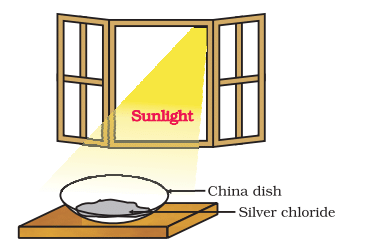
Q8: Answer the following questions based on the diagram given below:
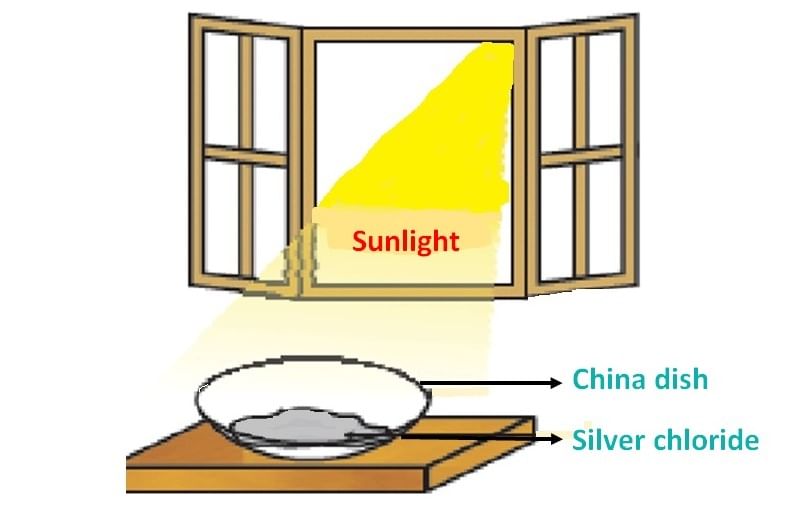
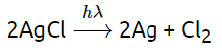
(i)  Identify the chemical change when silver chloride is left exposed to sunlight.

(ii) Write balanced chemical reaction for product produced.  

(iii) What type of chemical reaction is observed in this change ?

Ans: (i)  Silver chloride is white in color. When exposed to sunlight, silver chloride absorbs sunlight and produces silver metal and chlorine gas. Hence the white color changes to greyish.  

(ii) 2AgCl ----> 2Ag + Cl2  

(iii) Type of the chemical reaction is photolytic decomposition reaction or photolysis.

Case Based Questions: Chemical Reactions and Equations

Q1: Read the source below and answer the questions that follow:

Shruti performed an experiment in the laboratory where she burned a magnesium ribbon in the presence of oxygen. She noticed that the ribbon burned with a bright white flame and a white powder was formed as a product.

(a) Identify the chemical reaction taking place and write the balanced chemical equation. (1 mark)
(b) Explain why magnesium needs to be cleaned with sandpaper before burning. (2 marks)
(c) Identify and explain the type of reaction occurring in this experiment. (1 mark)
OR
(c) How does this reaction follow the law of conservation of mass? (1 mark)

Ans:
(a) The reaction is a combination reaction where magnesium reacts with oxygen to form magnesium oxide.
Equation: 2Mg + O₂ → 2MgO
(b) Magnesium must be cleaned with sandpaper to:

  • Remove the oxide layer on its surface.
  • Ensure a better reaction with oxygen.

(c) The reaction is a combination reaction because two reactants (magnesium and oxygen) combine to form a single product, magnesium oxide. 
OR
(c) The mass of reactants (magnesium + oxygen) equals the mass of the product (magnesium oxide), proving the law of conservation of mass.

Q2: Read the source below and answer the questions that follow:

Aryan took a few zinc granules in a test tube and added dilute sulphuric acid to it. He noticed the formation of bubbles and felt the test tube becoming warm. He then passed the gas through a soap solution and found that bubbles were formed, which burst with a 'pop' sound.

(a) Write the balanced chemical equation for the reaction taking place. (1 mark)
(b) What is the identity of the gas formed, and how can it be tested? (2 marks)
(c) What type of reaction is this? Justify your answer. (1 mark)
OR
(c) Why does the test tube become warm? Explain with reference to energy changes in the reaction. (1 mark)

Ans:
(a) Balanced equation: Zn + H₂SO₄ → ZnSO₄ + H₂
(b) The gas formed is hydrogen (H2). It can be tested by:

  • Bringing a burning matchstick near the bubbles.
  • A 'pop' sound confirms the presence of hydrogen gas.

(c) The reaction is a displacement reaction because zinc (Zn) replaces hydrogen (H) from sulphuric acid to form zinc sulfate and hydrogen gas. 
OR
(c) The test tube becomes warm because the reaction is exothermic, meaning it releases heat.

Get additional INR 200 off today with EDUREV200 coupon.
Avail Offer

Q3: Read the source below and answer the questions that follow:

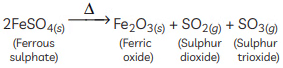
A chemistry teacher demonstrated an experiment where she heated ferrous sulfate crystals in a test tube. The green crystals changed color, and a brownish solid was formed along with the release of two gases that had a pungent smell.
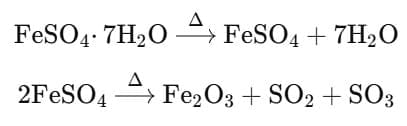
(a) Write the balanced chemical equation for the reaction. (1 mark)
(b) Name the type of reaction taking place and explain why it is categorized as such. (2 marks)
(c) What are the names of the gases released? (1 mark)
OR
(c) Give one industrial application of decomposition reactions. (1 mark)

Ans:
(a) Balanced equation:
On heating ferrous sulphate crystals, the reaction occurs in two steps:
(b) Type of reaction and explanation:
This is a thermal decomposition reaction because ferrous sulphate breaks down into simpler substances when heated.


(c) Gases released:
The gases evolved during the reaction are sulphur dioxide (SO₂) and sulphur trioxide (SO₃).

OR

(c) Industrial application of decomposition reaction:
Decomposition reactions are used in the manufacture of cement, where limestone (CaCO₃) decomposes on heating to form quicklime (CaO) and carbon dioxide (CO₂).

Q4: Read the source below and answer the questions that follow:

Raj noticed that an old iron gate in his backyard had turned reddish-brown after being exposed to the air for a long time. He asked his teacher about this phenomenon, and she explained that it was a chemical reaction called rusting.

(a) What is the chemical formula of rust? (1 mark)
(b) Write the balanced chemical equation for the rusting of iron. (2 marks)
(c) Suggest two ways to prevent rusting. (1 mark)
OR
(c) How does rusting affect the strength of iron objects? (1 mark)

Ans:
(a) The chemical formula of rust is Fe₂O₃·xH₂O (hydrated iron(III) oxide).
(b) Balanced equation:
4Fe + 3O₂ + 6H₂O → 4Fe(OH)₃
2Fe(OH)₃ → Fe₂O₃·xH₂O (rust)
(c) Rusting can be prevented by:

  • Applying paint or oil on iron surfaces to prevent contact with oxygen and moisture.
  • Galvanization, i.e., coating iron with a layer of zinc to prevent oxidation.

OR
(c) Rusting weakens iron objects, making them brittle and reducing their durability.

Also read: Infographics: Chemical Equations

Q5: Read the source below and answer the questions that follow:

In a chemistry practical, Mansi mixed solutions of barium chloride (BaCl₂) and sodium sulfate (Na₂SO₄) in a test tube. She observed the formation of a white precipitate in the solution.

(a) Write the balanced chemical equation for the reaction. (1 mark)
(b) What is the white precipitate formed? (2 marks)
(c) What type of reaction is this? Justify your answer. (1 mark)
OR
(c) Define a precipitation reaction and give another example. (1 mark)

Ans:
(a) Balanced equation:
BaCl₂ + Na₂SO₄ → BaSO₄ + 2NaCl
(b) The white precipitate formed is barium sulfate (BaSO₄).
(c) This is a double displacement reaction because there is an exchange of ions between the two reactants, forming an insoluble precipitate.
OR
(c) A precipitation reaction is one where an insoluble solid (precipitate) is formed. 
Example: AgNO₃ + NaCl → AgCl (precipitate) + NaNO₃.)

Q6: Read the source below and answer the questions that follow:

During a construction project, workers added quicklime (CaO) to water to prepare mortar. Rahul, a student observing this, noticed that the mixture released heat and became warm as the reaction proceeded.

(a) Write the balanced chemical equation for the reaction. (1 mark)
(b) What type of chemical reaction is this? Explain. (2 marks)
(c) Why does the reaction release heat? (1 mark)
OR
(c) Give one real-life application of this reaction. (1 mark)

Ans:
(a) Balanced equation:
CaO + H₂O → Ca(OH)₂ + Heat
(b) This is a combination reaction because two reactants (calcium oxide and water) combine to form a single product, calcium hydroxide.
(c) The reaction is exothermic as it releases heat due to the formation of new chemical bonds. 
OR
(c) This reaction is used in whitewashing walls, where Ca(OH)₂ reacts with CO₂ in air to form a protective layer of CaCO₃.)

Q7: Read the source below and answer the questions that follow:

A science teacher demonstrated an experiment where she passed electricity through water containing a few drops of acid. After a few minutes, gases were collected in two test tubes, and the volume of one gas was twice that of the other.

(a) Name the gases collected at the two electrodes and write the balanced equation for the reaction. (1 mark)
(b) Why is the volume of one gas double that of the other? (2 marks)
(c) What type of reaction is this? (1 mark)
OR
(c) Name one industrial use of electrolysis. (1 mark)

Ans:
(a) Hydrogen gas is collected at the cathode and oxygen gas is collected at the anode.
Balanced equation:
(b) According to the balanced chemical equation, two volumes of hydrogen gas are produced for one volume of oxygen gas. Therefore, the volume of hydrogen collected is double that of oxygen.

(c) Type of reaction:
This is a decomposition reaction because water breaks down into hydrogen and oxygen on passing electricity.

OR

(c) One industrial use of electrolysis:
Electrolysis is used in electroplating, where a thin layer of metal is deposited on another metal to prevent corrosion.

Q8: Read the source below and answer the questions that follow:

Anjali noticed that an old iron fence in her neighborhood had developed reddish-brown patches over time. She also observed that some iron objects in her kitchen remained unaffected by rusting.

(a) What is the chemical formula of rust? (1 mark)
(b) What are the conditions necessary for rusting? (2 marks)
(c) How can rusting be prevented? (1 mark)
OR
(c) Why does rusting weaken iron objects over time? (1 mark)

Ans:
(a) Chemical formula of rust:
Rust is hydrated iron(III) oxide, represented as Fe₂O₃·xH₂O.
(b)The chemical formula of rust is Fe₂O₃·xH₂O (hydrated iron(III) oxide). (b) Rusting occurs under specific conditions:

  • Oxygen must be present.
  • Moisture (water) is essential.

(c) Rusting can be prevented by:

  • Galvanization (coating iron with zinc)
  • Painting or oiling iron surfaces 

OR
(c) Rusting slowly eats away the iron, forming a flaky substance that weakens the metal and reduces its strength and durability.

Also read: Infographics: Chemical Equations

Q9: Read the source below and answer the questions that follow:

Ravi observed a gas stove in his kitchen and wondered about the reaction taking place when the gas burned with a blue flame. He learned that methane (CH₄) is the main component of natural gas, which reacts with oxygen to produce energy.

(a) Write the balanced chemical equation for the burning of methane. (1 mark)
(b) What type of reaction is this? Explain. (2 marks)
(c) Why is the flame blue when methane burns completely? (1 mark)
OR
(c) Why is this reaction considered important for daily life? (1 mark)

Ans:
(a) Balanced equation:
CH₄ + 2O₂ → CO₂ + 2H₂O + Energy
(b) This is a combustion reaction because methane burns in the presence of oxygen to release energy in the form of heat and light.
(c) The blue flame indicates complete combustion, meaning that methane is burning efficiently without producing smoke or soot. 
OR
(c) This reaction is important as it is used in cooking, heating, and generating electricity.

Q10: Read the source below and answer the questions that follow:

Rohan performed an experiment by dipping an iron nail in a beaker containing copper sulfate (CuSO₄) solution. After some time, he observed that the blue color of the solution faded, and a reddish-brown coating appeared on the nail.

(a) Write the balanced chemical equation for this reaction. (1 mark)
(b) Why does the blue color of the solution fade? (2 marks)
(c) What type of reaction is this? (1 mark)
OR
(c) Give another example of a displacement reaction. (1 mark)

Ans:
(a) Balanced equation:
Fe + CuSO₄ → FeSO₄ + Cu
(b) The blue color fades because iron displaces copper from copper sulfate, forming iron sulfate (FeSO₄), which is light green in color.
(c) This is a displacement reaction because a more reactive element (iron) replaces a less reactive element (copper). 
OR
(c) Another displacement reaction is Zn + CuSO₄ → ZnSO₄ + Cu.

Infographics: Chemical Equations

Visual Worksheet: Chemical Equations
Key Questions

Q1: (A) Write the essential conditions for the following reaction to take place and name its types: 
2AgCl → 2Ag + Cl2

(B) What is observed when silver chloride is exposed to sunlight? Give the type of reaction involved. 

Note: This is a key question and often appears in exams-understand it well. 

Solution:

Ans: (A) 

Sunlight is essential for the above reaction to take place.  This is a decomposition reaction. Such reactions require energy either in the form of heat, light or electricity for breaking down the reactants. Silver chloride turns grey after its decomposition into silver and chlorine by sunlight.  This reaction is used in black and white photography.
(B) When silver chloride is exposed to sunlight, it decomposes to form silver metal and chlorine gas. 2AgCl(s) → 2Ag(s) + Cl2(g) This is a photochemical decomposition reaction.

Q2: Assertion (A): Silver salts are used in black-and-white photography.
Reason (R): Silver salts do not decompose in the presence of light.  
(a) Both (A) and (R) are true and (R) is the correct explanation of (A).
(b) Both (A) and (R) are true but (R) is not the correct explanation of (A).
(c) (A) is true, but (R) is false.
(d) (A) is false, but (R) is true.

Solution:

Ans: (c)
Sol: Silver salt (AgCl) are used in black and white photography. Silver salt (AgCl) is photosensitive compound, it decomposes into elemental chlorine (Cl2) and Ag(metal).
AgBr is also used as black and white photography.

Q3:  Complete the following chemical reaction in the form of a balanced equation: 
       

(B) 

Q4: Translate the following statement into a balanced chemical equation : 
"Barium chloride reacts with aluminium sulphate to give aluminium chloride and barium sulphate." 

Solution:

Ans: 3BaCl2 + Al2(SO4)3 → 2AICI3 + 3BaSO4

Q5: Take 3 g of barium hydroxide in a test tube. Now add about 2 g of ammonium chloride and mix the contents with the help of a glass rod. Now touch the test tube from outside. 
(i) What do you feel about touching the test tube?
(ii) State the inference about the type of reaction that occurred. 
(iii) Write the balanced chemical equation of the reaction involved.  

Solution:

Ans: (i) On touching the test tube from outside, you will feel the test tube becoming cold.
(ii) The inference about the type of reaction that occurred is that it is an endothermic reaction. In endothermic reactions, heat is absorbed from the surroundings, resulting in a decrease in temperature
(iii) The balanced chemical equation for the reaction is:
Ba(OH)2(s) + 2NH4Cl(s) → BaCl2(aq) + 2NH3(g) + 2H2O(l)


Q6:  Write a chemical equation for the chemical reaction that occurs when the aqueous solutions of barium chloride and sodium sulphate react together. Write the symbols of the ions present in the compound precipitated in the reaction.

Solution:

Ans: 

Q7: The emission of brown fumes in the given experimental set-up is due to:

(a) thermal decomposition of lead nitrate which produces brown fumes of nitrogen dioxide. 
(b) thermal decomposition of lead nitrate which produces brown fumes of lead oxide. 
(c) oxidation of lead nitrate forming lead oxide and nitrogen dioxide. 
(d) oxidation of lead nitrate forming lead oxide and oxygen.

Note: This is a key question and often appears in exams-understand it well. 

Solution:

Ans: (a)
When lead nitrate is heated, it undergoes thermal decomposition, resulting in the formation of lead oxide,PbO (a yellow solid), nitrogen dioxide NO2 (a brown gas), and oxygen, O2. The brown fumes observed in this setup are due to the release of nitrogen dioxide gas.
The reaction is as follows:

Thus, the correct answer is (a) thermal decomposition of lead nitrate which produces brown fumes of nitrogen dioxide.

Q8: What happens when food materials containing fats and oils are left for a long time? List two observable changes and suggest three ways by which this phenomenon can be prevented.  

Solution:

Ans: Food materials containing fats and oils change when left for a long time due to a process called rancidity. This occurs when air interacts with these substances, affecting their smell and taste. The observable changes include:

  • The food develops an unpleasant smell.
  • The taste of the food becomes off or stale.

To prevent rancidity, consider these methods:

  • Vacuum packing to limit air exposure.
  • Refrigeration to slow down oxidation.
  • Storing food away from direct sunlight to reduce heat exposure.

Q9: Study the figure given below and answer the following questions:

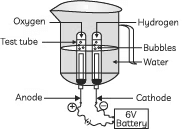
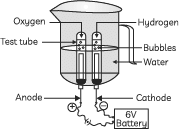
(A) Name the process depicted in the diagram. (B) Write the composition of gases collected at the anode and cathode. (C) Write the balanced chemical equation of the reaction taking place in this case. 
(D) The reaction does not take place if a few drops of dilute sulphuric acid are not added to water. Why?

Note: This is a key question and often appears in exams-understand it well. 

Solution:

Ans: (A) Electrolytic decomposition of water/ electrolysis of water. 
(B) The gas collected at cathode is hydrogen which is double the volume of oxygen collected at anode. 
(C) The balanced chemical equation for the reaction is:(D) The reaction does not occur without dilute sulphuric acid because:

  • Water is a poor conductor of electricity.
  • Adding sulphuric acid improves conductivity, allowing the reaction to proceed.

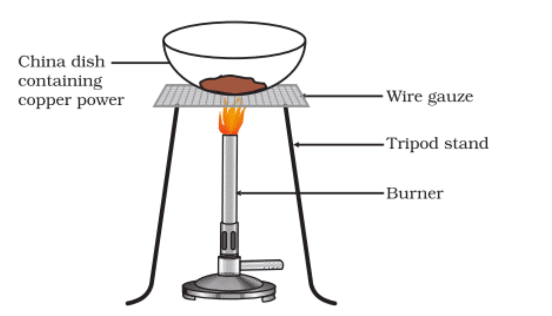
Q10: You might have noted that when copper powder is heated in a China dish, the reddish-brown surface of copper powder becomes coated with a black substance. 
(a) Why has this black substance formed? 
(b) What is the black substance? 
(c) Write the chemical equation of the reaction that takes place. 
(d) How can the black coating on the surface be turned reddish-brown?

Solution:

Ans: (a) The black substance is formed because copper reacts with oxygen in the air to form copper oxide.
(b) The black substance is copper oxide (CuO).
(c) The chemical equation for the reaction is:
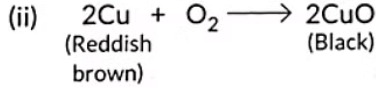
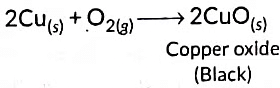
2Cu(s) + O2(g) → 2CuO(s)
(d) The black coating on the surface can be turned reddish-brown by reducing it back to copper. This can be done by passing hydrogen gas over the hot copper oxide. The chemical equation for this reaction is:
CuO(s) + H2(g) → Cu(s) + H2O(g)
The reduction reaction converts the black copper oxide back to reddish-brown copper.

Q11: (a) A solution of potassium chloride when mixed with silver nitrate solution, an insoluble white substance is formed. Write the chemical reaction involved and also mention the type of the chemical reaction. 
(b) Ferrous sulfate, when heated, decomposes with the evolution of a gas having a characteristic odor of burning sulfur. Write the chemical reaction involved and identify the type of reaction. 

Solution:

Ans: (a) The chemical reaction involved is a double displacement reaction or a precipitation reaction. The reaction between potassium chloride (KCl) and silver nitrate (AgNO3) produces silver chloride (AgCl), which is an insoluble white substance. The balanced chemical equation for this reaction is:
KCl(aq) + AgNO3(aq) → AgCl(s) + KNO3(aq)
(b) The chemical reaction involved is a thermal decomposition reaction. Ferrous sulfate (FeSO4) when heated decomposes to form ferric oxide (Fe2O3), sulfur dioxide (SO2), and water (H2O). The balanced chemical equation for this reaction is:
FeSO4(s) → Fe2O3(s) + SO2(g) + H2O(g)


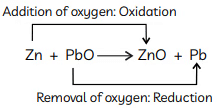
Q12: What is a reduction reaction? Identify the substances that are oxidised and the substances that are reduced in the following reactions. (A) Fe2O3 + 2Al → Al2O3 + 2Fe 
(B) 2PbO + C → 2Pb + CO2 

Solution:

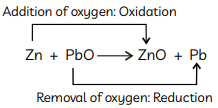
Ans: A reduction reaction is a reaction in which hydrogen is added to a substance or oxygen is removed from a substance. 
(A) In this reaction, Fe2O3 is losing oxygen and forming Fe, whereas Al is gaining oxygen and forming Al2O3. Therefore, Fe2O3 is getting reduced and Al is getting oxidised. 
(B) In this reaction, PbO is losing oxygen and forming Pb whereas C is gaining oxygen and forming CO. Therefore, PbO is getting reduced and C is getting oxidised.

Q13: (A) Identify the reducing agent in the following reactions: 
(i) 4NH3 + 5O2 → 4NO + 6H2
(ii) H2O + F2 → HF + HOF 
(iii) Fe2O3 + 3CO → 2Fe + 3CO2
(iv) 2H2 + O2 → 2H2
(B) Define a redox reaction in terms of gain or loss of oxygen.

Solution:

Ans: (A) (i) NH3 is the reducing agent because it gets oxidised to NO by the removal of hydrogen and addition of oxygen. O2 has been reduced to H2O by the addition of hydrogen. 
(ii) H2O is the reducing agent. Here, F2 gets reduced to HF (addition of hydrogen) and H2O gets oxidised to HOF (removal of hydrogen).
(iii) CO is the reducing agent. Here, CO has been oxidised to CO2 by the addition of oxygen. Fe2O3 has been reduced to Fe by the removal of oxygen.
(iv) H2 is the reducing agent as it gets oxidised to H2O by the addition of oxygen. O2 has been reduced to H2O by the addition of hydrogen. 
(B) The reaction in which one element gets oxidised or addition of oxygen occurs and other element gets reduced or removal of oxygen occurs in other element is called redox reaction. 
Example:

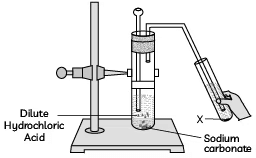
Q14: In the experimental setup given below, it is observed that on passing the gas produced in the reaction in the solution 'X' the solution 'X' first turns milky and then colourless.

The option that justifies the given observation is that 'X' is aqueous calcium hydroxide and: 
(a) it turns milky due to carbon dioxide gas liberated in the reaction and after some time it becomes colourless due to the formation of calcium carbonate. 
(b) it turns milky due to the formation of calcium carbonate and on passing excess of carbon dioxide it becomes colourless due to the formation of calcium hydrogen carbonate which is soluble in water. 
(c) it turns milky due to the passing of carbon dioxide through it. It turns colourless as on further passing carbon dioxide, sodium hydrogen carbonate is formed which is soluble in water. 
(d) the carbon dioxide liberated during the reaction turns lime water milky due to the formation of calcium hydrogen carbonate and after some time, it turns colourless due to the formation of calcium carbonate which is soluble in water. 

Note: This is a key question and often appears in exams-understand it well. 

Solution:

Ans: (b)
When carbon dioxide is passed through aqueous calcium hydroxide (lime water), it initially reacts to form calcium carbonate, which is insoluble in water and causes the solution to turn milky:
However, when excess carbon dioxide is passed through the solution, the calcium carbonate further reacts with the carbon dioxide and water to form calcium hydrogen carbonate, which is soluble in water, causing the solution to become clear again:

Thus, the correct answer is (b).

Q15: (a) Define a double displacement reaction.
(b) Write the chemical equation of a double displacement reaction which is also a (i) Neutralisation reaction and (ii) Precipitation reaction. Give justification for your answer.

Solution:

Ans: 

(a) The chemical reaction in which two reactants exchange ions to form two new compounds is called a double displacement reaction.
(b) (i) When an aqueous solution of an acid reacts with a base (alkali) by exchanging their ions/radicals to form salt and water as the only products, the reaction which takes place is called neutralisation reaction.
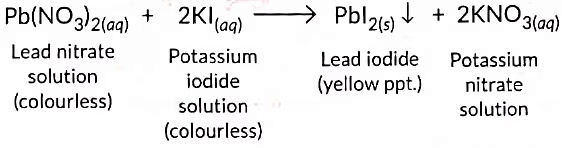
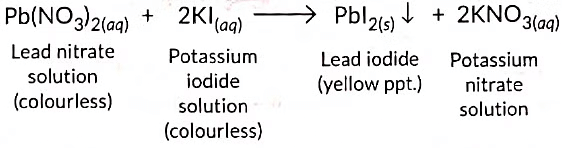
(ii) When the aqueous solutions of two ionic compounds react by exchanging their ions/radicals, to form two or more new compounds such that one of the products formed is an insoluble salt, and hence forms precipitate, the double displacement reaction is said to be precipitation reaction. When lead nitrate solution is mixed with potassium iodide solution, a yellow precipitate is formed. This reaction is a precipitation reaction and can be expressed as follows:

Important Topics for Preparation

Based on the analysis, the following topics are critical for CBSE Class 10 students preparing for "Chemical Reactions and Equations":

Types of Chemical Reactions

1. Combination: Understand reactions forming a single product
e.g., CaO + H₂O → Ca(OH)₂

2. Decomposition: Focus on:

  • Thermal: FeSO₄ → Fe₂O₃ + SO₂ + SO₃

  • Photochemical: AgCl → Ag + Cl₂

  • Electrolytic: 2H₂O → 2H₂ + O₂

3. Displacement: Learn the reactivity series to predict outcomes
e.g., Zn + CuSO₄ → ZnSO₄ + Cu

4. Double Displacement / Precipitation: Identify precipitates
e.g., Pb(NO₃)₂ + 2KI → PbI₂↓ + 2KNO₃

5. Balancing Chemical Equations

Practice balancing equations to follow the law of conservation of mass
Examples:

  • Al₂O₃ + HCl → AlCl₃ + H₂O

  • Zn(NO₃)₂ → ZnO + NO₂ + O₂

6. Redox Reactions

  • Oxidation: Loss of electrons / gain of oxygen

  • Reduction: Gain of electrons / loss of oxygen

  • Identify oxidizing and reducing agents
    e.g., CO in Fe₂O₃ + 3CO → 2Fe + 3CO₂

7. Exothermic vs. Endothermic Reactions

  • Exothermic: Releases heat
    e.g., CaO + H₂O → Ca(OH)₂ + heat

  • Endothermic: Absorbs heat
    e.g., NH₄Cl dissolving in water

8. Observable Changes

Memorize common reaction observations:

  • Color changes: AgCl (white to grey), CuSO₄ (blue to colorless)

  • Precipitates: PbI₂ (yellow), BaSO₄ (white)

  • Gas evolution: NO₂ (brown fumes), H₂ (bubbles)

  • Temperature changes: Warm (exothermic), cold (endothermic)

9. Electrolysis of Water

  • Understand the setup, use of acid as an electrolyte, and the 2:1 volume ratio of H₂:O₂

10. Practical-Based Questions

  • Be ready to describe setups and observations:
    e.g.,

    • Heating lead nitrate → Brown NO₂ fumes, yellow PbO residue

    • Electrolysis of water → H₂ and O₂ collection

11. Reactivity Series

  • Memorize the order: K, Na, Ca, Mg, Al, Zn, Fe, Pb, Cu, Ag

  • Use it to predict displacement reactions
    e.g., Mg displaces Cu; Cu cannot displace Fe

Visual Worksheet: Balancing Chemical Equations
NCERT Based Activity 

Activity 1.1 : Burning Magnesium Ribbon

CAUTION: This Activity needs the teacher's assistance. It would be better if students wear suitable eyeglasses. 

  • Clean a magnesium ribbon about 3-4 cm long by rubbing it with sandpaper. 
  • Hold it with a pair of tongs. Burn it using a spirit lamp or burner and collect the ash so formed in a watch-glass as shown in Fig. . Burn the magnesium ribbon keeping it away as far as possible from your eyes. 
  • What do you observe?

Burning of a magnesium ribbon in air and collection of magnesium oxide in a watch-glass

Observations: 

  • The magnesium ribbon burns with a bright, intense white light.
  • A white ash is formed during the burning process which is magnesium oxide (MgO).
  • The burning process releases a lot of heat and light, indicating a highly exothermic reaction.
  • The magnesium ribbon may sparkle during the burning due to the high temperature.

Chemical Reaction occured is :  2Mg(s)+O2(g)→2MgO(s)

Magnesium + Oxygen → Magnesium oxide 

          (Reactants)                         (Product)    

Explanation:

  • Magnesium (Mg) reacts with oxygen (O₂) from the air.
  • The reaction is highly exothermic, meaning it releases a large amount of heat and light.
  • Magnesium oxide (MgO) is formed as a white solid ash.

This reaction demonstrates the process of oxidation, where magnesium undergoes a chemical change due to its reaction with oxygen in the air.

Activity 1.2: Reaction between Lead Nitrate and Potassium Iodide

  • Take lead nitrate solution in a test tube. 
  •  Add potassium iodide solution to this. 
  • What do you observe?

Observation: A yellow precipitate of lead iodide (PbI2) forms immediately.

Chemical Reaction: Pb(NO3)2 (aq)+2KI(aq)→PbI2 (s)+2KNO3(aq)

Explanation:

  • Lead nitrate (Pb(NO3)2) reacts with potassium iodide (KI) to form lead iodide (PbI2) as a yellow precipitate and potassium nitrate (KNO₃) in solution.
  • This is an example of a double displacement reaction or a precipitation reaction, where an insoluble product (PbI2) is formed when two aqueous solutions are mixed.

Activity 1.3: Reaction of Zinc with Dilute Hydrochloric Acid or Sulphuric Acid

  •  Take a few zinc granules in a conical flask or a test tube. 
  • Add dilute hydrochloric acid or sulphuric acid to this (Fig.).  CAUTION: Handle the acid with care. 
  • Do you observe anything happening around the zinc granules? 
  • Touch the conical flask or test tube. Is there any change in its temperature?

Formation of hydrogen gas by the action of dilute sulphuric acid on zinc

Observation:

  • When the acid is added to the zinc granules, bubbles of gas are produced around the zinc.
  • The gas is hydrogen gas (H₂), which is released as a result of the reaction between zinc and the acid.

The reaction is exothermic, meaning it releases heat. When you touch the conical flask or test tube, you will feel that it has become warm or hot.

Chemical Reaction:

Zn (s)+2HCl(aq)→ZnCl2 (aq)+H2(g)

or

Zn (s)+H2SO4(aq)→ZnSO4 (aq)+H2(g)

Explanation:

  • Zinc reacts with the dilute acid (HCl or H2SO4) to form zinc chloride (ZnCl2) or zinc sulfate (ZnSO4) in solution, and hydrogen gas (H2) is produced.
  • The production of hydrogen gas and the release of heat indicate that the reaction is exothermic.

This activity demonstrates an example of a single displacement reaction and helps to understand the concept of exothermic reactions.

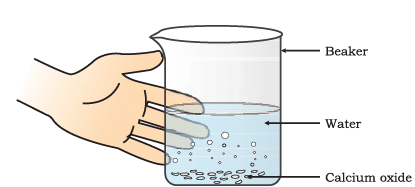
Activity 1.4 : Reaction of Calcium Oxide (Quick Lime) with Water

  • Take a small amount of calcium oxide or quick lime in a beaker. 
  • Slowly add water to this. 
  • Touch the beaker as shown in. 
  • Do you feel any change in temperature?

Formation of slaked lime by the reaction of calcium oxide with water

Observation:

  • When water is added to calcium oxide, you will observe that the beaker becomes very hot.

  • This indicates that the reaction is exothermic, meaning it releases heat.

Chemical Reaction:  CaO (s)+H2O (l)→Ca(OH)2 (aq)

Explanation:

  • Calcium oxide (quick lime) reacts with water to form calcium hydroxide (slaked lime), releasing a significant amount of heat during the process.
  • The heat released is enough to make the beaker feel hot to the touch, demonstrating the exothermic nature of the reaction.

This reaction is an example of a combination reaction and shows how water and calcium oxide react to produce calcium hydroxide while releasing heat.

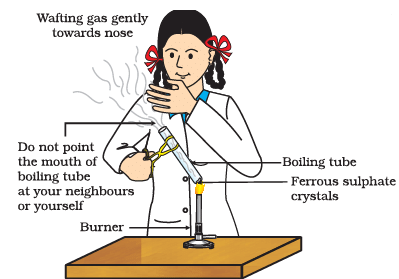
Activity 1.5: Heating of Ferrous Sulphate Crystals

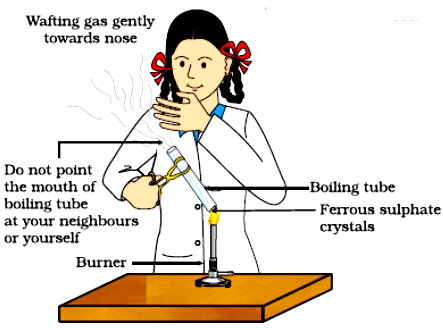
  • Take about 2 g ferrous sulphate crystals in a dry boiling tube. 
  • Note the colour of the ferrous sulphate crystals. 
  • Heat the boiling tube over the flame of a burner or spirit lamp as shown in Fig.
  • Observe the colour of the crystals after heating.

Correct way of heating the boiling tube containing crystals of ferrous sulphate and of smelling the odour

Observation:

  • Initially, the ferrous sulphate crystals are green.
  • After heating, the colour changes to brown.
  • This change is due to the formation of ferric oxide (Fe₂O₃) and the release of sulfur dioxide (SO₂) and sulfur trioxide (SO₃) gases.

Chemical Reaction: 

Explanation:

  • When ferrous sulphate is heated, it undergoes decomposition to form ferric oxide (Fe₂O₃), sulfur dioxide (SO₂), and sulfur trioxide (SO₃).
  • The green color of ferrous sulphate (FeSO₄) is due to the presence of Fe²⁺ ions, and upon heating, it is oxidized to form ferric oxide (Fe₂O₃), which is brown.
  • This is an example of a thermal decomposition reaction.

This activity demonstrates the decomposition of ferrous sulphate when heated and the change in color as a result of the chemical reaction.

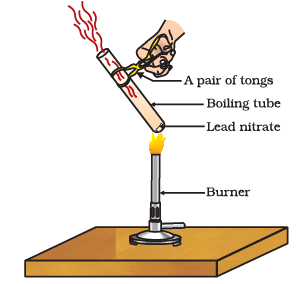
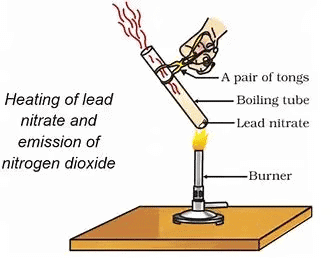
Activity 1.6 : Heating of Lead Nitrate

  • Take about 2 g lead nitrate powder in a boiling tube. 
  • Hold the boiling tube with a pair of tongs and heat it over a flame, as shown in Fig. 
  • What do you observe? Note down the change, if any.


Heating of lead nitrate and emission of nitrogen dioxide
Observation:

  • Upon heating, lead nitrate undergoes decomposition and decomposes into lead monoxide (PbO), nitrogen dioxide (NO₂), and oxygen gas (O₂).
  • A yellow color appears in the boiling tube due to the formation of lead monoxide (PbO).
  • You will also observe brown fumes of nitrogen dioxide (NO₂) being released.
  • Oxygen gas is released during the reaction.

Chemical Reaction: 

Explanation:

  • Lead nitrate decomposes when heated to form lead monoxide (PbO), nitrogen dioxide (NO₂), and oxygen (O₂).
  • The brown fumes are due to the formation of nitrogen dioxide, a toxic gas, which also gives a characteristic color.
  • This is an example of a decomposition reaction where a single reactant (lead nitrate) breaks down into multiple products.

Safety Note: Ensure proper ventilation while performing this activity as nitrogen dioxide is toxic and can irritate the respiratory system.

Activity 1.7: Electrolysis of Water

  • Take a plastic mug. Drill two holes at its base and fit rubber stoppers in these holes. Insert carbon electrodes in these rubber stoppers as shown in Fig.  
  • Connect these electrodes to a 6 volt battery. 
  • Fill the mug with water such that the electrodes are immersed. Add a few drops of dilute sulphuric acid to the water. 
  • Take two test tubes filled with water and invert them over the two carbon electrodes. 
  • Switch on the current and leave the apparatus undisturbed for some time. 
  • You will observe the formation of bubbles at both the electrodes. These bubbles displace water in the test tubes. 
  • Is the volume of the gas collected the same in both the test tubes? 
  • Once the test tubes are filled with the respective gases, remove them carefully. 
  • Test these gases one by one by bringing a burning candle close to the mouth of the test tubes. CAUTION: This step must be performed carefully by the teacher.
  •  What happens in each case? 
  • Which gas is present in each test tube?

Observation:

  • You will observe bubbles forming at both electrodes.
  • The gas collected at one electrode will extinguish the candle, while the gas collected at the other will cause the candle to burn more brightly.
  • The volume of gas collected at the two electrodes will not be the same. The volume of gas collected at the anode will be half of that collected at the cathode.

Gas Testing:

  • Gas at the cathode: When a burning candle is brought near the test tube, it produces a pop sound indicating its hydrogen gas.
  • Gas at the anode: When a burning candle is brought near the test tube, It makes a burning splinter glow more brightly or relight indicating its oxygen gas.

Chemical Reaction: 

Explanation:

  • This is an example of electrolysis of water, where water is split into hydrogen and oxygen gases due to the application of electric current.
  • Hydrogen gas is produced at the cathode (negative electrode), and oxygen gas is produced at the anode (positive electrode).

Activity 1.8: Decomposition of Silver Chloride in Sunlight

  • Take about 2 g silver chloride in a china dish. 
  • What is its colour? 
  • Place this china dish in sunlight for some time (Fig. ). 
  • Observe the colour of the silver chloride after some time.

Silver chloride turns grey in sunlight to form silver metal

Observation:

  • Initially, the silver chloride is white.
  • After exposing it to sunlight, the silver chloride turns grey.
  • This color change occurs due to the decomposition of silver chloride into silver metal (Ag) and chlorine gas (Cl₂) when exposed to sunlight.

Chemical Reaction: 

Explanation:

  • The decomposition reaction is driven by the energy from sunlight, which breaks down silver chloride into silver and chlorine gas.
  • This is a classic example of a photochemical reaction.

Carry out the following Activity

Take about 2 g barium hydroxide in a test tube. Add 1 g of ammonium chloride and mix with the help of a glass rod. Touch the bottom of the test tube with your palm. What do you feel? Is this an exothermic or endothermic reaction?

Observation:

  • When you touch the bottom of the test tube, you will feel that it is cold.
  • This indicates that the reaction is absorbing heat from the surroundings.

Conclusion: The reaction between barium hydroxide and ammonium chloride is endothermic, as it absorbs heat from the surroundings, making the test tube feel cold.

Chemical Reaction: Ba(OH)₂ (s)+2NH₄Cl (s)→BaCl₂ (aq)+2NH₃ (g)+2H₂O (l)

Explanation: In this reaction, barium hydroxide reacts with ammonium chloride to form barium chloride, ammonia gas, and water. The absorption of heat during the reaction makes it an endothermic process.

Activity 1.9: Displacement Reaction of Iron Nails in Copper Sulphate Solution
  • Take three iron nails and clean them by rubbing with sand paper. 
  • Take two test tubes marked as (A) and (B). In each test tube, take about 10 mL copper sulphate solution. 
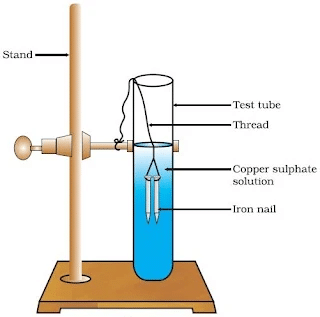
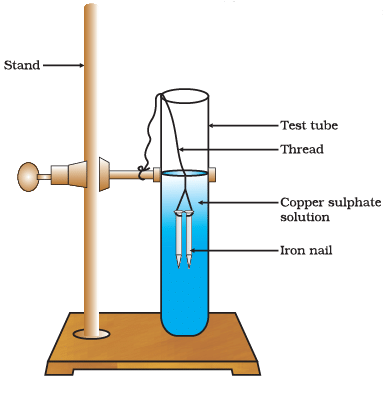
  • Tie two iron nails with a thread and immerse them carefully in the copper sulphate solution in test tube B for about 20 minutes [Fig.(a)]. Keep one iron nail aside for comparison. 

(a) Iron nails dipped in copper sulphate solution

  • After 20 minutes, take out the iron nails from the copper sulphate solution. 
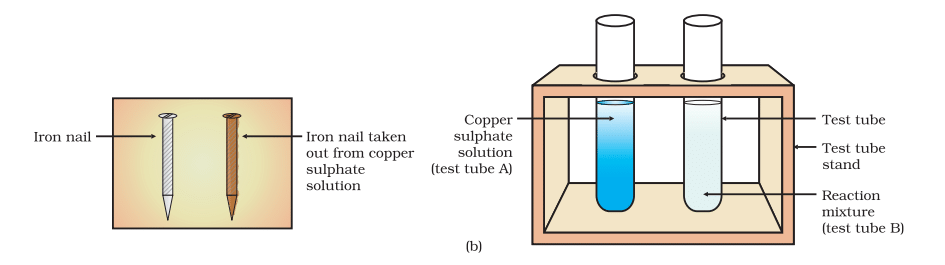
  • Compare the intensity of the blue colour of copper sulphate solutions in test tubes (A) and (B) [Fig.(b)]. 
  • Also, compare the colour of the iron nails dipped in the copper sulphate solution with the one kept aside [Fig.(b)]

(b) Iron nails and copper sulphate solutions compared before and after the experiment

Observation:
  • The copper sulfate solution in test tube A will maintain its blue color, while the solution in test tube B will show a decrease in blue intensity, as the copper ions (Cu²⁺) from the copper sulfate solution are displaced by iron ions (Fe²⁺) and copper metal is deposited on the iron nails.
  • The iron nails in test tube B will appear to have a reddish-brown color due to the deposition of copper metal on the surface of the nails.
  • The iron nail kept aside (in test tube A) will remain its original metallic color (grayish-silver).

Chemical Reaction: Fe (s)+CuSO₄ (aq)→FeSO₄ (aq)+Cu (s)

Explanation:

  • This is an example of a displacement reaction. Iron (Fe) displaces copper (Cu) from copper sulfate (CuSO₄) because iron is more reactive than copper.
  • During the reaction, copper ions (Cu²⁺) from the solution are reduced to copper metal (Cu), which gets deposited on the iron nails, while iron is oxidized to form iron sulfate (FeSO₄) in solution.
  • The decrease in the blue color intensity of the copper sulfate solution indicates the displacement of copper ions by iron ions.

Activity 1.10 : Reaction between Sodium Sulphate and Barium Chloride

  • Take about 3 mL of sodium sulphate solution in a test tube. 
  • In another test tube, take about 3 mL of barium chloride solution. 
  • Mix the two solutions (Fig.). 
  • What do you observe?
    Formation of barium sulphate and sodium chloride

 Observation:

  • A white precipitate forms immediately when the two solutions are mixed.
  • The precipitate is barium sulfate (BaSO₄), which is insoluble in water.

Chemical Reaction: Na₂SO₄ (aq)+BaCl₂ (aq)→BaSO₄ (s)+2NaCl (aq)

Explanation:

  • This is an example of a precipitation reaction, where barium sulfate (BaSO₄) is formed as a solid precipitate due to the reaction between sodium sulfate (Na₂SO₄) and barium chloride (BaCl₂).
  • The white color of the precipitate indicates the formation of barium sulfate, which is insoluble in water and precipitates out of the solution.

Activity 1.2, where you have mixed the solutions of lead(II) nitrate and potassium iodide. 
(i) What was the colour of the precipitate formed? Can you name the compound precipitated? 
(ii) Write the balanced chemical equation for this reaction. 
(iii) Is this also a double displacement reaction?
Ans: 
(i) A yellow precipitate of lead iodide (PbI2) forms immediately.

(ii) Chemical Reaction: Pb(NO3)2 (aq)+2KI(aq)→PbI2 (s)+2KNO3(aq)

(iii) Explanation:

  • Lead nitrate (Pb(NO3)2) reacts with potassium iodide (KI) to form lead iodide (PbI2) as a yellow precipitate and potassium nitrate (KNO₃) in solution.
  • This is an example of a double displacement reaction or a precipitation reaction, where an insoluble product (PbI2) is formed when two aqueous solutions are mixed.

Activity 1.11: Heating of Copper Powder

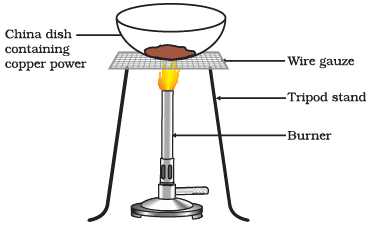
  • Heat a china dish containing about 1 g copper powder (Fig.). 
  • What do you observe?

Oxidation of copper to copper oxide

Observation:

  • Upon heating, the copper powder does not undergo any significant change in appearance.
  • Copper powder will remain its original reddish-brown color even after heating.
  • No visible reaction or color change is observed because copper does not react with oxygen at low temperatures.

Explanation:

  • Copper metal is generally unreactive with air at room temperature or under mild heating. However, if heated to a very high temperature, copper can react with oxygen to form copper oxide (CuO), which is black.
  • Since copper is not heated to a high enough temperature in this activity, no change occurs during the heating process.

Balancing of Chemical Equations 

Q1. Consider the following chemical equation:
a Al + b CuSO₄ → c Al₂(SO₄)₃ + d Cu
In order to balance this chemical equation, the values of the coefficients a, b, c, and d must be:
(a) 2, 3, 1, 3
(b) 1, 3, 1, 2
(c) 2, 1, 1, 3
(d) 3, 2, 1, 1

Solution:

Ans: (a)
1. Write the unbalanced equation
Al + CuSO₄ → Al₂(SO₄)₃ + Cu

2. Balance Aluminum (Al)

On the right, Al₂(SO₄)₃ has 2 Al atoms.

So, put 2 before Al on the left:
2Al + CuSO₄ → Al₂(SO₄)₃ + Cu

3. Balance Sulfate (SO₄)

On the right, Al₂(SO₄)₃ contains 3 sulfate groups.
On the left, each CuSO₄ has 1 sulfate group.
So, put 3 before CuSO₄:
2Al + 3CuSO₄ → Al₂(SO₄)₃ + Cu

4. Balance Copper (Cu)

On the left: 3 Cu atoms (from 3CuSO₄).

On the right: each Cu represents 1 atom, so put 3 before Cu:
2Al + 3CuSO₄ → Al₂(SO₄)₃ + 3Cu

5. Verify

Al: 2 (LHS) = 2 (RHS)

Cu: 3 (LHS) = 3 (RHS)

S: 3 (LHS) = 3 (RHS)

O: 12 (LHS) = 12 (RHS)

Balanced.

Final Answer

The coefficients are a = 2, b = 3, c = 1, d = 3 → Option (a).

Q2. To balance the following chemical equation:
xFeS₂ + yO₂ → zFe₂O₃ + wSO₂
The values of the coefficients x, y, z, and w must be, respectively:
(a) 4, 11, 2, 8
(b) 2, 7, 1, 4
(c) 4, 7, 2, 4
(d) 2, 11, 1, 8

Solution:

Ans: (a)
Step 1: Write the unbalanced equation.
FeS₂ + O₂ → Fe₂O₃ + SO₂

Step 2: Balance iron (Fe).
On the right, Fe is in Fe₂O₃ (2 atoms).
So, put coefficient 4 before FeS₂ and 2 before Fe₂O₃.
4FeS₂ + O₂ → 2Fe₂O₃ + SO₂

Now Fe is balanced (4 on each side).

Step 3: Balance sulfur (S).
On the left: 4FeS₂ = 8 sulfur atoms.
So, put coefficient 8 before SO₂.
4FeS₂ + O₂ → 2Fe₂O₃ + 8SO₂

Now S is balanced (8 on each side).

Step 4: Balance oxygen (O).
On the right:

From 2Fe₂O₃ → 2 × 3 = 6 oxygen atoms

From 8SO₂ → 8 × 2 = 16 oxygen atoms
Total = 22 oxygen atoms.

On the left: O₂ molecule contains 2 oxygen atoms.
So, coefficient before O₂ must be 11.
4FeS₂ + 11O₂ → 2Fe₂O₃ + 8SO₂

Step 5: Verify.

Fe: 4 (LHS) = 4 (RHS)

S: 8 (LHS) = 8 (RHS)

O: 22 (LHS) = 22 (RHS)

Balanced.

Final Answer: (a) x = 4, y = 11, z = 2, w = 8

Q3: What is a balanced chemical equation? 

Solution:

Ans: The equation which contains an equal number of atoms of each element on both sides of the arrow is called a balanced chemical equation.

Q4: Assertion (A): The following is a balanced chemical equation for the action of steam on iron:
3Fe (s) + 4H2O (g) → Fe3O4 (s) + 4H2 (g)
Reason (R): The law of conservation of mass holds good for a chemical equation.
(a) Both (A) and (R) are true, and (R) is the correct explanation of the assertion (A).
(b) Both (A) and (R) are true, but (R) is not the correct explanation of the assertion (A).
(c) (A) is true, but (R) is false. 
(d) (A) is false, but (R) is true.

Solution:

Ans: (a)
In this question, both the Assertion (A) and the Reason (R) are true. 
The balanced chemical equation 3Fe (s) + 4H2O (g) → Fe3O4 (s) + 4H2 (g) correctly represents the reaction of steam with iron, forming iron(II,III) oxide (Fe3O4) and hydrogen gas (H2). 
The Reason (R) states that the law of conservation of mass holds, meaning that mass is neither created nor destroyed in a chemical reaction, which is indeed reflected in the balanced equation. Therefore, option (a) is correct, as the Reason accurately explains the Assertion.

Q5: Lead nitrate solution is added to a test tube containing potassium iodide solution. Write the balanced chemical equation for the reaction involved.

Solution:

Ans: The balanced chemical equation for the reaction is:
Pb(NO3)2(aq) + 2KI(aq) → PbI2(s) + 2KNO3(aq)

Combination Reaction

Q1: Select from the following a process in which a combination reaction is involved:  

(a) Black and White photography
(b) Burning of coal
(c) Burning of methane
(d) Digestion of food

Solution:

Ans: (b)
Burning of coal involves the reaction of carbon (coal) with oxygen to form carbon dioxide: C (s) + O2(g) → CO2(g). This is a combination reaction as two substances (carbon and oxygen) combine to form a single product (carbon dioxide).

Q2: Which of the following reactions is different from the remaining three? 
(a) NaCl + AgNO3 → AgCl + NaNO3  
(b) CaO + H2O → Ca(OH)2
(c) KNO3 + H2SO4 → KHSO4 + HNO3
(d) ZnCl2 + H2S →  ZnS + 2HCl 

Solution:

Ans: (b)
In the reactions listed, options (a), (c), and (d) involve double displacement or exchange of ions between reactants, where compounds are formed by swapping partners. However, option (b) is a combination reaction, where calcium oxide (CaO) reacts with water (H2O) to form calcium hydroxide (Ca(OH)2) without exchanging ions. This makes (b) different from the others.

Q3: Which of the following is a redox reaction, but not a combination reaction?   
(a) C + O2 → CO2
(b) 2 H2 + O2 → 2 H2O
(c) 2 Mg + O2 → 2 MgO
(d) Fe2O3 + 3 CO → 2 Fe + 3 CO2

Solution:

Ans: (d)
A redox reaction involves both oxidation and reduction, where electrons are transferred between substances. In option (d), iron(III) oxide (Fe2O3) is reduced to iron (Fe), while carbon monoxide (CO) is oxidized to carbon dioxide (CO2). Unlike the other options, which are combination reactions, this one shows the reduction and oxidation of different substances, making it a redox reaction but not a combination reaction.

Q4: Name the type of chemical reaction in which calcium oxide reacts with water. Justify your answer by giving a balanced chemical equation for the chemical reaction.

Solution:

Ans: Combination reaction - Single product is formed (or any other)

Q5: When magnesium ribbon is burnt in the air, an ash of white colour is produced. Write the chemical equation for the reaction giving the chemical name of the ash produced. State the type of chemical reaction justifying your answer.

Solution:

Ans: 2 Mg + O2 → 2MgO
Magnesium oxide
Type - Combination reaction
Reason: Two or more substances combine to form a single product.

Q6: Name the type of chemical reaction that takes place when quicklime is added to water.  

Solution:

Ans: The reaction between CaO and H2O to form Ca(OH)2 is an exothermic and combination reaction.

Decomposition Reaction

Q1: Select from the following a decomposition reaction in which the source of energy for decomposition is light:    
(a) 2FeSO4 → Fe2O3 + SO2 + SO3
(b) 2H2O → 2H2 + O2
(c) 2AgBr → 2Ag + Br2
(d) CaCO3 → CaO + CO2

Solution:

Ans: (c)
A decomposition reaction is when a compound breaks down into simpler substances. Option (c) 2AgBr → 2Ag + Br2 is the correct answer because it requires light energy to break down silver bromide (AgBr) into silver (Ag) and bromine (Br2). The other options do not use light for decomposition.

Q2: (i) Define a decomposition reaction. How can we say that  (I) electrolysis of water, and (II) blackening of silver bromide when exposed to sunlight, are decomposition reactions? Mention the type of energy involved in each case.  
(ii) The type of reactions in which (I) calcium oxide is formed, and (II) calcium hydroxide is formed, are opposite reactions to each other. Justify this statement with the help of chemical equations.     

Solution:

Ans: (i) A reactant breaks down to give two or more products. A reaction which requires energy to split a compound or reactant in two or more simple substances.
(I) Water splits into hydrogen gas and oxygen gas.
Type of Energy: Electrical energy
(II) Silver bromide decomposes into silver and bromine
Type of Energy: Light energy
(ii) (I) Formation of calcium oxide:
CaCO₃ + Heat → CaO + CO₂
It is an endothermic reaction/decomposition reaction.
(II) Formation of calcium hydroxide:
It is exothermic/combination reaction

Q3: (A) Write the essential conditions for the following reaction to take place and name its types: 
2AgCl → 2Ag + Cl2
(B) Complete the following chemical reaction in the form of a balanced equation: 
               

Solution:

Ans: (A) 

Sunlight is essential for the above reaction to take place.  This is a decomposition reaction. Such reactions require energy either in the form of heat, light or electricity for breaking down the reactants. Silver chloride turns grey after its decomposition into silver and chlorine by sunlight.  This reaction is used in black and white photography.

(B) 

Q4: What is observed when silver chloride is exposed to sunlight? Give the type of reaction involved.

Solution:

Ans:  When silver chloride is exposed to sunlight, it decomposes to form silver metal and chlorine gas. 2AgCl(s) → 2Ag(s) + Cl2(g) This is a photochemical decomposition reaction.

Q5: The emission of brown fumes in the given experimental set-up is due to:

(a) thermal decomposition of lead nitrate, which produces brown fumes of nitrogen dioxide. 
(b) thermal decomposition of lead nitrate, which produces brown fumes of lead oxide. 
(c) oxidation of lead nitrate, forming lead oxide and nitrogen dioxide. 
(d) oxidation of lead nitrate forming lead oxide and oxygen. 

Solution:

Ans: (a)
When lead nitrate is heated, it undergoes thermal decomposition, resulting in the formation of lead oxide,PbO (a yellow solid), nitrogen dioxide NO2 (a brown gas), and oxygen, O2. The brown fumes observed in this setup are due to the release of nitrogen dioxide gas.
The reaction is as follows:

Thus, the correct answer is (a) thermal decomposition of lead nitrate which produces brown fumes of nitrogen dioxide.

Q6: When lead nitrate powder is heated in a boiling tube. we observe    
(a) Brown fumes of nitrogen dioxide
(b) Brown fumes of lead oxide 
(c) Yellow fumes of nitrogen dioxide
(d) Brown fumes of nitric oxide.

Solution:

Ans: (a)

When lead nitrate (Pb(NO3)2) is heated, it decomposes and produces brown fumes of nitrogen dioxide (NO2). This happens because the lead nitrate breaks down into lead oxide (PbO), nitrogen dioxide (NO2), and oxygen (O2). The brown color of the fumes is characteristic of nitrogen dioxide, making option (a) the correct answer.

Q7: Assertion (A): Silver salts are used in black-and-white photography.
Reason (R): Silver salts do not decompose in the presence of light.   
(a) Both (A) and (R) are true and (R) is the correct explanation of (A).
(b) Both (A) and (R) are true, but (R) is not the correct explanation of (A).
(c) (A) is true, but (R) is false.
(d) (A) is false, but (R) is true.

Solution:

Ans: (c)
Sol: Silver salt (AgCl) are used in black and white photography. Silver salt (AgCl) is photosensitive compound, it decomposes into elemental chlorine (Cl2) and Ag(metal).
AgBr is also used as black and white photography.

Q8: Study the figure given below and answer the following questions:

(A) Name the process depicted in the diagram. 
(B) Write the composition of gases collected at the anode and cathode. 
(C) Write the balanced chemical equation of the reaction taking place in this case. 
(D) The reaction does not take place if a few drops of dilute sulphuric acid are not added to water. Why?  

Solution:

Ans: (A) Electrolytic decomposition of water/ electrolysis of water. 
(B) The gas collected at cathode is hydrogen which is double the volume of oxygen collected at anode. 
(C) The balanced chemical equation for the reaction is:
(D) The reaction does not occur without dilute sulphuric acid because:

  • Water is a poor conductor of electricity.
  • Adding sulphuric acid improves conductivity, allowing the reaction to proceed.

Q9: In the electrolysis of water
(a) Name the gases liberated at the anode and cathode.
(b) Why is it that the volume of gas collected on one electrode is two times that on the other electrode?
(c) What would happen if dil. H2SO4 is not added to water?    (2020)

Solution:

Ans: (a) At anode: Oxygen gas is liberated. At cathode: Hydrogen gas is liberated.

(b) In the test tube covering the cathode, the amount of gas collected is double than that of the gas collected in the test tube covering the anode due to stochiometry.

2H2O → 2H2 + O2

(c)Without adding dilute sulphuric acid, water would not conduct electricity effectively, which would hinder the electrolysis process. As addition of a few drops of sulphuric acid make water a good conductor of electricity. 

Also read: Audio Notes: Chemical Reactions and Equations

Displacement and Double Displacement Reactions

Q1: Which of the following reactions is different from the remaining three?     
(a) NaCl + AgNO3 → AgCl + NaNO3  
(b) CaO + H2O → Ca(OH)2 
(c) KNO3 + H2SO4 → KHSO4 + HNO3 
(d) ZnCl2 + H2S →  ZnS + 2HCl 

Solution:

Ans: (b)
In the reactions listed, options (a), (c), and (d) involve double displacement or exchange of ions between reactants, where compounds are formed by swapping partners. However, option (b) is a combination reaction, where calcium oxide (CaO) reacts with water (H2O) to form calcium hydroxide (Ca(OH)2) without exchanging ions. This makes (b) different from the others.

Q2: Zn + 2CH3COOH → Zn(CH3COO)2 + H2    
The above reaction is a:
(a) Decomposition reaction
(b) Displacement reaction
(c) Double displacement reaction
(d) Combination reaction

Solution:

Ans: (b)
In the given reaction, zinc (Zn) replaces hydrogen in acetic acid (CH3COOH) to form zinc acetate (Zn(CH3COO)2) and hydrogen gas (H2). This type of reaction, where one element displaces another from a compound, is called a displacement reaction. Therefore, option (b) is correct.

Q3: Study the experimental set-up shown in the diagram and write a chemical equation for the chemical reaction involved. Name and define the type of reaction. List two other metals that can be used in place of iron to show the same type of reaction with copper sulphate solution.     

Solution:

Ans: Fe(s) + CuSO4 (aq) → FeSO4(aq) + Cu(s)
Displacement reaction: A reaction in which a more reactive metal displaces a less reactive metal from its salt solution.
Other metals that can be used in place of iron to show the same type of reaction with copper sulphate solution: Zinc, Aluminium, Calcium, Magnesium

Q4: (a) Define a double displacement reaction.
(b) Write the chemical equation of a double displacement reaction which is also a (i) Neutralisation reaction and (ii) Precipitation reaction. Give justification for your answer. 

Solution:

Ans: 

(a) The chemical reaction in which two reactants exchange ions to form two new compounds is called a double displacement reaction.
(b) (i) When an aqueous solution of an acid reacts with a base (alkali) by exchanging their ions/radicals to form salt and water as the only products, the reaction which takes place is called neutralisation reaction.
(ii) When the aqueous solutions of two ionic compounds react by exchanging their ions/radicals, to form two or more new compounds such that one of the products formed is an insoluble salt, and hence forms precipitate, the double displacement reaction is said to be precipitation reaction. When lead nitrate solution is mixed with potassium iodide solution, a yellow precipitate is formed. This reaction is a precipitation reaction and can be expressed as follows:

Q5: When hydrogen sulphide gas is passed through a blue solution of copper sulphate, a black precipitate of copper sulphide is obtained and the sulphuric acid so formed remains in the solution. The reaction is an example of a
(a) Combination reaction 
(b) Displacement reaction 
(c) Decomposition reaction 
(d) Double displacement reaction.

Solution:

Ans: (d)

When hydrogen sulfide (H2S) is passed through a blue solution of copper sulfate (CuSO4), it forms a black precipitate of copper sulfide (CuS) while sulfuric acid (H2SO4) remains in the solution. This process involves the exchange of ions between the reactants, characteristic of a double displacement reaction. In this type of reaction, the ions from both compounds swap partners, which makes option (d) the correct answer.

Q6: In a double displacement reaction such as the reaction between sodium sulphate solution and barium chloride solution: 
(A) Exchange of atoms takes place 
(B) Exchange of ions takes place 
(C) A precipitate is produced 
(D) An insoluble salt is produced 
The correct option is 
(a) (B) and (D) 
(b) (A) and (C)
(c) Only (B)
(d) (B), (C) and (D)

Solution:

Ans: (d)
In a double displacement reaction, like the one between sodium sulfate and barium chloride, the ions in the reactants swap places. This results in the formation of an insoluble salt (barium sulfate), which is a solid that separates out (precipitate) from the solution. So, options (B), (C), and (D) are all correct because they describe the ion exchange and the formation of a precipitate.

Q7: What is observed after about 1 hour of adding the strips of copper and aluminium separately to the ferrous sulphate solution filled in two beakers? Name the reaction if any change in colour is noticed. Also, write a chemical equation for the reaction.  

Solution:

Ans: 

Cu(s) + FeSO₄(aq) → No change will take place

Copper is less reactive than Fe, so Cu cannot displace iron from a ferrous sulphate solution. Hence, No reaction will take place.

2 Al(s) + 3 FeSO₄(aq) → Al₂(SO₄)₃ + 3 Fe(s) (Displacement reaction)

When Al is added to a FeSO₄(aq) solution, the green colour of FeSO₄(aq) disappears and the Fe is seen setting down as the reaction occurs. Al being higher in the reactivity series displaces the Fe in FeSO₄.

Q8: Identify the type of reactions taking place in each of the following cases and write the balanced chemical equation for the reactions.
(a) Zinc reacts with silver nitrate to produce zinc nitrate and silver.
(b) Potassium iodide reacts with lead nitrate to produce potassium nitrate and lead iodide. 

Solution:

Ans: (a) The type of reaction taking place is a single displacement reaction. Zinc (Zn) displaces silver (Ag) from silver nitrate (AgNO3) to form zinc nitrate (Zn(NO3)2) and silver (Ag). The balanced chemical equation for this reaction is:
Zn(s) + 2AgNO3(aq) → Zn(NO3)2(aq) + 2Ag(s)
(b) The type of reaction taking place is a double displacement reaction or a precipitation reaction. Potassium iodide (KI) reacts with lead nitrate (Pb(NO3)2) to produce potassium nitrate (KNO3) and lead iodide (PbI2). The balanced chemical equation for this reaction is:
2KI(aq) + Pb(NO3)2(aq) → 2KNO3(aq) + PbI2(s)

Q9: When potassium iodide solution is added to a solution of lead (II) nitrate in a test tube, a precipitate is formed. 
(a) What is the colour of this precipitate? Name the compound precipitated. 
(b) Write the balanced chemical equation for this reaction. 
(c) List two types of reactions in which this reaction can be placed.

Solution:

Ans: (a) The color of the precipitate formed is yellow. The compound precipitated is lead iodide (PbI2)
(b) The balanced chemical equation for this reaction is:
2KI(aq) + Pb(NO3)2(aq) → PbI2(s) + 2KNO3(aq)
(c) The two types of reactions in which this reaction can be placed are a double displacement reaction and a precipitation reaction. In a double displacement reaction, the positive and negative ions of two compounds switch places to form new compounds. In a precipitation reaction, a solid precipitate is formed when two solutions are mixed together.

Redox Reactions 

Q1: (a) Can a displacement reaction be a redox reaction? Explain with the help of an example.
(b) Write the type of chemical reaction in the following:
(i) Reaction between an acid and a base
(ii) Rusting of iron. 

Solution:

Ans: (a) Consider the following displacement reaction:
Zn(s)+ CuSO4(aq) → ZnSO4(aq) + Cu(s)
Here, Zn has changed into ZnSO4 (i.e., Zn2+ ions) by loss of electrons. Hence, Zn has been oxidised. CuSO4 (i.e., Cu2+) has changed into Cu by gain of electrons. Hence, CuSO4 has been reduced. Thus, the above reaction is a displacement reaction as well as a redox reaction.
(b) (i) Neutralisation reaction
(ii) Oxidation reaction.

Q2: Define a redox reaction in terms of gain or loss of oxygen.

Solution:

Ans: The reaction in which one element gets oxidised or addition of oxygen occurs and other element gets reduced or removal of oxygen occurs in other element is called redox reaction. 
Example:

Q3: Assertion (A): In the following reaction ZnO + C → Zn + CO 
ZnO undergoes reduction.
Reason (R): Carbon is a reducing agent that reduces ZnO to Zn.
(a) Both Assertion (A) and Reason (R) are true and Reason (R) is the correct explanation of Assertion (A)
(b) Both Assertion (A) and Reason (R) are true, but Reason (R) is not the correct explanation of the Assertion (A)
(c) Assertion (A) is true, but Reason (R) is False.
(d) Assertion (A) is false, but Reason (R) is true.

Solution:

Ans: (a)
Sol: The reaction in which oxygen is added or hydrogen is removed or loss of electrons takes place is called an oxidation reaction. In the reaction,
(i) Carbon is getting oxidised to carbon monoxide.
(ii) Zinc oxide is getting reduced to zinc.
Carbon is a reducing agent that reduces ZnO to Zn.

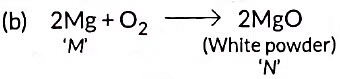
Q4: A shining metal 'M', on burning gives a dazzling white flame and changes to a white powder 'N'.
(a) Identify 'M' and 'N'.
(b) Represent the above reaction in the form of a balanced chemical equation.
(c) Does 'M' undergo oxidation or reduction in this reaction? Justify. 

Solution:

Ans: 

(a) 'M' is (Mg) Magnesium and 'N' is (MgO) Magnesium Oxide

(c) 'M' undergoes oxidation in this reaction because Mg gain oxygen to form MgO.

Q5: Mention with reason the colour changes observed when copper powder is strongly heated in the presence of oxygen.

Solution:

Ans: 
Copper metal undergoes oxidation.

Q6: 1 g of copper powder was taken in a China dish and heated. What change takes place in healing? When hydrogen gas is passed over this heated substance, a visible change is seen in it. Give the chemical equations of reactions, the name and the colour of the products formed in each case.  

Solution:

Ans: When copper powder is heated in a China dish, the reddish brown surface of copper powder becomes coated with a black substance which is copper oxide.
 
When hydrogen gas is passed over CuO, the black coating on the surface turned reddish brown due to the formation of Cu.

Q7: What is a reduction reaction? Identify the substances that are oxidised and the substances that are reduced in the following reactions. (A) Fe2O3 + 2Al → Al2O3 + 2Fe 
(B) 2PbO + C → 2Pb + CO2 

Solution:

Ans: A reduction reaction is a reaction in which hydrogen is added to a substance or oxygen is removed from a substance. 
(A) In this reaction, Fe2O3 is losing oxygen and forming Fe, whereas Al is gaining oxygen and forming Al2O3. Therefore, Fe2O3 is getting reduced and Al is getting oxidised. 
(B) In this reaction, PbO is losing oxygen and forming Pb whereas C is gaining oxygen and forming CO. Therefore, PbO is getting reduced and C is getting oxidised.

Q8: You might have noted that when copper powder is heated in a China dish, the reddish-brown surface of copper powder becomes coated with a black substance. 
(a) Why has this black substance formed? 
(b) What is the black substance? 
(c) Write the chemical equation of the reaction that takes place. 
(d) How can the black coating on the surface be turned reddish-brown?

Solution:

Ans: (a) The black substance is formed because copper reacts with oxygen in the air to form copper oxide.
(b) The black substance is copper oxide (CuO).
(c) The chemical equation for the reaction is:
2Cu(s) + O2(g) → 2CuO(s)
(d) The black coating on the surface can be turned reddish-brown by reducing it back to copper. This can be done by passing hydrogen gas over the hot copper oxide. The chemical equation for this reaction is:
CuO(s) + H2(g) → Cu(s) + H2O(g)
The reduction reaction converts the black copper oxide back to reddish-brown copper.

Test: Redox Reactions
Start Test

Exothermic and Endothermic Reactions

Q1: Assertion (A): The reaction of quick lime with water is an exothermic reaction. 
Reason (R): Quicklime reacts vigorously with water releasing a large amount of heat. 
(a) Both Assertion (A) and Reason (R) are true and Reason (R) is the correct explanation of Assertion (A)
(b) Both Assertion (A) and Reason (R) are true, but Reason (R) is not the correct explanation of the Assertion (A)
(c) Assertion (A) is true, but Reason (R) is False
(d) Assertion (A) is false, but Reason (R) is true

Solution:

Ans: (a)
Sol: Reaction of quick lime (CaO) with water is an exothermic reaction because CaO reacts vigorously with water releasing a large amount of heat.
CaO(s) + H2O(I) → Ca(OH)2(ag) + Heat

Q2: C6H12O6(aq) + 6O2(g) → 6CO2(g) + 6H2O(I)
The above reaction is a/an
(a) Displacement reaction 
(b) Endothermic reaction 
(c) Exothermic reaction 
(d) Neutralisation reaction

Solution:

Ans: (c)
Sol: In the process of respiration, glucose combines with oxygen in cells of our body and provides energy. Thus, respiration is an exothermic process.
C6H12O6(aq) + 6O2(g) → 6CO2(g) + 6H2O(I) + Energy

Q3: Consider the following processes
I. Dilution of sulphuric acid 
II. Sublimation of dry ice 
III. Condensation of water vapours 
IV. Dissolution of ammonium chloride in water 
The endothermic process(es) is/are
(a) I and III 
(b) Il only 
(c) Ill only 
(d) Il and IV

Solution:

Ans: (d)
Sol: During sublimation of dry ice, heat is absorbed, so, it is an endothermic process. Dissolution of NH4CI in water is also an endothermic process.

Q4: Assertion (A): Burning of natural gas is an endothermic process. 
Reason (R): Methane gas combines with oxygen to produce carbon dioxide and water
(a) Both (A) and (R) are true, and (R) is the correct explanation of (A). 
(b) Both (A) and (R) are true, and (R) is not the correct explanation of (A). 
(c) (A) is true but (R) is false. 
(d) (A) is false but (R) is true.

Solution:

Ans: (d)
Assertion (A): Burning of natural gas is an endothermic process. This is incorrect. Burning (or combustion) of natural gas, which mainly consists of methane, is an exothermic process, meaning it releases heat.
Reason (R): Methane gas combines with oxygen to produce carbon dioxide and water. This statement is correct. During combustion, methane reacts with oxygen to produce carbon dioxide and water as products.
Since the assertion is false, but the reason is true, the correct answer is (d) (A) is false but (R) is true.

Q5: A compound 'A' is used in the manufacture of cement. When dissolved in water, it evolves a large amount of heat and forms compound 'B'. 
(i) Identify A and B. 
(ii) Write the chemical equation for the reaction of A with water.
(iii) List two types of reactions in which this reaction may be classified.   

Solution:

Ans: (i) Compound A is calcium oxide (CaO) and compound B is calcium hydroxide (Ca(OH)2).
(ii) The chemical equation for the reaction of A (calcium oxide) with water is:
CaO(s) + H2O(l) → Ca(OH)2(aq)
(iii) The reaction can be classified as a combination reaction and an exothermic reaction. It is a combination reaction because two substances combine to form a new compound, and it is exothermic because it evolves a large amount of heat.

Q6: Identify the type of each of the following reactions. Also, write a balanced chemical equation for each reaction: 
A reaction in which the reaction mixture becomes warm. 

Solution:

Ans: The type of reaction in which the reaction mixture becomes warm is an exothermic reaction. An example of such a reaction is the combustion of methane (CH4):
CH4(g) + 2O2(g) → CO2(g) + 2H2O(g) + heat

Cheat Sheet: Chemical Reactions and Equations

1. What is a Chemical Reaction?

A chemical reaction is a process in which one or more substances (reactants) are converted into new substances (products) with different properties.

Examples from daily life include:

  • Milk turning sour
  • Rusting of iron
  • Burning of fuel
  • Digestion of food
  • Respiration

In all these cases, the original substances change into new substances, which indicates that a chemical reaction has occurred.

2. Indicators of a Chemical Reaction

A chemical reaction can often be identified by certain observable changes.

These observations help us determine whether a chemical reaction has taken place.

3. Chemical Equations
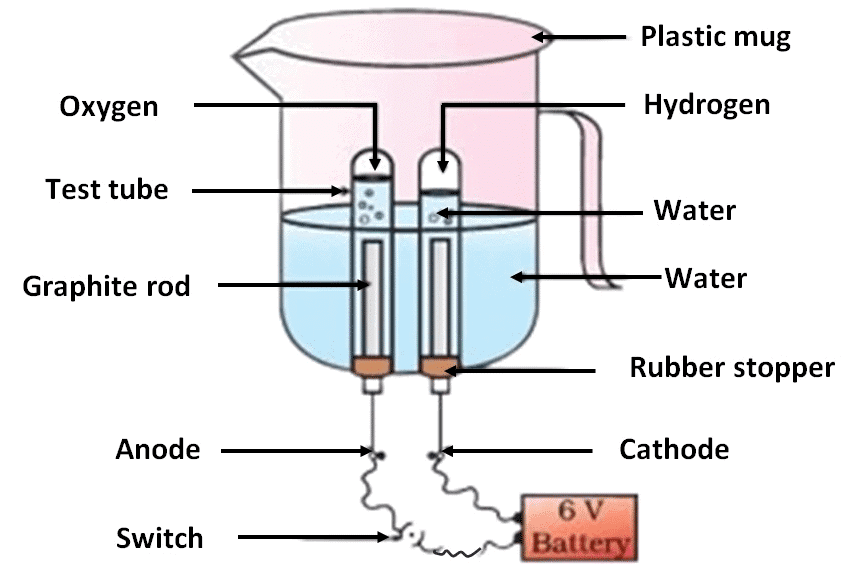
A chemical equation is a symbolic representation of a chemical reaction using chemical formulas.

Word Equation

A reaction can first be written in words.

Example:
Magnesium + Oxygen → Magnesium oxide

Chemical Equation

Using chemical formulas, the same reaction becomes:

Mg + O₂ → MgO

In a chemical equation:

  • Reactants are written on the left-hand side (LHS)
  • Products are written on the right-hand side (RHS)
  • An arrow (→) shows the direction of the reaction.

4. Balanced Chemical Equations

A chemical equation must follow the Law of Conservation of Mass, which states that mass cannot be created or destroyed in a reaction. Therefore, the number of atoms of each element must be the same on both sides of the equation.

Example

Unbalanced equation:

Fe + H₂O → Fe₃O₄ + H₂

Balanced equation:

3Fe + 4H₂O → Fe₃O₄ + 4H₂

Balancing ensures that the same number of atoms exist before and after the reaction.

5. Writing Physical States in Equations
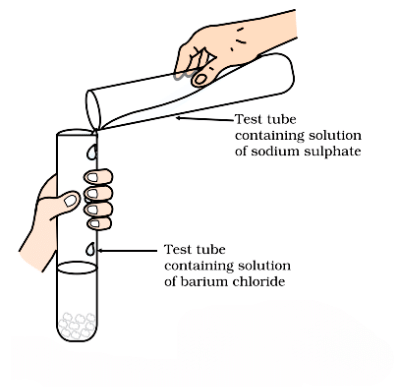
Chemical equations often include the physical state of substances.

Example:

3Fe(s) + 4H₂O(g) → Fe₃O₄(s) + 4H₂(g)

Sometimes reaction conditions like heat, pressure, catalyst, or sunlight are written above or below the arrow.

6. Types of Chemical Reactions
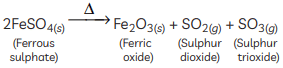
Chemical reactions can be classified into several types.
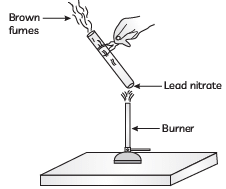
6.1 Combination Reaction

A combination reaction occurs when two or more substances combine to form a single product.

Example: CaO + H₂O → Ca(OH)₂

In this reaction, calcium oxide and water combine to form calcium hydroxide (slaked lime).

Other examples:

  • C + O₂ → CO₂
  • 2H₂ + O₂ → 2H₂O

Exothermic Reactions

Many combination reactions release heat.
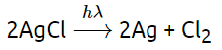
Example: CH₄ + 2O₂ → CO₂ + 2H₂O + heat

Respiration is also an exothermic reaction because it releases energy.

6.2 Decomposition Reaction

A decomposition reaction occurs when a single compound breaks down into two or more simpler substances.

Example: CaCO₃ → CaO + CO₂

This reaction occurs when calcium carbonate is heated.

Decomposition reactions require energy such as:

  • Heat
  • Light
  • Electricity

Examples:

These reactions absorb energy and are often endothermic reactions.

6.3 Displacement Reaction

A displacement reaction occurs when a more reactive element replaces a less reactive element from its compound.

Example: Fe + CuSO₄ → FeSO₄ + Cu

Here, iron displaces copper from copper sulphate solution.

Other examples:

  • Zn + CuSO₄ → ZnSO₄ + Cu
  • Pb + CuCl₂ → PbCl₂ + Cu

These reactions occur because some elements are more reactive than others.

6.4 Double Displacement Reaction

A double displacement reaction occurs when two compounds exchange their ions to form new compounds.

Example:Na₂SO₄ + BaCl₂ → BaSO₄ + 2NaCl

 In this reaction:

  • Barium sulphate forms as a white precipitate (insoluble solid).

Such reactions are called precipitation reactions when an insoluble substance forms.

6.5 Oxidation and Reduction (Redox Reactions)

These reactions involve the transfer of oxygen or hydrogen.

Example:

CuO + H₂ → Cu + H₂O

In this reaction:

  • CuO loses oxygen → reduction
  • H₂ gains oxygen → oxidation

Since both processes occur together, they are called redox reactions.

7. Effects of Oxidation in Everyday Life

Corrosion

Corrosion is the slow destruction of metals due to reactions with air, moisture, or chemicals.

Examples:

  • Rusting of iron
  • Black coating on silver
  • Green coating on copper

Rusting causes major damage to structures such as bridges, vehicles, and iron railings.

Rancidity

Rancidity occurs when fats and oils react with oxygen, causing food to develop unpleasant smell and taste.

Examples:

  • Stale chips
  • Spoiled butter or oil

Prevention methods:

  • Use airtight containers
  • Add antioxidants
  • Store food in refrigerators
  • Flush chip packets with nitrogen gas to prevent oxidation.