
Chapter Notes:
What is a Chemical Reaction?
A chemical reaction is a process in which one or more substances, the Reactants, are converted to one or more different substances, the Products.
Chemical Equations
A chemical equation is a symbolic representation of a chemical reaction using the symbols and formulas of the substances involved.
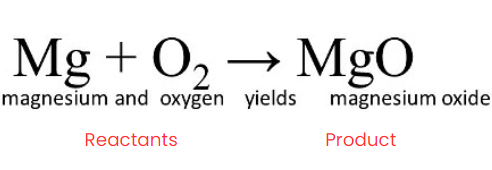
The substances that undergo chemical change in the reaction, Magnesium and Oxygen, are the Reactants. When magnesium burns in air, it combines with oxygen to form magnesium oxide.
Chemical equations can be made more concise and useful if we use chemical formulae instead of words. Example: The chemical formula for water is H2O, which indicates that it is made up of two hydrogen atoms and one oxygen atom.
- Melting ice is a physical change as it only involves a change in state from solid to liquid.
- Boiling water is also a physical change as it involves the conversion of liquid water to water vapor.
- Cutting paper is a physical change as it only alters the shape or appearance of the paper without forming any new substances.
1. Writing a Chemical Equation
Representation of a chemical reaction in terms of symbols and chemical formulae of the reactants and products is known as a chemical equation.
- For solids, the symbol is "(s)".
- For liquids, it is "(l)".
- For gases, it is "(g)".
- For aqueous solutions, it is "(aq)".
- For gas produced in the reaction, it is represented by "(↑)".
- For precipitate formed in the reaction, it is represented by "(↓)".
The reactants are on the left (LHS) of the arrow, while the products are on the right (RHS). A plus sign (+) links the different reactants and products together.
A balanced account of a chemical reaction is a complete chemical equation, which symbolically depicts the reactants, products, and their physical states.
2. Balanced Chemical Equations
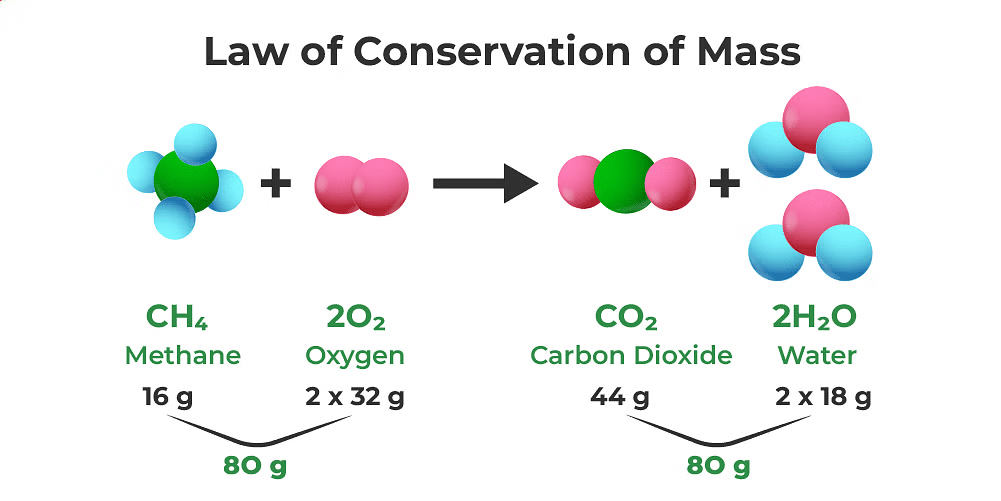
The Law of Conservation of Mass states that in a chemical reaction, atoms can't be created or destroyed. This means that the total number of atoms for each element in the starting materials (reactants) must be the same as in the end products, keeping the overall mass the same.
(ii) Balanced chemical equation
A chemical equation is considered balanced when the number of atoms for each element on the reactant side is identical to the product side.
Steps for Balancing Chemical Equations
- To balance chemical equations, coefficients (numeric values preceding chemical symbols or formulas) are utilized. These coefficients represent the number of atoms or molecules involved. Adjust the coefficients as needed to make sure that the number of each type of atom is the same on both sides of the equation.
- For instance, in the equation Zn + HCl → ZnCl2 + H2, balancing involves adding coefficients to achieve equilibrium: Zn + 2HCl → ZnCl2 + H2. This balancing process often involves trial and error adjustments to ensure the equality of atoms on both sides.
Here are the steps to write a balanced chemical equation: Fe + H2O → Fe3O4 + H2
Step 1: Write the number of atoms of elements present in reactants and in products in a table as shown here.
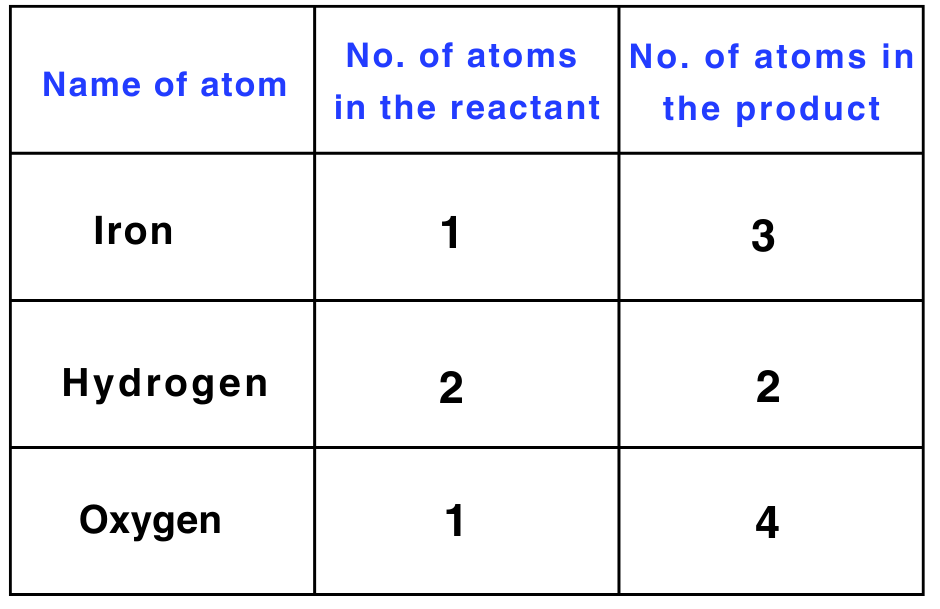
Step 2: Balance the atom which is maximum in number on either side of a chemical equation.
Start by balancing the number of oxygen atoms, which has the maximum count on the right-hand side (RHS).
To balance oxygen, multiply the number of oxygen atoms on the left-hand side (LHS) by 4.
Fe + 4 × H2O → Fe3O4 + H2
Step 3: Balancing oxygen created an imbalance in the number of hydrogen atoms. There are now eight hydrogen atoms on the LHS and two on the RHS.
To balance hydrogen, multiply the number of hydrogen atoms on the RHS by 4.
Fe + 4 × H2O → Fe3O4 + 4 × H2
Step 4: There is only one iron atom on the LHS and three on the RHS.
To balance iron, multiply the number of iron atoms on the LHS by 3.
3 × Fe + 4 × H2O → Fe3O4 + 4 × H2
The equation is now balanced, and the same number of atoms of each element is present on both sides.
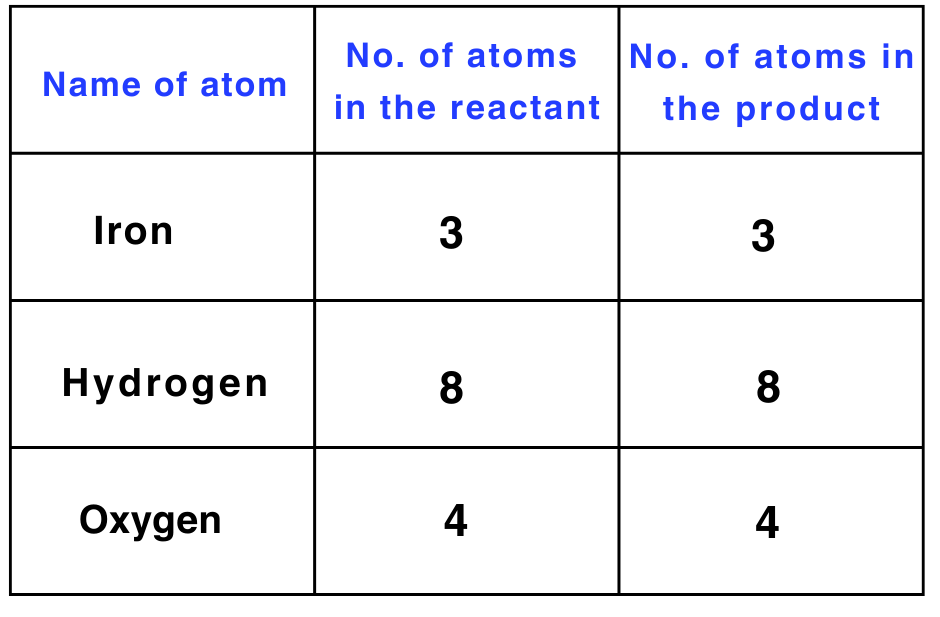
After balancing, the above equation can be written as follows:
3Fe + 4H2O → Fe3O4 + 4H2
- To make a chemical equation more informative, it is important to include the physical state of the substances involved.
- The symbol (g) is used to represent a gaseous state, (l) for liquid state, (s) for solid state, and (aq) for an aqueous solution.
- The conditions under which the reaction takes place are also important to include in the chemical equation.
- These conditions can be written above and/or below the arrow in the chemical equation.
- Including this information can help provide a clearer understanding of the chemical reaction taking place. Example :

- In this equation, (g) indicates that carbon dioxide is a gas, (l) indicates that water is a liquid, and (aq) indicates that glucose is dissolved in water. Sunlight and chlorophyll are specifically mentioned as the sources of energy used in the reaction. This highlights the importance of these specific components in the photosynthesis process.
Try yourself: What is the balanced chemical equation for the reaction between hydrogen gas and oxygen gas to form water?
The equation tells us that two molecules of hydrogen gas (H2) react with one molecule of oxygen gas (O2) to produce two molecules of water (H2O). The coefficient 2 in front of the H2 and H2O represents the number of molecules involved in the reaction. The coefficient 1 in front of the O2 indicates that only one molecule of oxygen gas is involved in the reaction.
Therefore the balanced equation is
2H2 + O2 → 2H2O
Types of Chemical Reactions
Considering various factors, chemical reactions are classified into several categories.
1. Combination Reaction
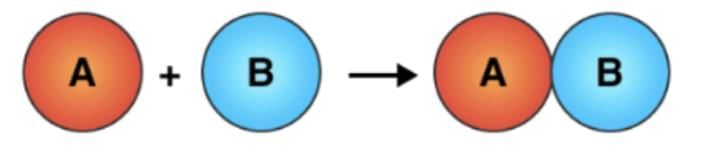
It occurs when two or more reactants combine to form a single product. or we say, such a reaction in which a single product is formed from two or more reactants is known as a combination reaction.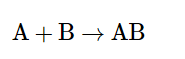
This is the equation of a combination reaction.
Example:
(i) Calcium oxide reacts vigorously with water to produce slaked lime (calcium hydroxide) releasing a large amount of heat.
CaO(s) + H2O(l) → Ca(OH)2 (aq) + Heat
(ii) A solution of slaked lime produced by the reaction is used for white-washing walls. Calcium hydroxide reacts with carbon dioxide in the air to form calcium carbonate. Calcium carbonate is formed after two to three days of white washing and gives a shiny finish to the walls. It is interesting to note that the chemical formula for marble is also CaCO3.

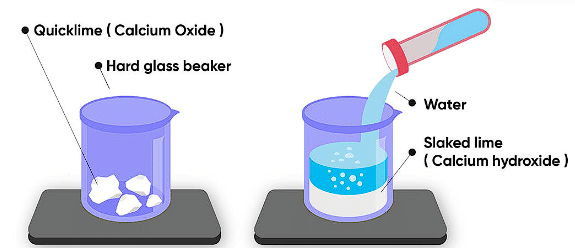
Note: Reactions that release heat when products are formed are known as exothermic chemical reactions.
Other Examples of Exothermic Reactions
(a) Burning of Coal: When carbon is burnt in oxygen (air), carbon dioxide is formed. In this reaction, carbon is combined with oxygen.
C(s) + O2 (g) → CO2 (g)
(b) Formation of H2O
2H2 (g) + O2 (g) → 2H2O (l)
(c) Burning of natural gas
CH4 (g) + 2O2 (g) → CO2 (g) + 2H2O (g)
Note: Do you know that respiration is an exothermic process?
We need energy to live, and we get it from the food we eat. When we digest food, it's broken down into simpler forms. For instance, rice, potatoes, and bread have carbohydrates, which are turned into glucose. This glucose then mixes with oxygen in our cells to produce energy.
C6H12O6 + 6O2 → 6CO2 + 6H2O + energy
Let's Revise: Give an example of a combination reaction used in white-washing walls.
Ans: Calcium oxide reacts with water to form calcium hydroxide, which later reacts with carbon dioxide to form calcium carbonate used in white-washing.
2. Decomposition Reaction
A single reactant breaks down when exposed to heat, light, or electricity, resulting in the formation of two or more products.
There are three types of decomposition reactions:
(a) Thermal decomposition
A decomposition reaction carried out by heating is called thermal decomposition
Example 1: Heating of Ferrous Sulphate
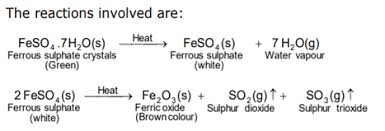
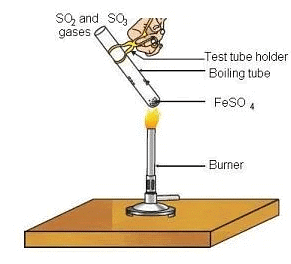
Ferrous sulphate crystals (FeSO4. 7H2O) lose water when heated and the green colour of ferrous sulphate crystals fades. It then decomposes to ferric oxide (Fe203), sulphur dioxide (SO2) and sulphur trioxide (SO3). Ferric oxide is a solid, while S02 and SO3 are gases.
Example 2: Decomposition of Calcium Carbonate

Heating calcium carbonate breaks it down into calcium oxide (lime) and carbon dioxide. This reaction is important in industries, with calcium oxide being used in cement production.
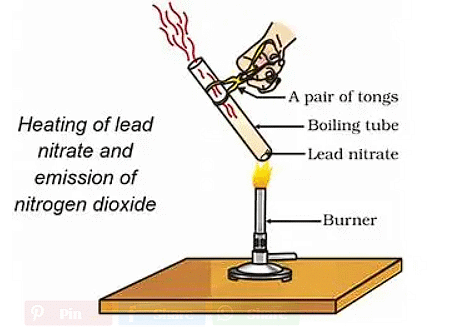
Example 3: Heating of Lead Nitrate Powder

(b) Photolytic decomposition
where light is needed for the reaction. An example is the photolytic decomposition of H2O2.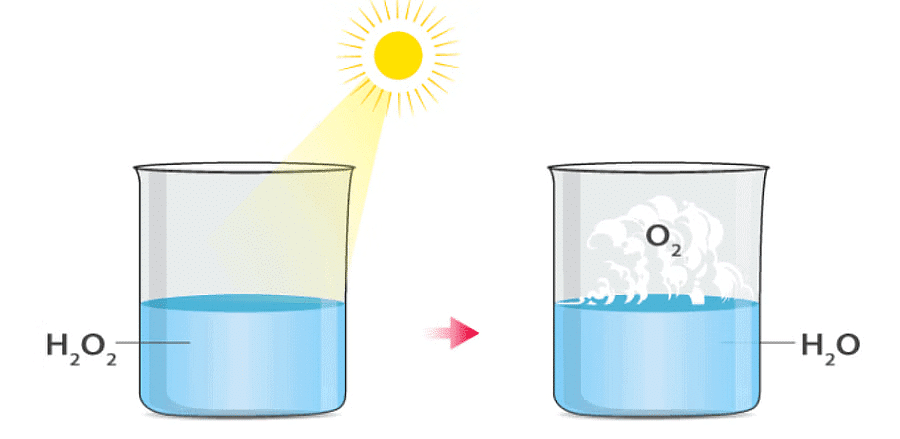 Photolytic Decomposition
Example: Photolytic Decomposition of Hydrogen Peroxide
Hydrogen Peroxide undergoes photolytic decomposition when exposed to sunlight, breaking down into water and oxygen gases:

This process is an example of photolytic decomposition, which is crucial in certain chemical reactions and can be influenced by light intensity.
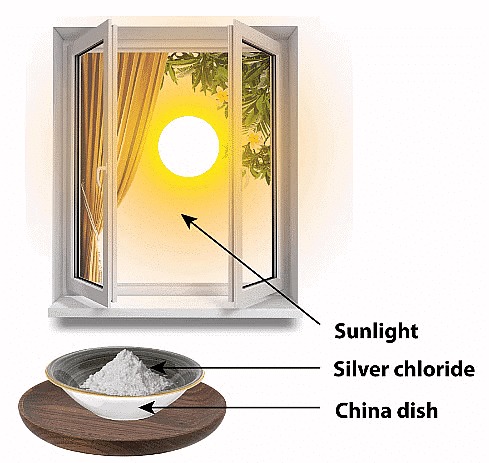
Example: Effect of sunlight on Silver Chloride

White silver chloride turns grey in sunlight. This occurs due to the decomposition of silver chloride into silver and chlorine when exposed to light.
Silver bromide also behaves in the same way. The above reactions are used in black and white photography.
(c) Electrolytic decomposition
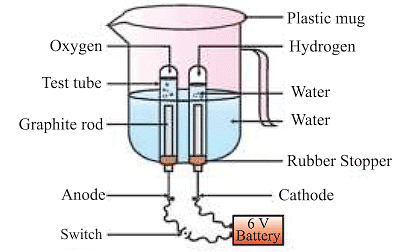
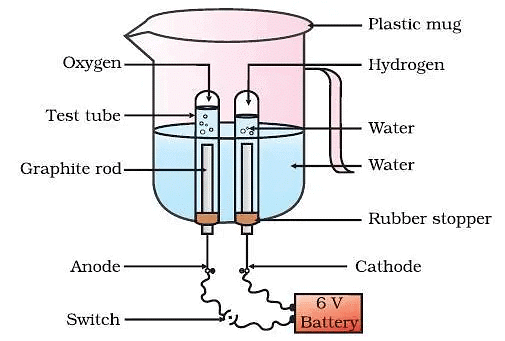
where electricity is necessary for the reaction. An example is the electrolytic decomposition of H2O. Electrolysis of water is the decomposition into oxygen and hydrogen gas due to an electric current passed through the water.

Note: What form of energy is causing these decomposition reactions?
Decomposition reactions need energy to break down the substances involved. This energy can come from heat, light, or electricity. These types of reactions, where energy is taken in rather than given off, are called endothermic reactions.
Let's Revise
Q: What happens when ferrous sulphate is heated?
Ans: It loses water and decomposes into ferric oxide, sulphur dioxide, and sulphur trioxide.
Q: Are decomposition reactions endothermic or exothermic? Why?
Ans: They are endothermic because they require energy input to break compounds.
3. Displacement Reaction
A displacement reaction is a chemical reaction in which a more reactive element displaces a less reactive element from its compound. Both metals and non-metals take part in displacement reactions.Some Important Reactions are:
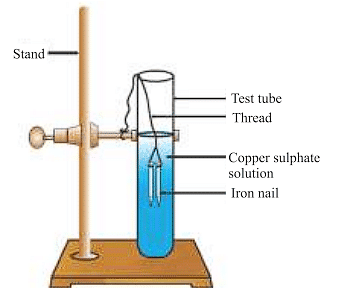
Reaction of iron nails with copper sulphate solution.
Fe (s) + CuSO4(aq) → FeSO4(aq) + Cu (s)
The iron nail becomes brownish in colour and the blue colour of copper sulphate solution fades. In this reaction, iron has displaced or removed another element, copper from the copper sulphate solution.
Other examples of displacement reactions are:
Zinc and lead are more reactive elements than copper. They displace copper from its compounds.
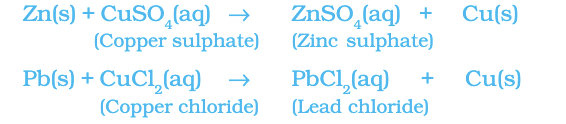
Try yourself: Which of the following is an example of a displacement reaction?
A displacement reaction occurs when one element replaces another in a compound. In this case:
- Zinc reacting with copper sulphate is a classic example, where zinc displaces copper from its compound.
- The other options do not fit the definition of a displacement reaction:
- Combustion of methane involves a chemical change but is not displacement.
- Photosynthesis in plants is a process of converting light energy into chemical energy, not displacement.
- Rusting of iron is an oxidation process and does not involve displacement.
Therefore, the correct example of a displacement reaction is when zinc reacts with copper sulphate.
4. Double Displacement Reaction
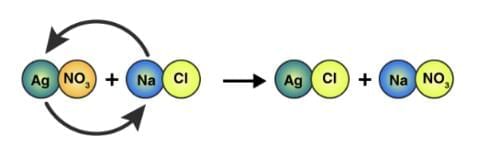
A double displacement reaction is a type of chemical reaction where two compounds react, and the positive ions (cation) and the negative ions (anion) of the two reactants switch places, forming two new compounds or products.Example: When the solution of barium chloride reacts with the solution of sodium sulphate, white precipitate of barium sulphate is formed along with sodium chloride.
Na2SO4 (aq) + BaCl2 (aq) → BaSO4 (s) + 2 NaCl (aq)
Note: Double Displacement Reaction, in which precipitate is formed, is also known as precipitation reaction. Neutralisation reactions are also examples of double displacement reactions
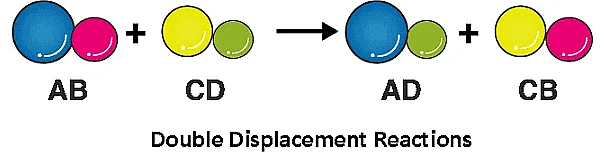
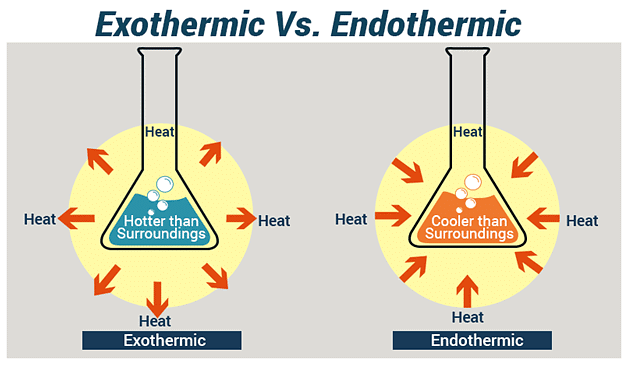
5. Endothermic and Exothermic Reaction
(i) Exothermic Reaction: An exothermic reaction is a type of chemical reaction in which energy is released from the reaction system into the surroundings, usually in the form of heat .
Example: Formation of Carbon dioxide
The chemical reaction can be depicted as:
C(s) + O2(g) → CO2(g) + Heat
(ii) Endothermic Reaction: An endothermic reaction is a type of chemical reaction in which energy is absorbed from the surroundings in the form of heat, light, or electricity.
Example: Photosynthesis
Plants absorb light energy from sunlight to convert carbon dioxide and water into glucose and oxygen.
Reaction as: 6CO2 + 6H2O → C6H12O6 + 6O2
Try yourself: Select the appropriate state symbols of the products given as X and Y in the following chemical equation by choosing the correct option from table given below:Zn(s) + H2SO4(aq) → ZnSO4(X) + H2(Y)
- Zn(s): Zinc is a solid metal.
- H2SO4(aq): Sulfuric acid is an aqueous solution.
- ZnSO4(X): Zinc sulfate is an aqueous solution (aq)
- H2(Y): Hydrogen gas is a gas (g).
- It is type of a displacement reaction
6. Oxidation and Reduction
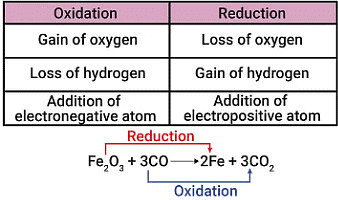
A redox reaction happens when there is a change in the oxidation states of the substances involved. Oxidation is the loss of electrons or an increase in the oxidation state of a substance or its atoms, while reduction is the gain of electrons or a decrease in the oxidation state of a substance or its atoms.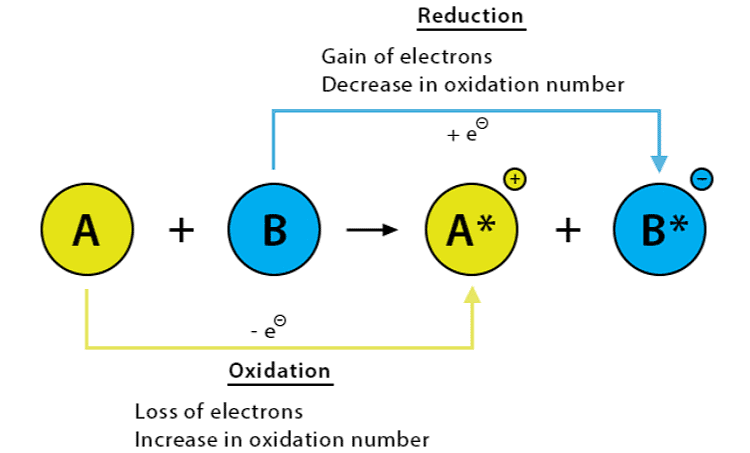
(i) Oxidation is the process in which an atom, ion, or molecule loses one or more electrons. During oxidation, the oxidation state of the atom or molecule increases, since it becomes more positive or less negative.
Some examples of oxidation include the reaction of iron with oxygen to form rust and the reaction of glucose with oxygen in cellular respiration.
(ii) Reduction is the opposite process of oxidation, in which an atom, ion, or molecule gains one or more electrons.
Some examples of reduction include the reaction of silver ions with electrons to form silver metal, and the reaction of hydrogen ions with electrons to form hydrogen gas.
Oxidation of Copper to Copper Oxide
The surface of copper powder becomes coated with black copper(ll) oxide because oxygen is added to copper and copper oxide is formed. If hydrogen gas is passed over this heated material (CuO), the black coating on the surface turns brown as the reverse reaction takes place, and copper is obtained. During this reaction, the copper(ll) oxide loses oxygen and is reduced. The hydrogen gets oxygen and is oxidized.
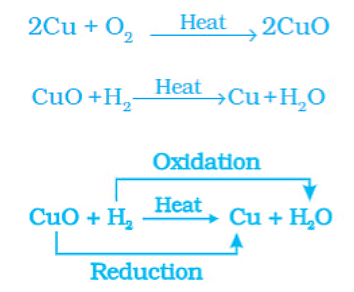
Examples:
ZnO + C → Zn + CO
MnO2 + 4HCl → MnCl2 + 2H2O + Cl2
Try yourself: Which of the following statements is true about oxidation reactions?
Oxidation reactions refer to the process where substances lose electrons. The following points clarify the true nature of oxidation:
- Oxidation is defined as the gain of oxygen atoms.
- It can also involve the loss of electrons or an increase in oxidation state.
- Reduction is the opposite, characterised by the loss of oxygen atoms or gain of electrons.
- Both oxidation and reduction must occur simultaneously in a chemical reaction.
Therefore, Correct Answer - Option B
- Oxidation and reduction always occur together in a chemical reaction and are often referred to as redox reactions.
- In a redox reaction, one substance is oxidized while another substance is reduced. The substance that is oxidized is called the reducing agent.
- It causes the reduction of another substance by donating electrons. The substance that is reduced is called the oxidizing agent. It causes the oxidation of another substance by accepting electrons.
- Example: In the reaction between zinc metal and hydrochloric acid, zinc is oxidized to form zinc ions, while hydrogen ions are reduced to form hydrogen gas:
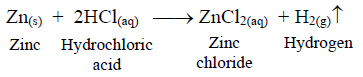
Zn(s) + 2HCl(aq) → ZnCl2(aq) + H2(g) - In this reaction, zinc is the reducing agent and HCl acts as the oxidizing agent..
Have You Observed the Effects of Oxidation Reaction in Everyday Life?
1. Corrosion
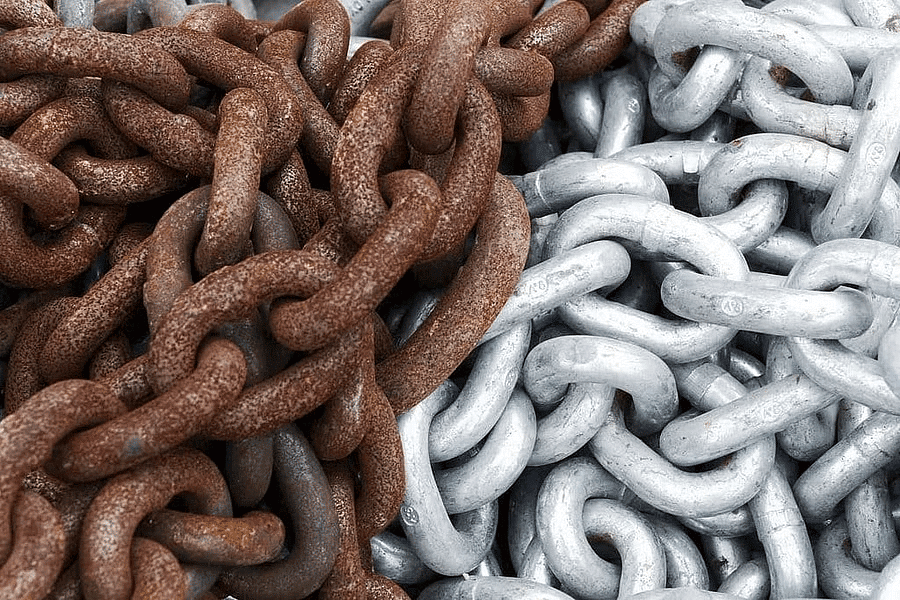
- Numerous metals, prone to chemical activity, easily react with moisture, oxygen, and acids. Iron, for example, starts as shiny but eventually rusts, forming a reddish-brown powder due to oxidation.
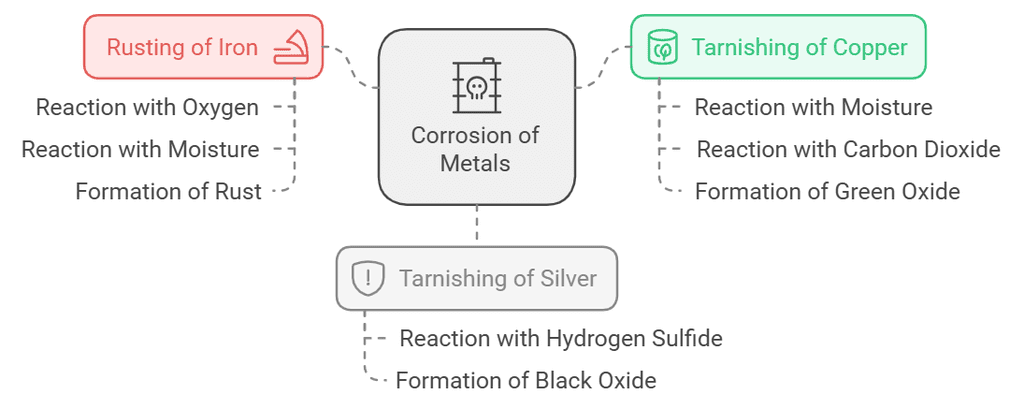
- Metals, like iron, face corrosion as their oxides don't firmly attach, causing flaking, structural weakening, and breakdown. The process of metal deterioration due to environmental substances is called corrosion.
- Copper and silver items tarnish when exposed to air and water. Copper develops a green oxide layer, while silver acquires a black oxide covering. These oxide formations act as barriers, limiting further exposure and reducing corrosion.
- Rusting:
4Fe(s) + 3O2(from air) + xH2O(moisture) → 2Fe2O3.xH2O(rust)
Corrosion of copper:
Cu(s) + H2O(moisture) + CO2(from air) → CuCO3.Cu(OH)2(green)Corrosion of silver:
2Ag(s) + H2S (from air) → Ag2S(black) + H2(g)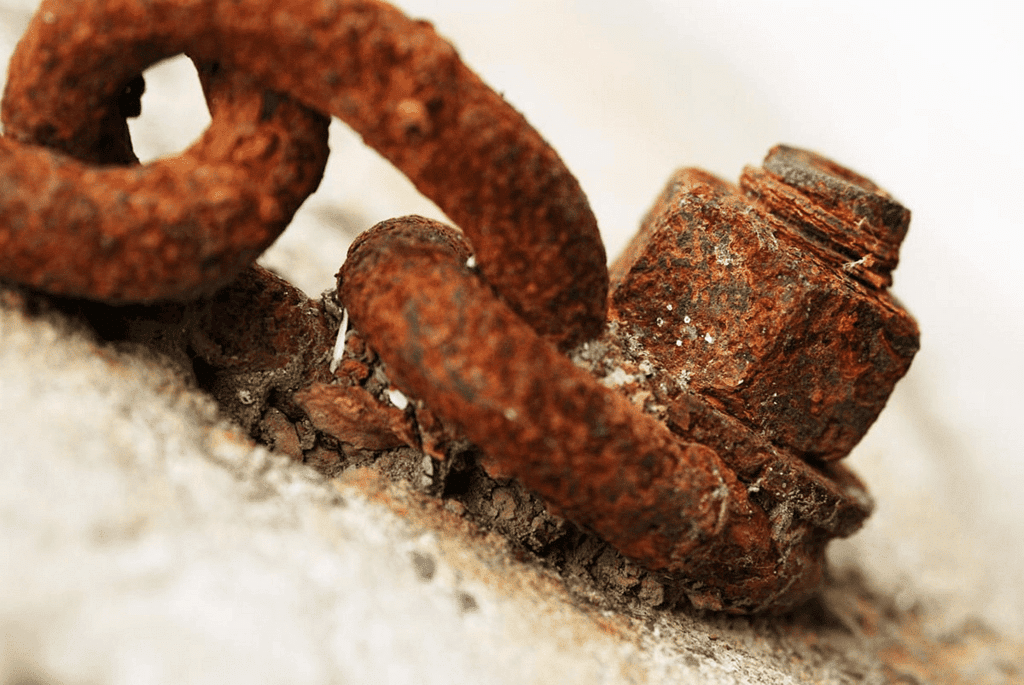 Rusting
2. Rancidity
- The taste and odour of food materials containing fat and oil change when they are left exposed to air for a long time. This is called rancidity. It is caused by the oxidation of fats and oils present in food materials.
- Prevention:
(i) Seal food in air-tight containers.
(ii) Employ nitrogen packaging.
(iii) Store in refrigeration.
(iv) Add antioxidants or preservatives.
Let's Revise
Q: What roles do zinc and hydrochloric acid play in the redox reaction Zn(s) + 2HCl(aq) → ZnCl2(aq) + H2(g)?
Ans: Zinc is the reducing agent (oxidized to Zn²⁺), and hydrochloric acid is the oxidizing agent (H⁺ reduced to H₂).
Q: What is the primary cause of rancidity in food containing fats and oils?
Ans: Oxidation of fats and oils when exposed to air.
Short Answer Questions: Chemical Reactions & Equations
Q1: What is a Chemical Reaction?
Ans: A chemical reaction refers to the process that leads to the transformation of one set of chemical substances into another.
A Chemical Reaction
It involves the making or breaking of bonds between atoms, ions, or molecules. During a chemical reaction, reactants are transformed into products. For instance, when iron rusts, the iron (reactant) reacts with oxygen to form iron oxide (product).Reaction: Rusting of Iron
Q2: What is a balanced chemical equation? Why is it necessary to balance a chemical equation?
Ans: A balanced chemical equation is one in which the number of atoms involved on the reactant side is equal to the number of atoms on the product side. This is based on the law of conservation of mass which states that matter cannot be created or destroyed. For example, the balanced chemical equation for the reaction between nitrogen and hydrogen to form ammonia is N2 + 3H2 → 2NH3.
A Balanced Chemical Equation
Need to Balance a Chemical Equation:
- Balancing a chemical equation is essential because it follows the Law of Conservation of Mass, which states that the total number of atoms of each element in the reactants must be equal to the total number of atoms of that element in the products.
- This law implies that the number of atoms for each element on the reactant side should be the same as the number of atoms for that element on the product side.
- Without balance, the chemical equation may incorrectly represent the actual reaction, leading to inaccurate predictions about the quantities of reactants needed or products formed.
Q3: What is the method of balancing chemical equations?
Ans: The hit-and-trial method is used to balance simple chemical equations. In this method, coefficients before the symbols/formulae of the reactants and products are adjusted in such a way that the total number of atoms of each element on both sides becomes equal.
For example, consider the unbalanced equation
H2 + O2 → H2O
Here, there are 2 H atoms on the left and only 1 on the right, and 2 O atoms on the left but only 1 on the right. By adjusting coefficients, we get the balanced equation as
2H2 + O2 → 2H2O
Now, there are 4 H atoms and 2 O atoms on both sides.
Q4: What are the characteristics of chemical reactions?
Ans: Characteristics of chemical reactions are as follows:
(i) Evolution of a gas
(ii) Formation of a precipitate
(iii) Change in color
(iv) Change in temperature
(v) Change in the state.
Q5: What is a Precipitation reaction? Give an example.
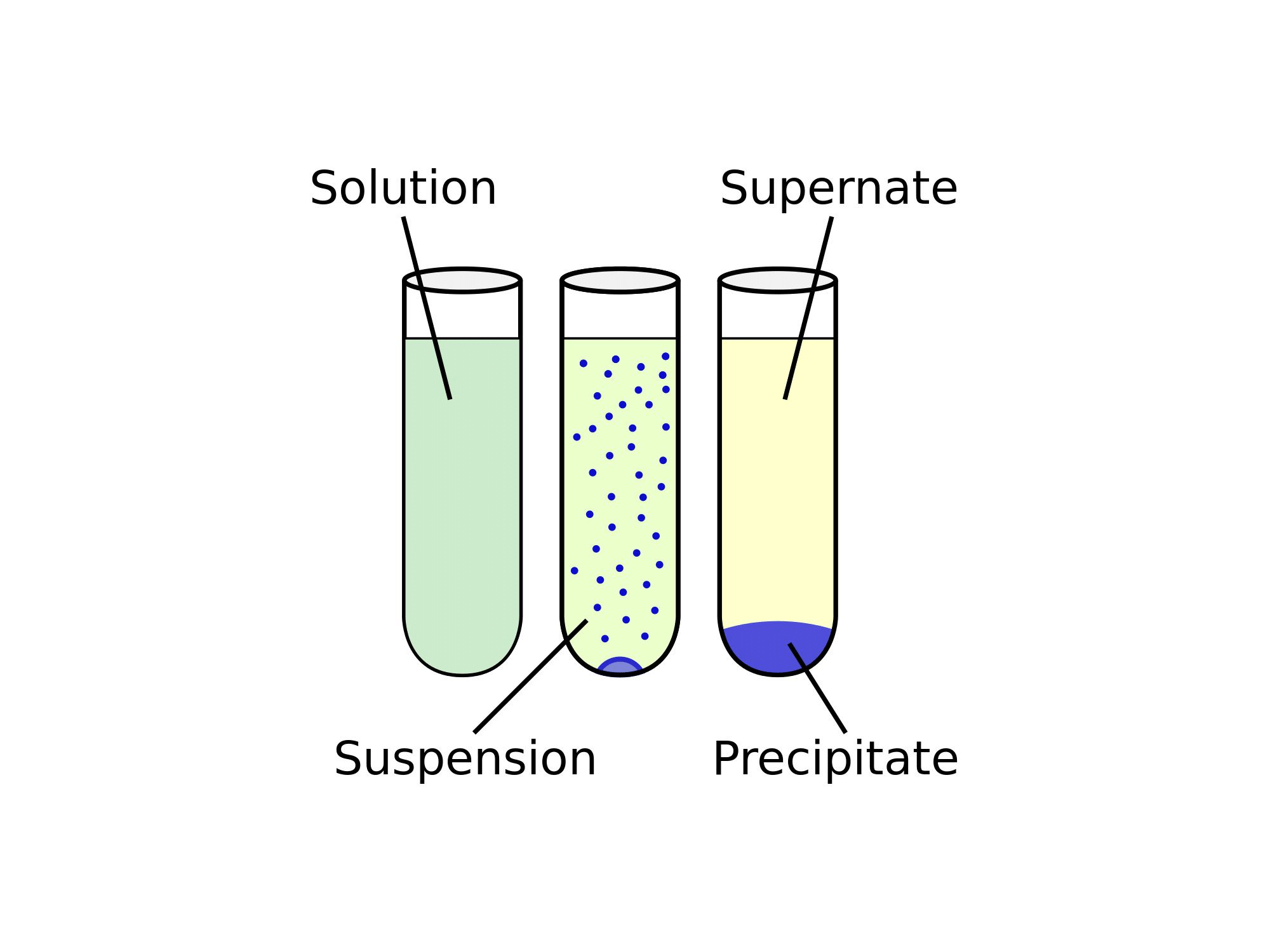
Ans: A precipitation reaction is a type of chemical reaction where two soluble salts in aqueous solution combine to form an insoluble salt (precipitate). This precipitate can be separated from the solution by filtration.
For example, when solutions of silver nitrate and sodium chloride are mixed, a white insoluble salt, silver chloride (AgCl), precipitates out of the solution:
AgNO3(aq) + NaCl(aq) → AgCl(s) + NaNO3(aq).
Q6: What is a redox reaction?
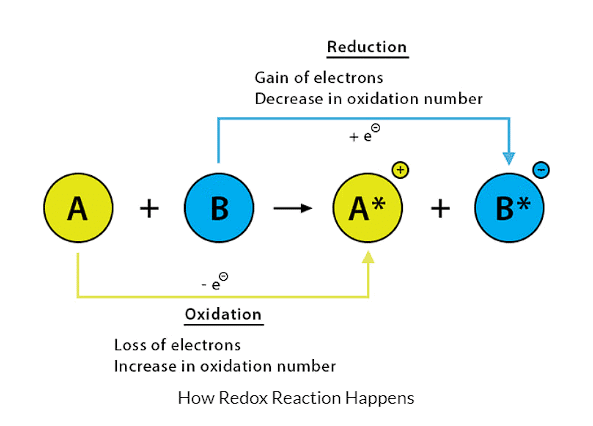
Ans: A redox (reduction-oxidation) reaction is type of chemical reaction that involves the transfer of electrons between two species. Redox reactions are of two types:
(i) Oxidation
(ii) Reduction
An oxidation reaction is one in which a substance loses electrons, while a reduction reaction is one in which a substance gains electrons. For example, in the reaction between hydrogen and oxygen to form water, hydrogen is oxidized (loses electrons) and oxygen is reduced (gains electrons): 2H2 + O2 → 2H2O.
Example: Formation of Water
- Hydrogen (H₂) is oxidized because it loses electrons:H2→ 2H+ + 2e-
- Oxygen (O₂) is reduced because it gains electrons:
- These ions combine to form water (H2O).
Q7: In the equations given below, state giving reasons, for whether substances have been oxidized or reduced.
(i) PbO + CO → Pb + CO2
(ii) H2S + Cl2 → 2HCl + S
Ans:
(i) In this reaction, carbon monoxide (CO) is oxidized because it gains oxygen to form carbon dioxide (CO₂).
Lead oxide (PbO) is reduced to lead (Pb) because it loses oxygen. The reaction can be broken down into half-reactions to illustrate electron transfer:
Reduction (Gain of electrons):
PbO + 2e⁻ → Pb + O²⁻
(Lead oxide is reduced to lead)Oxidation (Loss of electrons):
CO + O²⁻ → CO₂ + 2e⁻
(Carbon monoxide is oxidized to carbon dioxide)
In this reaction:- PbO acts as the oxidizing agent because it accepts electrons, which leads to the oxidation of CO.
- CO acts as the reducing agent because it donates electrons, causing reduction of PbO.
(ii) In this reaction, hydrogen sulfide (H₂S) is oxidized to sulfur (S) because it loses hydrogen.
Chlorine (Cl₂) is reduced to hydrogen chloride (HCl) because it gains electrons. The half-reactions for this process are:
Oxidation (Loss of electrons):
H₂S → S + 2H⁺ + 2e⁻
(Hydrogen sulfide is oxidized to sulfur)Reduction (Gain of electrons):
Cl₂ + 2e⁻ → 2Cl⁻
(Chlorine is reduced to chloride ions, forming hydrochloric acid)In this reaction:
- Cl₂ acts as the oxidizing agent because it accepts electrons, causing oxidation of H₂S.
- H₂S acts as the reducing agent because it donates electrons, causing reduction of Cl₂.
Q8: What are the different ways that can make chemical equations more informative
Ans: Chemical equations can be made more informative by:-
(i) By indicating the physical states of the reactants and products. Example: Gaseous state is indicated by the symbol (g).
Zn(s) + H2SO4(aq) → ZnSO4(aq) + H2(g)(ii) By indicating the heat changes that take place in the reaction. For example: An exothermic reaction is indicated by writing "Heat" or "Heat energy" or "Energy" on the products side of an equation.
C(s) + O2(g) → CO2(g) + Heat(iii) By indicating the "conditions" under which the reaction takes place.
Q9: A sample of water weed was placed in water and exposed to sunlight. Bubbles of gas are seen on the surface of the leaves.
(i) Name the gas evolved.
(ii) Name the process taking place.
(iii) Write a balanced equation of reaction taking place.
Ans:
(i) Oxygen
(ii) Photosynthesis
(iii) Carbon Dioxide + Water→Glucose + Oxygen
that means,
6CO2 + 6H2O → C6H12O6 + 6O2Explanation in detail:
- Photosynthesis is the process in which plants use carbon dioxide and water to form glucose in the presence of energy from the sunlight and release oxygen alongside the glucose molecule.
- 6CO2 + 6H2O → C6H12O6 + 6O2
- As the oxygen is evolved in the process, the bubbles of gas seen on the surface of leaves are of oxygen.
- Photosynthesis occurs in plants having chloroplasts.
Q10: Give balanced equations, wherever possible, or where this is not possible, explain the following by means of examples:
(i) A reaction which gives out heat.
(ii) A reaction that takes place with the help of sunlight.
(iii) A reaction that is brought about by the electric current.
(iv) A reversible reaction.
(v) A reaction with a solid and gas that produces heat.
Ans:
(i) Coke on heating in air, catches fire and liberates a large amount of heat.
C + O2 → CO2 + Heat
(ii) Carbon dioxide and water react in the presence of chlorophyll and sunlight to form glucose and oxygen.
6CO2 + 6H2O → C6H12O6 + 6O2
(iii) Molten lead bromide decomposes into lead metal and bromide on the passage of electric current.
PbBr2 → Pb + Br2
(iv) The reaction between red hot iron and steam is reversible.
3Fe + 4H2O ⇌ Fe3O4 + 4H2
(v) When magnesium burns in air or oxygen it liberates a large amount of heat.
2Mg + O2 → 2MgO + Heat.
Q11: Balance the following chemical equations:
(i) Mg + N2 → Mg3N2
(ii) KClO3 → KCI + O2
Ans:
(i) Mg + N2 → Mg3N2
Balance equation:- The number of atoms of each type in the reaction is the same on both reactants and the product sides is called a balance equation.
According to the question,
Consider the given equation as follows:
Mg + N2 → Mg3N2
Since the left-hand side is called the reactant side. The right-hand side is called the product side.
On the reactant side,
The number of atoms of Mg and n are 1 and 2 respectively.
On the product side,
The number of atoms of Mg and n are 3 and 2 respectively.
To balance the equation,
Multiply Mg by 3, we get
3Mg + N2 ⇒ Mg3N2
This implies that the number of atoms on both sides are equal.(ii) KClO3 → KCl + 3O2.
KClO3 → KCl + O2
Multiply oxygen by 3
KClO3 → KCl + 3O2
Multiply KClO3 by 2
2KClO3 → KCl + 3O2
Multiply KCl by 2
2KClO3 → 2KCl + 3O2
Hence, equation balanced
Try yourself: Q15: Which of the following is a balanced chemical equation?
- A balanced chemical equation is one in which the number of atoms involved on the reactant side is equal to the number of atoms on the product side.
- In Option A, there are 4 hydrogen atoms on the reactant side and only 2 on the product side, so it is not balanced.
- In Option B, there are 2 hydrogen atoms on the reactant side and only 1 on the product side, so it is not balanced.
- In Option C, there are 4 hydrogen atoms and 2 oxygen atoms on both sides, so it is balanced.
- In Option D, there are 2 hydrogen atoms on the reactant side and 4 on the product side, so it is not balanced.
- Therefore, Option C is the correct answer as it represents a balanced chemical equation.
Q12: Write the uses of decomposition reactions.
Ans:
A decomposition reaction is a type of chemical reaction in which a single compound breaks down into two or more simpler substances. It usually occurs under the influence of heat, light, or electricity.
Examples of Decomposition Reactions:
Thermal Decomposition (Heat-driven)
CaCO3 → CaO+CO2(Calcium carbonate decomposes into calcium oxide and carbon dioxide.)
- Metal Extraction: They play a vital role in extracting metals like aluminum, sodium, and potassium from their compounds in ores through processes like electrolysis.
- Chemical Synthesis: Decomposition reactions are employed to create specific chemicals and compounds by breaking down complex substances.
- Environmental Applications: In waste treatment and pollution control, decomposition reactions help break down harmful substances into less toxic forms.
- Food Preparation: Baking soda (sodium bicarbonate) decomposes to release carbon dioxide, making dough rise in baking.
- Explosives: Decomposition reactions are involved in explosive devices, releasing energy rapidly.
Q13: What do you understand by the term corrosion?
Ans: Corrosion is when metals like iron, copper, or silver slowly get damaged because of things around them like water or acids. For example, when a new iron object is left outside, it starts to turn reddish-brown, which we call rust. This happens because the metal is reacting with air and water.Other metals like silver might turn black, and copper might turn green. These color changes show that the metal is getting damaged. Corrosion is a problem because it can ruin things like cars, bridges, and fences, making them weak and unsafe.
Q14: Can rancidity retard by storing foods away from the light?
Ans: Rancidity is a process whereby food products, particularly those containing fats and oils, deteriorate in quality, leading to unpleasant smells and tastes. This occurs when the fats and oils within the food oxidize over time. If food is stored away from light, this oxidation process slows down, which retards the development of rancidity. Thus, proper storage can significantly delay the onset of this undesirable characteristic.
Example: Oil becomes rancid (rancid oil) because of the decomposition of fats it has, or sometimes milk becomes rancid due to bacterial growth, etc.
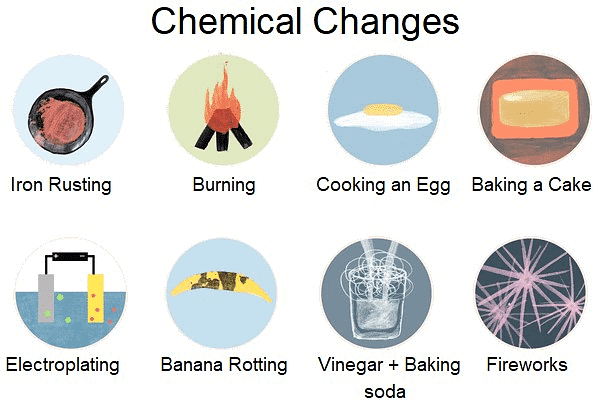
Chemical Change
A chemical change happens when any two substances interact with each other by gaining, sharing, or donating electrons.
- Whenever a chemical change occurs, we say that a chemical reaction has taken place. For example, cooking of food, respiration, digestion of food, and exposure of iron to the humid atmosphere.
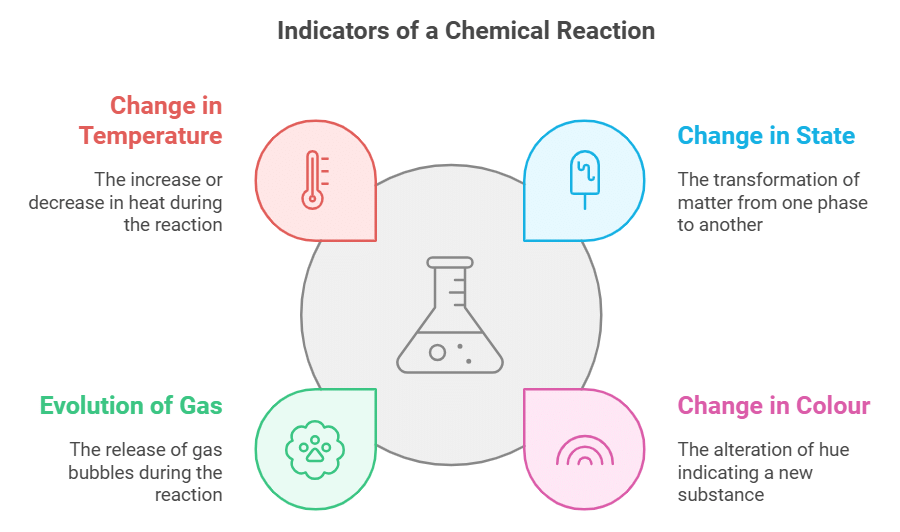
- Chemical change involves the change of state, change of colour, the evolution of gas, or change of temperature.
 Examples of Chemical Change
Let's do some activities to understand chemical reactions better.
Activity 1
Aim: Perform an activity to show that a chemical reaction has taken place (change in state and change in colour).
Materials Required: Magnesium ribbon, Sandpaper, Tongs, Spirit lamp or burner, Watch-glass, Suitable eyeglasses
Procedure: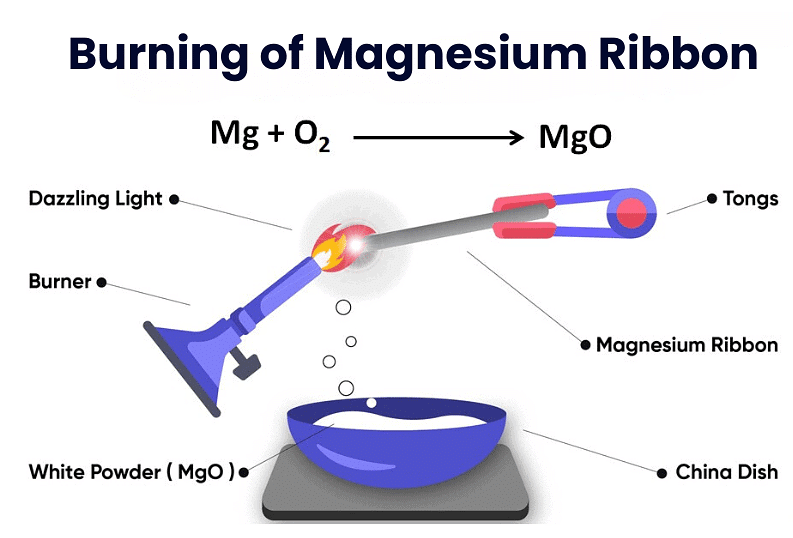 (i) Clean a magnesium ribbon about 3-4 cm long by rubbing it with sandpaper.
(ii) Hold it with a pair of tongs.
(iii) Burn it using a spirit lamp or burner and collect the ash so formed in a china dish as shown in the Figure above.
(iv) Burn the magnesium ribbon keeping it away as far as possible from your eyes.
Result:
As the magnesium ribbon burns, you will observe a dazzling white flame and the ribbon will change into a white powder, which is the magnesium oxide. This activity shows that a chemical reaction has taken place as there is a change of state of the magnesium ribbon.
Try yourself: Which of the following is an example of a chemical change?
When the magnesium ribbon burns and changes into magnesium oxide, it is an example of a chemical change because it involves a chemical reaction that results in the formation of a new substance with different properties.
During the process of burning, the magnesium ribbon reacts with oxygen in the air to form magnesium oxide. The state of magnesium changes from magnesium to magnesium oxide.
Activity 2
Aim: Perform an activity to show that a chemical reaction has taken place (evolution of a gas and change of temperature).
Materials Required: Conical flask (250 mL), cork, glass tube, zinc granules, dilute sulphuric acid.
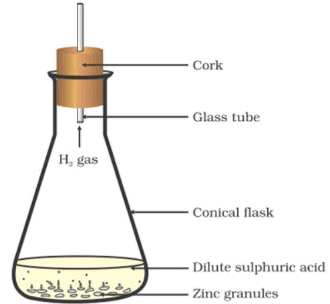
Procedure:
(i) Set up the apparatus as shown in the above figure.
(ii) Remove the cork and glass tube. Place some dilute sulphuric acid into it.
(iii) Add a few small granules of zinc and immediately close the flask with the cork.
We observe that hydrogen gas is evolved which is indicated by the bubbles.
On touching the flask, we find that it is hotter now than before.
Result:
This activity shows that a chemical reaction has taken place. Before mixing the sulphuric acid and granules of zinc there were no fumes and the flask was at room temperature. But after following all the procedures given, some changes happened and that is the hotter flask than before and bubbles of hydrogen are seen. Thus, there is the evolution of gas and a temperature change.
Chemical Equations
The description of a chemical reaction in a short form is called a chemical equation. Chemical equations make use of symbols to represent factors such as the direction of the reaction and the physical states of the reacting entities.
For example:
- In the above example, when magnesium and oxygen come into contact and undergo a chemical reaction, they are referred to as reactants. The resulting substance that is formed as a result of this reaction is called the product, specifically magnesium oxide.
- The reactants are written on the left-hand side (LHS) with a plus sign between them.
- Similarly, the products are written on the right-hand side (RHS) with a plus sign between them.
- The arrowhead points towards the product and shows the direction of the reaction.
Writing a Chemical Equation
Skeletal Chemical Equations
A chemical equation written in the form of symbols and formulae is called a skeletal chemical equation. Such an equation may not be balanced.
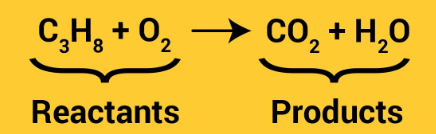 Skeletal chemical equationIn the above equations, there are three carbon atoms on the LHS while there is only one carbon atom on RHS hence, this equation is not balanced, now let's see some Balanced chemical equations.
Balanced Chemical Equations
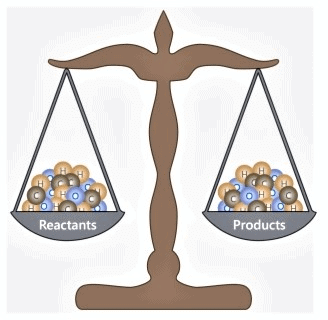 No. of atoms on both sides should be equal
A chemical equation in which the number of atoms of each element on LHS and RHS is equal is called a balanced chemical equation.
Example: Zn + H2SO4 → ZnSO4 + H2
This is a balanced equation because the number of atoms of Zn, H, S, and O is equal on the reactant (LHS) and product (RHS) sides.
Try yourself: What is a balanced chemical equation?
A balanced chemical equation is an equation in which the number of atoms of each element on the left-hand side (LHS) and right-hand side (RHS) is equal. This means that the equation is balanced in terms of mass and atoms.
Balancing of Chemical Equation
Let us illustrate the balancing of the chemical equations by taking an example:
Example: Fe + H2O → Fe3O4 + H2
The following steps are involved:
- Step I - First of all, we see that number of Fe and O atoms on the reactant and product sides are different. So the equation needs to be balanced.
- Step II - Select the compound which has a maximum number of atoms. It may be a reactant or product. In that compound, select the element which has the maximum number of atoms. Using these criteria, we select Fe304 as the compound and oxygen as the element. There are four 0 atoms on RHS and one O atom on the LHS. Hence, multiply H2O(containing O) by four to balance O.
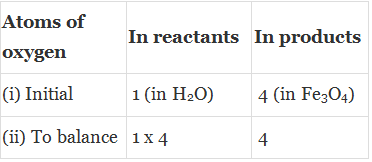 The partly balanced equation becomes:
Fe + 4H2O → Fe3O4 + H2 - Step III - Fe and H are still to be balanced. Take either now for balancing. Let us take H. There are eight H atoms on LHS and two H atoms on RHS. Multiply H2 by four to equalise H atoms.
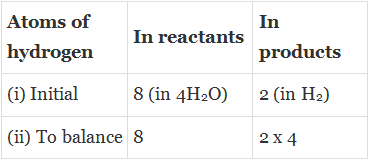 The equation would become:
Fe + 4H2O → Fe3O4 + H2 - Step IV - Fe is left to be balanced. There is one Fe atom on LHS and three Fe atoms on RHS. Multiply Fe on LHS by three to equalize
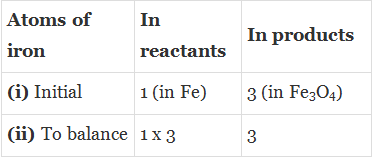 We can write the equation now as:
3Fe + 4H2O → Fe3O4 + H2 - Step V - Finally, we write the equation, after removing boxes and check whether it is balanced or not.
3Fe + 4H2O → Fe3O4 + 4H2
This method of balancing equations is known as the hit and trial method as we complete the balancing by making trials for different elements. - Step VI - Writing Symbols of Physical States. To make the equation more informative, we write the physical states of different substances on LHS and RHS. Thus,
3Fe(s) + 4H2O(g) → Fe3O4(s) + 4H2 (g) - Notations (s), (l) and (g) are used for solid, liquid and gaseous states respectively. In the above equation (g) after H2O means H2O is in the form of steam (gaseous), and (aq) is written for an aqueous solution.
- Sometimes the reaction conditions, such as temperature, pressure, catalysts, etc., for the reaction are indicated above and/or below the arrow in the equation. For example,

Types of Chemical Reactions
Chemical reactions involve breaking and making of bonds between atoms to produce new substances.
(i) Combination Reactions
A reaction in which a single product is formed from two or more reactants is called a combination reaction.
Example:
(i) Burning of coal C(s) + O2 (g) → CO2 (g)
(ii) Formation of water from H2 and O2. 2H2 (g) + O2 (g) → 2H2O (I)
Now, let's do an activity to understand the combination reaction a little more.
Activity 3
Aim: Perform an activity to illustrate a combination reaction.
Materials required: Beaker (500 mL ), water, calcium oxide ( quick lime).
Procedure:(i) Take a clean 500 mL Pyrex glass beaker.
(ii) Take about 50 g of quick lime in it.
(iii) Add about 100 ml water to it carefully.
(iv) Quick lime (calcium oxide) reacts vigorously with water to form a single product slaked lime Ca(OH)2 and a large amount of heat is evoked.
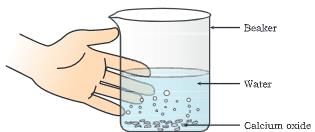
CaO (s) + H2O (l) → Ca(OH)2 (aq) + Heat
Some more examples of a combination reaction are: Burning of coal
C(s) + O2 (g) → CO2 (g)
Formation of water from H2 (g) and O2 (g)
2H2 (g) + O2 (g) → 2H2O (l)
Observations:
- When water is added to quick lime, a suspension of slaked lime is formed.
- On touching the beaker we feel it is hot.
- A clear solution appears as the suspension of slaked lime settles down to the bottom of the beaker.
- On blowing exhaled air that contains sufficient carbon dioxide, lime water turns milky.
Result:
- Quick lime reacts vigorously with water to produce slaked lime releasing a large amount of heat. So the reaction is highly exothermic.

- Slaked lime is only slightly soluble in water, so it forms a suspension of slaked lime in water.
- The clear solution obtained after the suspension settles is called lime water.
- Exhaled air contains CO2 which turns lime water milky.
- Calcium oxide and water react to form only a single product, calcium hydroxide. So the reaction is a combination reaction.
Interesting Fact:
White Washing of Buildings
A solution of slaked lime Ca(OH)2 is applied on the walls and roofs. After 2 or 3 days, slaked lime reacts with atmospheric carbon dioxide and it changes into calcium carbonate.
Ca(OH)2(aq) + CO2(g) → CaCO3(s) + H2O(l)
Calcium carbonate gives a shiny white finish to the walls.
(ii) Exothermic Reactions
Reactions which take place with the evolution of heat (increase of temperature) are called exothermic reactions.
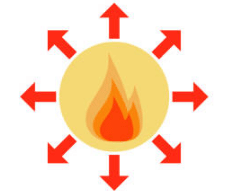 Evolution of heat in Exothermic reaction
Example: Burning of natural gas and respiration are exothermic reactions.
- CH4(g) + 2O2(g) → CO2(g) + 2H2O(g) (Burning of natural gas)
- C6H12O6(aq) + 6O2(g) → 6CO2(g) + 6H2O(l) (Respiration)
- The decomposition of vegetable matter into compost is also an exothermic reaction.
Try yourself: Which of the following reactions is an example of a combination reaction?
The correct answer is option C, CaO(s) + H2O(l) → Ca(OH)2(aq) + Heat. This is a combination reaction because a single product, calcium hydroxide, is formed from two reactants, calcium oxide and water.
(iii) Endothermic Reactions
Reactions which take place with absorption of heat (lowering of temperature) are called endothermic reactions.
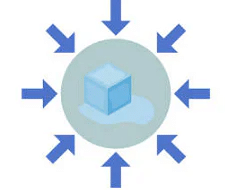 Absorption of heat in Endothermic reaction
Example:
- Melting of ice cubes.

- Evaporating liquid water.
(iv) Decomposition Reactions
When a single reactant breaks down to give simpler products, it is called a decomposition reaction. For example:
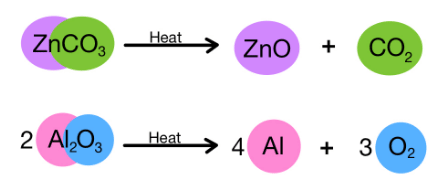
Let's do an activity to understand the decomposition reaction more.
Activity 4
Aim: Perform an activity to illustrate the decomposition reaction.
Materials required: Lead nitrate powder, boiling tube, test tube holder, burner.
Procedure:
(i) Take a clean Pyrex glass boiling tube.
(ii) Add to it about 2 g powdered lead nitrate.
(iii) Using a test tube holder or pair of tongs, heat the test tube on a Bunsen burner.
(iv) Note the change that takes place.
Observation: We observe that brown fumes are emitted from the test tube.
The following reaction takes place in this activity:
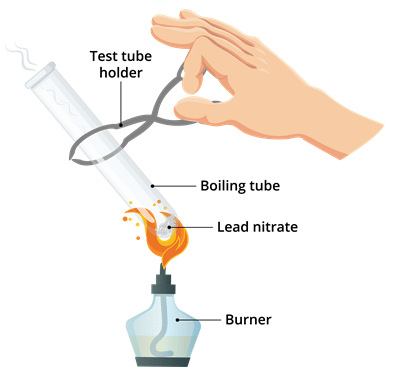

Result:
In the above reaction, lead nitrate breaks down into simpler products proving that this is the decomposition reaction.
Similarly, we can perform the activities of heating ferrous sulphate crystals and calcium carbonate to illustrate decomposition reactions.
Activity 5
Aim: Perform the electrolysis of water experiment to illustrate the decomposition reaction.
Materials required: A plastic mug, two graphite rods, two test tubes, a 6 V battery, a switch, two rubber stoppers, and sulphuric acid.
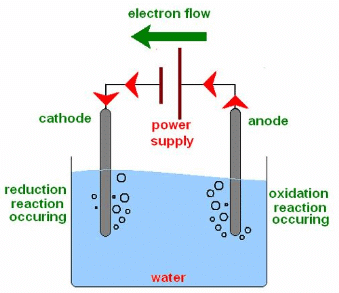 Electrolysis of Water
Procedure:
(i) Set up the apparatus as shown in Fig. above.
(ii) Fill the mug with water such that graphite rods are immersed. Add a few drops of sulphuric acid.
(iii) Connect the electrodes to a 6 V battery and switch on the current. Leave the apparatus undisturbed for some time.
(iv) Formation of bubbles at both electrodes will take place.
(v) The reaction that takes place is as follows:
2H2O (l) → 2H2 (g) + O2 (g)
Observation:
- Hydrogen gas is collected in the test tube over the cathode while oxygen gas is collected in the test tube over the anode.
- It is interesting to note that the volume of hydrogen collected is twice the volume of oxygen as explained by the above chemical equation.
- Hydrogen and oxygen gases can be identified as under: Bring a burning candle near the tube placed over the cathode. A pop sound is produced (hydrogen is a combustible gas).
- Again, bring the burning candle near the tube placed over the anode. The flame gets brighter (oxygen is a supporter of combustion).
Result: As we have seen in the reaction that water is converted into very simple products like hydrogen and oxygen hence it is a decomposition reaction.
Activity 6
Aim: Perform an activity (decomposition of silver salt) to illustrate the decomposition reaction.
Materials required: China dish, silver chloride.
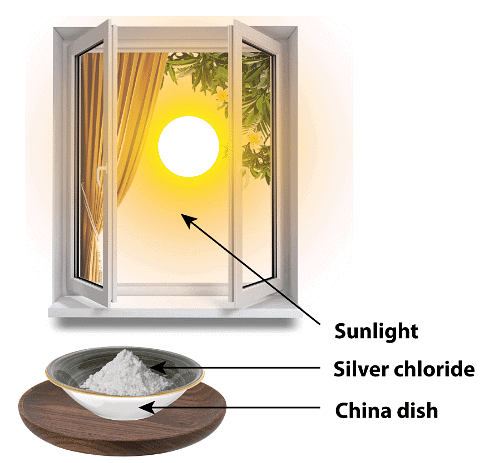
Procedure
(i) Take about 2 g silver chloride in a china dish (Fig. 1.6).
(ii) Place the china dish in sunlight for some time.
(iii) You will observe that silver chloride becomes grey after some time.
Observation:
Silver chloride becomes grey after some time because silver chloride undergoes decomposition by the action of sunlight (sunlight is also a form of energy).

Result:
As we have seen in the above reaction Silver chloride breaks down into simpler products like Silver and chlorine gas, hence proving that this is a decomposition reaction.
(v) Displacement Reaction
A reaction in which one substance displaces another from the aqueous solution is called displacement reaction.
A general reaction of this type may be represented as:
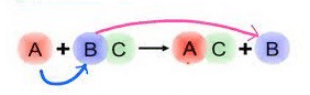
Thus C has displaced B in the above reaction.
Activity 7
Aim: Perform an activity to illustrate displacement reaction.
Materials required: Test tube, thread, stand with clamp, copper sulphate solution, iron nails.
Procedure:
(i) Take three iron nails and clean them by rubbing them with sandpaper.
(ii) Take two test tubes. Mark them A and B. In each test tube take about 10 mL of copper sulphate solution.
(iii) Tie two nails with a thread and immerse them in the copper sulphate solution in test tube B for about 20 minutes Fig. 1.7(a).
Keep one nail aside for comparison.
(iv) Take out the iron nails from the copper sulphate solution in test tube B.
(v) Compare the colour of the copper sulphate solution in the two test tubes.
Observation:
- It will be observed that the intensity of the blue colour has decreased in test tube B compared to that in test tube A.
- Also, compare the colours on the nails. It will be seen that the nail removed from the copper sulphate solution has a brown coating of Cu on it.
- The following reaction takes place in the above experiment:

- Iron is more reactive than copper. It displaces copper from the solution of copper salt.
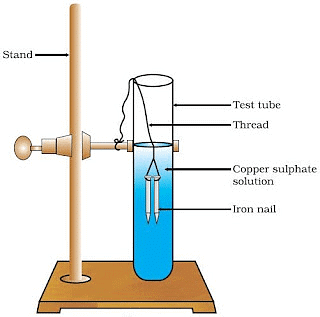 Iron nails dipped in copper sulphate solution
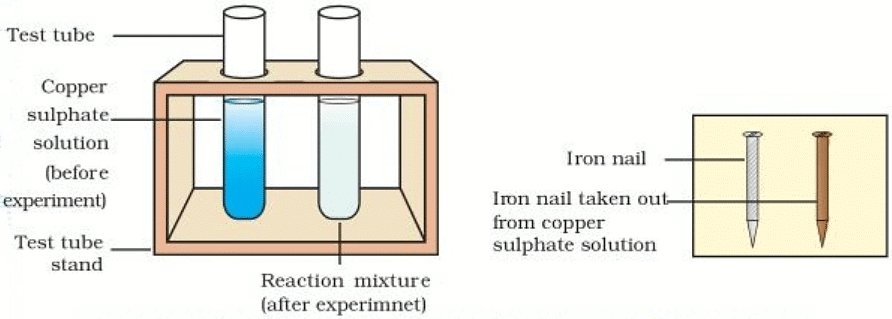 Iron nails and copper sulphate solutions compared before and after the experiment
- Similarly, we can experiment using zinc or lead in place of Cu. Both Zn and Pb are more reactive than Cu.
- Zinc and lead displace copper from the solution of CuSO4 as per the following equations:
Zn(s) + CuSO4(aq) → ZnSO4(aq) + Cu(s)
Pb(s) + CuSO4(aq) → PbSO4(aq) + Cu(s)
Copper which is displaced gets deposited on zinc or lead as the brown coating.
Try yourself: What is a displacement reaction?
In displacement reactions, one substance displaces another from a compound in a solution. The displaced element takes the place of the element it is displacing in the compound.
(vi) Double Displacement Reaction
Reactions in which there is an exchange of ions between the reactants are called double displacement reactions.
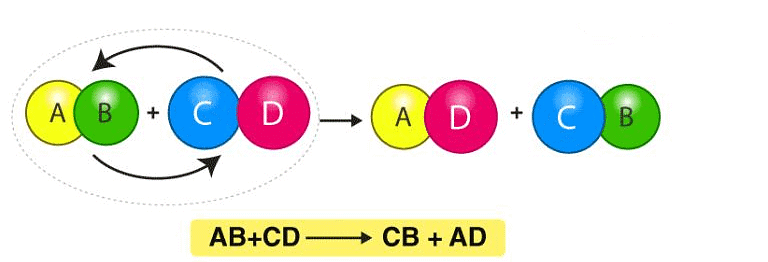
Activity 8
Aim: Perform an activity to illustrate a double displacement reaction.
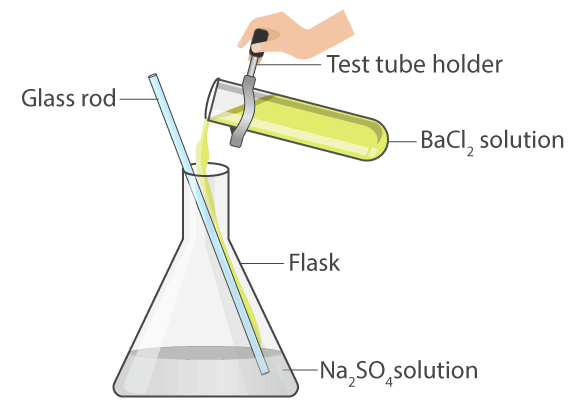
Materials required: Two test tubes, sodium sulphate solution, and barium chloride solution.
Procedure:
(i) Take two 20 mL clean test tubes.
(ii) Take 5 mL barium chloride solution in one test tube and 5 mL sodium sulphate solution in the other test tube.
(iii) Add sodium sulphate solution to the test tube containing barium chloride solution as shown in Fig. 1.8.
Observation:
- It will be observed that a white precipitate of barium sulphate is formed as a result of the exchange of ions between the two substances.
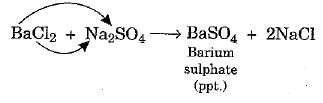
- Any reaction that produces a precipitate can be called a precipitation reaction.
- Similarly, we can carry out the reaction between lead nitrate and potassium iodide by mixing their aqueous solutions to illustrate a double decomposition reaction.
(vii) Oxidation and Reduction
Reactions in which a substance gains oxygen or loses hydrogen is called an oxidation reaction.
Similarly, a reaction in which a substance loses oxygen or gains hydrogen is called a reduction reaction.
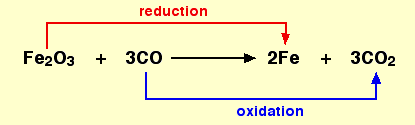
- If a substance gains oxygen during a reaction, it is said to be oxidised. Similarly, if a substance loses oxygen during a reaction, it is said to be reduced.
- One reactant gets oxidised while the other gets reduced during a reaction. Such reactions are called reduction-oxidation reactions or redox reactions.
Activity 9
Aim: Perform an activity to illustrate oxidation.
Materials required: China dish, copper powder, wire gauze, tripod stand, burner.
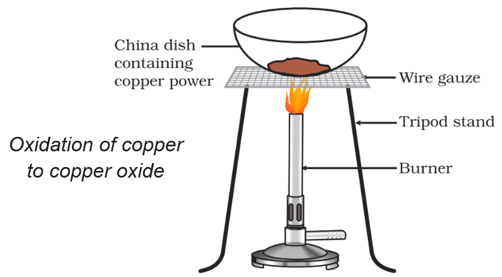
Procedure:
(i) Take about 2 g copper powder in a clean china dish (Fig.1.9)
(ii) Place it on a wire gauze supported on a tripod stand.
(iii) Heat it for about 15 minutes.
Observation:
- It will be observed that copper powder becomes black because of the formation of copper oxide (oxidation).

- We say that copper has been oxidised to copper oxide. Now, if we pass hydrogen gas over heated CuO, we obtain Cu (Brown colour) back. This is because CuO has been reduced to Cu.
CuO + H2 → Cu + H2O - It may be schematically represented as under:
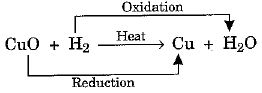
- Some other examples of redox reactions are:
ZnO + C → Zn + CO
MnO2 + 4HCl → MnCl2 + 2H2O + Cl2
The Effects of Oxidation and Reduction Reaction in Everyday Life
(i) CorrosionWhen a metal is attacked by substances around it such as moisture, acids, etc., it is said to corrode and this process is known as corrosion.
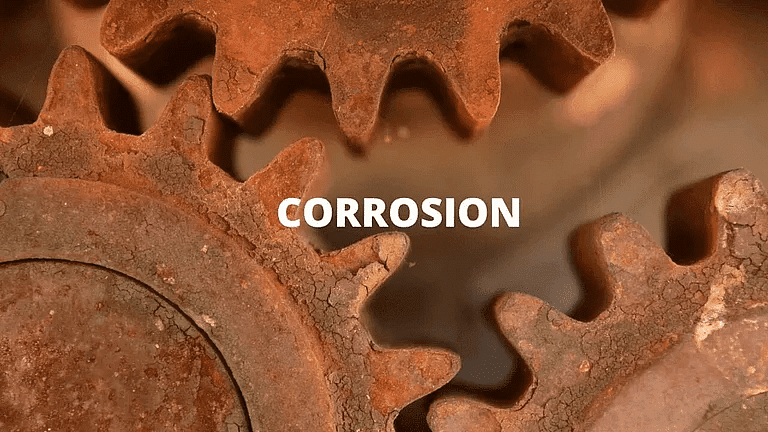
- Iron articles are shiny when new. But with time, they get coated with a reddish-brown powder called rust. Silver articles become black and copper articles become green on the surface due to corrosion.
- Corrosion causes damage to car bodies, bridges, iron railings, ships, etc.
(ii) Rancidity
When fats and oils are oxidised (or kept in open for some days), their smell and taste changes. We say that they have gone rancid. This phenomenon is called rancidity.
 Rancidity
Try yourself: What causes rancidity in oils and fats?
Rancidity occurs when oils and fats are exposed to air and undergo oxidation. This causes the formation of unpleasant odours and flavours, which can make the food inedible. To prevent rancidity, antioxidants are added to foods containing oils and fats, and they work by inhibiting the oxidation process. Therefore, option B is the correct answer.
- Antioxidants are added to foods containing oils and fats to prevent rancidity. The antioxidant substances that are added to food are preferentially oxidised and thus they prevent the oxidation of foods.
- Keeping food in air-tight containers helps to slow down oxidation. Chips manufacturers flush bags of chips with nitrogen to prevent chips from getting oxidised.
Important Equations and Definitions: Chemical Reactions and Equations
Chemical Equations
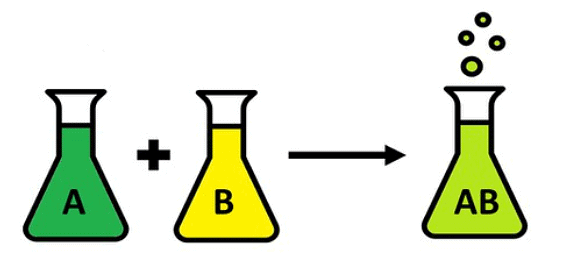
A + B → C + D
In this example, A and B are the reactants, which react to form the products C and D.
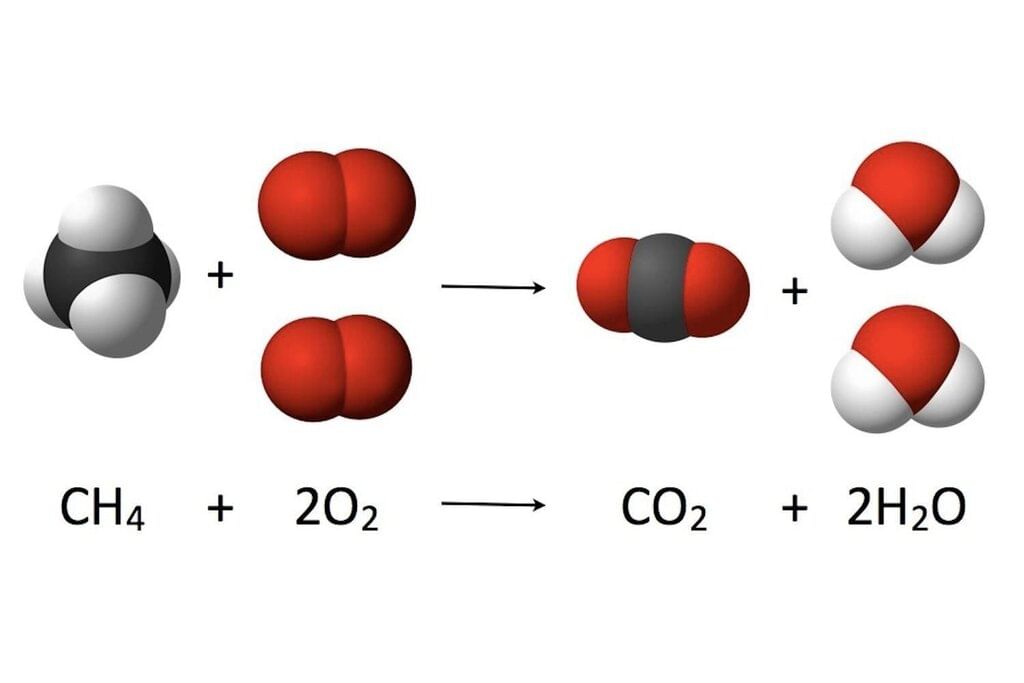 Here we can see how the number of each atom on the left side is balanced on the right side, as stated by the law of conservation of mass.
Types of Chemical Reactions
1. Combustion Reaction
2Mg + O₂ → 2MgO
A combustion reaction is a reaction with a combustible material with an oxidizer to give an oxidized product.
2. Decomposition Reaction
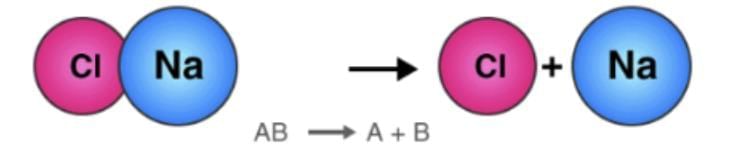
CaCO₃ → CaO + CO₂
A Decomposition reaction is a reaction in which a single component breaks down into multiple products.
3. Neutralization Reaction
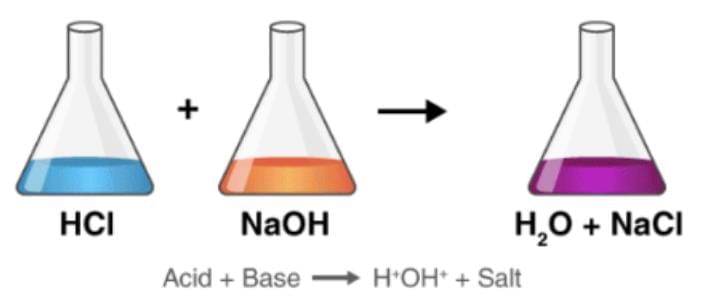
HCl + NaOH → NaCl + H₂O
A Neutralization reaction is the reaction between an acid and a base giving salt and water as the products.
4. Redox Reaction
Zn + 2H⁺ → Zn²⁺ + H₂
A REDuction-OXidation reaction is a reaction in which there is a transfer of electrons between chemical species.
5. Precipitation or Double-Displacement Reaction
AgNO₃ + NaCl → AgCl + NaNO₃
It is a type of displacement reaction in which two compounds react, and their anions and cations switch places forming two new products.
6. Synthesis Reaction
2Na(s) + Cl₂(g) → 2NaCl(s)
A Synthesis reaction is one of the most basic types of reaction wherein multiple simple compounds combine under certain physical conditions giving out a complex product.
7. Combination Reaction
2H₂ + O₂ → 2H₂O
A Combination reaction is a reaction in which two or more substances combine to form a single product. It is also known as a synthesis reaction where simpler substances react to form a more complex compound.
- Combination Reaction is a reaction in which two or more substances combine to form a single product.
- Decomposition Reaction is a reaction in which a single compound breaks down into two or more simpler products.
- Neutralization Reaction is the reaction between an acid and a base, resulting in the formation of salt and water.
- Therefore, the correct answer is option d) Redox Reaction, as only redox reactions involve the transfer of electrons.
Important Points to Remember
- In a chemical change, a new compound is formed but in a physical change, the substance changes its state of existence.
- Atoms or ions or molecules which react to form a new substance are called reactants; the new atoms or molecules formed are products.
- A chemical reaction follows the law of conservation of mass. That is no atom is destroyed or created but only a new product is formed from reactants.
Multiple Choice Questions
Q1: Which of the following is not a physical change?
(a) Boiling of water to give water vapour
(b) Melting of ice to give water
(c) Dissolution of salt in water
(d) Combustion of Liquefied Petroleum Gas (LPG)
Ans : Option (d).
Combustion is always a chemical change because new compound is formed after burning and it is irreversible.
Q2: The following reaction is an example of a 4NH3 (g) + 5O2 (g) → 4NO(g) + 6H2O(g)
(i) displacement reaction
(ii) combination reaction
(iii) redox reaction
(iv) neutralisation reaction
(a) (i) and (iv)
(b) (ii) and (iii)
(c) (i) and (iii)
(d) (iii) and (iv)
Ans : Option (c).
The reaction provided is a mixture of displacement and redox reaction because in this reaction oxygen displace hydrogen in the ammonia. Here nitrogen is getting oxidized and oxygen is reduced.
Q3: Which of the following statements about the given reaction are correct?
3Fe(s) + 4H2O(g) → Fe3O4 (s) + 4H2 (g)
(i) Iron metal is getting oxidised
(ii) Water is getting reduced
(iii) Water is acting as reducing agent
(iv) Water is acting as oxidising agent
(a) (i), (ii) and (iii)
(b) (iii) and (iv)
(c) (i), (ii) and (iv)
(d) (ii) and (iv)
 Rusting of Iron
Ans : Option (c).
Here, Iron combines with water to get oxidized. Oxygen is removed from water hence it is getting reduced. Water is providing oxygen and it acts as an oxidizing agent.
Q4: Which of the following are exothermic processes?
(i) Reaction of water with quick lime
(ii) Dilution of an acid
(iii) Evaporation of water
(iv) Sublimation of camphor (crystals)
(a) (i) and (ii)
(b) (ii) and (iii)
(c) (i) and (iv)
(d) (iii) and (iv)
Ans : Option (a).
Exothermic process are the one which release enormous amount of heat When water reacts with water and acid reacts with water it releases enormous amount of heat.
Q5: Three beakers labelled as A, B and C each containing 25 mL of water were taken. A small amount of NaOH, anhydrous CuSO4 and NaCl were added to the beakers A, B and C respectively. It was observed that there was an increase in the temperature of the solutions contained in beakers A and B, whereas in case of beaker C, the temperature of the solution falls. Which one of the following statement(s) is(are) correct?
(i) In beakers A and B, exothermic process has occurred.
(ii) In beakers A and B, endothermic process has occurred.
(iii) In beaker C exothermic process has occurred.
(iv) In beaker C endothermic process has occurred.
(a) (i) only
(b) (ii) only
(c) (i) and (iv)
(d) (ii) and (iii)
Ans : Option (c).
Exothermic processes will increase the temperature wherease endothermic processes will decrease the temperature.
Q6: A dilute ferrous sulphate solution was gradually added to the beaker containing acidified permanganate solution. The light purple colour of the solution fades and finally disappears. Which of the following is the correct explanation for the observation?
(a) KMnO4 is an oxidising agent, it oxidises FeSO4
(b) FeSO4 acts as an oxidising agent and oxidises KMnO4
(c) The colour disappears due to dilution; no reaction is involved
(d) KMnO4 is an unstable compound and decomposes in presence of FeSO4 to a colourless compound.
Ans : Option (a).
In this reaction potassium permanganate is an oxidizing agent. Purple color appeared due to potassium permanganate when all the permanganate solution is utilized.
Q7: Which among the following is(are) double displacement reaction(s)?
(i) Pb + CuCl2 → PbCl2 + Cu
(ii) Na2SO4 + BaCl2 → BaSO4 + 2NaCl
(iii) C + O2 → CO2
(iv) CH4 + 2O2 → CO2 + 2H2O
(a) (i) and (iv)
(b) (ii) only
(c) (i) and (ii)
(d) (iii) and (iv)
Ans : Option (b).
Here Sodium and Barium are displaced from each other's salts hence it is a double displacement reaction.
Q8: Which among the following statement(s) is (are) true? Exposure of silver chloride to sunlight for a long duration turns grey due to
(i) the formation of silver by decomposition of silver chloride
(ii) sublimation of silver chloride
(iii) decomposition of chlorine gas from silver chloride
(iv) oxidation of silver chloride
(a) (i) only
(b) (i) and (iii)
(c) (ii) and (iii)
(d) (iv) only
Ans : Option (a).
Q9: Solid calcium oxide reacts vigorously with water to form calcium hydroxide accompanied by liberation of heat. This process is called slaking of lime. Calcium hydroxide dissolves in water to form its solution called lime water. Which among the following is (are) true about slaking of lime and the solution formed?
(i) It is an endothermic reaction
(ii) It is an exothermic reaction
(iii) The pH of the resulting solution will be more than seven
(iv) The pH of the resulting solution will be less than seven
(a) (i) and (ii)
(b) (ii) and (iii)
(c) (i) and (iv)
(d) (iii) and (iv)
Ans : Option (b).
When Solid calcium oxide reacts vigorously with water to form calcium hydroxide accompanied by liberation of heat. It proves the reaction is exothermic. pH of the solution will be more than 7 because oxides and hydroxides of metals are alkaline.
Q10: Barium chloride on reacting with ammonium sulphate forms barium sulphate and ammonium chloride. Which of the following correctly represents the type of the reaction involved?
(i) Displacement reaction
(ii) Precipitation reaction
(iii) Combination reaction
(iv) Double displacement reaction
(a) (i) only
(b) (ii) only
(c) (iv) only
(d) (ii) and (iv)
Ans : Option (d).
Ammonium and barium are getting displaced from their respective salts. Hence this is a double displacement reaction. One of the products formed, barium sulphate
is an insoluble solid that separates from the solution as a white precipitate.

Q11: Electrolysis of water is a decomposition reaction. The mole ratio of hydrogen and oxygen gases liberated during electrolysis of water is
(a) 1:1
(b) 2:1
(c) 4:1
(d) 1:2
Ans : Option (b).
1 Mole of water has 2 moles of hydrogen and 1 mole of water. Hence mole ration between hydrogen and oxygen is 2 : 1.
Q12: Which of the following is(are) an endothermic process(es)?
(i) Dilution of sulphuric acid
(ii) Sublimation of dry ice
(iii) Condensation of water vapours
(iv) Evaporation of water
(a) (i) and (iii)
(b) (ii) only
(c) (iii) only
(d) (ii) and (iv)
Ans : Option (d).
Change of solid to gas or liquid to gas absorbs heat hence sublimation of dry ice and evaporation is an endothermic reaction.
Q13: In the double displacement reaction between aqueous potassium iodide and aqueous lead nitrate, a yellow precipitate of lead iodide is formed. While performing the activity if lead nitrate is not available, which of the following can be used in place of lead nitrate ?
(a) Lead sulphate (insoluble)
(b) Lead acetate
(c) Ammonium nitrate
(d) Potassium sulphate
Ans : Option (b).
To get lead iodide we need a compound containing lead hence Ammonium nitrate and Potassium sulphate are ruled out. Lead sulphate is insoluble hence it cannot be used so the answer is (b) Lead acetate.
Q14: Which of the following gases can be used for storage of fresh sample of an oil for a long time ?
(a) Carbon dioxide or oxygen
(b) Nitrogen or oxygen
(c) Carbon dioxide or helium
(d) Helium or nitrogen
Ans : Option (d).
Oxygen cannot be used as it is an oxidizing agent. Helium can be used as it is an inert gas. Nitrogen is less reactive and it is cheaper than Helium. In most cases nitrogen is used in packet to prevent rancidity.
Q15: The following reaction is used for the preparation of oxygen gas in the laboratory
Which of the following statement (s) is (are) correct about the reaction?
(a) It is a decomposition reaction and endothermic in nature.
(b) It is a combination reaction.
(c) It is a decomposition reaction and accompanied by release of heat .
(d) It is a photochemical decomposition reaction and exothermic in nature.
Ans : Option (a).
Potassium chlorate decomposes to give potassium chloride and oxygen. This is a decomposition reaction which is endothermic in nature.
Q16: Which one of the following processes involve chemical reactions?
(a) Storing of oxygen gas under pressure in a gas cylinder
(b) Liquefaction of air
(c) Keeping petrol in a china dish in the open
(d) Heating copper wire in presence of air at high temperature
Ans : Option (d).
In first three options given here there is no involvement of chemical reaction. When copper is heated in presence of air at high temperature copper undergoes oxidation reaction to give out copper oxide.
Q17: In which of the following chemical equations, the abbreviations represent the correct states of the reactants and products involved at reaction temperature ?
(a) 2H2 (l) + O2 (l) → 2H2O(g)
(b) 2H2 (g) + O2 (l) → 2H2O(l)
(c) 2H2 (g) + O2 (g) → 2H2O(l)
(d) 2H2 (g) + O2 (g) → 2H2O(g)
Ans : Option (c).
Hydrogen and oxygen are gases at room temperature whereas water is liquid. Hence option (c) represents correct states of reactants and products.
Q18: Which of the following are combination reactions ?
(i)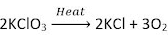
(ii) MgO + H2O → Mg(OH)2
(iii) 4Al + 3O2 → 2Al2O3
(iv) Zn + FeSO4 → ZnSO4 + Fe
(a) 1 and 3
(b) 3 and 4
(c) 2 and 4
(d) 2 and 3
Ans : Option (d).
Here, two reactants react to form a single product hence option ii) and iii) represents combination reactions.
Short Answer Questions
Q19: Write the balanced chemical equations for the following reactions and identify the type of reaction in each case.
(a) Nitrogen gas is treated with hydrogen gas in the presence of a catalyst at 773K to form ammonia gas.
(b) Sodium hydroxide solution is treated with acetic acid to form sodium acetate and water.
(c) Ethanol is warmed with ethanoic acid to form ethyl acetate in the presence of concentrated H2SO4 .
(d) Ethene is burnt in the presence of oxygen to form carbon dioxide, water and releases heat and light.
Ans :
(a)
Combination reaction
(b) NaOH(aq) + CH3COOH(aq) ⟶ CH3COONa(aq) + H2O(l)
Neutralisation reaction(c)
Esterification reaction(type of double didplacement reaction)
(d) C2H4(g) + 3O2(g) → 2CO2(g) + 2H2O(g) + Heat + Light
Oxidation reaction


Q20: Write the balanced chemical equations for the following reactions and identify the type of reaction in each case.
(a) Thermit reaction, iron (III) oxide reacts with aluminium and gives molten iron and aluminium oxide.
(b) Magnesium ribbon is burnt in an atmosphere of nitrogen gas to form solid magnesium nitride.
(c) Chlorine gas is passed in an aqueous potassium iodide solution to form potassium chloride solution and solid iodine.
(d) Ethanol is burnt in air to form carbon dioxide, water and releases heat.
Ans :
(a) Fe2O3(s) + 2Al(s) → Al2O3(s) + 2Fe(l) + Heat
Single displacement reaction
(b) 3Mg(s) + N2(g) → Mg3N2(s)Combination reaction
(c) 2KI(aq) +Cl2(g) →2KCl(aq) + I2(s)Single displacement reaction
(d) C2H5OH(l) + 3O2(g) → 2CO2(g) + 3H2O(l) + HeatCombustion reaction
Q21: Complete the missing components/variables given as x and y in the following reactions
(a) Pb(NO3)2 [aq] + 2Kl[aq] → Pbl2[X] + 2KNO3 [y]
(b) Cu[s] + 2Ag NO3 [aq] → Cu[NO3]2 [aq] + x[s]
(c) Zn[s] + H2SO4[aq] → ZnSO4[x] + H2[y]
(d) 
Ans :
(a) Pb(NO3)2 [aq] + 2Kl[aq] → Pbl2[s] + 2KNO3 [aq]
(b) Cu[s] + 2Ag NO3 [aq] → Cu[NO3]2 [aq] + 2Ag[s]
(c) Zn[s] + H2SO4[aq] → ZnSO4[aq] + H2[g]
(d)

Q22: Which among the following changes are exothermic or endothermic in nature?
(a) Decomposition of ferrous sulphate
(b) Dilution of sulphuric acid
(c) Dissolution of sodium hydroxide in water
(d) Dissolution of ammonium chloride in water
Ans :
(a) Decomposition of ferrous sulphate - Endothermic reaction
(b) Dilution of sulphuric acid -Exothermic reactions
(c) Dissolution of sodium hydroxide in water -Exothermic reactions
(d) Dissolution of ammonium chloride in water-Endothermic reaction
Q23: Identify the reducing agent in the following reactions
(a) 4NH3 + 5O2 → 4NO + 6H2O
(b) H2O + F2 → HF + HOF
(c) Fe2O3 + 3CO → 2Fe + 3CO2
(d) 2H2 + O2 → 2H2O
Ans :
(a) NH3 Ammonia
(b) H2O- Water
(c) CO - Carbon momnoxide
(d) H2 - Hydrogen
Q24: Identify the oxidising agent (oxidant) in the following reactions
(a) Pb3O4 + 8HCl → 3PbCl2 + Cl2 + 4H2O
(b) 2Mg + O2 → 2MgO
(c) CuSO4 + Zn → Cu + ZnSO4
(d) V2O5 + 5Ca → 2V + 5CaO
(e)3Fe + 4H2O → Fe3O4 +4H2
(f) CuO + H2 → Cu + H2O
Ans :
(a) Pb3O4
(b) O2
(c) CuSO4
(d) V2O5
(e) H2O
(f) CuO
Q25: Write the balanced chemical equations for the following reactions
(a) Sodium carbonate on reaction with hydrochloric acid in equal molar concentrations gives sodium chloride and sodium hydrogencarbonate.
(b) Sodium hydrogencarbonate on reaction with hydrochloric acid gives sodium chloride, water and liberates carbon dioxide.
(c) Copper sulphate on treatment with potassium iodide precipitates cuprous iodide (Cu2 I2 ), liberates iodine gas and also forms potassium sulphate.
Ans :
(a) Na2CO3 + HCl → NaCl + NaHCO3
(b) NaHCO3 + HCl → NaCl + H2O + CO2
(c) 2CuSO4 + 4Kl → 2K2SO4 + CU2l2 + I2
Q26: A solution of potassium chloride when mixed with silver nitrate solution, an insoluble white substance is formed. Write the chemical reaction involved and also mention the type of the chemical reaction ?
Ans :
KCl(aq) + AgNO3(aq) → AgCl(s) + KNO3(aq)
It is a double displacement and precipitation reaction.
Q27: Ferrrous sulphate decomposes with the evolution of a gas having a characteristic odour of burning sulphur. Write the chemical reaction involved and identify the type of reaction.
Ans :
2FeSO4 → Fe2O3 + SO2 + SO3
This is a decomposition reaction.
Q28: Why do fire flies glow at night ?
Ans : Fireflies glow due to bioluminescence, in which luciferin reacts with oxygen in the presence of luciferase enzyme to produce light. This is a chemical change.
Q29: Grapes hanging on the plant do not ferment but after being plucked from the plant can be fermented. Under what conditions do these grapes ferment ? Is it a chemical or a physical change ?
Ans :Grapes on the plant do not ferment because of defense mechanism of plants. When grapes are plucked from plant grapes reacts with yeast to carry out fermentation. Here sugar changes to alcohol and it is a chemical change.
Q30: Which among the following are physical or chemical changes ?
(a) Evaporation of petrol
(b) Burning of Liquefied Petroleum Gas(LPG)
(c) Heating of an iron rod to red hot.
(d) Curdling of milk
(e) Sublimation of solid ammonium chloride
Ans :
(a) Evaporation of petrol -Physical change
(b) Burning of Liquefied Petroleum Gas (LPG) -Chemical change
(c) Heating of an iron rod to red hot -Physical change
(d) Curdling of milk -Chemical change
(e) Sublimation of solid ammonium chloride-Physical change
Q31: During the reaction of some metals with dilute hydrochloric acid, following observations were made.
(a) Silver metal does not show any change
(b) The temperature of the reaction mixture rises when aluminium (Al) is added.
(c) The reaction of sodium metal is found to be highly explosive
(d) Some bubbles of a gas are seen when lead(Pb) is reacted with the acid.
Explain these observations giving suitable reasons.
Ans :
(a) As silver lies in low reactive series of metals, there will be no reaction between silver and dilute HCl.
(b) It is an exothermic reaction, therefore the temperature increases.
(c) Sodium is highly reactive metals. An exothermic reaction takes place between sodium and atmospheric oxygen which results in temperature increase.
(d) Hydrogen gas is produced when lead reacts with acid. This is responsible for the formation of bubbles.
Q32: A substance X, which is an oxide of a group 2 element, is used intensively in the cement industry. This element is present in bones also. On treatment with water it forms a solution which turns red litmus blue. Identify X and also write the chemical reactions involved.
Ans : Compound X is Calcium oxide. CaO is extensively used in cement industry. On treatment with water Cao produces Ca(OH)2 which is alkaline in nature and turns red litmus to blue color.
CaO + H2O → Ca(OH)2
Q33: Write a balanced chemical equation for each of the following reactions and also classify them.
(a) Lead acetate solution is treated with dilute hydrochloric acid to form lead chloride and acetic acid solution.
(b) A piece of sodium metal is added to absolute ethanol to form sodium ethoxide and hydrogen gas.
(c) Iron (III) oxide on heating with carbon monoxide gas reacts to form solid iron and liberates carbons dioxide gas.
(d) Hydrogen sulphide gas reacts with oxygen gas to form solid sulphur and liquid water.
Ans :
(a) Pb(CH3COO)2 + 2HCI - PbCl2 + 2CH3COOH
This is a Double Displacement reaction.
(b) 2Na + 2C2H5OH + 2C2H5ONa+ H2
This is a Displacement reaction.
(c) Fe2O3 + 3CO + 2Fe + 3CO2
This is a redox reaction.
(d) 2H2S + O2 → 2s + 2H2O
This is a replacement reaction.
Q34: Why do we store silver chloride in dark coloured bottles?
Ans : Silver chloride decomposes into silver and chlorine gas when exposed to sunlight.
2AgCl → 2Ag + Cl2
Thus, it is stored in dark coloured bottles.
Q35: Balance the following chemical equations and identify the type of chemical reaction.
(a) Mg(s) + Cl2(g) → MgCl2(s)
(b) HgO(s) → Hg(l) + O2(g)
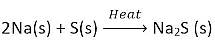
(c) Na(s) + S(s) → Na2S(s)
(d) TiCl4(l) + Mg(s) → Ti(s) + MgCl2(s)
(e) CaO(s) + SiO2(s) → CaSiO3(s)
(f) H2O2(l) →H2O(l) + O2(g)
Ans :
(a) Mg(s) + Cl2(g) → MgCl2(s)
Combination reaction or Synthesis reaction.
(b)Decomposition reaction
(c)
Combination reaction
(d) TiCl4(l) + Mg(s) → Ti(s) + 2MgCl2 (s)
Displacement reaction
(e) CaO(s) + SIO2(s) → CaSIO3(s)
Synthesis reaction(f)
Decomposition reaction


Q36: A magnesium ribbon is burnt in oxygen to give a white compound X accompanied by emission of light. If the burning ribbon is now placed in an atmosphere of nitrogen, it continues to burn and forms a compound Y.
(a) Write the chemical formulae of X and Y.
(b) Write a balanced chemical equation, when X is dissolved in water.
Ans :
2Mg + O₂ → 2MgO
(a) Compound X → MgO [ Magnesium Oxide ]
Compound Y → Mg3N2 [ Magnesium Nitride ]
(b) When magnesium oxide is dissolved in water, magnesium hydroxide is formed.MgO + H2O → Mg(OH)2
Q37: Zinc liberates hydrogen gas when reacted with dilute hydrochloric acid, whereas copper does not. Explain why?
Ans : Zinc is more reactive than copper as Zinc is placed above Hydrogen and Copper is placed below hydrogen in the activity series of metals. Because of this Zinc reacts with HCl whereas Copper will not react.
Zn + HCl → ZnCl2+ H2
Cu + HCl → No reaction
Q38: A silver article generally turns black when kept in the open for a few days. The article when rubbed with toothpaste again starts shining.
(a) Why do silver articles turn black when kept in the open for a few days? Name the phenomenon involved.
(b) Name the black substance formed and give its chemical formula.
Ans : (a) Silver reacts with H2S present in the atmosphere to form a black colour compound silver sulphide. This phenomenon is called corrosion.
(b) The black substance formed is silver sulphide.2Ag+ H2S → Ag2S + H2
Long Answer Questions
Q39: On heating blue coloured powder of copper (II) nitrate in a boiling tube, copper oxide (black), oxygen gas and a brown gas X is formed
(a) Write a balanced chemical equation of the reaction.
(b) Identity the brown gas X evolved.
(c) Identity the type of reaction.
(d) What could be the pH range of aqueous solution of the gas X?
Ans :
(a) Balanced chemical equation
(b) The brown gas X evolved is nitrogen dioxide (NO2).
(c) This is a thermal decomposition reaction.
(d) As nitrogen dioxide is and oxide of a non-metal, it dissolves in water to form acidic solution. Therefore, pH of this solution is less than 7.

Q40: Give the characteristic tests for the following gases
(a) CO2
(b) SO2
(c) O2
(d) H2
Ans :
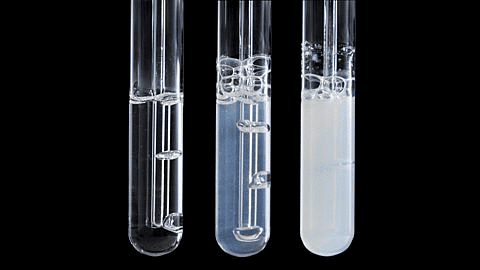 Upon passing CO2 limewater colour changes to White
The characteristic test are as follows:
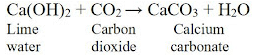
(a) Pass CO2 into limewater which will turn water into milky. This isthe confirmation test for the presence of Carbon-di-oxide.
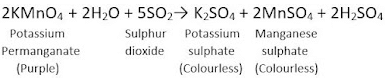
(b) Sulphur dioxide (SO2) gas when passed through acidic potassium permanganate solution (purple in colour) turns it colourless because SO2 is a strong reducing agent.
When sulphur dioxide gas is passed through acidic dichromate solution (orange in colour), the solution turns green because sulphur dioxide is a strong reducing agent.
(c) Burning of match stick near oxygen makes it burn even more brightly.
(d) Hydrogen (H2) gas burns with a pop sound when a burning candle is brought near it.
Q41: What happens when a piece of
(a) zinc metal is added to copper sulphate solution?
(b) aluminium metal is added to dilute hydrochloric acid?
(c) silver metal is added to copper sulphate solution?
Also, write the balanced chemical equation if the reaction occurs
Ans :
(a) When zinc is added to a solution of copper sulfate, zinc displaces copper and forms zinc sulphate as a result.
Zn(s)+ CuSo4(aq)→ ZnSo4(aq)+ Cu(s)
(b) Aluminium being more reactive than hydrogen displaces it from dilute hydrochloric acid solution and hydrogen gas is evolved.
2Al (s)+ 6HCl(aq)→ 2AlCl3(aq)+ 3 H2(g)
(c) Silver metal is less reactive than copper cannot displace it from its salt solution. Therefore, no reaction occurs.
Q42: What happens when zinc granules are treated with dilute solution of H2SO4, HCl, HNO3, NaCl and NaOH, also write the chemical equations if reaction occurs.
Ans :
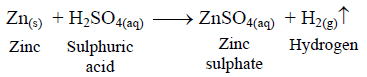
(i) Zinc reacts with dilute H2SO4 to form zinc sulphate and hydrogen gas.
(ii) Zinc reacts with dilute HCl to form zinc chloride and hydrogen gas.
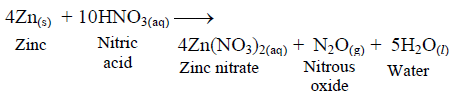
(iii) Zinc reacts with dilute HNO3 and forms zinc nitrate, nitrous oxide and water.
(iv) Zinc does not react with NaCl.
(v) Zinc reacts with sodium hydroxide to form sodium zincate and hydrogen gas.

Q43: On adding a drop of barium chloride solution to an aqueous solution of sodium sulphite, white precipitate is obtained.
(a) Write a balanced chemical equation of the reaction involved
(b) What other name can be given to this precipitation reaction?
(c) On adding dilute hydrochloric acid to the reaction mixture, white precipitate disappears. Why?Ans :
Ans: (a) Balanced chemical equation
(b) This reaction is also known as double displacement reaction.
(c) The white precipitate of barium sulphite reacts with dilute HCl to form soluble barium chloride, water, and sulphur dioxide gas. Since barium chloride is soluble, the precipitate disappears.BaSO3 (s) + 2HCl (aq) → BaCl2 + H2O + SO2 (g)

Q44: You are provided with two containers made up of copper and aluminium. You are also provided with solutions of dilute HCl, dilute HNO3, ZnCl2 and H2O. In which of the above containers these solutions can be kept?
Ans: (A) When solutions are kept in copper container
(a) Dilute HCl
Copper does not react with dilute HCl. Therefore, it can be kept.
(b) Dilute HNO3
Nitric acid acts as a strong oxidising agent and reacts with copper vessel, therefore cannot be kept.
(c) ZnCl2
Zinc is more reactive than copper (Cu) therefore, no displacement reaction occurs and hence can be kept.
(d) H2O
Copper does not react with water. Therefore, can be kept.
(B) When solutions are kept in aluminium containers
(a) Dilute HCl
Aluminium reacts with dilute HCl to form its salt and hydrogen is evolved. Therefore, cannot be kept.
2 Al + 6HCl → 2 AlCl3 + 3 H2
(b) Dilute HNO3
Aluminium gets oxidised by dilute HNO3 to form a layer of Al2O3 and can be kept.(c) ZnCl2
Aluminium being more reactive than zinc can displace zinc ion from the solution. Therefore, the solution cannot be kept.
2 Al + 3 ZnCl2 → 2 AlCl3 + 3Zn(d) H2O
Aluminium does not react with cold or hot water. Therefore, water can be kept.
Aluminium is attacked by steam to form aluminium oxide and hydrogen
2Al (s) + 3H2O (g) → Al2O3 (s) + 3H2 (g)
Very Short Questions: Chemical Reactions and Equations
Q1: What happens when magnesium ribbon burns in the air?
Ans: When magnesium ribbon burns in the air, it combines with the oxygen to form magnesium oxide.
2Mg(s) + O2 (g) → 2MgO(s)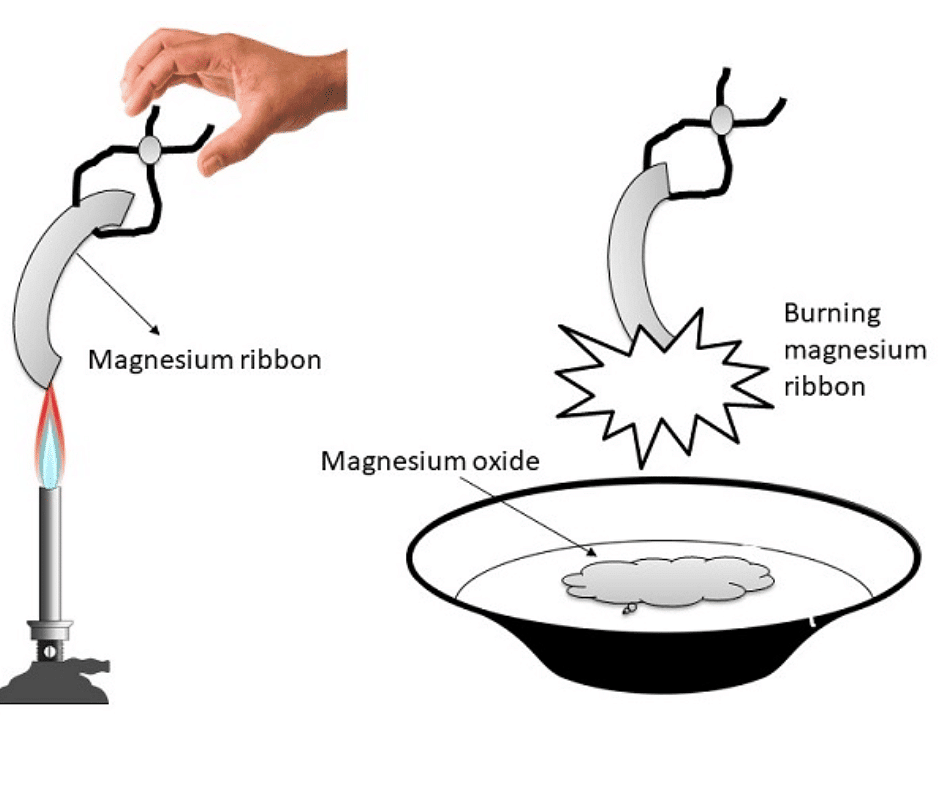
Q2: On what chemical law, the balancing of chemical equations is based?
Ans: The balancing of a chemical equation is based on the law of conservation of mass.
Q3: Name the gas that evolved when zinc reacts with dil. HCl.
Ans: Hydrogen gas is evolved.
When HCl , which is an acid goes into the chemical reaction with the Zinc metal, the reaction occurs by vigorously bubbles, which are due to the formation of Hydrogen gas.
Q4: Name and state the law which is kept in mind while we balance a chemical equation.
Ans: Law of conservation of mass. Mass can neither be created nor destroyed during a chemical reaction.
Q5: Write the chemical equation for reactions that take place when lead nitrate and potassium iodide solutions are mixed.
Ans: Pb(NO3)2 + 2KI → 2KNO3 + PbI2
Lead nitrate + Potassium iodide → Potassium nitrate + Leadiodide
Q6: Why is photosynthesis considered an endothermic reaction?
Ans: Photosynthesis is considered an endothermic reaction because heat is absorbed in this process.
Q7: What is precipitate?
Ans: Precipitate is an insoluble metal compound formed after a reaction.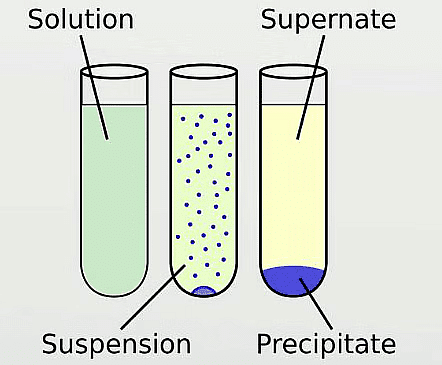
Q8: Why is the combustion of Liquified Petroleum Gas (LPG) a chemical change?
Ans: Combustion of Liquified Petroleum Gas (LPG) is a chemical change because, after its combustion, a new substance is formed and cannot be turned back into LPG.
Q9: What is wrong with the following equation?
Mg + O ➝ MgO
Identify the mistake and balance the equation.
Ans: In this equation, oxygen should be in molecular form (O2).
2Mg + O2 ➝ 2MgO.
Q10: What is meant by the skeletal equation?
Ans: The equation where the number of atoms of each element on both sides of a chemical equation is not equal is called a skeletal equation.
Short Answer Questions
Q1: Grapes hanging on the plant do not ferment, but after being plucked from the plant can be fermented. Under what conditions do these grapes ferment? Is it a chemical or a physical change?
Ans: When attached to the plants, Grapes are living, and therefore, their immune system prevents fermentation. The microbes can grow in the plucked grapes, which can be fermented under anaerobic conditions. This is a chemical change.
Q2: You are provided with two containers made up of copper and aluminium. You are also provided with dilute HCI, HNO3, ZnCl2 and H2O solutions. In which of the above containers we can keep these solutions?
Ans: Dilute hydrochloric acid and zinc chloride solution cannot be kept in a copper container because copper reacts slowly with dilute HCl and ZnCl2. Copper also reacts with dilute nitric acid. Therefore, none of these solutions should be stored in copper. Aluminium forms a protective oxide layer and does not react with nitric acid, so dilute HNO3 can be stored in aluminium. Zinc chloride and water can also be kept in aluminium.
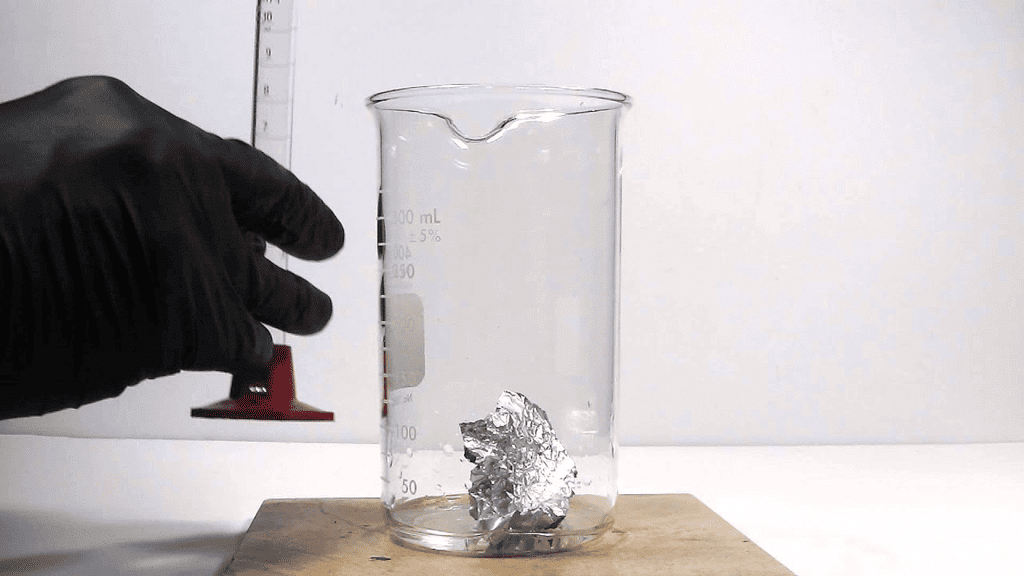 Q3: Which among the following are physical or chemical changes?
(a) Evaporation of petrol
(b) Burning of Liquefied Petroleum Gas (LPG)
(c) Heating of an iron rod to red hot.
(d) Curdling of milk
(e) Sublimation of solid ammonium chloride
Ans:
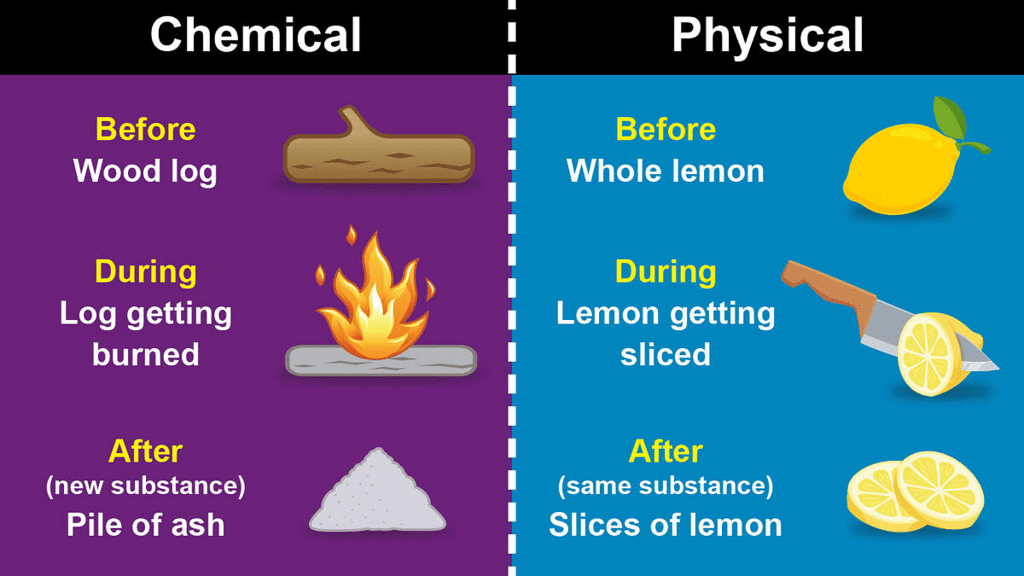
(a) Evaporation of petrol is a physical change as it only gets converted from one physical state to another.
(b) Burning of Liquefied Petroleum Gas (LPG) is a chemical change as heating produces carbon dioxide and water.
(c) The heating of an iron rod to red hot is a physical change as heating involves only temperature change.
(d) The curdling of milk is a chemical change as it affects the chemical composition of the milk.
(e) Sublimation of ammonium chloride is a physical change because it changes state from solid to gas and back to solid without forming a new substance.
Q4: A substance X, an oxide of a group 2 element, is used intensively in the cement industry. This element is present in bones also. On treatment with water, it forms a solution which turns red litmus blue. Identify X and also write the chemical reactions involved.
Ans: Here, X is calcium oxide.
Calcium oxide is used intensively in the cement industry.
The element present in it (in bones also) is calcium.
On treatment with water, calcium oxide forms a solution of calcium hydroxide [Ca(OH)2], which is an alkali. Hence, it turns red litmus blue.
CaO (s) + H2O (l) → Ca(OH)2 (aq) + Heat
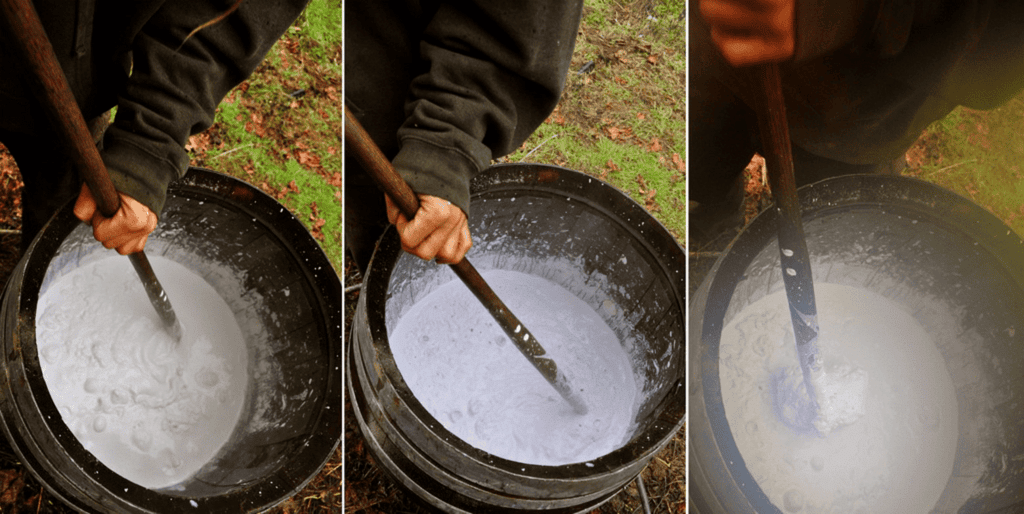
Q5: Write a balanced chemical equation for each following reaction and classify them.
(a) Lead acetate solution is treated with dilute hydrochloric acid to form lead chloride and acetic acid solution.
(b) A piece of sodium metal is added to absolute ethanol to form sodium ethoxide and hydrogen gas.
(c) Iron (III) oxide on heating with carbon monoxide gas reacts to form solid iron and liberates carbon dioxide gas.
(d) Hydrogen sulphide gas reacts with oxygen gas to form solid sulphur and liquid water
Ans:
(a ) Pb(CH3COO)2 + 2 HCl → PbCl2 + 2 CH3COOH
It is a double displacement reaction.
(b ) 2 Na + 2 C2H5OH → 2 C2H5ONa+ H2
It is a displacement or a redox reaction.
 (c ) Fe2O3 + 3 CO → 2 Fe + 3 CO2
It is a redox reaction.
(d ) 2 H2S + O2 → 2 S + 2 H2O
It is a redox reaction.
Q6: A magnesium ribbon is burnt in oxygen to give a white compound X accompanied by light emission. If the burning ribbon is now placed in an atmosphere of nitrogen, it continues to burn and forms a compound Y.
(a) Write the chemical formulae of X and Y.
(b) Write a balanced chemical equation when X is dissolved in water.
Ans:
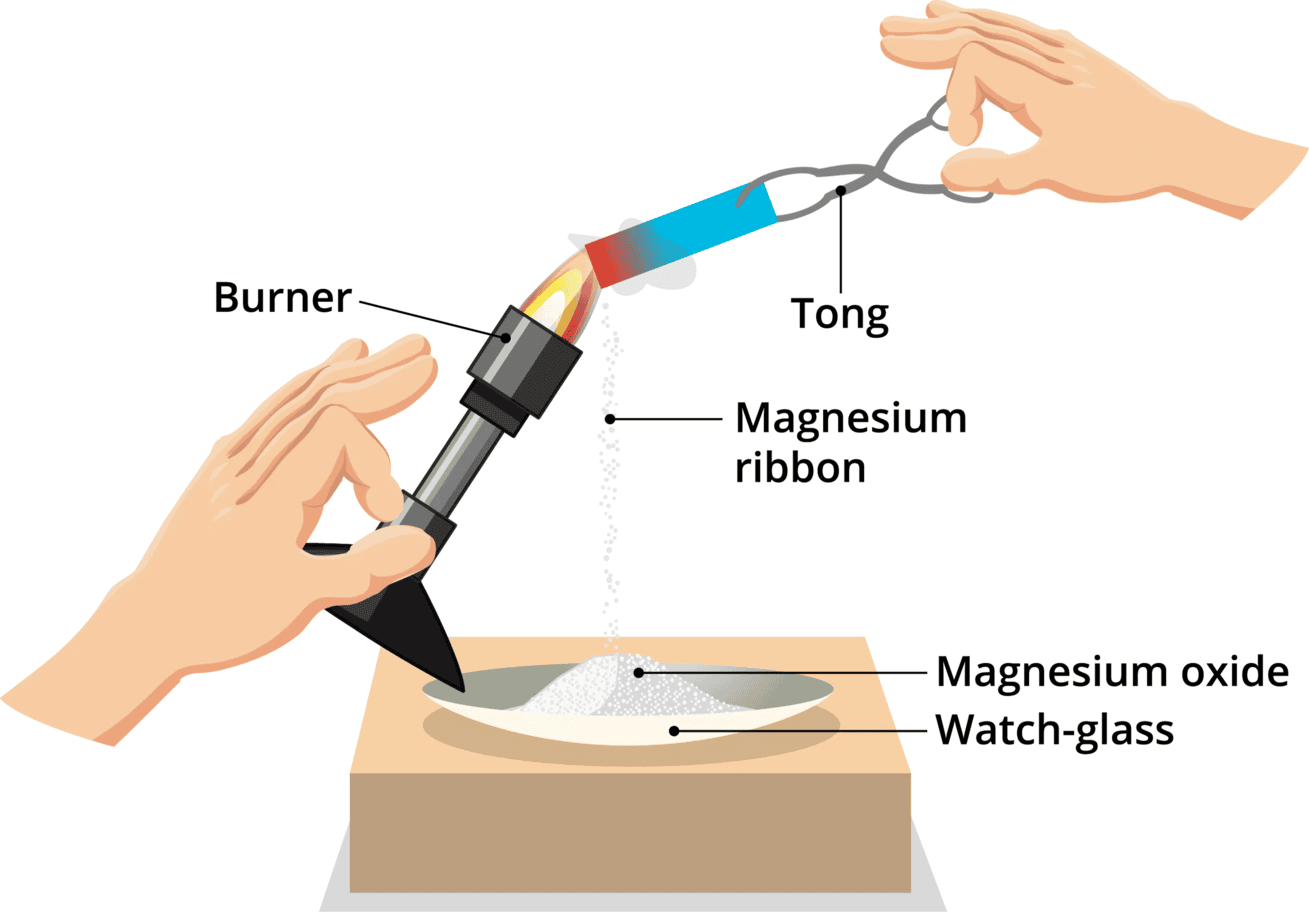
Here, X is magnesium oxide, and Y is magnesium nitride.
(a ) The chemical formulae of X are MgO and Y is Mg3N2.
(b ) When X is dissolved in water following reaction occurs.
MgO + H2O → Mg(OH)2
Q7: Zinc liberates hydrogen gas when reacted with dilute hydrochloric acid, whereas copper does not. Explain why?
Ans: Zinc is more reactive than copper as Zinc is placed above hydrogen, and copper is placed below hydrogen in the activity series of metals. Thus, zinc liberates hydrogen gas when reacted with dilute hydrochloric acid, whereas copper does not.
Q8: A silver article generally turns black when kept in the open for a few days. The article, when rubbed with toothpaste again, starts shining.
(a ) Why do silver articles turn black when kept in the open for a few days? Name the phenomenon involved.
(b ) Name the black substance formed and give its chemical formula.
Ans: (a ) The silver article turns black when kept in the air because the silver article reacts with sulphur compounds such as hydrogen sulphide (H2S) present in the air to form silver sulphide Ag2S. This phenomenon is called corrosion. It is also known as tarnishing of silver.
(b ) The black substance is silver sulphide. Its chemical formula is Ag2S.
Long Question Answer
Q1: When zinc granules are treated with a dilute solution of H2SO4, HCI, HNO3, NaCI and NaOH. Write the chemical equations if a reaction occurs.
Ans:
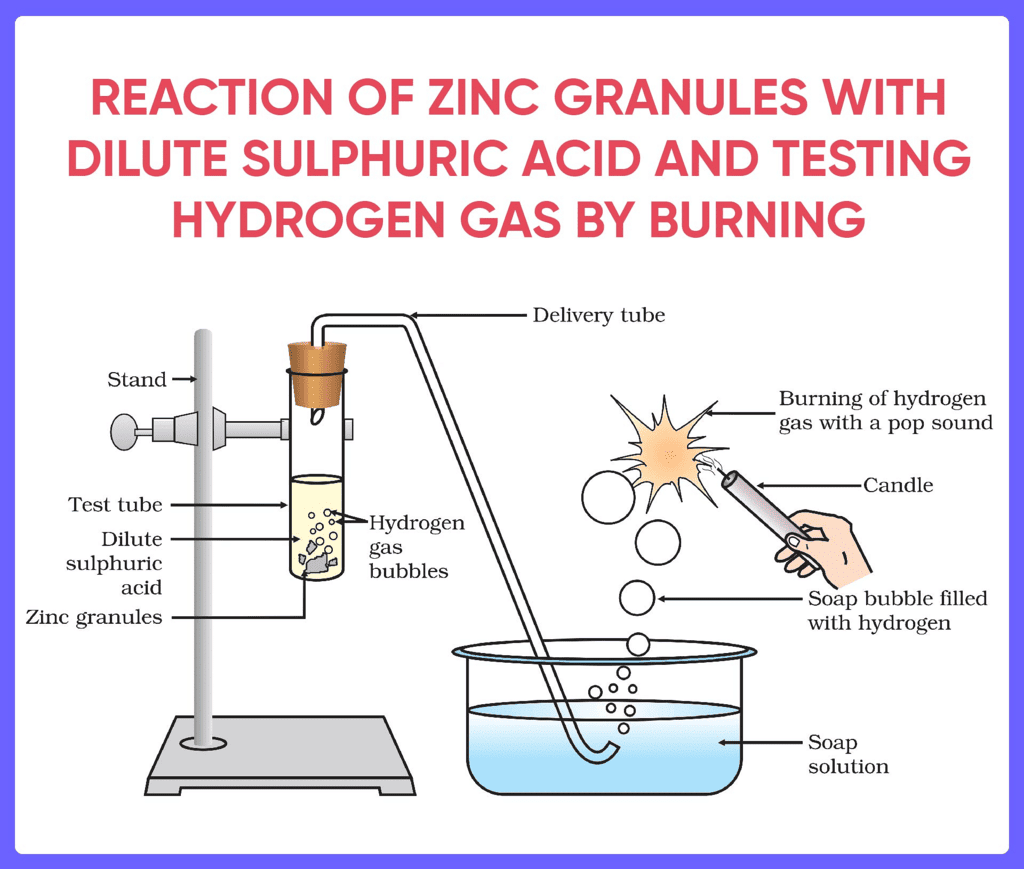
- Zinc granules react with dilute sulphuric acid to form zinc sulphate and hydrogen gas.
Zn (s) + H2SO4 (aq) → ZnSO4 (aq) + H2 (g) - Zinc granules react with dilute hydrochloric acid to form zinc chloride and hydrogen gas.
Zn (s) + 2HCl(aq) → ZnCl2 (aq) + H2 (g) - Zinc granules react with dilute nitric acid to form zinc nitrate, water and dinitrogen gas.
Zn (s) + HNO3(aq) → Zn(NO3)2 (aq) + H2O (l) + N2O (g) - Zinc does not react with sodium chloride
Zn (s) + NaCl → No Reaction. - Zinc granules react with dilute sodium hydroxide to form zinc hydroxide and hydrogen gas.
Zn (s) + 2NaOH (aq) → Na2ZnO2 (aq) + H2 (g)
Q2: What happens when a piece of
(a) Zinc metal is added to copper sulphate solution?
(b) Aluminium metal is added to dilute hydrochloric acid?
(c) Silver metal is added to copper sulphate solution?
Also, write the balanced chemical equation if the reaction occurs
Ans:
(a ) Zinc metal reacts with copper sulphate solution and forms colourless zinc sulphate and reddish-brown copper metal.
Zn (s) + CuSO4 (aq) → ZnSO4 (aq) + Cu (s)
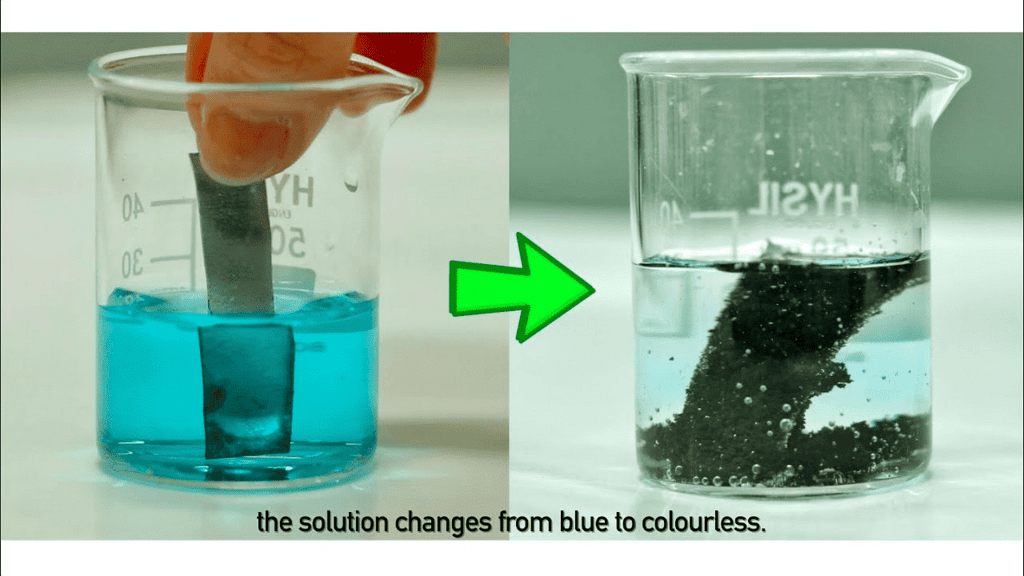 (b ) Aluminium metal reacts with dilute hydrochloric acid to form aluminium chloride and hydrogen gas.2 Al (s) + 6 HCl (aq) → 2 AlCl3 (aq) + 3 H2 (g)
(c ) Silver is less reactive than copper. Hence, no reaction will occur.
Q3: Give the characteristic tests for the following gases
(a ) CO2
(b ) SO2
(c ) O2
(d ) H2
Ans:
The characteristics test for
(a ) CO2: CO2 turns lime water milky due to the formation of insoluble calcium carbonate.
CO2 + Ca(OH)2 → CaCO3 + H2O
(b ) SO2: SO2 turns purple coloured acidic potassium permanganate solution colourless.
5 SO2 + 2 KMnO4 + 2 H2O → K2SO4 + 2 MnSO4 + 2 H2SO4
(c ) O2: We can confirm the evolution of oxygen gas by bringing a burning candle near the mouth of the test tube containing the reaction mixture. The intensity of the flame increases because oxygen supports burning.
(d ) H2: Hydrogen (H2) gas burns with a pop sound when a burning candle is brought near it.
Q4: On heating blue coloured powder of copper (I) nitrate in a boiling tube, copper oxide (black), oxygen gas, and a brown gas X is formed
(a) Write a balanced chemical equation of the reaction.
(b) Identity the brown gas X evolved.
(c) Identify the type of reaction.
(d) What could be the pH range of the aqueous solution of the gas X?
Ans:
(a) 2Cu(NO3)2 (s) → 2CuO (s) + 4NO2 (g) + O2 (g)
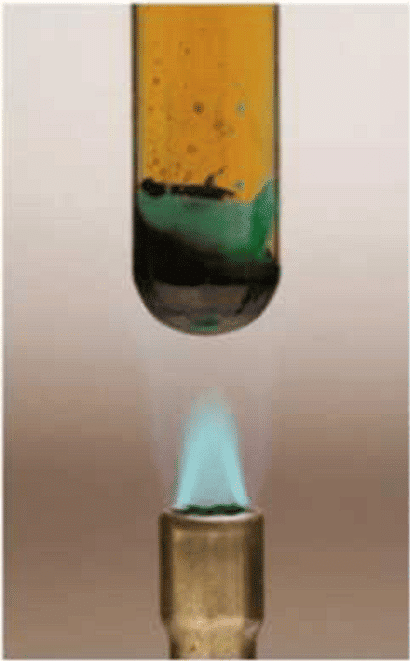 (b) The brown gas is of nitrogen dioxide.(c) It is a thermal decomposition reaction.(d) NO2 gas reacts with water to produce nitric acid. Thus, its pH range will be less than 7.
Q5: Balance the following chemical equations and identify the type of chemical reaction.
(a ) Mg (s) + Cl2 (g) → MgCI2 (s)
(b ) HgO (s) + Heat → Hg (l) + O2 (g)
(c ) Na (s) + S (s) → Na2S (s)
(d ) TlCl4 (l) + Mg (s) → Tl (s) + MgCl2 (s)
(e ) CaO (s) + SiO2 (s) → CaSiO3 (s)
(f ) H2O2 (l) + UV → H2O (l) + O2 (g)
Ans:
(a ) Mg (s) + Cl2 (g) → MgCI2 (s)
It is a combination reaction.
(b ) 2 HgO (s) + Heat → 2 Hg (l) + O2 (g)
It is a thermal decomposition reaction.
(c ) 2 Na (s) + S (s) → Na2S (s)
It is a combination reaction.
(d ) TlCl4 (l) + 2 Mg (s) → Tl (s) + 2 MgCl2 (s)
It is a displacement reaction.
(e ) CaO (s) + SiO2 (s) → CaSiO3 (s)
It is a combination reaction.
(f ) 2 H2O2 (l) + UV → 2 H2O (l) + O2 (g)
It is a decomposition reaction.
Q6: We made the following observations during the reaction of some metals with dilute hydrochloric acid.
(a) Silver metal does not show any change
(b) The temperature of the reaction mixture rises when aluminium (Al) is added.
(c) The sodium metal reaction is highly explosive.
(d) Some gas bubbles are seen when lead (Pb) is reacted with the acid.
Explain these observations giving suitable reasons.
Ans: (a) Silver does not show any characteristics change because silver is less reactive than hydrogen. Thus, it cannot displace hydrogen from dilute hydrochloric acid.
(b) The reaction between aluminium (Al) and hydrochloric acid is highly exothermic. Thus, the temperature of the reaction mixture rises.
(c) Sodium is a highly reactive metal. It reacts with hydrochloric acid, vigorously forming hydrogen gas and a large amount of heat.
(d) When lead reacts with hydrochloric acid, the gas bubbles observed are hydrogen gas.
Pb (s) + 2 HCl (aq) → PbCl2 (s) + H2 (g)
Q7: A white precipitate is obtained when adding a drop of barium chloride solution to an aqueous sodium sulphite solution.
(a ) Write a balanced chemical equation of the reaction involved
(b ) What other name can be given to this precipitation reaction?
(c ) On adding dilute hydrochloric acid to the reaction mixture, white residue disappears. Why?
Ans:
(a ) BaCl2 + Na2SO3 ⟶ BaSO3 + 2 NaCl
(b ) It can be assigned as a double displacement reaction.
(c ) On adding dilute hydrochloric acid to the reaction mixture, white residue disappears due to the formation of barium chloride.
BaSO3 + 2 HCl ⟶ BaCl2 + SO2 + H2O