
About the Poet
Key Points of the Poem
- Dust of Snow is a short but powerful poem. The poem highlights how even a small incident in nature can create a deep impact on a person's mood and outlook.
- It captures the healing power of nature and its ability to change our perspective towards life.
- Robert Frost uses very simple imagery from nature-a crow, a hemlock tree, and a fall of snow-to convey a powerful lesson about how small things can make significant differences in our outlook.
- At the start, the poet is upset, but the gentle fall of snow instantly lifts his mood.
- By the end, he feels calm, refreshed, and grateful to nature for saving his day from being wasted.
Visual Story: Dust of Snow
Detailed Summary
Stanza 1
The way a crow
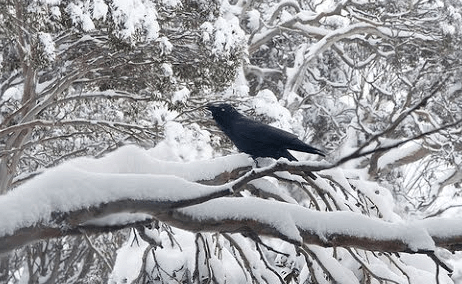
In this poem, the poet is talking about a winter's day when all the treetops were covered with snowflakes. The poet was walking under one such snow-covered tree. This was a Hemlock tree. The hemlock tree is usually associated with poison and toxicity as a poison named hemlock is also derived from it. Thus, this tree cannot be associated with anything positive.However, a crow shook the tree (perhaps by landing on a branch or moving), and because of this sudden motion, the snow from the tree fell on the poet like rain. The snowflakes were so light and small that the poet describes them as 'dust of snow' - comparing them to fine dust particles. This shower of snowflakes from the hemlock tree is the central event of the poem, as it caused a significant change in the poet's emotional state.

Stanza 2
Now in the second stanza, the poet explains exactly in what way the shower of snowflakes had an effect on him. He says that it changed his mood. Earlier, he had been in a bad mood, but the shower of snowflakes falling on him suddenly changed his mood for the better. In addition to this, there was another effect that the shower of snowflakes had on the poet. He says that particular day was one he hadn't been looking forward to, and it hadn't been going well either.He had been regretting how the day was going and felt it was being wasted. However, the shower of dust like snow on his shoulder changed his mind. It made him feel that the day had not been a complete waste. At least some part of that day had been saved from being wasted, as this small moment had a positive impact on him.

Try yourself: What effect did the shower of snowflakes have on the poet?
The shower of snowflakes changed the poet's mood.
In the poem, the poet describes how the falling snowflakes from the hemlock tree had a positive effect on him. Initially feeling despairing, he felt gladdened by the snowflakes, which helped him realize that his day wasn't a complete waste. This is a great example of how nature can uplift our spirits, even in small ways.
- The poet was initially upset/despairing
- The snowflakes changed his mood and gladdened his heart
- The day was saved from being completely wasted
Theme/ Message
Theme
1. Healing Power of Nature: Nature can uplift human spirits in the most unexpected ways.
2. Symbolism:
Crow → Often symbolises darkness or ill omen, but here it becomes a source of joy.
Hemlock tree → Symbol of sorrow/negativity, yet it gives a positive experience.
Dust of snow → Small, seemingly unimportant things can have great impact.
3. Optimism: Even gloomy situations can lead to moments of happiness.
4. Change of Mood: The poem emphasizes how perspective can shift instantly.
Message
- This poem conveys the message that nothing in life is small. Even trivial things can bring positive changes in our life.
- If we take things positively in life, situations do change for better. Even the small help or good gestures we do for others make large differences.
Deeper Meaning
The poet may even have been contemplating dark thoughts about life, but this incident reminded him of the value of small joys.
The crow's action of shaking snow is symbolic of an unexpected good deed, which changes the course of someone's entire day.
The snow, covering the poisonous hemlock, symbolizes purity and healing that can emerge from darkness.
Literary Devices
- Rhyme Scheme- ababcdcd
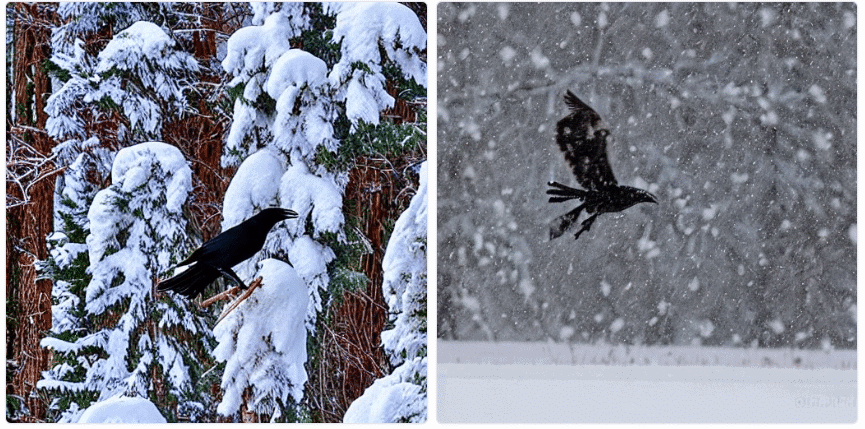
Imagery: Visual images like the crow shaking snow from a hemlock tree and the 'dust of snow' falling on the poet highlight nature's impact on mood.
- Alliteration: Repetition of initial consonant sounds in closely placed words, e.g.,Has given my heartAnd saved some part
Symbolism: The crow and hemlock tree, usually seen as negative, symbolize sorrow and death but are used to show how even grim elements of nature can uplift the mood.
Inversion: When the structure of a sentence is changed by the poet to create a rhyme, the poetic license is called inversion. In stanza 1, the poetic device 'inversion' is used.
- Enjambment: In enjambment, the same sentence continues to the next line without the use of any punctuation marks.This poem is very good example of this poetic device. It is used throughout the poem. The lines of stanzas flow to the next line without any punctuation.
Metaphor: "Dust of snow" metaphorically compares snowflakes to dust, symbolizing a small but meaningful event.
Synecdoche: The word "heart" is used to represent the poet's entire emotional state.
- Assonance: Repetition of vowel sounds, e.g., the 'o' sound in"Shook down on me."
Difficult Words
- Dust of snow - very small, fine particles of snow that fall lightly, like dust.
- Shook down - to cause something to fall by shaking. In the poem, the crow shakes the branch, and snow falls.
- Hemlock - a type of tree whose branches are poisonous; symbol of sadness or negativity.
- Give heart - make happy and confident
- Has given my heart - has created an impact on my heart and made me feel happy and confident
- Mood - state of mind
- A change of mood - a change in the present condition of mind
- Saved some part of a day - To make the day better; to rescue the day from being wasted in gloom or regret.
- Rued-regretted deeply, felt sad deeply.
Short Answer Questions: Dust of Snow


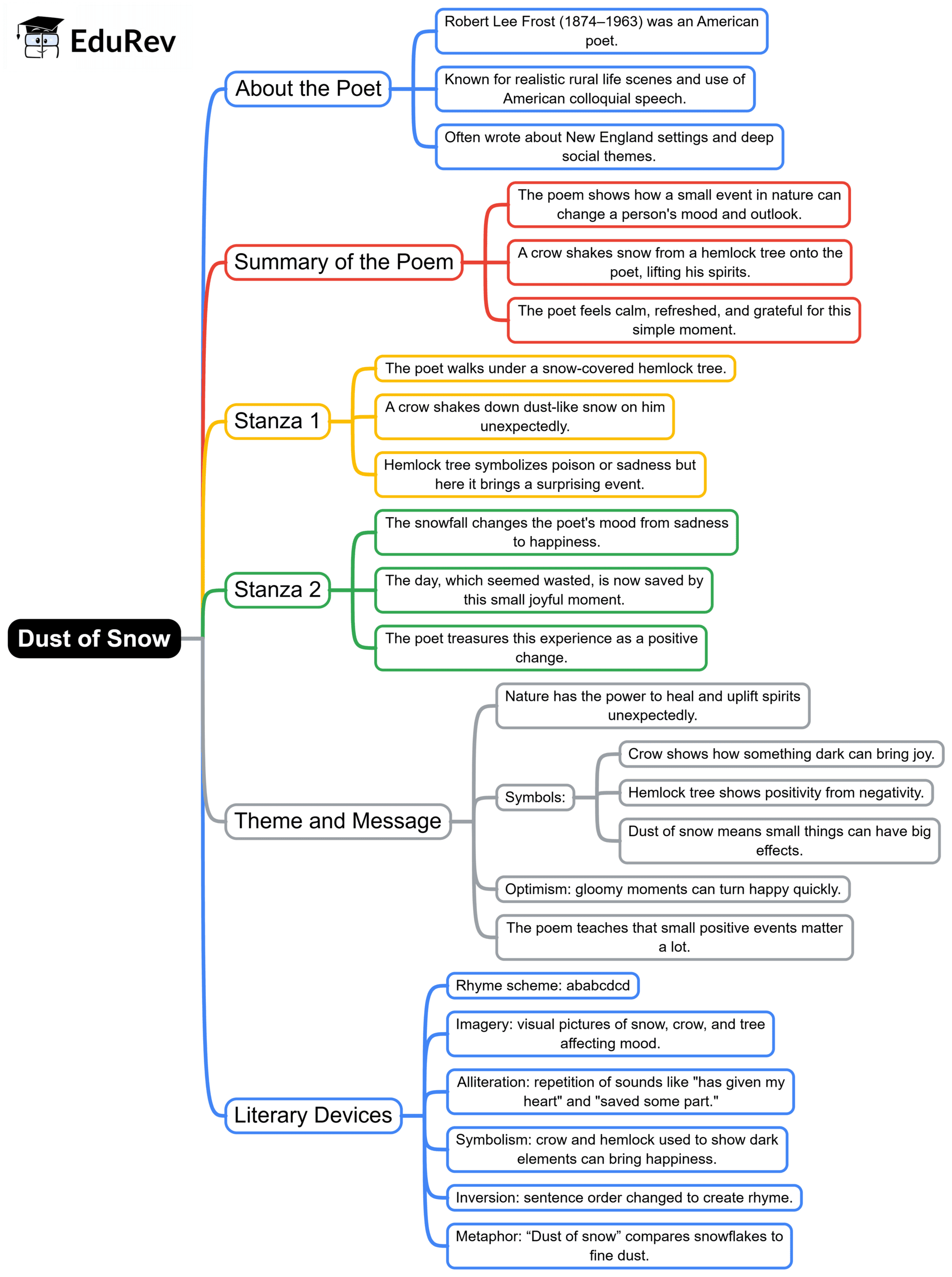
Mind Map
Key Questions
Q1: Who is the poet of the poem 'Dust of Snow'?
Q2: What shook down the dust of snow on the poet?
Q3: What is meant by the phrase 'dust of snow'?
Q4: What was the effect of the dust of snow on the poet?
Q5: Why was the poet feeling sad before the incident?
Q6: Why has the poet used a crow in the poem?
Q7: What is a hemlock tree? Why is it significant in the poem?
Q8: How does nature influence the poet in the poem?
Q9: What does the poet mean by 'a change of mood'?
Q10: Explain the line 'And saved some part of a day I had rued.'
Q11: What message does the poem 'Dust of Snow' convey?
Q12: How do the crow and hemlock tree represent negativity?
Q13: Why is the poem called 'Dust of Snow'?
Q14: Explain the theme of the poem 'Dust of Snow'.
Q15: What qualities of Robert Frost's poetry are reflected in this poem?
Long Answer Questions: Dust of Snow
The poem shows how small moments can produce large changes. It highlights the ability to find brightness amid gloom and to value small joys. The message is that hope, gratitude and resilience-qualities of a positive attitude-help us face difficulties and make our personal world kinder and more pleasant.

Extract-Based Questions for 'Dust of Snow'
Poem:
Questions:
- What is the subject of the poem?
- Who or what shook the dust of snow on the poet?
- What type of tree did the dust of snow fall from?
- How did the dust of snow affect the poet's mood?
- What happened to the poet's day before the dust of snow fell?
- How did the dust of snow save the poet's day?
- What emotion did the poet feel after the dust of snow fell on him?
- What is the significance of the hemlock tree in the poem?
Answers:
- The poem is about a small, unexpected incident in nature - a crow shaking snow from a branch - that brings a sudden, positive change in the poet's mood.
- A crow shook the dust of snow on the poet; the crow's movement caused the flakes to fall onto him.
- The dust of snow fell from a hemlock tree.
- The dust of snow changed the poet's mood for the better; it lifted his spirits and brightened his feelings.
- Before the dust of snow fell, the poet had been regretting part of the day and was in a gloomy or sorrowful mood.
- The dust of snow saved part of his day by changing his mood; that small event turned part of a regretted day into something better.
- The poet felt cheered and relieved; his mood improved and he experienced a lighter, more positive feeling.
- The hemlock tree is significant as the immediate source of the snow that causes the change of mood. Symbolically, because hemlock can have dark or poisonous associations in literature, its use creates a contrast that makes the small, positive incident more striking.

Extract-Based MCQs for 'Dust of Snow'
Explanation: The line states that the crow "Shook down on me / The dust of snow," so the crow's movement is clearly responsible for the falling snow.
Explanation: The stanza ends with "From a hemlock tree," which implies the crow was on that tree when it shook the snow down.

Explanation: Although crows are often seen as negative in some traditions, here the crow's simple action brings a positive change in the poet's mood. Therefore, it stands for an unexpected moment of joy or transformation.
Explanation: The rhyme pattern is: crow (A), me (B), snow (A), tree (B), so the scheme is A B A B.
Explanation: The poet says the incident "Has given my heart / A change of mood," which shows a positive change; it lifted his spirits rather than increasing sorrow or anger.
Explanation: "Rued" means to feel regret or sorrow about something, so option (ii) is correct.
Explanation: The poet explicitly says "saved some part / Of a day I had rued," so it was a portion of that day, not the whole day or the week.
Explanation: The rhyme pattern is: heart (A), mood (B), part (A), rued (B), so it follows A B A B.
Vocabulary and Poetic Device Questions
- What is the meaning of "Shook down" in the second line of the poem?
- What is the meaning of "hemlock" in the third line of the poem?
- What is the meaning of "rued" in the last line of the poem?
- What type of literary device is used in the alliteration of "saved some part" in the sixth line of the poem?
- What type of literary device is used in the rhyme scheme of the first stanza?
Answers:
- In this context, "shook down" means that the crow caused small particles of snow to fall from the branch onto the poet by shaking the tree.
- Here, "hemlock" refers to the hemlock tree from which the dust of snow fell; it is the tree named in the stanza.
- In this poem, "rued" means felt regret or sorrow about something; the poet had regretted part of the day.
- The device is alliteration; the repeated initial consonant sound in "saved" and "some" creates the alliterative effect.
- The rhyme scheme of the first stanza is A B A B (abab), with "crow" rhyming with "snow" and "me" rhyming with "tree".
Some more MCQs to Practice

Ans:
- Ans: (c)Explanation: The stanza explicitly says a crow "Shook down on me / The dust of snow," so the crow caused the snow to fall.
- Ans: (c)Explanation: The poem names the hemlock tree as the source of the dust of snow, so option (c) is correct.
- Ans: (c)Explanation: The lines "Has given my heart / A change of mood" show that the incident altered the poet's feelings, so it gave him a change of mood.
- Ans: (b)Explanation: The poet says he had "rued" a day, which means he felt regret about a bad day; thus option (b) is the intended meaning here.
- Ans: (None of the given options)Explanation: The poem says it "saved some part / Of a day I had rued," which means a portion of the day was saved. None of the four options named a "part" of the day, so none is strictly correct.
- Ans: (c)Explanation: The line describes the crow performing an action that affects the poet; several readers treat this as a vivid description rather than a figurative device, but if a choice must be made among the given options, many class tests list this as personification because the action is presented in direct relation to the poet's feelings.
- Ans: (d)Explanation: The phrase "Has given my heart / A change of mood" creates a clear mental picture of the poet's altered feeling, so "imagery" best captures the effect here among the given choices.
- Ans: (a)Explanation: Hemlock is traditionally associated with death or poison in literature and mythology; that symbolic background may add a contrasting layer of meaning to the poem.
Very Short Questions: Poem - Dust of Snow

 Hemlock Tree
Worksheet: Dust of Snow
Q1: What change come in the poet's mood?
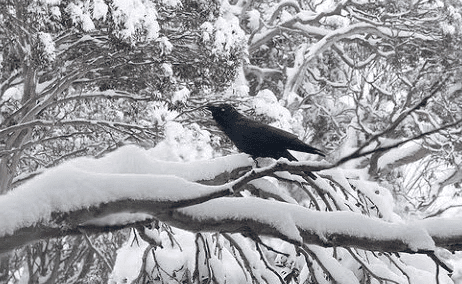
Q3: Where was the crow sitting?
Q5: What did poet realise when dust of snow fell on him?
Q6: What do the crow, hemlock tree and dust of snow represent in the poem?

Q7: It is our attitude towards a situation that makes it positive or negative. Do you agree with it? Express your views with reference to the poem 'Dust of Snow'.
Q8: In the poem 'Dust of Snow', how does the poet's mood get changed?
Q9: A simple moment proves to be very significant and saves the rest of the day of the poet from being wasted. Explain on the basis of the poem 'Dust of Snow'.
Q10: What do the 'Hemlock' tree and 'Crow' represent? What does the dust of snow metaphorically stand for?
NCERT Solutions: Dust of Snow
Thinking about the Poem
Q3. Have there been times when you felt depressed or hopeless? Have you experienced a similar moment that changed your mood that day?
Ans: I have experienced times of feeling down or hopeless, sometimes because of other people's behaviour and sometimes because of my own mistakes. On one occasion, I was very upset and went out for a walk. In the park I saw a girl playing with a small puppy; she was feeding and hugging it, and they both looked so happy. Watching that simple, cheerful scene lifted my spirits immediately. I joined them and played for a while, and the rest of the day felt much brighter. Such small, everyday moments can have the same redeeming effect that Frost describes in the poem.