About the Poet

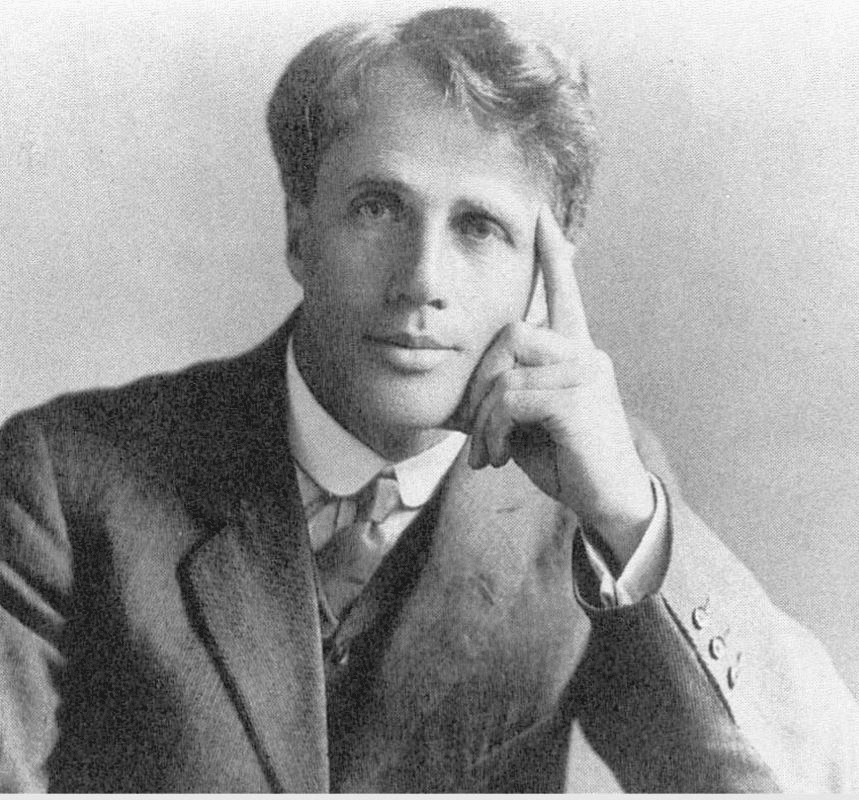
Robert Lee Frost (March 26, 1874 - January 29, 1963) was an American poet. His work was initially published in England before it was published in the United States. Known for his realistic depictions of rural life and his command of American colloquial speech, Frost frequently wrote about settings from rural life in New England in the early 20th century, using them to examine complex social and philosophical themes.  
Get additional INR 200 off today with EDUREV200 coupon.
Avail Offer

 Key Points of the Poem

  • The poem is composed of 2 stanzas - the first stanza has 4 lines and the second stanza has 5 lines; 9 lines in total.
  • The poem is written symbolically; it uses physical elements to represent human emotions and ideas.
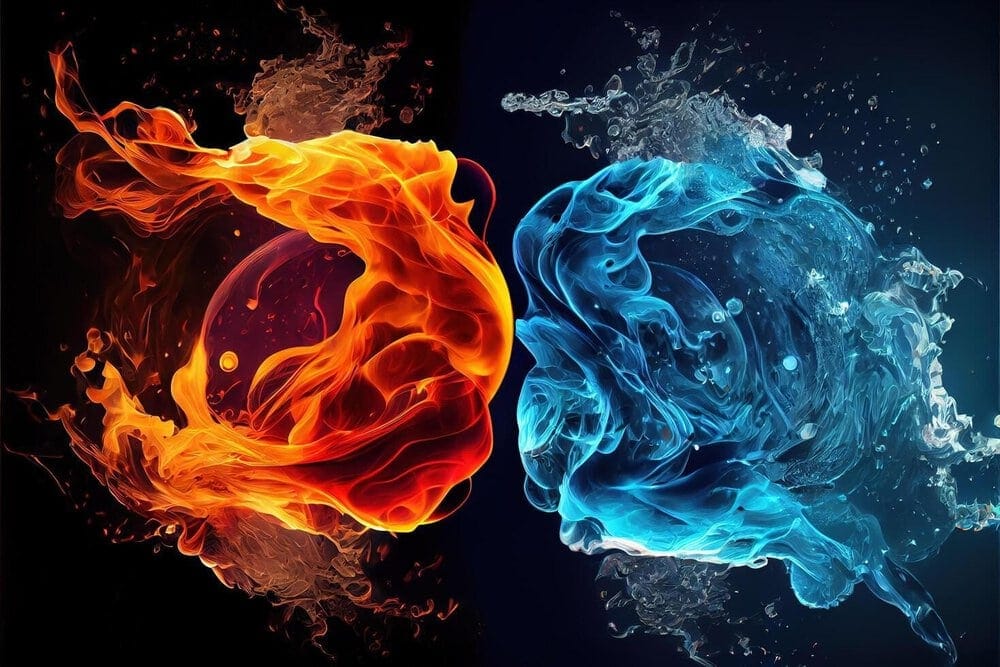
  • It presents two opposing views about how the world might end: fire and ice. These are metaphors for human emotions - fire stands for desire and passion, while ice stands for hatred and cold indifference.
  • Fire (desire) can spread quickly and cause immediate, visible destruction, so uncontrolled desire is shown as a rapid and dangerous force.
  • Hatred (ice) causes slow, silent, and steady destruction; its effects are gradual but equally harmful.

MULTIPLE CHOICE QUESTION
Try yourself: What is the main theme of the poem?
A

The destruction caused by fire

B

The destructive power of human desires

C

The slow destruction caused by ice

D

The importance of rural life in New England

Detailed Summary 

Also read: Short Answer Questions: Fire & Ice

Stanza 1

Some say the world will end in fire,
Some say in ice.

The poet introduces two opposing beliefs about how the world might end. Some people think it will be destroyed by fire, symbolizing desire, passion, greed, and uncontrolled emotions. Others believe it will end in ice, symbolizing hatred, indifference, and insensitivity. Frost sets up the contrast between these two destructive forces of human nature.

Stanza 2

From what I've tasted of desire

I hold with those who favor fire.

The poet reflects on his own experiences with human emotions. He has felt the burning power of desire-for wealth, power, or possessions-and knows how destructive it can be. Based on this understanding, he agrees with those who think fire (desire and greed) could cause the end of the world. Frost shows how desire grows endlessly and burns everything in its path.
Stanza 3

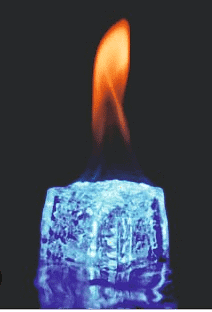
But if it had to perish twice,
I think I know enough of hate
To say that for destruction ice
Is also great
And would suffice.

The poet considers another possibility: if the world had to end a second time, ice (representing hatred and coldness of heart) could also destroy it. Frost has seen how hatred freezes relationships, communities, and humanity itself. Just like fire, ice is equally powerful and dangerous, though it works more slowly and silently. In conclusion, the poet warns us that both desire (fire) and hatred (ice) can bring about destruction, not just of the world but also of human lives and society.

Theme/ Message 
Theme 

  • Dual destructive forces - The poem explores how two opposite emotions, desire (fire) and hatred (ice), are equally capable of destroying the world.

  • Symbolism: Fire represents desire, passion, and the intensity of human emotions, while ice symbolises hatred, coldness, and emotional detachment.
  • Human emotions as threats - Fire represents greed, lust, and uncontrolled passion, while ice symbolises hatred, indifference, and insensitivity. These human emotions can lead to catastrophic consequences.
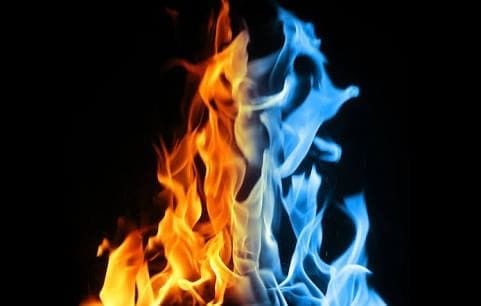
  • Inevitable destruction - The poet highlights that whether through burning desire or freezing hatred, human flaws can bring about destruction if left unchecked.

  • Balance and moderation - The underlying lesson is that excess of any strong emotion leads to ruin; self-control and sensitivity are implied remedies.

Message

  • The poem teaches that uncontrolled human emotions - whether burning desires or cold hatred - have the power to destroy not just individuals, but the world.
  • Ultimately, survival depends not on natural disasters but on how we manage our inner emotions.

Literary Devices

  • Rhyme scheme - stanza 1 is abaa while for stanza 2 it is ababa.
    Symbolism - Symbolism is the use of symbols to signify some ideas by giving them symbolic meaning different from their literal meaning.
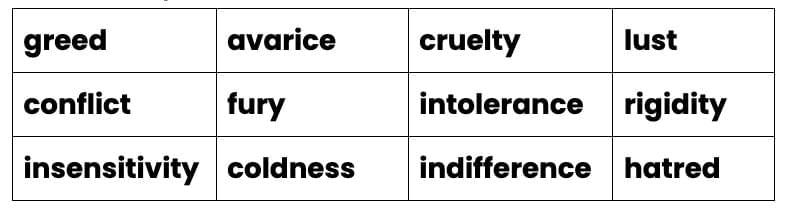
    •Fire - symbolizes desire, including human emotions like lust, fury, cruelty, greed etc..
    •Ice - symbolizes the hatred with cold feelings of humans such as rigidity, jealousy, indifference, intolerance, etc..
  • Imagery -Imagery is the visualisation of the poetic description through our sensory organs. Here, the reader would visualise the destruction through fire or ice. The imagery formed would depend on how we perceive and imagine in the context being portrayed in the poem. It makes a poem picturesque as images are formed in the minds of the reader.
    For example, "Some say the world will end in fire" and "To say that for destruction ice, is also great".
  • Personification -Personification is to assign human qualities to non-living things. In this poem, 'fire' and 'ice' are capable of destroying the earth. Therefore, the poet personifies fire and ice by giving them a mind which is capable of destroying almost anything.
  • Anaphora - Anaphora is the repetition of a word or expression at the start of two or more consecutive lines.
    For example:
    "Some say the world will end in fire,
    Some say in ice."
    'Some say'' is repeated at the start of the lines 1 and 2.
  • Alliteration -Alliteration is the repetition of the same sound used at the beginning of the nearly placed words.
    Example: The sound of 's' in "some say," 'f' in "favour fire," and 'w' in "world will."
  • Assonance - Assonance is the repetition of the same vowel sounds in different words in the same line e.g., ''I hold with those who favour fire.'' In this line, the long sound of 'O' is used.
  • Enjambment-It is a line or clause that does not come to an end at a line break, rather it moves over to the next line. This device has been used prominently in the poem.
    For Example:
    ''From what I've tasted of desire
    I hold with those who favour fire''
  • Metaphor - It is a literary device that is used to make a covert comparison without using the words 'like 'or 'as '.
    Here, the poet has used the terms 'fire' and 'ice' as metaphors for the human emotions related to desire and hatred.
  • Antithesis - Fire is the antithesis of ice. Two contrasting and directly opposite destructive forces are the hallmark of this poem: 'Fire' and 'Ice'.

MULTIPLE CHOICE QUESTION
Try yourself: Which of the following best represents the symbolism of fire in the poem?
CORRECT ANSWER
A

Desire and passion

B

Hatred and coldness

C

Destruction and catastrophe

D

Indifference and intolerance

Correct Answer: A
- The poem uses fire as a symbol to represent extreme human emotions such as desire, passion, lust, anger, and greed.
- Fire is associated with the intensity and burning nature of these emotions.
- The poet states that those who believe the world will end in fire are favoring the idea that human desires and passions will lead to destruction.
- Therefore, Option A is the correct answer as it accurately represents the symbolism of fire in the poem.
Report a problem

Also read: Short Answer Questions: Fire & Ice

Difficult Words

  • Perish - to die or be destroyed completely.

  • Desire - a strong feeling of wanting something; greed or passion.

  • Favor - to support or agree with an idea.

  • Suffice - to be enough or adequate.

  • Destruction - the act of causing great damage or ruin.

Symbolic Meanings

  • Fire - symbolises desire, greed, passion, lust, uncontrolled emotions.

  • Ice - symbolises hatred, indifference, coldness of heart, insensitivity.

Short Answer Questions: Fire & Ice
Q.1. What do "fire" and "ice" symbolise in the poem "Fire and "Ice"?
Ans: 'Fire' and 'Ice' are symbolised here. 'Fire' stands for desire, while 'Ice stands for hatred.​​​​

Q.2. What does the poet think about the end of the world?
Ans: The poet believes that the world may end either because of fire (desire) or ice (hatred). Though he initially agrees with fire, he later admits that ice is equally capable of destruction.

Q.3. How can fire destroy the world?
Ans: Fire symbolises uncontrollable desire. Such intense passions lead to conflicts and wars, which may finally destroy the world.

Q.4.What do you think would be enough to destroy the world? Can Fire and Ice contribute to it?
Ans: Our desires and hatred would be enough to destroy the world. According to the poet, `fire' represents 'desire' and `ice' represents `hatred'. Desires like fire spread rapidly and engulf one's whole life. Similarly, 'hatred' fills life with poison.

Q.5. What is the underlying idea of the poem 'Fire and Ice'?
Ans: The poet equates fire with `desire' and ice with 'hatred'. Both of these are growing with enormous speed. If we don't check them from growing, the world will perish. So we must restrain our desires and love our fellow beings.

Q.6. Which two ideas about how the world will end have been mentioned in the poem? Which idea does the poet support more?
Ans: The two ideas mentioned are that the world will end in fire or in ice. Though the poet thinks both are great for destruction, yet he seems to favour the idea of the destruction of the world by fire a little more than by ice.

Q.7. What do 'fire' and ice' stand for, and what is the general opinion regarding the world?
Or
According to the poet, what do 'fire' and 'ice' represent? Do you agree with him?
Ans: According to the poet, 'fire' represents desire and 'ice' represents hatred. I do agree with the poet. Desires like fire spread rapidly and engulf one's whole life. Similarly, 'hatred' fills the whole life with poison. It makes one hard-hearted and cruel.

Q.8. What do people think about the end of the world? What does the poet think?
Ans: Some people think that someday the world will end in fire. On the other hand, some people say that it will end in ice. The poet has experienced desire and therefore believes that fire can destroy the world.

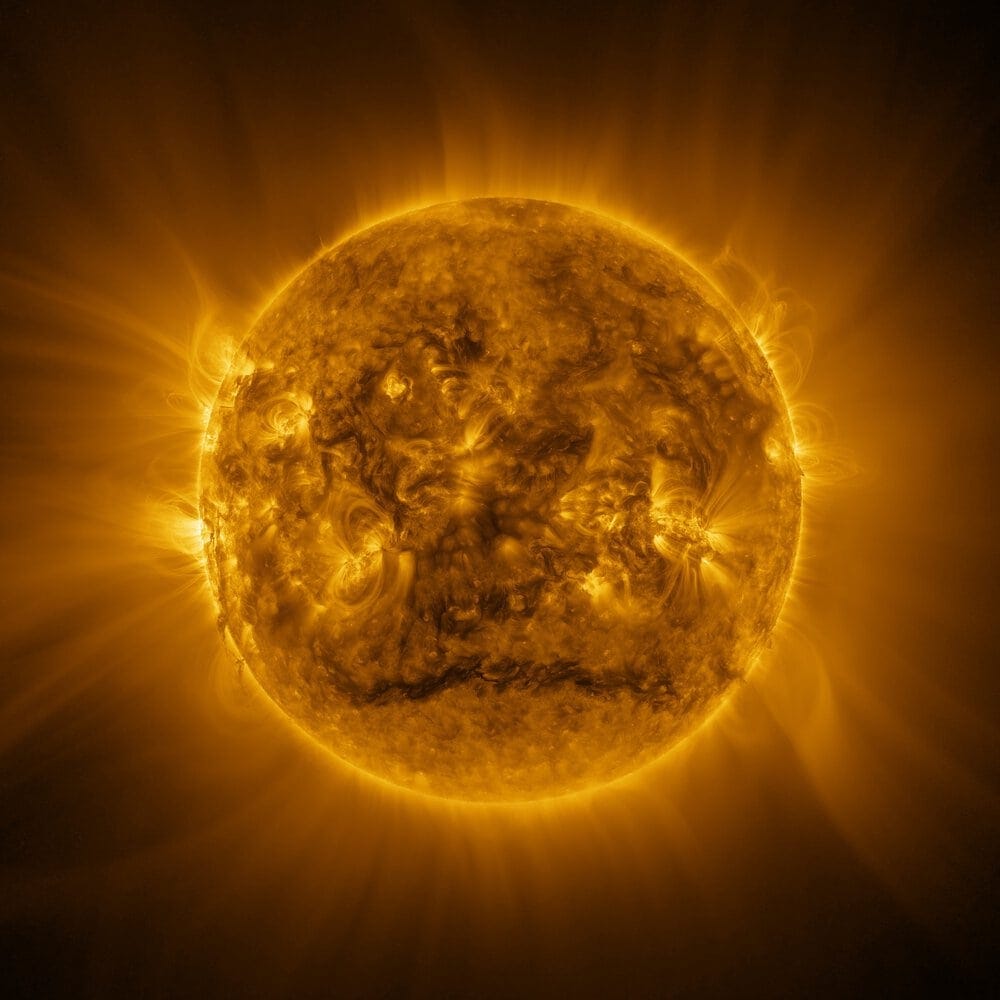
Q.9 There are many ideas about how the world will 'end'. Do you think the world will end someday? Have you ever thought what would happen if the sun got so hot that it 'burst', or grew colder and colder?
Ans: There are many ideas about how the world will end. Robert Frost points out two destructive forces-Fire and Ice, which may cause an end to the world. Yes, everything is subject to an end. The world would come to an end someday. The cause may be a war or a natural calamity. The sun is the main source of energy. It is life on Earth. If the sun got so hot that it "burst' or grew colder and colder, the life on the earth would come to an end.

Q.10. How will the world end twice?
Ans: The poet says that both fire and ice are destructive. Here, fire stands for the heat of desire and ice stands for hatred He thinks that our violent desires will end the world. If it survives, it will be ruined by hatred.

Q.11. What is the main idea of the poem?
Ans: The main idea of the poem is that there are violent passions in the world. They are destructive. The poem conveys that both desire and hatred are destructive human emotions and either can bring about the end of the world.

Q.12. Will this world come to an end? What does the poet say in this regard?
Ans: Everything that has a beginning or origin, does have an end. It is an eternal law of nature. The existing world will come to an end, someday. The poet believed many people believe that either 'fire' or 'ice' will be the cause of the end of the world.

Q.13. What do people think about the end of the world? Who does the poet side with and why?
Ans: People are divided over the cause of the end of this world. Some people think that 'fire' symbolised by unbridled passions, desires and fury will destroy this world. Others believe that 'ice' symbolised by cold reasoning, indifference and hatred will be the cause of destruction. The poet sides with those who believe that 'fire' or unbridled passions and desires will result in the destruction of the world.

Q.14. Why does the poet say, 'I've tasted of desire/I hold with those who favour fire?
Ans: The poet is familiar with the fire of passions and desires in love. He knows it quite well that are uncontrolled desires, passions and fury lead to our destruction. Similarly, he sides with those people who believe that 'fire' symbolised by unbridled passions and desires with be the real cause of the end of the world.

Q.15. What will be the cause of the end of the world if it has to perish twice?
Ans: This world is not eternal. Its end is certain. The poet sides with those people who think that 'fire' will cause the end of the existing world. But if this world has to perish twice the 'ice' is as strong to bring the end of the world as 'fire' is. Icy reasoning devoid of human love and sympathy and hatred is sufficient to bring an end of this world.

Q.16. How does the poet 'know enough of hate'? Where will this 'hate' lead to?
Ans: 'Icy' or cold reasoning can lead to rigidity, indifference and insensitiveness. This can take away all warmth of human feelings, love and sympathy. The result can be disastrous. 'Hatred' born out of cold and 'Icy' reasoning can lead to the destruction of the world.

Q.17. How will 'ice' be as 'great' and 'suffice' for causing the end of this existing world? Do you agree with the poet?
Ans: There is no need for 'fire' to destroy the world. Even 'ice' is sufficient and 'strong' enough to cause the destruction of this world. If this world has to 'perish twice', then there is no need for fire to destroy it twice. 'Ice' is as 'strong' and 'great' a cause that can cause the end of this world.

Q.18. What is the message of the poem 'Fire and Ice'?
Ans: The metaphors of 'fire' and 'ice' are used very effectively to convey a definite message to the readers. 'Fire' here stands for our unbridled, uncontrolled and unchecked passions, desires, lust and fury. Such passions are disastrous for human beings. Similarly cold reasoning devoid of all human warmth, love, sympathy will bring insensitivity, cruelty and rigidity. This hatred will lead to the end of this world.

Q.19. From when I have tasted of desire
I hold with those who favour fire.
Why does the poet hold with those who favour fire?
Ans: The poet sides with those who believe that the world will be destroyed by fire. 'Fire' is a symbol of desire. The poet has already experienced desire. On the basis of his experience, he knows that excessive desire will destroy the world. That is why he holds with those who favour fire.

Q.20. But if it has to perish twice
I think I know enough of hate.
What does 'it' refer to? How will it perish twice?
Ans:  'It' here refers to the world. The poet says that people hold different opinions about the end of the world. Some say 'fire', which stands for 'desire', will destroy the world. Secondly, 'ice', which stands for 'hatred' can also destroy the world.

Q.21. To say that for destruction ice
Is also great
In the poem what does 'ice' stand for? How is it sufficient to bring destruction?
Ans: 'Ice' stands for 'hatred'. Hatred may be religious, communal or of any other type. According to the poet, there is enough hatred in the world which will destroy the external, physical world one day.

Long Answer Questions:

Q.1. How does the poem depict the two contrasting ideas- 'Fire' and 'Ice'? Can hatred destroy us and the world? Explain bringing out values that can make this world a better place to live in.
Ans. In this poem, Robert Frost uses the images of fire and ice as clear metaphors for two powerful human impulses. Fire stands for desire, passion and uncontrolled longing; ice stands for hate, cold indifference and emotional hardness. The poet suggests that either extreme can lead to destruction: desire can burn and consume, while hatred and coldness can freeze and kill feeling. Yes, hatred can destroy people and communities because it hardens hearts, breaks trust and leads to cruelty and conflict. To prevent this, human values such as love, compassion, tolerance, empathy, patience and generosity must be practised. These qualities warm relations, reduce resentment and help people resolve differences peacefully, making the world a safer and kinder place to live in.

Q.2. What is the rhyme scheme of the poem? How does it help in bringing out the contrasting ideas in the poem?
Ans. The commonly noted rhyme scheme is ABAB in the first stanza and ABAAB in the second stanza. The repeating rhyme pattern in the first part creates a steady, familiar rhythm that introduces the speaker's simple observation about the world ending in fire or ice. When the rhyme pattern shifts in the second part, it matches the movement of thought from one idea to its opposite and back again; this subtle change in sound underlines the contrast between burning desire and icy hate. In addition, the recurrence of key rhymes and the compact form of the lines help make the statement feel decisive: each image (fire or ice) is presented as a complete, sufficient cause of destruction, and the rhyme supports that completeness by giving the lines a firm, balanced sound.

Q.3. There are many ideas about how this world will come to an 'end'. What are they? Do you agree with the poet and his understanding of the poet and his understanding of the issue in this regard?
Ans. The poem presents two main ideas about the end of the world. Some believe it will end in fire, symbolising uncontrolled desire and passion, while others believe it will end in ice, symbolising hatred and cold indifference. Robert Frost agrees that both forces are equally capable of destruction. I agree with the poet because excessive desire can lead to greed and violence, while hatred can destroy human relationships and society. Thus, both fire and ice are capable of causing destruction

Q.4. What do the metaphors of 'ice' and 'fire' convey to the readers? Don't they represent the two extremes of human behaviour that can lead to the destruction and death of this world? What is the message that the poet wants to give to the readers?
Ans. The metaphors of fire and ice convey two opposing human extremes. Fire symbolises burning desire, passion, greed and rage; ice symbolises coldness, hate, indifference and rigidity. Both extremes are dangerous because they remove balance and human warmth: fire can destroy through uncontrolled impulse, while ice can destroy by killing feeling and compassion. The poet's message is a warning and an appeal - people should be aware that extremes of feeling or of cold, indifferent thinking can both lead to ruin. Implicitly, Frost asks readers to avoid such extremes and to cultivate moderation, understanding and kindness so that human society does not move towards its own end.

Multiple Choice Questions

Q1: Why are desires compared to fire?
(a) Both are lethal
(b) Both are related to heat
(c) Both burn
(d) Both consume rapidly
The correct Answer is Option (d)
Desires are powerful and can lead to a quick end. Just like fire, desire can spread and consume fast leading to apocalypse.

Q2: According to the poem Fire and Ice, what do some people think the world will end in?
(a) Rain
(b) Moon
(c) Sun
(d) Fire
Correct Answer is Option (d)
According to the poet, some people believe that the world will end in fire because of the violent desires of man.

Q3: "But if it had to perish twice." What does 'it' stand for in this line?
(a) World
(b) Desire
(c) Ice
(d) Fire
Correct Answer is Option (a)
The poet through the poem tries to opine that hate and greed are the greatest malice in this world. The poet says that although he favors the belief that the world would end in fire, he also feels that if the world were to end twice it would end in ice i.e. man's propensity to hate the other will be the cause of it's demise.

Q4: Who is the poet of the poem Fire and Ice?
(a) Robert Frost
(b) Ben Jonson
(c) William Cowper
(d) William Blake

The correct Answer is Option (a)
Robert Frost is the poet of 'Fire and Ice'.

Q5: Name the poetic device used in the line To say that for destruction ice is also great.
(a) Oxymoron
(b) Alliteration
(c) Imagery
(d) Metaphor
Correct Answer is Option (c)

Get additional INR 200 off today with EDUREV200 coupon.
Avail Offer

Short Answer Type Questions

Q6: Which age-old question does the poem revolve around? 

Ans: The poem revolves around the age-old question of whether the world will end in fire or in ice. People are divided on this issue. Some believe that fire will become the cause of the end and others think that ice will end the world. Here, fire symbolizes human desire and ice symbolizes hatred.

Q7: What do the metaphors of Ice and Fire convey to the reader? Elaborate. What is the message given by the poet?
Ans: Frost presents the two of the darkest traits of humanity; the capacity to hate and the capacity to be consumed by lust or desire. Of the two, he attributes the greater of the two evils, is desire. In giving desire the foremost position with regard to the destruction of the world, Frost provides a powerful statement on the subject of greed and jealousy, saying that above all trait of humanity that is most likely to lead to its demise. Desire represents the greatest problem that contributes to the cause of the war. Frost then attributes hatred to the same capacity to do harm. However, he lessens the relative importance of hatred but still presents it as having the ability to lead to the destruction of the world if it were to happen for a second time.

Q8: What do 'Fire' and 'Ice' stand for and what is the general opinion regarding the world? 
Ans: Fire' stands for fury, desire, lust, anger, avarice, cruelty, greed. Ice is symbolic of hatred, coldness, rigidity, insensitivity, and intolerance. The general opinion regarding the world is that the world will end in fire and some say in ice. Both reasons contrast each other and one is equally opposite to each other. People who favor fire believe that it will be the heat and passion that will end the world. On the other side, some people think that it will be the ice that will freeze the world.

Q9: How can fire destroy the world?
Ans: Fire' symbolizes passion or hatred. It will lead to conflicts and ultimately destroy the world. Fire represents desire that is fervent, consuming, and always wanting more. Ice represents hatred that is hard and cold.

Q10: What is the central idea of the poem 'Fire and 'Ice'? 
Ans: The poet presents two possibilities about the end of the world. It will be either due to 'Fire or 'Ice' he prefers the first as he believes the world will end in fire but the ice will not go away.

Also read: Sure Shot Questions for Board Exams: Fire and Ice

Long Answer Type Questions

Q11: Discuss how extreme behavior can hasten the end of the world with respect to 'Fire and Ice'. 

Ans: The concept of 'Fire' serves as a representation of intense desire, encompassing a fervent love or craving that directs individuals toward acquiring and possessing materialistic pursuits. Within our society, numerous individuals dedicate their lives to attaining larger TVs, more stylish cars, or more opulent homes. This relentless desire, however, often leads individuals to their downfall, manifesting in financial ruin or fractured relationships. Frost's poem delves into the theme of greed corrupting both individuals and society at large.
On the other hand, 'Ice' symbolizes the potent force of hatred. While desire swiftly consumes, hatred quietly generates restrained devastation. A prime example is the role of hatred in fostering racism and fueling wars, with its impact enduring in the minds of people for generations. Moreover, hatred can consume the hater even more profoundly than the person being hated, ultimately resulting in the ruin of lives.

Q12: The poem 'Fire and Ice', carries with it very deep thematic ideas. Elaborate on these darkest traits of humanity.
Ans: Frost explores two of humanity's darkest traits in his work: the capability for hatred and the susceptibility to be consumed by lust or desire. Interestingly, he assigns the greater degree of malevolence to desire. By emphasizing desire as the primary force behind the world's destruction, Frost delivers a compelling commentary on the perils of greed and jealousy. He suggests that, above all human traits, desire poses the greatest threat to the world and plays a significant role in the causes of war. Frost then attributes hatred with a comparable potential for harm, albeit he diminishes its relative significance. Still, he underscores its ability to contribute to the world's destruction, especially if allowed to manifest once again.

Q13: How will the world end? Support your answer with a scientific explanation. 
Ans:  Scientists propose two potential reasons for world destruction:

  • Some believe the Earth could be incinerated from its fiery core. This could lead to natural calamities like volcanic eruptions, earthquakes, and tsunamis, ultimately ending the world.
  • Others argue that an impending ice age, triggered by global warming and melting ice from snowy mountains, poses a significant threat. This scenario envisions the world shrinking as icy waters prevail, resulting in the demise of all living things.
    Frost's work serves as a cautionary message about these dual challenges facing humanity, highlighting the potential consequences of human vices with increased impact.

Extract Based Questions

Q14: 
Some say the world will end in fire
Some say in ice.
From what I've tasted of desire
I hold with those who favor fire.
(a) What is the poet's opinion of the world in these lines?  
Ans: In the poet's opinion the world will end in fire. 
(b) What is the poet's opinion about the world?
Ans: According to the poet, the world will end in fire.
(c) What is the contradictory opinion of the public?
Ans: The contradictory opinion of the public is the debate whether the world will end in fire or ice. 
(d) How are ice and fire similar to each other though they have contradictory traits? 
Ans: Both ice and fire are similar in the sense that both of them would destroy everything in the world. 

Q15: 
 But if it had to perish twice,
I think I know enough of hate
To say that for destruction ice
Is also great
And would suffice.
(a) Why does the poet feel that 'ice' is also great for destruction?
Ans: Ice equates with 'hatred', which is enough to destroy the world.
(b) What is the rhyme scheme of this stanza of the poem?
Ans: a b a b a
(c) The two things that the poet thinks are good enough for destruction are 
Ans: fire and ice which means 'hatred' and 'desire'.
(d) What does 'it' stand for in the first line?
Ans: Here, 'it' stands for the world.

Key Questions

Q1: Who is the poet of the poem 'Fire and Ice'?

Solution:
The poet of the poem 'Fire and Ice' is Robert Frost, a famous American poet known for his simple style and deep philosophical ideas about human emotions and nature.

Q2: What are the two possible ways in which the world can end according to the poet?

Solution:
According to the poet, the world can end either in fire or in ice. Fire symbolises desire and uncontrolled passion, while ice symbolises hatred and coldness.

Q3: What does 'fire' symbolize in the poem?

Solution:
In the poem, fire symbolises desire, greed, passion and uncontrolled human emotions. The poet believes that excessive desire can destroy the world and human life.

Q4: What does 'ice' symbolize in the poem?

Solution:
Ice symbolises hatred, cruelty, indifference and coldness of heart. The poet suggests that hate can also become destructive and lead to the end of the world.

Q5: Why does the poet favour fire as the cause of destruction?

Solution:
The poet favours fire because he has experienced human desire and understands its destructive nature. He believes that uncontrolled desires can cause great destruction in the world.

Q6: Why does the poet think ice is also capable of destruction?

Solution:
The poet thinks ice is capable of destruction because hatred and emotional coldness can be equally harmful. Hate destroys relationships, peace and humanity in society.

Q7: What is the central idea of the poem 'Fire and Ice'?

Solution:
The central idea of the poem is that uncontrolled human emotions such as desire and hatred are dangerous and destructive. Both can lead to suffering and destruction if not controlled.

Q8: Explain the line 'From what I've tasted of desire'.

Solution:
The line means that the poet has personally experienced desire and understands how powerful and destructive it can become when people fail to control their emotions.

Q9: Explain the line 'I think I know enough of hate'.

Solution:
The poet means that he has seen or experienced hatred in life and knows that hatred can be equally destructive and harmful like uncontrolled desire.

Q10: How does the poem highlight human emotions?

Solution:
The poem highlights that strong human emotions such as desire and hatred control human behaviour. If these emotions become extreme, they can destroy peace, relationships and even society.

Q11: What message does the poem 'Fire and Ice' convey?

Solution:
The poem conveys that people should control negative emotions like greed, desire and hatred. Emotional balance and self-control are necessary for peaceful and meaningful life.

Q12: Why is the poem considered symbolic?

Solution:
The poem is considered symbolic because fire and ice are used as symbols for human emotions. Fire represents desire while ice represents hatred and emotional coldness.

Q13: What is the tone of the poem 'Fire and Ice'?

Solution:
The tone of the poem is serious, thoughtful and philosophical. The poet reflects deeply on human emotions and their destructive effects on the world.

Q14: Explain the rhyme scheme of the poem.

Solution:
The rhyme scheme of the poem is ABA ABC BCB. The poem uses a simple but effective rhyme pattern that makes it musical and memorable.

Q15: How is the poem 'Fire and Ice' relevant in modern times?

Solution:
The poem remains relevant because greed, hatred and violence still create conflicts and destruction in society. It reminds people to control negative emotions and promote peace and harmony.

Important Topics for Preparation

  • Symbols: Fire and ice as human emotions
  • Theme: Destructive nature of desire and hatred
  • Message: Importance of emotional control
  • Poetic Devices: Symbolism, imagery and rhyme scheme
  • Tone: Philosophical and reflective

Short & Long Questions: Poem - Fire and Ice

Short Answer Questions

Q1: According to the poet, what do 'ice' and 'fire' symbolise? [CBSE QB, 2020-21]
Ans: According to the poet 'ice' symbolizes hatred, coldness and rigidity and these human cold emotions and lack of love are destructive enough to remove the warmth of fire and destroy the world. Fire symbolises unlimited wishes and desires of human beings like violent feelings of anger, cruelty, brutality, etc., that might end the world.

Q2: What is the message of the poem 'Fire and Ice'?
Ans: The poem 'Fire and Ice' is short but encompasses the entire humanity in its targeted message. The metaphor of 'Fire and Ice' are used very effectively to solidly convey a clear message to the readers. The poem acts like a moral-mirror for readers to assess their own standing in the world. 'Fire' stands for our uncontrolled passions which are disastrous for human beings. Similarly cold reasoning devoid of human love will bring insensitivity. Both the aspect of human thinking and resulting behaviour embedded with desire and hatred will lead to the end of this world and it may also happen more than once.

Q3: The tone of the speaker contrasts with the seriousness of the subject matter. Justify. [CBSE QB, 2020-21]
Ans: 'Fire and Ice' is a symbolic poem by Robert Frost with a message to reveal the gravity of the violent and cold human emotions. These emotions, if not controlled, may lead to destruction of the world. The poet wants to make humanity believe that everything will end one day as a result of human misdeed. His aim is aphorism-brevity for Frost truth remains ambiguous as to how specific the world is going to end. That's why the tone contrasts with the seriousness of the subject matter with people favouring both 'fire' and 'ice'.

Q4: Evaluate the line- Some say the world will end in fire/Some say in ice- in the context of volcanic eruptions, forest fires, meteor collisions, melting ice caps etc. [CBSE QB, 2020-21]
Ans: In the poem 'Fire and Ice' the poet considers the age-old question of whether the world will end in fire or in ice. The threat of global warming may lead to severe volcanic eruptions and forest fires that may end the world or there might be a meteor collision, the melting of ice caps or glaciers etc, that may also end the world.
So, either option is enough to achieve its purpose sufficiently may be in storm of volcanic eruptions, forest fires or melting ice caps.

Q5: Fire and Ice projects a pessimistic outlook. Comment. [CBSE QB, 2020-21]
Ans: According to me, 'Fire and Ice' projects a realistic outlook rather than a pessimistic one. The poet brings forth the view that the world will soon end. It can be either by fire or ice. He mentions that he has tasted everything in life after World War I. So, it would soon end either with greed or indifference.

Q6: What does 'fire' and 'ice' stand for and what is the general opinion regarding the world? [Board Term-I, 2016-17]
Ans: Fire stands for fury, desire, lust, anger, avarice, cruelty and greed. Ice is symbolic of hatred, coldness, rigidity, insensitivity and intolerance. The general opinion regarding the world is that the world will end in fire and some say ice. Both the two reasons contrast each other and one equally opposite to each other. People who favour fire believe that it will be the heat and passion which will end the world. On the other hand, some people think that it will be the ice which will freeze the world.

Q7: To say that for destruction, ice is also great for the poet, what does ice stand for? How is it sufficient to bring destruction? [CBSE 2014]
Ans: Ice stands for the cold feelings of humans such as indifference, hatred, greed, jealousy, apathy, lack of love, cold-heartedness, etc. Although the poet states that he believes fire would bring an end to the world, he also states that if the world has to end twice, then ice or the cold feelings of people are also great to end the world.

Q8: How will the world end? Support your answer with a scientific explanation. [CBSE 2014]
Ans: According to some people, the world will end in fire. The core of the earth will get extremely heated up due to the increasing global warming. It may lead to severe natural calamities like volcanic eruptions, earthquakes, uncontrollable forest fires and tsunamis that may end the world. However, some people believe that the world may end in ice. As a result of the melting ice caps or glaciers, there would rise an ice age that would freeze all the living things on the earth to death. All the ice and snow from the mountains will melt down to the plains one day and thus, will shrink the world.

Q9. Explain the symbols used in the poem 'Fire and Ice' by Frost.
Ans: Frost represents 'fire' as human desires and lust for things. It symbolises all the uncontrolled materialistic greed that humans have and their actions to achieve their goals create conflict and destruction. However, 'ice' is a symbol of cold feelings. It symbolises hatred, indifference and coldness of heart with the same effects as the 'fire' element.

Q10. How can Frost's poem 'Fire and Ice' be read as an extended metaphor?
Ans: Frost's poem 'Fire and Ice' is certainly an extended metaphor. The metaphor of 'Fire and Ice' is used very effectively to solidly convey a clear message to the readers. The poem acts like a moral-mirror for readers to assess their own standing in the world. Fire metaphorically represents and refers to violent human emotions like anger, cruelty, brutality, etc., while the term ice refers to cold human feelings such as hatred, jealousy, indifference, etc., that might destroy the world. The poet has used both fire and ice as great metaphors to imply that both of the destructive forces are powerful enough to bring doom to the world. These metaphors convey that violent and cruel human emotions are a threat to the world.

Long Answer Questions
Q1: "Fire and Ice" was first published in 1920. Briefly explain how WW I might have influenced the theme of the poem. [CBSE QB, 2020-21]
Ans: WW I was fought between 1914 and 1918. The poem was published two years after the war and so, there is the possibility that the war may have impacted the theme of the poem 'Fire and Ice'. The destruction and violence and rage seen during WW I is reflected in the poem 'Fire and Ice' with the two different scenarios represented by the elements of the poem's title. Robert Frost must have seen the destruction of the world that was the outcome of the uncontrolled rage of people and thus believes fire to be the world-ender. Ironically, he also adds that ice representing the ' hate world 'also' be 'great' to bring the end of the world. Here the poet uses his own experiences of worldly life and its mundane truth to add a second stanza devoted to the world-ending effect of ice i.e. hatred and indifference in the hearts of people.

Q2: Most of your classmates, like Frost, feel that man's greed and rage or hate, would lead the world to its destruction. You feel that the 'fire and ice' in Mankind can be addressed to create a harmonious world. Write a speech, for your classmates, expressing your beliefs with respect to the poem. [CBSE QB, 2020-21]
Ans: A very good morning, to each and every one present in this room. Today I'm here to express my beliefs with respect to the poem 'Fire and Ice'. Dear friends, I strongly believe that 'Fire and Ice' in Mankind can be addressed to create a harmonious world. We, humans, are swaying between two extremes 'Fire and Ice'. Sometimes we are torn by our unbridled fire of passions, desires, lusts, longings and fury. This further results in greed, avarice and passionate love. All such extremes can lead to conflicts and disasters. If not controlled, they can help in bringing an early end of the world. Humanity can redeem itself and possibly save or delay the end of the world by giving up such extremes of thinking and behaviour. So let us keep burning the fire of patriotism, solidarity and sensitivity and put ice on indifference and rigidity to create a harmonious world around us.

Q3: It is a Hobson's Choice that the poet faces in the poem 'Fire and Ice'. Illustrate this thought, with the help of examples from the poem.
Ans: The poem describes a fiery end to the planet, which represents human greed and selfishness. Some believe that the ice, which represents hatred, will bring about the end. Because both options would ultimately lead to catastrophe, humanity is thus faced with a decision that really isn't a choice at all. As all options equally contribute to personal damage, the decisions are demonstrated on a personal level. To underscore the significance of his message that there are no alternatives, the poet presents the options in a concise and terse manner. The poem's central theme of destruction brought on by greed and hatred, which is exemplified by the saying Hobson's Choice, gives the poem a deep and dark undercurrent.

Q4: Today's world is conflict ridden. People fight over various issues and there is no peace in the world. Explain/Describe based on your reading of the poem 'Fire' and 'Ice'.
Ans: In today's world, hatred is a major problem. Brother despises his brother, and neighbour despises his neighbour. Nobody wants to put up with or forgive anyone else. We live in a terribly divided world as a result of the hostility. Nothing will be left untouched if hatred continues to control our lives and the globe. All of our accomplishments will be lost, and the planet will end. We must develop the capacity to forgive and forget if we are to save the earth. For this, we need a tremendous amount of love and compassion, as well as the ability to put up with one another's differences and learn to get along.

NCERT Solutions: Fire & Ice

Q1. There are many ideas about how the world will 'end'. Do you think the world will end someday? Have you ever thought what would happen if the sun got so hot that it 'burst', or grew colder and colder?
Ans: There are many theories about how the world might end, and it is reasonable to think that, like many things, the world will have an end at some point. If the Sun were to become extremely hot and explode, the Earth would be destroyed very quickly because no living thing could survive such intense heat. If the Sun grew much colder, life would also come to an end: plants would be unable to make food without sunlight, temperatures would fall drastically, and animals and humans could not survive for long. In either case, the loss of the Sun's normal heat and light would make the planet uninhabitable.


Q2. For Frost, what do 'fire' and 'ice' stand for? Here are some ideas:

Ans: For Frost, fire and ice are symbols for two kinds of destructive human forces. Fire stands for desire, passion, greed and anger - the intense wishes or emotions that can lead people to harm others or destroy what they have. Ice stands for hatred, coldness, indifference, rigidity and cruelty - an emotional chill that makes people uncaring and unkind. Frost suggests that either uncontrolled desire or hard-hearted hatred could, in different ways, bring about great harm to the world.


Q3. What is the rhyme scheme of the poem? How does it help in bringing out the contrasting ideas in the poem?
Ans:
The rhyme scheme of the poem is: a, b, a, a, b, c, b, c, b.
This pattern helps to underline the contrast between fire (desire) and ice (hate). The first four lines, with the repeated 'a' sounds, give a strong, steady rhythm that emphasises the speaker's view about fire and desire. In the remaining lines, the alternating 'b' and 'c' sounds shift the rhythm and draw attention to the idea of ice and hatred. The repeated b rhymes at the close of the poem link the final thought - that ice would also suffice to destroy - back to earlier lines, giving a balanced finish and reinforcing the poem's message that both intense desire and cold hatred are powerful enough to bring an end.

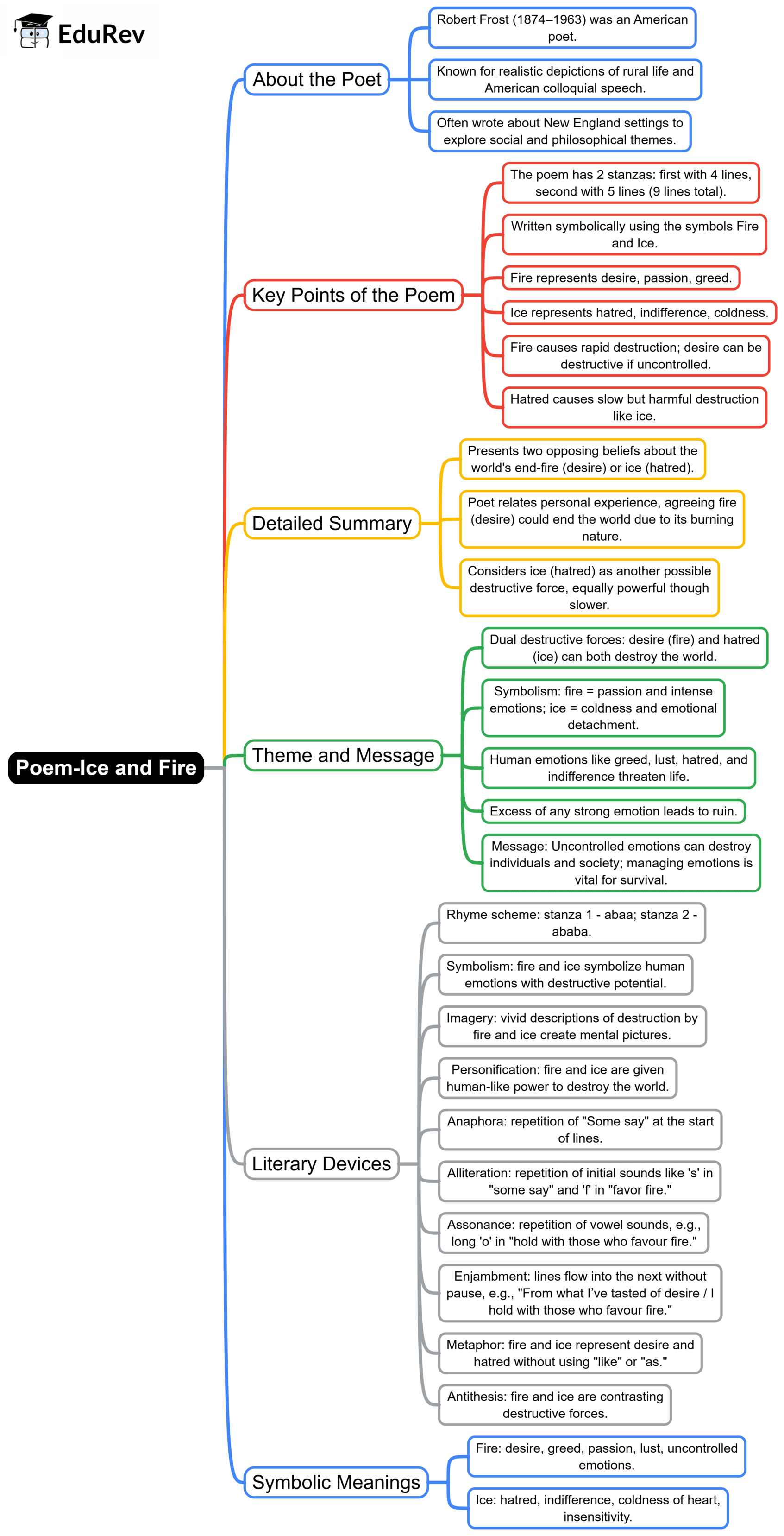
Mind Map:

MCQs - Stanza 1

Read this stanza and answer the following questions:

"Some say the world will end in fire
Some say in ice.
From what I've tasted of desire
I hold with those who favour fire."

Q1: What do some people think about how the world will end?
(i) They think the world will end in floods.
(ii) They think the world will end in fire or ice.
(iii) They think the world will end in a storm.
(iv) They think the world will end in an earthquake.
Ans: (ii)

Explanation: The poet presents two opposite views about the world's end: one group believes it will end in fire and another believes it will end in ice. These two possibilities are stated plainly in the first two lines, so option (ii) correctly summarises those opinions.
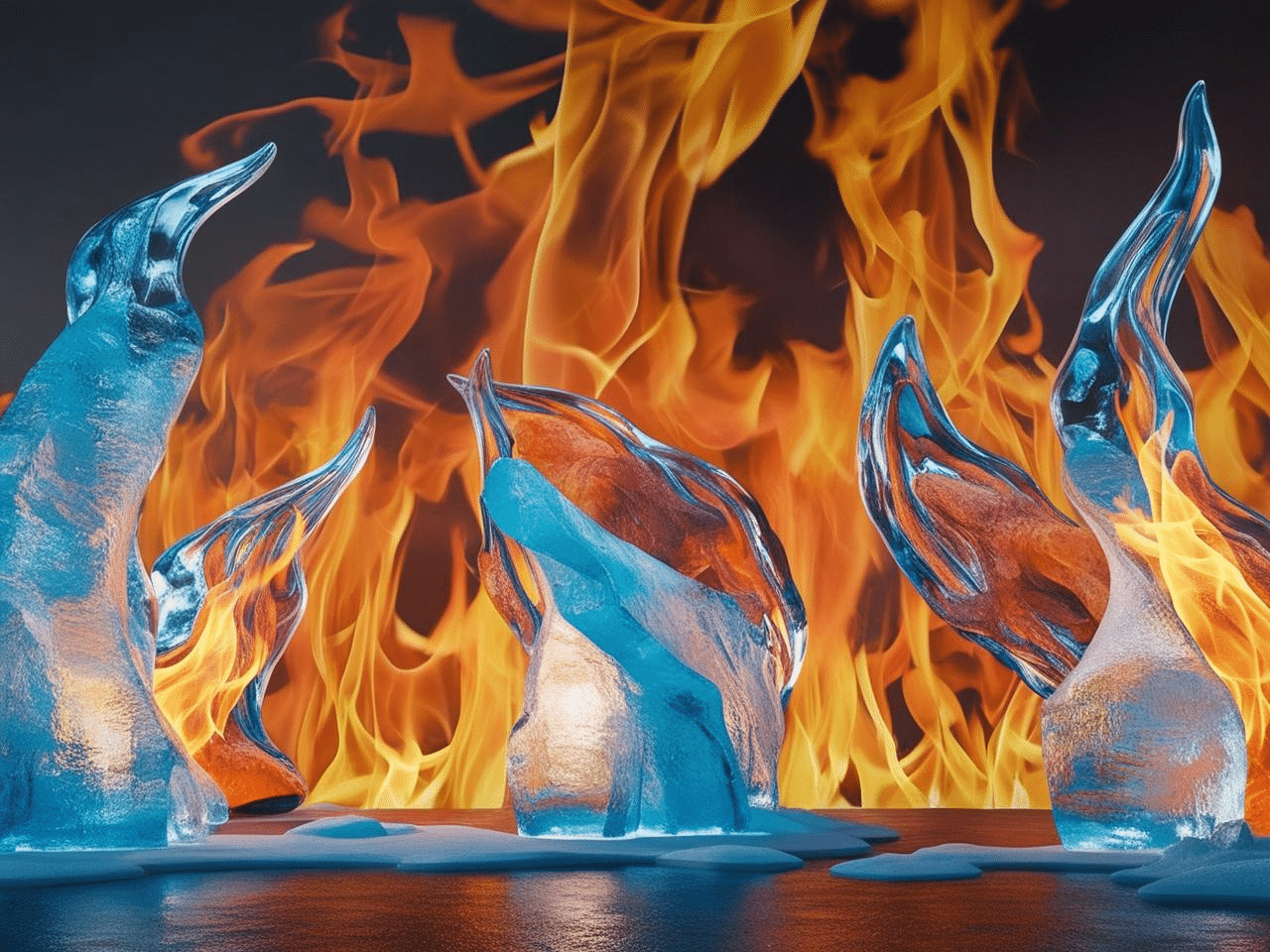
Fire and Ice

Q2: What is the poet's opinion about desire?
(i) Desire is the cause of destruction.
(ii) Desire should be controlled.
(iii) Desire is not harmful.
(iv) Desire is the force that saves the world.
Ans: (i)

Explanation: The poet links fire with desire and indicates that desire can be destructive when strong and unchecked. By saying "From what I've tasted of desire / I hold with those who favour fire," he shows his belief that desire has the power to destroy, which supports option (i).

Q3: What does "fire" symbolize in the poem?
(i) Heat
(ii) Anger
(iii) Desire
(iv) Rage
Ans: (iii)

Explanation: The poet explicitly refers to what he has "tasted of desire" and then sides with those who favour fire. This direct link makes it clear that fire symbolises desire - intense passion or longing that can consume and destroy.

Q4: What is the rhyme scheme of the stanza?
(i) AABB
(ii) ABAB
(iii) ABAA
(iv) ABBA
Ans: (iii)

Explanation: The rhyme pattern is ABAA. The rhyming words are "fire" (A), "ice" (B), "desire" (A) and "fire" (A). Thus the first, third and fourth lines rhyme with each other while the second line has a different rhyme.

Competency-Based Question

Q5: The poet relates "fire" to desire. If you were in a leadership role, how would you ensure that intense ambition (desire) does not harm your team?
(i) Encourage healthy competition and open communication
(ii) Let ambition run unchecked to boost productivity
(iii) Avoid setting goals to reduce pressure
(iv) Assign individual tasks only and avoid collaboration
Ans: (i)

Explanation: Like fire, unchecked ambition can harm a group. A good leader channels ambition in positive ways by encouraging healthy competition, setting clear goals, and maintaining open communication so that team members support each other rather than undermine one another.

Competency Tested: Leadership, Emotional Intelligence

Q6: The poem explores how strong emotions can lead to destruction. How can this idea be applied to real-life conflict management?
(i) Ignore emotional tension and focus on results
(ii) Promote emotional awareness and mediation
(iii) Allow conflicts to escalate to teach lessons
(iv) Avoid working with people who disagree with you
Ans: (ii)

Explanation: Since powerful emotions like desire can be destructive, effective conflict management requires recognising and addressing emotions early. Promoting emotional awareness and using mediation helps resolve tensions constructively and prevents harm to relationships and outcomes.

Competency Tested: Conflict Resolution, Emotional Awareness
MCQs - Stanza 2

Read this stanza and answer the following questions:

"But if it had to perish twice,
I think I know enough of hate
To say that for destruction ice
Is also great And would suffice."

Q1: What does "it" refer to in the first line?
(i) Fire
(ii) Ice
(iii) Destruction
(iv) The world
Ans: (iv)

Explanation: The pronoun "it" refers back to what the poet has been discussing earlier - the possible end of the world. Thus "it" here means the world that could perish.

Q2: What is "ice" symbolic of in the poem?
(i) Cold
(ii) Hatred
(iii) Indifference
(iv) Love
Ans: (ii)

Explanation: The poet links ice with negative feelings and calls it "great" enough for destruction. This establishes ice as a symbol of hatred or cold indifference that can destroy relations and, by extension, the world.

Q3: Which two elements does the poet consider as sufficient to destroy the world?
(i) Fire and ice symbolizing hatred and desire
(ii) Fire and ice symbolizing heat and glaciers
(iii) Fire and ice symbolizing anger and frustration
(iv) The cold attitude and anger of people
Ans: (i)

Explanation: The poet names fire and ice as the two forces capable of destruction. He equates fire with desire and ice with hatred, so together they represent passionate and cold destructive emotions, which supports option (i).

Q4: What is the rhyme scheme of this stanza?
(i) ABABA
(ii) ABABB
(iii) AABBA
(iv) ABBA
Ans: (i)

Explanation: The rhyme pattern is ABABA. The rhyming words are "twice" (A), "hate" (B), "ice" (A), "great" (B) and "suffice" (A), so the first, third and fifth lines share one rhyme and the second and fourth lines another.

Competency-Based MCQs

Q5: The poet considers "ice" (hatred) as equally destructive. What real-world behavior best reflects controlling such emotions?
(i) Expressing anger immediately to release tension
(ii) Avoiding people who upset you completely
(iii) Practicing empathy and seeking understanding
(iv) Keeping all emotions bottled up
Ans: (iii)

Explanation: Since ice represents hate and cold indifference, its opposite is warmth and understanding. Practising empathy and seeking to understand others helps reduce hatred and prevents destructive outcomes.

Competency Tested: Emotional Regulation, Empathy

Q6: According to the poem, both desire and hatred can destroy. In terms of decision-making, what's the best approach to avoid being swayed by such extremes?
(i) Trust only your gut instincts
(ii) Make impulsive choices based on passion
(iii) Balance emotion with reason and consider consequences
(iv) Avoid taking any decisions to stay safe
Ans: (iii)

Explanation: Both strong desire and strong hatred can lead to harmful choices. Balancing emotion with reason and weighing consequences helps make thoughtful decisions and avoids the extremes that the poet warns about.

Competency Tested: Critical Thinking, Decision-Making

More Questions on Stanza 1

Read this stanza and answer the following questions:
Some say the world will end in fire
Some say in ice
From what I've tasted of desire
I hold with those who favour fire.

(i) Name the poem and the poet.

Ans: These lines are from the poem 'Fire and Ice' by Robert Frost.

(ii) What are the two destructive forces?

Ans: The two destructive forces named by the poet are fire and ice.

(iii) What do they stand for?

Ans: Fire stands for desire and ice stands for hatred.

(iv) What does he favour?

Ans: Robert Frost favours the view that fire (desire) would cause the destruction of the world.

More Questions on Stanza 2

Read this stanza and answer the following questions:
But if it had to perish twice,
I think I know enough of hate
To say that for destruction ice
Is also great And would suffice.

(i) What does 'Ice' stand for?

Ans: Ice stands for hatred.

(ii) What does the poet believe?

Ans: Robert Frost believes that ice (hatred) is equally destructive and could destroy the world as effectively as fire.

(iii) What is the another destructive force?

Ans: The other destructive force is fire.

(iv) Find a word in these lines that means opposite to 'creation'.

Ans: Destruction.


Infographics: Fire and Ice