
Introduction
Power sharing is a fundamental principle of democratic governance that ensures the distribution of power among various organs of government, social groups, and political entities to prevent the concentration of power in a single authority.
This approach is crucial for maintaining stability, fostering inclusiveness, and promoting fairness in diverse societies.
In a democracy all power does not rest with any one organ of the government. An intelligent sharing of power among the legislature, executive and judiciary is very important for the design of democracy.

Belgium and Sri Lanka
Belgium
- Belgium is a small European country, smaller in area than Haryana state.
- Borders: France, the Netherlands, Germany, and Luxembourg.
- Population: Just over one crore, with a complex ethnic composition.
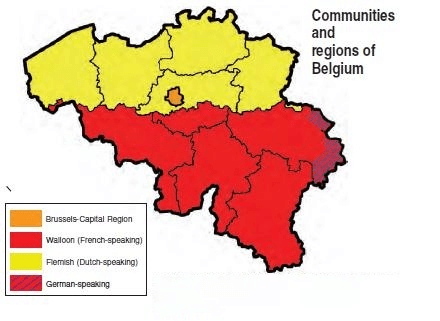
- Language breakdown: 59% Dutch speakers in Flemish region, 40% French speakers in Wallonia, and 1% German speakers.
- In Brussels, 80% speak French and 20% speak Dutch.
- Tensions: Dutch-speaking community felt disadvantaged compared to the French-speaking minority, leading to conflicts in the 1950s and 1960s.

 | Get additional INR 200 off today with EDUREV200 coupon. | Avail Offer |

Sri Lanka
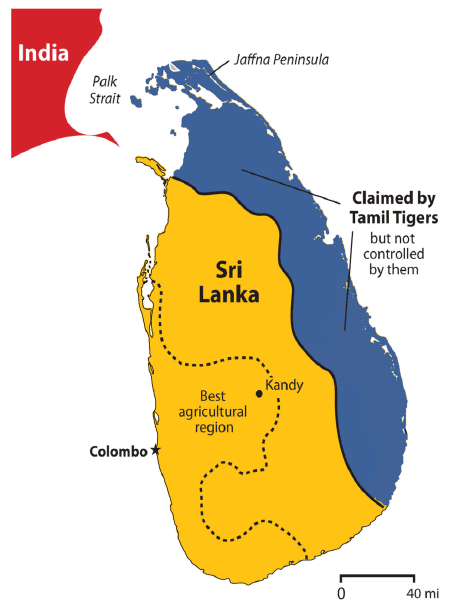
- Sri Lanka is an island nation close to Tamil Nadu with a population similar to Haryana.
- Population: Around two crore with significant diversity.
- Social groups: 74% Sinhala speakers, 18% Tamil speakers, including Sri Lankan Tamils and Indian Tamils.
- Religion: Majority of Sinhala speakers are Buddhists, while Tamils are mostly Hindus or Muslims.
- Concentration: Sri Lankan Tamils are mainly in the north and east of the country.
- Possibilities: Potential conflicts due to demographic majorities could lead to partition and power struggles.
Try yourself: What is the significance of power sharing in a democracy?
- Power sharing helps prevent the concentration of power in one person or group.
- This reduces the risk of misuse or abuse of authority.
- It ensures that all groups and interests are represented in the government.
- By dividing power, democracy remains fair and balanced for everyone.
Hence, the correct answer - Option B
Majoritarianism in Sri Lanka
Post-Independence Era (1948 Onwards): Following independence in 1948, Sri Lanka witnessed the rise of majoritarianism, where leaders of the Sinhala community sought to secure political dominance by leveraging their majority status.
Majoritarian Measures: A series of measures were adopted to establish Sinhala supremacy:
- Official Language Act (1956): Sinhala was recognized as the sole official language, disregarding Tamil.
- Preferential Policies: Government policies favored Sinhala applicants for university admissions and government jobs.
- Religious Favoritism: The constitution mandated state protection and promotion of Buddhism, further alienating the Tamil community.
Impact on Sri Lankan Tamils:
- Growing Alienation: Sri Lankan Tamils increasingly felt marginalized, perceiving that government policies denied them equal political rights, discriminated against them in employment opportunities, and ignored their cultural and linguistic needs.
- Political Discontent: Tamil leaders and parties sought recognition of Tamil as an official language, regional autonomy, and equality in education and job opportunities, but these demands were persistently denied.
Escalation and Civil War (1980s-2009):
- Rise of Separatist Movements: By the 1980s, political organizations advocating for an independent Tamil state, Tamil Eelam, emerged in the northern and eastern parts of Sri Lanka.
- Civil Conflict: Distrust between the Sinhala and Tamil communities escalated into widespread conflict, culminating in a civil war that lasted until 2009.
Consequences of the Civil War:
- Human and Social Impact: The war resulted in the loss of thousands of lives, the displacement of families, and widespread economic and social disruption.
- Cultural and Economic Setbacks: The conflict severely affected Sri Lanka's social fabric and economic development, undermining previous achievements in education, health, and overall well-being.
End of the Civil War (2009): The war concluded in 2009, leaving lasting scars on the nation's societal and economic landscape
- In Sri Lanka, after gaining independence in 1948, majoritarian measures were adopted by the leaders of the Sinhala community, leading to conflicts with the Tamil minority.
- These measures included the establishment of Sinhala supremacy through language policies, preferential treatment, and religious favoritism, which marginalized the Tamil community and sparked tensions.
Accommodation in Belgium
Recognition of Diversity: Belgian leaders took a proactive approach by acknowledging the existence of regional differences and cultural diversities. To facilitate peaceful coexistence, they amended the constitution four times between 1970 and 1993, resulting in a unique and innovative arrangement. 
Key Elements of the Belgian Model:
1. Equal Representation in Central Government:
- The constitution prescribes that the number of Dutch and French-speaking ministers in the central government shall be equal. This prevents any single community from making unilateral decisions.
- Some special laws require the support of a majority from each linguistic group, ensuring balanced decision-making and preventing domination by one community.
2. Decentralization and Autonomy of State Governments:
- Many powers of the Central Government were devolved to the State Governments of the two main regions (Flanders and Wallonia), which are not subordinate to the Central Government.
- This decentralization underscores the autonomy of the regions.
3. Equal Representation in Brussels:
- Brussels, the capital city, has a separate government where both Dutch and French-speaking communities have equal representation.
- This balance was accepted by the French-speaking population as the Dutch-speaking community agreed to equal representation in the Central Government.
4. Community Government:
- In addition to the Central and State Governments, a 'community government' exists. It is elected by people belonging to one of the three language communities-Dutch, French, and German-regardless of their residence.
- This government has authority over cultural, educational, and language-related issues, allowing each community to preserve its identity.
5. Complexity and Effectiveness:
- The Belgian model is indeed complex, even for the people living in Belgium.
- However, it has effectively avoided civic strife between the two major communities and prevented a potential division of the country on linguistic lines.
- The success of this model is further demonstrated by Brussels being chosen as the headquarters of the European Union.
Comparative Insights:
Belgium's Power-Sharing Success:
- Belgium illustrates how respecting the interests and feelings of different communities through power-sharing arrangements can preserve the unity of a diverse country.
- The model promotes mutual acceptance and cohesion.
Sri Lanka's Cautionary Tale:
- In contrast, Sri Lanka's experience shows that when a majority community attempts to enforce its dominance and refuses to share power, it can undermine national unity and lead to conflict.
Also read: Key Concepts: Power-sharing |
Why Power Sharing is Desirable?
- Social Stability: Power sharing reduces the likelihood of conflicts between social groups, which in turn minimizes violence and political instability. Imposing the majority's will may seem appealing initially, but it can harm national unity in the long term.
- Democracy's Essence: Power sharing embodies the essence of democracy. Democratic governance involves sharing power with those impacted by decisions, allowing them a say in governance and a stake in the system.
Two Sets of Reasons:
- Prudential Reasons: Focus on the positive outcomes that power sharing can bring, emphasizing its practical benefits.
- Moral Reasons: Highlight the intrinsic value of power sharing itself, beyond its outcomes, by stressing the importance of citizen participation and stakeholder involvement in governance.
Forms of Power-Sharing
- Power-sharing can be considered as the spirit of democracy as power is not concentrated in the hands of few people.
- Moreover, the people in power are not only responsible for their decisions but are also held accountable for them.
- Power-sharing also gives respect to each and every social group which is rarely seen in any other type of government except democracy.
There are different ways in which power-sharing takes place in various democracies:
- When power is shared among different groups, it minimizes the likelihood of violence and political instability.
- Imposing the will of the majority may initially seem appealing, but it can harm national unity in the long term.
- Power sharing allows for diverse community interests to be respected, fostering mutual acceptance and cohesion.
 | Attention! Sale expiring soon, act now & get EduRev Infinity at 40% off! | Claim Offer |
1. Power-Sharing between Different Organs of the Government
- The power division is horizontal where different organs of the government at the same level exercise different powers in their jurisdiction.
- This is easily seen in Indian democracy the legislature, judiciary and executive function on the same level and yet have different jurisdictions.

2. Power-Sharing between Different Levels of Government
- This refers to the system where the power is distributed among various levels of government such as the central and provincial governments.
- This system is also known as federalism. India is a prime example of the federal system of government.
- In certain matters, the power-sharing is so exclusive that certain subjects are only exclusive to the union government or the state government.

3. Power-Sharing between Different Social Groups
Representation of Social Groups: Power may also be shared among different social groups, such as religious and linguistic communities. The 'community government' in Belgium is an example of this type of arrangement, where various groups have a voice in governance.
Constitutional and Legal Arrangements: In many countries, there are constitutional and legal mechanisms to ensure that socially weaker sections and women are represented in legislatures and administration. For example, India uses a system of 'reserved constituencies' to ensure representation for marginalized communities.
Purpose of Social Power-Sharing: These arrangements are designed to give minority communities and socially weaker groups a fair share of power, preventing them from feeling alienated from the government. This approach helps in accommodating social diversities within the governance framework.
Also read: Key Concepts: Power-sharing |
4. Power-Sharing between Different Political Groups
Role of Political Parties and Groups: Power-sharing in democracies often involves various political groups, including political parties, pressure groups, and other public interest groups. These groups influence decision-making and ensure that power is not concentrated in one hand.
Competition and Coalition: In a democratic system, competition among political parties allows citizens to choose their leaders. This competition can lead to power-sharing when two or more parties form an alliance to contest elections. If their alliance wins, they form a coalition government, sharing power directly.
Influence of Interest Groups: In addition to political parties, interest groups such as traders, businessmen, industrialists, farmers, and workers also play a role in power-sharing. They may participate in governmental committees or exert influence on the decision-making process, ensuring that various societal interests are represented in governance.
Try yourself: Which of the following is an example of horizontal sharing of power?
Because in horizontal distribution of power, power is shared among different organs of the government namely legislature, executive and judiciary. In this system, each organ checks the other and thus there exists a system of checks and balances.
Important Terms to Remember
- Power-sharing: Power-sharing is the distribution of power among the organs of the government like-legislature, executive, and judiciary. It is an intelligent step to ensure the stability of political order. Besides, power-sharing also includes sharing at the different levels like union, state, and local.
- Majoritarian: A concept which signifies a belief that the majority community should be able to rule a country in whatever way it wants is known as Majoritarian. In this type of rule, they disregard the wishes and needs of the minority.
- Ethnicity: A social division based on shared culture. Most people belonging to the same ethnic group believe in their common descent because they have similarities of physical type or culture or both. They may not have the same religion or nationality, e.g, French-speaking, Dutch-speaking, Sinhala speaking, etc.
- Community Government: A type of Government that is elected by people belonging to one language community is called community government. For example, Dutch, French, and German-speaking people form their respective community governments, no matter where they live. This is a very specific type of government in Belgium.
- Civil War: A violent conflict between opposing groups within a country is known as a civil war. Sometimes it becomes so intense that it appears like a war.
- Prudential: It is a set of reasons which favours power-sharing. It is based on prudence, or on careful calculation of gains and losses. Prudential reasons stress beneficial consequences.
- Checks and Balances: A system in which each organ of the government checks the others which results in a balance of power among various institutions. It ensures that none of the organs can exercise unlimited power.
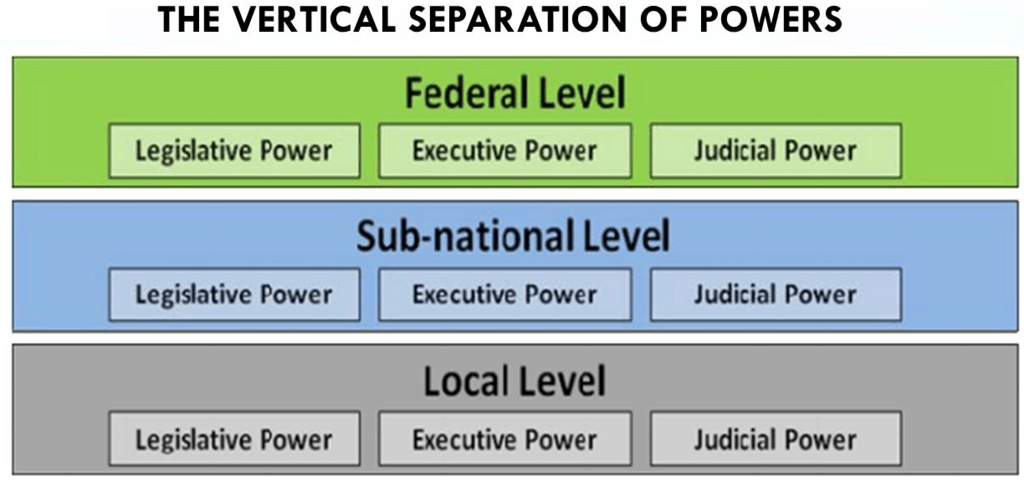
- Vertical Division of Power: It is a type of distribution of power that involves the higher and lower levels of government such as central, provincial, and regional levels.
- Reserved Constituencies: It is a system in which constituencies are reserved in the Assemblies and the Parliament for minorities in order to give them a fair share in power.
- Coalition Government: When the alliance of two or more parties gets elected and forms a government it is known as the Coalition Government. This is another form of power-sharing.
There are two ways of running a government.
- One is a tyranny - In this, the power is concentrated in the hands of a leader or a king.
- On the other hand, the other one is a democracy. In this, the power is delegated at different levels.
The lesson illustrates, with the examples of Belgium and Sri Lanka, how power-sharing is handled by democracies and we learn how necessary it is to share power in a democracy wisely.
Power Sharing
- Power-sharing means the distribution of power among the organs of the government, such as the legislature, executive, and judiciary.
- Power-sharing helps in achieving the stability of political order. In power-sharing, power might even be shared at distinct levels such as union, state and local.
| Get additional INR 200 off today with EDUREV200 coupon. | Avail Offer |
Forms of Power Sharing
In a modern democracy, power-sharing arrangements can take many forms.
Horizontal distribution of power:
In this, the power is shared among different organs of government, such as the legislature, executive, and judiciary. This type of power-sharing is prevalent in India.Federal government (vertical distribution of power):
In this, the power can be shared among governments at different levels. This type of power-sharing is prevalent in the USA.Power-sharing among different social groups:
Power can be shared among social groups, such as linguistic and religious groups. For instance, Community government in Belgium.Other types of power-sharing:
Power sharing is also seen in political parties, pressure groups and movements that control or influence those in power.
- The legislature
- The executive
- The judiciary
This distribution helps in achieving stability in political order.
Story of Belgium
(i) Geographical Position: A Small country in Europe, bordered by the Netherlands, France and Germany.
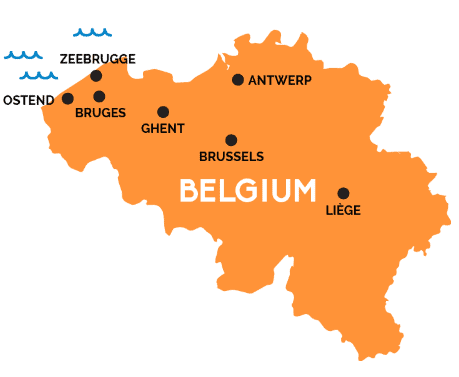 Map of Belgium
(ii) Area and Population: Smaller in area than the Indian state of Haryana. The population is a little over one crore, half of the state of Haryana.
(iii) Ethnic Composition: 59% live in the Flemish region - speak Dutch, 40% live in the Wallonia region - speak French, and 1% speak German
(iv) Capital: Brussels; 80% speak French, 20% Speak Dutch.
(v) Important Point:
- In Brussels, the Dutch-speaking people are in a minority, which is the opposite of the rest of the country, where they are in a majority.
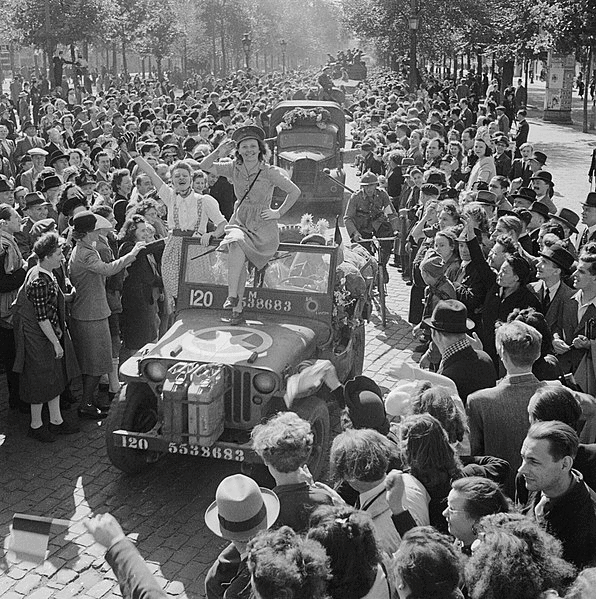 Cheering crowds greet British troops entering Brussels, 4 September 1944
- The minority population of French-speaking people was richer than the Dutch-speaking population.
- The majority community was given benefits much later. This led to tension between the two communities in the 1950s and 1960s. Tension was more acute in the capital city of Brussels.
(vi) Accommodation in Belgium: Belgium constitution was amended four times, between 1970 and 1993, so as to assist all communities to live together within the same country, with the result that it did not suffer from a civil war, demands for autonomy or partition of the country.
Also read: Previous Year Questions: Power-Sharing |
Story of Sri Lanka
(i) Geographical Position: A small island in Asia, off the southern coast of Tamil Nadu.
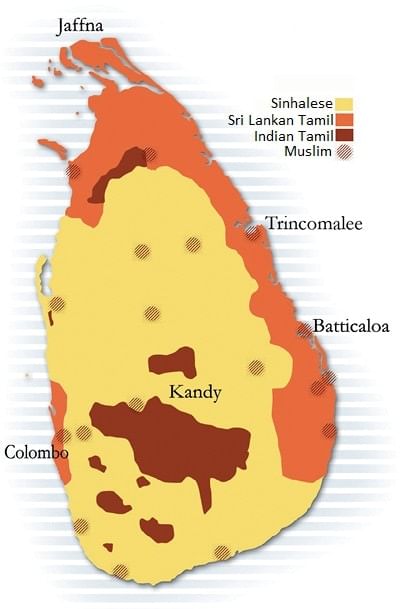 Ethnic communities of Sri Lanka
(ii) Population: Same as Haryana's. About two crore people.
(iii) Ethnic Composition: 74% Sinhalese-speaking people, 18% Tamil-speaking people, 13% are natives of Sri Lanka, known as Sri Lankan Tamils.
The rest are called Tamils, who are descendants of plantation workers who came from India during the colonial period.
(iv) Religion: Most of the Sinhala-speaking people are Buddhists. Most of the Tamils are Hindus or Muslims. Christians constitute 7% of the population, and they belong to both Sinhala and Tamil communities.
Majoritarianism in Sri Lanka
- Majoritarianism: A belief that only the majority community should rule a country, make laws for everyone and with total disregard to the wishes and needs of the minority.
- Sri Lanka became independent in 1948. It immediately adopted measures to impose Sinhala supremacy.
Example:
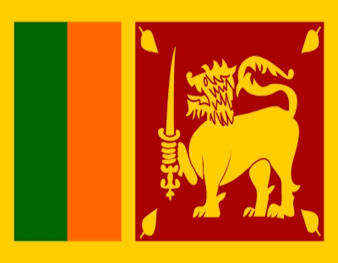
- It made Sinhalese the official language of the country (by an Act in 1956), and ignored Tamil completely.
- Made a preferential policy to favour Sinhala-speaking people in all government jobs and educational institutions.
- It promoted and protected Buddhism.
Try yourself: Consider the following statements about the ethnic composition of Sri Lanka:
A. Major social groups are the Sinhala- speaking (74%) and Tamil-speaking (18%)
B. Among the Tamils, there are two sub-groups, Sri Lankan Tamils and Indian Tamils.
C. There are about 7% Christians, who are both Tamil and Sinhala.
D. Most of the Sinhala-speaking are Hindus or Muslims and most of the Tamil-speaking are Buddhists.
Which of the above statements are correct?
In Sri Lanka:
A. Major social groups are the Sinhala- speaking (74%) and Tamil-speaking (18%)
B. Among the Tamils, there are two sub-groups, Sri Lankan Tamils and Indian Tamils.
C. There are about 7% Christians, who are both Tamil and Sinhala.
D. Statement D is incorrect. Most of the Sinhala-speaking people are Buddhists, not Hindus or Muslims, and most Tamil-speaking people are Hindus, not Buddhists. Therefore, the correct statements are A, B, and C.
| Attention! Sale expiring soon, act now & get EduRev Infinity at 40% off! | Claim Offer |
Result
- The Tamils felt alienated. No respect or recognition was given to their language, culture and religion. They began to struggle for equality in jobs, entry to the university, and recognition of their language and culture. Slowly, the conflict changed into a demand for regional autonomy.
- The Tamilians were grouped in the North and East of Sri Lanka. Their demands were ignored, the conflict became more severe and by the 1980s, the Tamilian demand had changed.
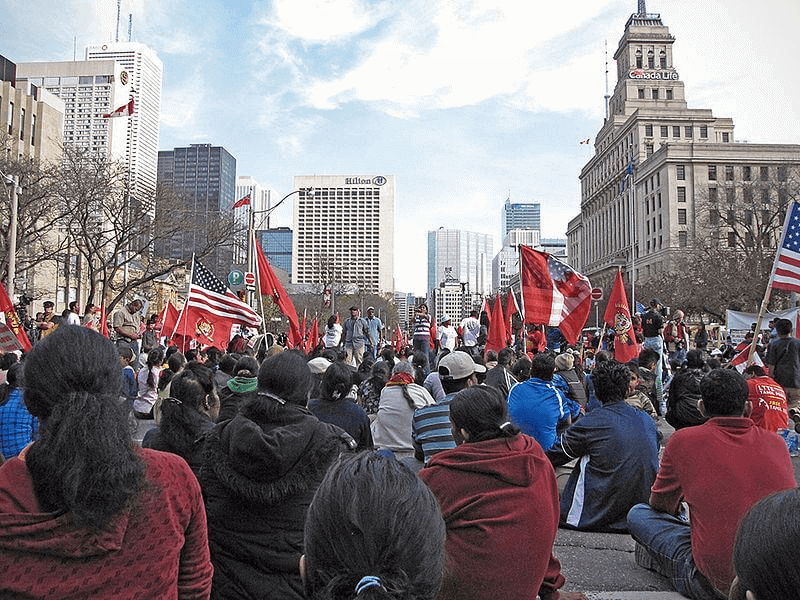 Tamilians in Sri Lanka protesting for their demands
 - They wanted Tamil Eelam in the North and East. A civil war ensued, which killed thousands on both sides. The flourishing economy of Sri Lanka has disappeared and the conflict has given a blow to the social, cultural and economic life of Sri Lanka.
Accommodation in Belgium
From 1970 to 1993, the constitution of Belgium was amended four times. The idea was to work out an arrangement that would make everyone live together. Key elements of the Belgian model are:
- The number of Dutch and French-speaking ministers shall be equal in the central government.
- Certain powers of the central government were given to the state governments of the two regions of the country.
- There was a separate government for Brussels in which both communities had equal representation.
- There was a provision of 'community government' that was elected by people belonging to one language.
Hence, it was a fairly better alternative than the majoritarian policy of Sri Lanka.
Also read: Previous Year Questions: Power-Sharing |
Forms of Power-Sharing
- Power-sharing arose as a democratic alternative to undivided power concentrated in one person or place; democracy treats people as the source of all political power and ensures every group has a voice in shaping public policy.
- Therefore, political power should be widely distributed so that diverse views are respected and no single centre can dominate decisions.
Why power-sharing matters?
- Upholds the democratic principle of popular sovereignty and inclusion.
- Prevents abuse of power, improves legitimacy, and accommodates social diversity.
Four forms of power-sharing
1. Horizontal distribution (separation of powers)
- What it is: Power shared among organs at the same level-legislature, executive, judiciary.
- Purpose: Ensures no organ exercises unlimited power; each checks the others, creating a balance of power.
- Mechanisms/links: Ministers and officials are accountable to Parliament/State Assemblies; judges, though appointed by the executive, can review executive action and laws; termed a system of "checks and balances."
2. Vertical division (federal division of powers)
- What it is: Power shared across levels-national (Union/Central), state (provincial/regional), and lower local bodies (municipalities, panchayats).
- Constitutional clarity: The constitution specifies subjects and powers for each level.
- Illustrations: Adopted in countries with multiple levels (e.g., Belgium's federal approach); not adopted in some unitary countries (e.g., refusal in Sri Lanka as per the text).
3. Sharing among social groups
- What it is: Power-sharing with religious and linguistic communities to ensure fair representation.
- Examples/measures: Belgium's "community government"; constitutional/legal provisions like reserved constituencies for socially weaker sections and women in legislatures and administration.
- Rationale: Prevents alienation of minorities; gives diverse groups a meaningful stake in governance.
4. Sharing among parties, pressure groups, and movements
- What it is: Electoral competition and pluralism distribute power among parties and organised interests.
- Forms: Pre- or post-poll alliances leading to coalition governments; influence of interest groups (traders, farmers, industrialists, workers) through committees, advocacy, and lobbying.
- Effect: Prevents monopoly of power; ensures ideologically and socially diverse representation over time.
Frequently Asked Questions
Q.1: What is the vertical division of power?
Ans: When power is shared among governments at different levels, i.e., the Union or the Central Government, the State Government and the Municipality and Panchayat at the lower level. This division of power involving higher and lower levels of government is called the vertical division of power.
Q.2: Define the term 'Ethnic'.
Ans: Ethnic means a social division based on shared culture and common descent. People belonging to an ethnic group need not have the same religion or nationality.
Q.3: Define majoritarianism. (2013)
Ans: Majoritarianism is a rule by the majority community by disregarding the needs and wishes of the minority community.
Short Answer Questions: Power-sharing
Q1: Give three reasons for the civil war in Sri Lanka.
Ans: The following were the reasons for the civil war in Sri Lanka:
- Language discrimination: Sinhala was declared the only official language, which ignored the Tamil language.
- Employment bias: Preference was given to Sinhala speakers for government jobs and military positions.
- Religious favouritism: Buddhism was established as the official religion, marginalising other faiths.
Q2: Why is power-sharing desirable in a democracy or any other system of government?
Ans: Power-sharing is desirable in a democracy and other systems of government for several reasons:
- Reduces conflict: Distributing power among various social groups lowers the risk of conflict.
- Ensures stability: It contributes to a stable political order, promoting national unity.
- Encourages participation: Involving citizens in governance makes them feel invested in the system, enhancing the government's legitimacy.
Q3: Describe the power-sharing in Lebanon.
Ans: Power-sharing in Lebanon is characterised by a complex system designed to maintain balance among various religious communities:
- The President must be a Maronite Christian.
- The Prime Minister is always a Sunni Muslim.
- The Deputy Prime Minister is allocated to the Orthodox Christian sect.
- The Speaker of Parliament is reserved for Shia Muslims.
Furthermore:
- Christians agreed to forfeit French protection.
- Muslims agreed to refrain from pursuing unification with Syria.
Q4: Why is power sharing essential for a democracy?
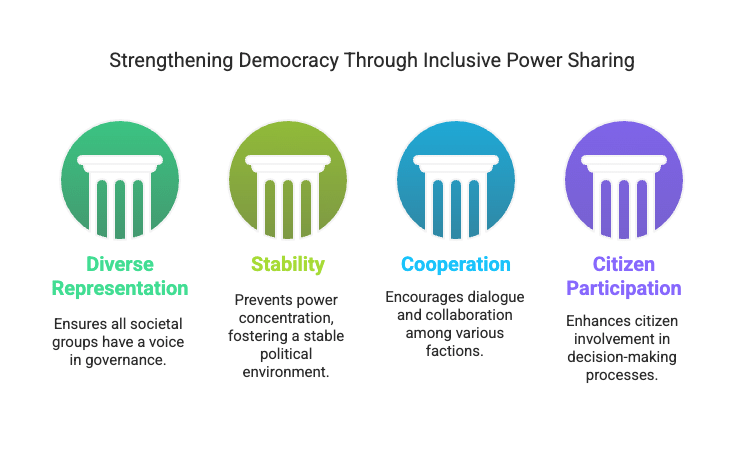
Ans: Power sharing is vital for democracy because it:
- Ensures representation of diverse groups in society.
- Promotes stability by preventing the concentration of power.
- Encourages cooperation and dialogue among different factions.
- Enhances citizen participation in governance.
By distributing power, democracy becomes more inclusive and responsive to the needs of all citizens.
 Q5: In the Flemish region which language did the majority of the people speak?
Ans: The majority of people in the Flemish region speak the Dutch language.
Q6: What is the power of the community government in Belgium?
Ans: The community government in Belgium has significant powers in several key areas:
- Cultural matters: Manages cultural institutions and promotes activities.
- Education: Oversees the education system, including schools and curricula.
- Language: Regulates language use and policies within its jurisdiction.
This decentralisation enables communities to effectively address local needs.
Q7: In a democracy power sharing is ensured in the presence of political parties and pressure groups. Explain.
Ans: In a democracy, political parties are essential for distributing power. Here's how they contribute:
- Competition: Political parties compete for power, allowing each a fair chance to govern.
- Coalitions: When no party achieves a clear majority, parties may form coalition governments to share power.
- Interest Groups: Various groups, including workers and business owners, influence government decisions, enhancing power sharing.
This system ensures that diverse voices and interests are represented in governance.
Q8: Can dividing power lead to the weakening of a country?
Ans: No, dividing power cannot lead to the weakening of a country.
In fact, the division of power:
- Protects the rights of minorities.
- Prevents the tyranny of the majority.
- Promotes national integration.
- Increases citizens' sense of safety and security.
Overall, a system of divided power supports a more democratic society.
Q9: Describe any three forms of power sharing in modern democracies.
Ans: Three forms of power sharing in modern democracies:
- Separation of Powers: Power is divided among the different branches of government, including the legislature, executive, and judiciary.
- Federalism: Authority is shared between a central government and regional or provincial governments, promoting local governance.
- Social Group Representation: Different social groups, such as religious and linguistic communities, share power. For instance, Belgium has a community government to represent these groups.
Q10: Write one prudential and one moral reason for power sharing.
Ans: Prudential reason for power sharing: Power sharing helps to:
- Reduce social conflicts between groups with different interests.
- Avoid violence and political instability.
- Maintain a stable political order.
Moral reason for power sharing: Power sharing reflects the essence of:
- Democracy by involving those affected by decisions.
- Allowing people to have a say in governance.
Flowcharts & Important Terms: Power Sharing
Q1: Why is power sharing desirable? Explain. (CBSE 2024)
Ans: Power sharing is desirable because it helps in maintaining peace, stability, and fairness within a society. Here's why:
- Prevents Conflict: Power sharing ensures that no single group dominates over others. This helps in reducing conflicts and tensions between different communities or groups, which might otherwise arise if one group holds too much power.
- Promotes Democracy: Power sharing is a key feature of a democratic system. It ensures that people from different backgrounds (such as ethnic, religious, or social groups) have a say in decision-making, making the system more inclusive.
- Encourages Cooperation: When power is shared, different groups are encouraged to cooperate and work together for the common good. This leads to more balanced and fair policies.
- Protects Minority Rights: Power sharing helps protect the rights of minority groups by ensuring that they have representation in government and decision-making processes, preventing their interests from being ignored.
- Ensures Political Stability: When different groups feel included in the governance process, it leads to greater political stability and reduces the chances of unrest or rebellion.
In summary, power sharing is desirable because it promotes fairness, reduces conflicts, supports democracy, and ensures that all groups have a voice in the political system.
Q2: Identify the primary objective of power-sharing arrangements in Belgium from the following options.
(a) Establishing a unitary form of government.
(b) Centralized political control of government.
(c) Establishing cultural and educational matters of Dutch.
(d) Accommodating linguistic and regional interest. (CBSE 2024)
Ans: (d)
The primary objective of power-sharing arrangements in Belgium was to accommodate the diverse linguistic and regional interests of the country's population, which includes Dutch-speaking, French-speaking, and a small German-speaking community. Belgium implemented a complex system of power sharing that allowed each linguistic group representation in the government to ensure peace and equality among communities, thus promoting social harmony and political stability.
Therefore, the correct answer is (d) Accommodating linguistic and regional interest.

Q3: Two statements are given below as Assertion (A) and Reason (R). Read the statements and choose the correct option:
Assertion (A): Sri Lanka adopted 'Tamil' as the official language of the State.
Reason (R): The Government of Sri Lanka adopted a series of majoritarian measures. (2023)
(a) Both (A) and (R) are true and (R) is the correct explanation of (A).
(b) Both (A) and (R) are true but (R) is not the correct explanation of (A).
(c) (A) is true but (R) is false.
(d) (A) is false but (R) is true.
Ans: (d)
Assertion (A): This is false. Sri Lanka adopted Sinhala, not Tamil, as the sole official language of the state in 1956, through the Sinhala Only Act. This led to discontent among the Tamil-speaking minority.
Reason (R): This is true. The Government of Sri Lanka did adopt a series of majoritarian measures, such as making Sinhala the official language and prioritizing Sinhala speakers in state employment and education, which marginalized the Tamil community.
Q4: Two statements are given below as Assertion (A) and Reason (R). Read the statements and choose the most appropriate option.
Assertion (A): Majority community is dominant in a few democratic states.
Reason (R): Dominance can undermine the unity of the country. (Term-1, 2021-22)
(a) Both A and R are correct, and R is the correct explanation of the A.
(b) Both A and R are correct, but R is not the correct explanation of the A.
(c) A is correct, but R is incorrect.
(d) A is incorrect, but R is correct.
Ans: (a)
Assertion (A): This is true. In some democratic states, the majority community can dominate decision-making, which may marginalise minority groups.
Reason (R): This is true. When the majority excludes or sidelines minorities, it can lead to dissatisfaction and conflict, threatening the country's unity and stability.
Q5: Describe the horizontal power-sharing arrangements. (2020)
Ans: Horizontal power-sharing involves the distribution of power among various branches of government.
The key features are:
- Power is shared among different organs of government, including the legislature, executive, and judiciary.
- Each organ exercises distinct powers, ensuring that no single organ can dominate.
Q6: Why was there an acute problem in Brussels during 1950s and 1960s between the two communities? (2019 C)
Ans: During the 1950s and 1960s, tensions arose in Brussels between the two main communities in Belgium due to several factors:
- The French-speaking community was a minority but was relatively wealthy and influential.
- The Dutch-speaking community felt resentment as they had access to economic development and education much later.
- Brussels posed a unique challenge: While the Dutch-speaking people were the majority in the country, they were a minority in the capital.
Q7: Two statements are given below as Assertion (A) and Reason (R). Read the statements and choose the most appropriate option.
Assertion (A): The distrust between Sinhalese and Tamil communities turned into widespread conflict in Sri Lanka
Reason (R): 1956 Act recognised Sinhala as the only official language. (Term-1, 2021-22)
(a) Both A and R are correct, and R is the correct explanation of the A.
(b) Both A and R are correct, but R is not the correct explanation of the A.
(c) A is correct, but R is incorrect.
(d) A is incorrect, but R is correct.
Ans: (a)
Assertion (A): This is true. The distrust between the Sinhalese and Tamil communities in Sri Lanka escalated into widespread conflict, culminating in a brutal civil war.
Reason (R): This is true. The 1956 Act, which made Sinhala the sole official language, was one of the key majoritarian measures taken by the Sinhalese-dominated government. This decision marginalized the Tamil community and fueled their resentment, leading to tensions and eventually violent conflict.
Q8: Two statements are given below as Assertion (A) and Reason (R). Read the statements and choose the most appropriate option.
Assertion (A): Power-sharing is good.
Reason (R): It helps to reduce the possibility of conflicts between social groups. (Term-1, 2021-22)
(a) Both A and R are correct, and R is the correct explanation of the A.
(b) Both A and R are correct, but R is not the correct explanation of the A.
(c) A is correct, but R is incorrect.
(d) A is incorrect, but R is correct.
Ans: (a)
Assertion (A): This is true. Power-sharing is considered beneficial as it promotes inclusivity and ensures that all groups in society have a voice in governance.
Reason (R): This is true. Power-sharing reduces the likelihood of conflict by addressing the grievances of different social groups, thereby fostering harmony and stability.
Q9: Under which of the following is power shared in the 'Community Government' of Belgium? (2020)
(a) Different social groups
(b) Different organs of government
(c) Central and State government
(d) State government and Community government
Ans: (a)
In Belgium, the Community Government is designed to represent and share power among different social groups, such as linguistic communities (like the Flemish and French speakers). This system ensures that the diverse interests and identities within the country are recognized and that each group has a say in governance, promoting unity and reducing conflict among them.
Q10: Consider the following statements on Power Sharing and choose the correct option.
I. It deepens democracy.
II. It helps to reduce conflicts among social groups.
III. It is a way to ensure political stability.
IV. It brings socio-economic struggles. (2023)
(a) I, II and III
(b) III, Ill and IV
(c) I, III and IV
(d) I, II and IV
Ans: (a)
I. It deepens democracy: Power sharing allows various groups to participate in governance, making the political system more inclusive and democratic.
II. It helps to reduce conflicts among social groups: By giving different social groups a stake in political power, it reduces the chances of conflict, as everyone feels represented.
III. It is a way to ensure political stability: When power is shared among various groups, it promotes stability because it prevents any one group from dominating and causing unrest.
IV. This statement is incorrect: Power sharing aims to address socio-economic struggles rather than create them.
Short Answer Type Questions
Q 1. Describe with examples the way in which power can be shared among different social and linguistic groups?
Power may also be shared among different social groups, such as religious and linguistic groups, for example, Belgium. In Belgium, apart from the Central and the State Government, there is a third kind of government called the Community Government. This community government is elected by people belonging to one language community. This government has the power regarding cultural, educational and language-related issues.
Belgium Federal ParliamentIn some countries, there are constitutional and legal arrangements whereby socially weaker sections and women are represented in the legislature and administration. This type of arrangement is meant to give space in the government and administration to diverse social groups who otherwise would feel alienated from the government.

Q 2. Describe horizontal and vertical power sharing in modern democracies.
When power is shared among legislature, executive and judiciary different organs of government. This is known as the horizontal distribution of power. This kind of distribution allows different organs of government placed at the same level to exercise different powers. In this pattern, each organ checks the others. This maintains the balance of power, for example, in India.
When power shared among governments at different levels, at the provincial or regional level, this is known as vertical distribution of power. Such a general government for the entire country is usually called the federal government. In India, we refer to it as the central or union government. The governments at the provincial or regional level are called by different names in different countries. In India, we call them state governments.
Q 3. What is the difference between the policies adopted by Belgium and Sri Lanka regarding power-sharing arrangement?
OR
How have Belgium and Sri Lanka dealt with the question of power-sharing differently.
The ethnic composition of Belgium is very complex. The Belgium Constitution prescribes that the number of Dutch and French-speaking ministers shall be equal in the central government.
Some special laws require the support of the majority of members from each linguistic group. Thus no single community can make decisions unilaterally. Many powers of the central government have been given to state governments but the state governments are not subordinate to the central government. Brussels (the capital) has a separate government in which both the communities have equal representation.
Apart from the central and the state government, there is a third kind of government. This community government is elected by people belonging to one language community. It has the power regarding cultural, educational and language-related issues.
In Sri Lanka, there are two major social groups - Sinhala speakers (74%) and Tamil speakers (18%). The leaders of the Sinhala community sought to secure dominance over the government. As a result, the democratically elected government adopted a series of majoritarian. Under it, Sinhala is recognised as the only official language. The government followed Sinhala preferential policies. The state shall protect and foster Buddhism. As a result, the relations between the Sinhala and Tamil communities strained over time.
Q 4. Explain how Belgium was able to solve her ethnic problem.
The Belgian leaders amended their Constitution four times between 1970 and 1993, to work out an arrangement agreeable to all sections of society.
(i) The number of Dutch and French-speaking ministers is equal in the central government.
(ii) Many powers of the central government have been given to the state government of the two regions of the country.
(iii) The state governments are not subordinate to the central government.
(iv) Brussels has a separate government in which both the communities have equal representation.
(v) The 'Community Government' is elected by people belonging to one language community-Dutch, French and German-speaking - no matter where they live.
Q 5. What were the reasons for the alienation of Sri Lankan Tamils? What was the effect of this on Sri Lankan Tamils? What was the effect of this on the country?
(i) In 1956, an Act was passed to recognise Sinhala as the only official language, thus disregarding Tamil.
Fig: Sinhala as the official language in Sri Lanka(ii) The governments followed preferential policies that favoured Sinhala applicants for positions in educational institutions, armed forces and other government jobs.
(iii) A new constitution declared that the state shall protect and promote Buddhism, the religion of the majority Sinhala community.
All these government measures gradually increased the feeling of alienation among the Sri Lankan Tamils.
Q 6. Explain two reasons as to why power sharing is desirable.
(i) Power sharing is desirable because it helps to reduce the possibility of conflict between social groups. Since social conflicts eventually lead to political instability, power-sharing ensures the stability of the political order.
(ii) Powers sharing is the very spirit of democracy. A legitimate government is one where citizens through participation, acquire a stake in the system.
Q 7. Write one prudential and one moral reason for power-sharing.
(i) Prudential reason for power-sharing: Power-sharing reduces social conflicts among social groups with different interests and aspirations. Social conflicts lead to violence and instability. Power-sharing ensures the stability of political order.
(ii) Moral reason for power-sharing: Power-sharing is the very spirit and essence of democracy. Democracy involves sharing power with those affected by its exercise, and who have to live with its effects. People have the right to be consulted on how they are to be governed.
Long Answer Type Questions
Q 1. Describe any three demands of the Sri Lankan Tamils. How did they struggle for their demands?
The demands of the Sri Lankan Tamils are:
(i) recognition of Tamil as an official language
(ii) regional autonomy
(iii) equality of opportunity in securing education and jobs
In order to struggle for their demands, they launched parties and struggles. By 1980s, several political organizations were formed, demanding an independent Tamil Eelam (state) in northern and eastern parts of Sri Lanka. This struggle turned into a widespread conflict, leading to a civil war.
Q 2. What is majoritarianism? How has it increased the feelings of alienation among Sri Lankan Tamils? Explain with examples.
'Majoritarianism' refers to the policy of domination of the majority over the minority, just by the virtue of being in majority.
In Sri Lanka, it has led to feelings of alienation among the Tamils. They feel that none of the major political parties, led by Buddhist Sinhala leaders are sensitive to their language and culture. According to them, the Constitution and the government policies have denied them equal political rights and discriminated against them in getting jobs and other opportunities and ignored their interests.
This alienation among the Tamils is due to the following reasons:
(i) In 1956, an Act was passed to recognize Sinhala as the only official language, thus disregarding Tamil.
(ii) The government framed policies favouring Sinhala people for government jobs.
(iii) The new Constitution specified that the state shall protect and foster Buddhism.
NCERT Solutions: Power-sharing
Q1. What are the different forms of power-sharing in modern democracies? Give an example of each of these.
Ans: Different forms of power-sharing in modern democracies:
(i) Horizontal distribution of Power
- Power is shared among different organs of the government - the Legislature, Executive and the Judiciary.
- Example: The Indian Parliament enacts laws, the Executive implements them and the Judiciary checks whether the actions of the other organs are within the limits set by the Constitution. This separation prevents concentration of power and provides mutual checks and balances.
(ii) Federal Division of Power
- A federal system divides powers between a central government and lower levels of government (states or provinces). In India the central government deals with matters of national importance while state governments handle local matters.
- Example: India's three-tier system - Central, State and Local Governments - where each level has constitutionally defined responsibilities to prevent arbitrary centralisation.
(iii) Power shared among different social groups
- This form ensures that different social groups have a voice in government and that minorities receive fair representation.
- Example: India reserves certain parliamentary and assembly seats for Scheduled Castes and Scheduled Tribes, ensuring these communities can participate in decision-making. Belgium's community arrangements similarly give representation to linguistic groups.
(iv) Power shared among political parties, pressure groups and movements
- Power is also shared through the existence of multiple political parties, coalitions and organised interest groups which influence public policy and government decisions.
- Example: Coalition governments where two or more parties govern together, and interest groups (such as farmers' unions or trade associations) that participate in policy discussions and negotiations.
Q2. State one prudential reason and one moral reason for power-sharing with an example from the Indian context.
Ans:
(i) Prudential Reason
- Prudential Reason: Power-sharing reduces the possibility of conflict between social groups and helps maintain political stability.
- Example: Reservation of seats in Parliament and state assemblies for weaker sections and marginalised communities prevents their exclusion, reduces grievances and helps integrate these groups into mainstream politics.
(ii) Moral Reason
- Moral Reason: Power-sharing is rooted in democratic values - it is fair and just that people from different communities and backgrounds should have a voice in governance.
- Example: In India, people elect their representatives every five years (or earlier), which reflects the moral principle that all citizens should participate in choosing those who govern them.
Q3. After reading this chapter, three students drew different conclusions. Which of these do you agree with and why? Give your reasons in about 50 words.
- Thomman -Power sharing is necessary only in societies which have religious, linguistic or ethnic divisions.
- Mathai -Power sharing is suitable only for big countries that have regional divisions.
- Ouseph -Every society needs some form of power sharing even if it is small or does not have social divisions.
Ans:
- The conclusion drawn by Ouseph is correct.
- Every society needs some form of power-sharing.
- In a family, the members may differ but power-sharing may resolve differences.
- In a society too different communities should try to accommodate each other as has been done in Belgium where the French-speaking people accepted equal representation in Brussels because the Dutch-speaking community has accepted equal representation in the central government.
Q4. The Mayor of Merchtem, a town near Brussels in Belgium, has defended a ban on speaking French in the town's schools. He said that the ban would help all non-Dutch speakers integrate into this Flemish town. Do you think that this measure is in keeping with the spirit of Belgium's power-sharing arrangements? Give your reasons in about 50 words.
Ans:
- No. The ban is not in keeping with the spirit of Belgium's power-sharing arrangements.
- Power-sharing aims at accommodation and mutual respect among linguistic communities; imposing a ban is an attempt to impose the majority's will on a minority.
- Such measures can create resentment and damage relations between French-speaking and Dutch-speaking communities instead of promoting integration.
Q5. Read the following passage and pick out any one of the prudential reasons for power sharing offered in this.
"We need to give more power to the panchayats to realize the dream of Mahatma Gandhi and the hopes of the makers of our Constitution. Panchayati Raj establishes true democracy. It restores power to the only place where power belongs in a democracy in the hands of the people. Given power to panchayats is also a way to reduce corruption and increase administrative efficiency. When people participate in the planning and implementation of developmental schemes, they would naturally exercise greater control over these schemes. This would eliminate the corrupt middlemen. Thus, Panchayati Raj will strengthen the foundations of our democracy.\"
Ans: The prudential reason for power sharing offered in the above passage is giving power to panchayats because it reduces corruption and increases administrative efficiency.
- Panchayati Raj brings decision-making closer to the people and restores power at the local level.
- Local participation helps to monitor and control developmental schemes, reducing the scope for corrupt intermediaries.
- Greater local control improves administrative efficiency and strengthens democratic foundations.
Q6. Different arguments are usually put forth in favor of and against power-sharing. Identify those which are in favor of power-sharing and select the answer using the codes given below? Power-sharing:
A. reduces conflict among different communities
B. decreases the possibility of arbitrariness
C. delays the decision-making process
D. accommodates diversities
E. increases instability and divisiveness
F. promotes people's participation in government
G.undermines the unity of a country
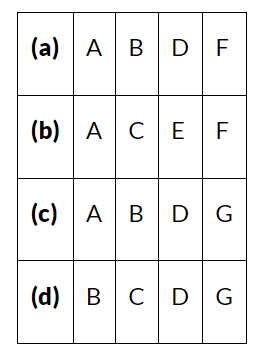
Ans: (a)
Explanation: Options that favour power-sharing are A, B, D and F. Power-sharing reduces conflict by giving groups representation (A); it limits arbitrariness by distributing authority (B); it accommodates diversity by recognising different identities and interests (D); and it increases people's participation by involving them in governance (F). Options C, E and G are criticisms or possible disadvantages rather than arguments in favour.
Q7. Consider the following statements about power-sharing arrangements in Belgium and Sri Lanka.
Α. In Belgium, the Dutch-speaking majority of people tried to impose their domination on the minority French-speaking community.
B. In Sri Lanka, the policies of the government sought to ensure the dominance of the Sinhala-speaking majority.
C. The Tamils in Sri Lanka demanded a federal arrangement of power-sharing to protect their culture, language and equality of opportunity in education and jobs.
D. The transformation of Belgium from a unitary government to a federal one prevented a possible division of the country on linguistic lines.
Which of the statements given above are correct?
(a) A, B, C and D
(b) A, B and D
(c) C and D
(d) B, C and D
Ans: (d)
Explanation: Statement A is incorrect because Belgium did not have the Dutch-speaking majority imposing domination; instead, Belgium adopted power-sharing arrangements to secure equality between Dutch-speaking and French-speaking communities. Statement B is correct - in Sri Lanka, government policies favoured the Sinhala-speaking majority. Statement C is correct - Tamils demanded federal power-sharing to protect their rights. Statement D is correct - Belgium's move to federalism helped prevent a possible division along linguistic lines.
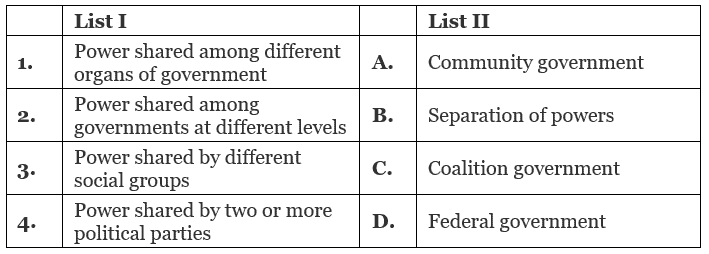
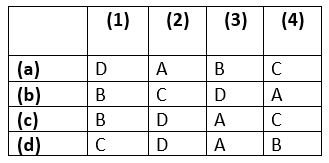
Q8. Match List I (forms of power-sharing) with List-II (forms of government) and select the correct answer using the codes given below in the lists:
Ans:
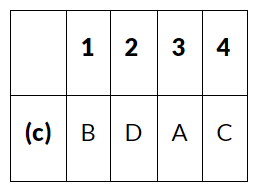
Q9. Consider the following two statements on power sharing and select the answer using the codes given below:
1. Power-sharing is good for democracy.
2. It helps to reduce the possibility of conflict between social groups.
Which of these statements are true and false?
(a) A is true and B is false
(b) Both A and B are true
(c) Both A and B are false
(d) A is false but B is true
Ans: (b)
Explanation: Both statements are true. Power-sharing is good for democracy because it disperses authority, encourages participation and prevents concentration of power. It also reduces the possibility of conflict between social groups by giving them representation and a role in decision-making, which lowers grievances and promotes stability.
Features of power-sharing are as follows:
- Power-sharing reduces the possibility of conflicts between social groups.
- Power-sharing is a good way to ensure the stability of political order.
- Power-sharing is the spirit of democracy.
- Power-sharing is good for democracy.
1. Meaning of Power Sharing
Power sharing means the distribution of power among different organs, levels, and groups in society so that no single person or group controls all the power.
In a democracy:
- Power is shared among institutions and citizens.
- It prevents misuse of power and dictatorship.
- It ensures participation of different communities in decision making.
2. Case Study: Belgium and Sri Lanka

These examples show that power sharing helps maintain unity, while ignoring it can create conflict.
3. Belgium: Example of Successful Power Sharing
Belgium has multiple linguistic communities.
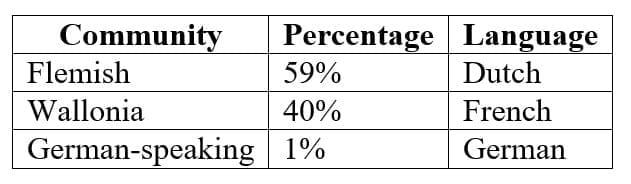
Brussels (capital):
- 80% French speakers
- 20% Dutch speakers
| Get additional INR 200 off today with EDUREV200 coupon. | Avail Offer |
Features of the Belgian Power Sharing Model
- Equal number of Dutch and French ministers in the central government.
- Important laws require support from each linguistic group.
- State governments have strong powers.
- Brussels has its own government with equal representation.
- A community government deals with cultural and language matters.
These arrangements helped maintain unity and avoid conflict.
4. Sri Lanka: Example of Majoritarianism
Sri Lanka has two major communities.
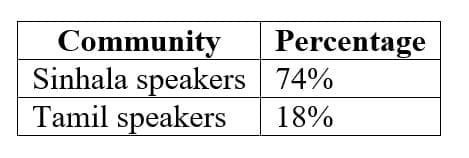
Majoritarian Policies
After independence (1948), the government introduced policies favoring the Sinhala majority:
- Sinhala declared the only official language (1956).
- Preferential treatment for Sinhala applicants in jobs and education.
- Constitution gave special status to Buddhism.
Also read: Short Notes: Power-sharing |
Consequences
- Tamils felt discriminated against.
- Demanded autonomy and equal rights.
- Conflict eventually turned into civil war, causing huge loss of life and property.
5. Majoritarianism
Majoritarianism is the belief that the majority community should rule the country without considering minority interests.
Problems:
- Leads to discrimination
- Creates social conflict
- Weakens national unity
6. Why Power Sharing is Desirable
Two main reasons support power sharing.
| Attention! Sale expiring soon, act now & get EduRev Infinity at 40% off! | Claim Offer |
7. Forms of Power Sharing
Power sharing can occur in different ways in modern democracies.
a) Horizontal Power Sharing
Power is shared among different organs of government.
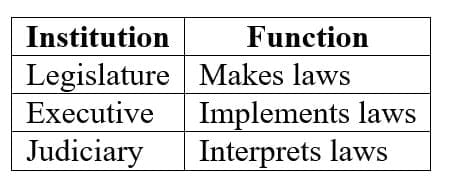
This system creates checks and balances, preventing concentration of power.
b) Vertical Power Sharing
Power is shared among different levels of government.
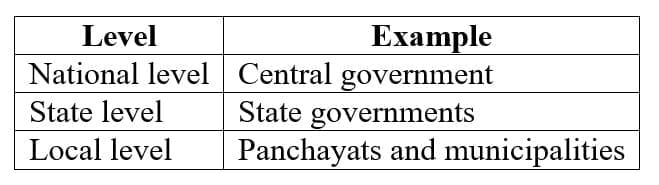
This system is known as federalism.
Also read: Short Notes: Power-sharing |
c) Power Sharing Among Social Groups
Power is shared among different communities such as religious or linguistic groups.
Examples:
- Community government in Belgium
- Reservation for SC/ST and women in India
This ensures representation of minorities and weaker sections.
d) Power Sharing Among Political Parties and Pressure Groups
Power is shared through:
- Competition between political parties
- Coalition governments
- Influence of pressure groups and interest groups
Examples of interest groups:
- Farmers
- Traders
- Industrialists
- Workers
MCQ Questions
Q1: In which year Sri Lanka emerged as an independent country?
(a) 1947
(b) 1948
(c) 1949
(d) 1950
Ans: (b) 1948
Sri Lanka emerged as an independent country in 1948. The leaders of the Sinhala community sought to secure dominance over government by virtue of their majority.
Q2: Which is the state religion of Sri Lanka?
(a) Buddhism
(b) Hinduism
(c) Islam
(d) Christianity
Ans: (a) Buddhism
In 1956, an Act was passed to recognise Sinhala as the only official language, thus disregarding Tamil. A new constitution stipulated that the state shall protect and foster Buddhism.
Q3: Which major social group constituted the largest share in population of Sri Lanka?
(a) Sinhalas
(b) Sri Lankan Tamils
(c) Indian Tamils
(d) Muslims
Ans: (a)
The major social groups in Sri Lanka are the Sinhala-speakers (74 per cent) and the Tamil-speakers (18 per cent)
Q4: Which language is spoken by the majority of Belgians?
(a) German
(b) French
(c) Dutch
(d) English
Ans: (c)
Of the Belgian's total population, 59 per cent lives in the Flemish region and speaks Dutch language.
Q5: Which religion is followed by Sinhala speaking people?
(a) Hindus
(b) Muslims
(c) Buddhists
(d) None of these
Ans: (c)
Most of the Sinhala speaking people are Buddhists, while most of the Tamils are Hindus or Muslims.
Q6: Which language was declared as the only official language of Sri Lanka by an Act passed in 1956?
(a) Tamil
(b) Sinhala
(c) Hindi
(d) English
Ans: (b)
In 1956, an Act was passed to recognise Sinhala as the only official language, thus disregarding Tamil.
Q7: Which of the following is not one of the three organs of government powers are shared?
(a) Legislature
(b) Bureaucracy
(c) Executive
(d) Judiciary
Ans: (b)
Power is shared among different organs of government, such as the legislature, executive and judiciary.
Q8: Which of the following is not one of the aspects of federal division of powers?
(a) Sharing of powers among central provincial and local governments
(b) Division of powers involving higher and lower levels of government
(c) The Constitution clearly lays down powers of different levels of government
(d) There is no vertical division of powers
Ans: (d)
The aspects of federal division of powers are sharing of powers among central provincial and local governments, Division of powers involving higher and lower levels of government.
Q9: What led to non-sharing of power?
(a) Peace among all the communities
(b) The tyranny of the majority and oppression of minority
(c) Negation of the very spirit of democracy
(d) Both (b) and (c)
Ans: (d)
Non-sharing of power led to tyranny of the majority and oppression of minority and negation of the very spirit of democracy.
Q10: How many times was the Constitution of Belgium amended between 1970 and 1993?
(a) Two times
(b) Three times
(c) Five times
(d) Four times
Ans: (d)
Between 1970 and 1993, they amended their constitution four times so as to work out an arrangement that would enable everyone to live together within the same country.
Fill in the blanks
Q1: .......... has started power struggle demanding separate Eelam in Sri Lanka.
Ans: Tamilians political organisation
Q2: Both .......... and .......... share power on an equal basis at .......... in Belgium.
Ans: Dutch, French speaking people, central government
Q3: In Belgium, three communities are living .......... , .......... and .......... .
Ans: French, Dutch, German speaking
Q4: In Belgium, lastly the power is shared between .......... , .......... and .......... .
Ans: Central, State, Community Government
Q5: .......... was started in Sri Lanka due to distrust between the two communities.
Ans: Civil War
| Get additional INR 200 off today with EDUREV200 coupon. | Avail Offer |
True & False
Q1: The feeling of accommodation has led to the problem in Sri Lanka.
Ans: False
Q2: Sri Lanka is facing the problems because of supporting the Tamilians in the state.
Ans: False
Q3: Belgium and Sri Lanka are the two similar causes in the struggle of people.
Ans: False
Q4: Belgium has French people in majority whereas the others struggle for their rights.
Ans: False
Q5: Power sharing increases the possibility of conflict between social groups.
Ans: False
Q6: Power sharing is desirable and reduces possibilities of conflict within the country.
Ans: True
Also read: Mind Map: Power Sharing |
Assertion and Reasons
Direction: Mark the option which is most suitable :
Q1: Assertion : French speaking community in Belgium was rich and powerful.
Reason : Belgian Government favoured French speaking community.
(a) If both assertion and reason are true and reason is the correct explanation of assertion.
(b) If both assertion and reason are true but reason is not the correct explanation of assertion.
(c) If assertion is true but reason is false.
(d) If both assertion and reason are false.
Ans: C
Q2: Assertion : There was a feeling of alienation among Sri Lankan Tamils.
Reason : The Sri Lankan government denied them equal political rights and discriminated against them in getting jobs and other opportunities,
(a) If both assertion and reason are true and reason is the correct explanation of assertion.
(b) If both assertion and reason are true but reason is not the correct explanation of assertion.
(c) If assertion is true but reason is false.
(d) If both assertion and reason are false.
Ans: A
Q3: Assertion : Tyranny of majority is highly desirable.
Reason : It helps in making the political order more stable.
(a) If both assertion and reason are true and reason is the correct explanation of assertion.
(b) If both assertion and reason are true but reason is not the correct explanation of assertion.
(c) If assertion is true but reason is false.
(d) If both assertion and reason are false.
Ans: D
Q4: Assertion : Power should reside with one person and group located at one place in a democracy.
Reason : If the power is dispersed, it will not be possible to take decision quickly and enforce it.
(a) If both assertion and reason are true and reason is the correct explanation of assertion.
(b) If both assertion and reason are true but reason is not the correct explanation of assertion.
(c) If assertion is true but reason is false.
(d) If both assertion and reason are false.
Ans: D
Q5: Assertion : Sinhala was recognized as only official language of Sri Lanka.
Reason : The government of Sri Lanka wanted to establish the supremacy of Sinhala community.
(a) If both assertion and reason are true and reason is the correct explanation of assertion.
(b) If both assertion and reason are true but reason is not the correct explanation of assertion.
(c) If assertion is true but reason is false.
(d) If both assertion and reason are false.
Ans: A
Q6: Assertion : In Belgium, the leaders realized that the unity of the country is possible by respecting the feelings and interest of different countries.
Reason : Belgium favoured Dutch speaking community.
(a) If both assertion and reason are true and reason is the correct explanation of assertion.
(b) If both assertion and reason are true but reason is not the correct explanation of assertion.
(c) If assertion is true but reason is false.
(d) If both assertion and reason are false.
Ans: C
Q7: Assertion : Community government in Belgium is elected by one language community.
Reason : Community government helped in resolving conflict between different linguistic groups.
(a) If both assertion and reason are true and reason is the correct explanation of assertion.
(b) If both assertion and reason are true but reason is not the correct explanation of assertion.
(c) If assertion is true but reason is false.
(d) If both assertion and reason are false.
Ans: A
Q8: Assertion : In a democracy, everyone has voice in the shaping of public policies.
Reason : India has federal system.
(a) If both assertion and reason are true and reason is the correct explanation of assertion.
(b) If both assertion and reason are true but reason is not the correct explanation of assertion.
(c) If assertion is true but reason is false.
(d) If both assertion and reason are false.
Ans: B
Q9: Assertion : Power Sharing is good.
Reason : It leads to ethical tension.
(a) If both assertion and reason are true and reason is the correct explanation of assertion.
(b) If both assertion and reason are true but reason is not the correct explanation of assertion.
(c) If assertion is true but reason is false.
(d) If both assertion and reason are false.
Ans: C
Q10: Assertion : Belgium and Sri Lanka both faced ethical tension among different communities.
Reason : Both the countries resolved the conflict by power sharing arrangement which gave equal representation to all the communities.
(a) If both assertion and reason are true and reason is the correct explanation of assertion.
(b) If both assertion and reason are true but reason is not the correct explanation of assertion.
(c) If assertion is true but reason is false.
(d) If both assertion and reason are false.
Ans: C
| Attention! Sale expiring soon, act now & get EduRev Infinity at 40% off! | Claim Offer |
Very Short Answer Type Questions
Q1: Mention any one characteristics of power sharing.
Ans: It gives the people right to be consulted or any other characteristics.
Q2: Who formed the majority in terms of population in Sri Lanka?
Ans: Sinhala community.
Q3: Which type of powers does the Community Government of Belgium enjoy?
Ans: This government has the power regarding culture, education and language related issues.
Q4: How and when was Sinhala recognized as the official language of Sri Lanka?
Ans: Sinhala was recognized as the official language of Sri Lanka by passing an Act in 1956.
Q5: What is the prudential reason behind power sharing.
or
Why power sharing is good for democracies?
Ans: It reduces the possibility of conflict between social groups.
Q6: Which factor is responsible for increasing the feeling of alienation among the Sri Lankan Tamils?
Ans: Majoritarianism.
Q7: What does the system of 'checks and balances' ensure in power sharing?
Ans: That none of the organs of the government can exercise unlimited power.
Q8: What measure was adopted by the democratically elected government of Sri Lanka to establish Sinhala supremacy?
Ans: Majoritarian measure.
Q9: What is the state religion of Sri Lanka?
Ans: Buddhism.
 | Assertion & Reason Test: Power-sharing | Start Test |
Short Answer Type Questions
Q1: What is power sharing? Why power sharing is important in a democracy?
Ans: (i) When the power does not rest with any one organ of the state rather it is shared among legislature, executive and judiciary, it is called power sharing.
(ii) Power sharing is important in a democracy because :
(a) It helps to reduce the possibility of conflict between social groups.
(b) It is the very spirit of democracy.
(c) It is a good way to ensure the stability of the political order.
Q2: In modern democracies, power is often shared among different organs of the government. Explain.
Ans: Power is shared between different organs of the government such as Legislature, Executive and Judiciary. This system of power sharing is referred to as a system of'checks and balances' because: All three organs are placed at the same level of power. The power distribution ensures that no organ enjoys unlimited powers. Each organ exercises a check on the others. Thus there is a balance of power.
Q3: How can power be shared among governments at different levels? Explain.
or
Explain the vertical division of power giving example from India.
Ans: Vertical division of power: Vertical division of power means sharing of power among governments at different levels.
In India, there are three levels of the government:
a. For the entire country: Central Government/Union Government.
b. At the provincial level: State Governments.
c. At the local level (i.e., rural and urban): Local self governments like panchayats and municipal councils.
Q4: Give reasons why power sharing is desirable.
or
Why power sharing is necessary in democracy?
Explain.
or
Write one prudential and one moral reason for power sharing.
or
Why is power sharing desirable? Explain moral reasons in this regard.
or
Why power sharing is desirable? Explain giving any three prudential reasons.
Ans: Power sharing is desirable in democracy because:
(i) Prudential reasons:
(a) It helps to reduce the possibility of conflict between social groups. Since social conflict often leads to violence and political instability.
(b) It is a good way to ensure the stability of political order.
(c) Imposing the will of majority community over others may look like an attractive option in the short run, but in the long run it undermines the unity of the nation.
(ii) Moral reasons:
(a) Power sharing is the very spirit of democracy. A democratic rule involves sharing power with those affected by its exercise and who have to live with its effect.
(b) People have a right to be consulted on how they are to be governed.
(c) A legitimate government is one where citizens through participation, acquire a stake in the system.
Q5: "Sharing of powers makes a country more powerful and united." Do you agree with this statement and why?
or
"Power sharing is the very spirit of democracy". Justify this statement with three suitable points.
or
How far do you agree with the statement that power sharing is keeping with the "Spirit" of democracy?
Ans: Power sharing keeps up with the 'Spirit' of Democracy as:
a. Power sharing ensures that all people have stake in government.
b. Power sharing ensures maximum participation. It upholds the concept of people's rule. It always brings better outcomes in democracy. It ensures the political stability in democracy.
c. Power sharing accommodates diverse groups. It helps to reduce the possibility of conflict between social groups.
Q6: Explain any three consequences of the majoritarian policies adopted by the Sri Lankan government.
Ans: Consequences of majoritariari policies adopted by Sri Lankan Government.
a. Tamils felt the government was not sensitive about Tamil language and culture.
b. Tamils felt discriminated against in jobs and education.
c. Tamils felt the government was practising religious discrimination.
d. Relations between Tamils and Sinhalese became strained.
Q7: Explain any three consequences of the majoritarian policies adopted by the Sri Lankan Government.
Ans: Consequences of majoritarian policies adopted by Sri Lankan Government were:
a. Tamils felt the government was not sensitive about Tamil language and culture because Sinhala was declared the official language.
b. Tamils felt discriminated against securing jobs and education which were given preferentially to the Sinhala speakers.
c. Tamils felt the government was practising religious discrimination because the State fostered Buddhism. Relations between Tamils and Sinhalese became strained.
Q8: Describe the power sharing arrangement made by Belgium.
or
Explain any three elements of the Belgium model of power sharing.
Ans: The main elements of the Belgium model of power sharing includes:
a. Constitution prescribes that the number of Dutch and French-speaking ministers shall be equal in the Central Government. Some special laws require the support of majority of members from each linguistic group. Thus, no single community can make decisions unilaterally.
b. Many powers of the Central Government have been given to State Governments of the two regions of the country. The State Governments are not subordinate to the Central Government.
c. Brussels had a separate government in which both the communities have equal representation. The French speaking people accepted equal representation in Brussels because the Dutchspeaking community has accepted equal representation in the Central Government.
Q9: Explain how power is shared among different organs of the government.
Ans: Power is shared among different organs of government i.e., Legislature, Executive and Judiciary
a. Legislature: The legislature is concerned with passing the laws, controlling the finances of the state and delivering on matter of public importance.
b. Executive: The executive machinery implements the policies of the government and executes the rules made by the legislature bodies.
c. Judiciary: The judiciary is concerned with the interpretation of the laws and has the power to punish those who commit crimes or break the laws. The judiciary can also check the functioning of the executives.
Q10: Compare the different ways in which the Belgians and the Sri Lankans have dealt with the problem of cultural diversity.
Ans: The Belgian leaders recognised the existence of regional and cultural diversities.
a. They amended their Constitution four times so as to work out an innovative arrangement that would enable everyone to live together in peace and harmony, i.e., there was sharing of power between the Dutch and the French both in the Central Government, State Government and Community Government. They followed a policy of accommodation.
b. This helped to avoid civic strife and division of the country on linguistic lines.
c. On the other hand, the Sinhalese who were in majority in Sri Lanka as compared to the Tamils followed a policy of majoritarianism and adopted a series of measures to establish Sinhala Supremacy by passing an Act of 1956. These measures alienated the Tamils leading to civic strife between the two communities.
Mind Map: Power Sharing
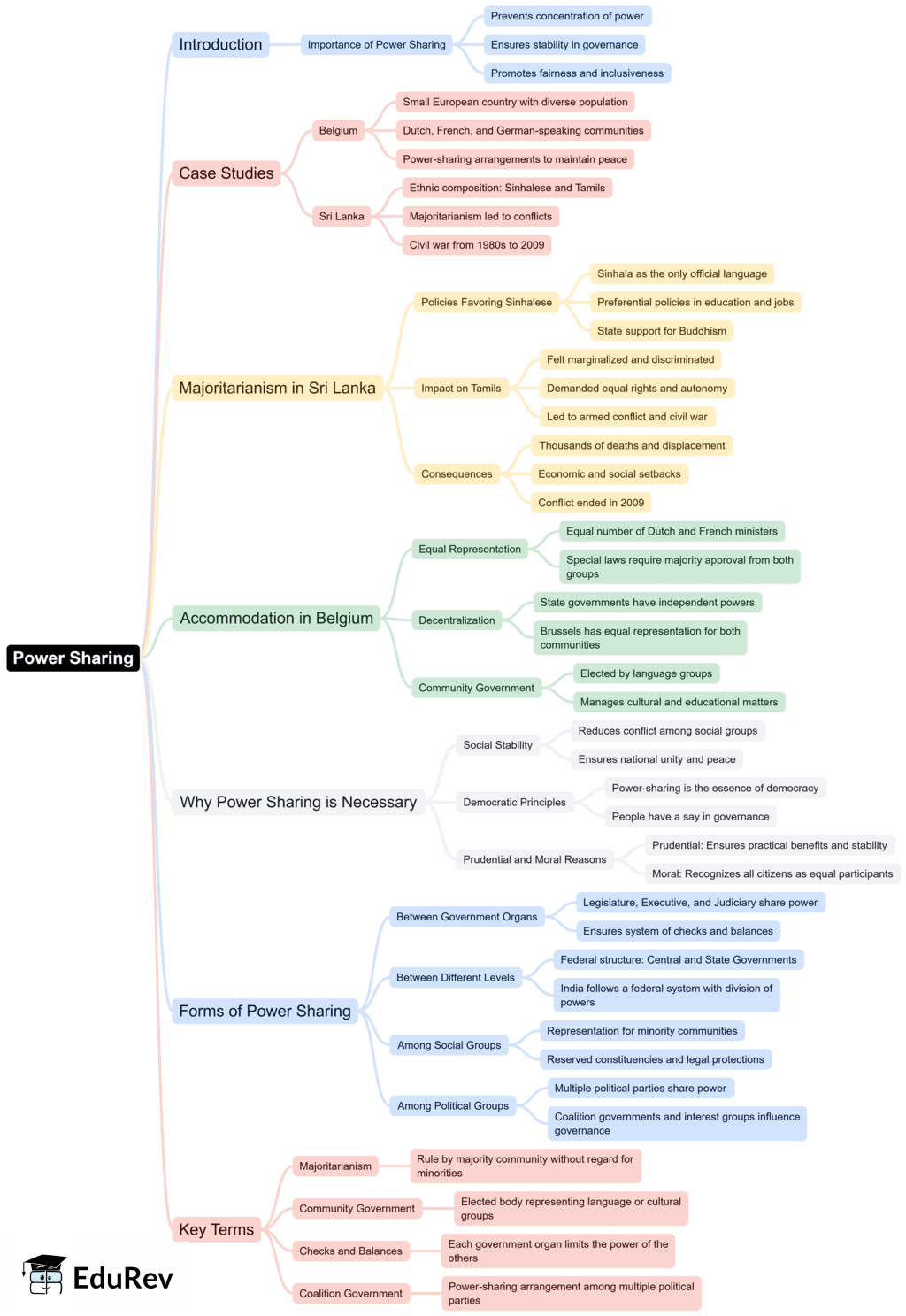
NCERT Summary:
Case study: Story of Belgium
Belgium is a small European country with a population described in the input as a little over one crore. The country's ethnic and linguistic composition is complex and has shaped its political arrangements.
- About 59 percent of the population live in the Flemish region and speak Dutch.
- About 40 percent live in the Wallonia region and speak French.
- About 1 percent speak German.
- In the capital, Brussels, roughly 80 percent of people speak French and 20 percent speak Dutch.
- The French-speaking community was relatively more prosperous and powerful earlier, while the Dutch-speaking community benefited from economic development and education later; this created tensions in the 1950s and 1960s.
Accommodation in Belgium
Belgium solved its communal tensions through constitutional and institutional reforms. The Belgian constitution was amended four times between 1970 and 1993 to accommodate communities. The key elements of the Belgian model include:
- The constitution requires that the number of Dutch-speaking and French-speaking ministers be equal in the central government.
- Many powers of the central government were devolved to the governments of the two main regions, giving regions control over a range of matters.
- Brussels was given a separate government in which both language communities have equal representation.
- There is provision for community governments elected by people belonging to a language community; these governments have powers over cultural, educational and language-related issues.
These arrangements helped reduce conflict by ensuring that each community had formal representation and control over issues that concerned them directly.
| Get additional INR 200 off today with EDUREV200 coupon. | Avail Offer |
Case study: Story of Sri Lanka
Sri Lanka is an island nation south of India. The input describes its population as about two crore people and highlights the main social groups and their distribution:
- Sinhalese (about 74 percent) are the majority and are mostly Buddhists.
- Tamils (about 18 percent) are the principal minority and most of the Tamils are Hindus, but there are also some Muslims and Christians
- Tamils are further categorised into two groups:
Sri Lankan Tamils (about 13 percent), who are native to the island
Indian Tamils (about 5 percent), who came from India during the colonial period as plantation workers. - About 7 percent of the population are Christians, including both Tamils and Sinhalese.
Majoritarianism and its consequences in Sri Lanka
The democratically elected government in Sri Lanka adopted a series of measures that established the dominance of the Sinhalese majority. The input lists some of these decisions and their outcomes:
- The government made Sinhala the only official language.
- Preferential policies were followed that favoured Sinhala applicants for university places and government jobs.
- These measures created a strong feeling of alienation among the Tamil population.
- Tamils formed political parties and movements demanding recognition for Tamil as an official language, regional autonomy, and equal opportunities in education and employment.
- By the 1980s several political organisations began demanding an independent Tamil Eelam (a separate state) in the northern and eastern parts of Sri Lanka.
- The conflict escalated into a prolonged Civil War.
Also read: Very Short Questions: Power Sharing |
Comparing the two cases
- Belgium addressed linguistic division through institutional accommodation, constitutional amendments and power devolution so that different language communities gained representation and control over cultural and educational matters.
- Sri Lanka followed majoritarian policies that gave the majority community exclusive privileges; this created alienation, demands for autonomy and eventually violent conflict.
- Belgium's approach emphasised inclusion and shared institutions; Sri Lanka's approach emphasised majority preferences and reduced minority protections.
The chapter explains power sharing - the practice of distributing political power among different institutions, social groups and levels of government so that no single group can monopolise decision making. Power sharing reduces conflict, strengthens democracy and helps diverse societies live together peacefully. The following sections present clear definitions, the principal forms of power sharing, two case studies (Belgium and Sri Lanka), reasons for power sharing, its advantages and problems, and a brief concluding summary.
What is power sharing?
Power sharing is the distribution of power among different organs of government, different levels of government and different social groups. It is both a political arrangement and a democratic principle: those affected by public decisions should share in making them. Power sharing is not merely about creating institutions; it is also about recognising and protecting different identities and interests within a polity.
| Attention! Sale expiring soon, act now & get EduRev Infinity at 40% off! | Claim Offer |
Why is power sharing desirable?
- Power sharing reduces the possibility of conflict between social groups by giving them a stake in governance.
- It protects the rights and interests of minorities and prevents domination by a single majority group.
- Power sharing is a core democratic value: democracy involves sharing power with those affected by its exercise and who have to live with its outcomes.
- It promotes stability and political accommodation in diverse societies, making governance more acceptable and legitimate.
Forms of power sharing
Modern democracies share power in multiple ways. The principal forms are described below with simple explanations and examples.
Horizontal distribution of power
This is the division of power among different organs of government - the legislature, the executive and the judiciary. Each organ has distinct functions and checks the others to prevent concentration of power.
Example: India's separation and mutual checking of powers among the legislature, executive and judiciary.
Vertical distribution of power (Federalism)
Power is divided between the central (national) government and governments at provincial, state or regional levels. Each level has specified powers and functions so that local diversity can be respected while maintaining national unity.
Example: The United States of America (USA) is a federal country where powers are divided between the federal government and state governments.
Power sharing among social groups
Power can be shared by creating institutions that give representation to different religious, linguistic or ethnic communities. These arrangements recognise group identities and allocate authority or representation so that members of different communities can protect their cultural, educational and language interests.
Example: The community governments in Belgium that deal with cultural, educational and language-related matters.
Power sharing among political actors
Power is also shared through political parties, coalitions, and by allowing pressure groups and social movements to influence policy. This includes electoral competition, coalition governments and mechanisms that ensure diverse voices are included in decision making.
Also read: Very Short Questions: Power Sharing |
Advantages of power sharing
- Reduces the possibility of conflict among social groups.
- Makes democracy more inclusive by involving affected groups in decision making.
- Protects minority rights and cultural identities.
- Enhances political stability and legitimacy.
Infographics: Power-sharing
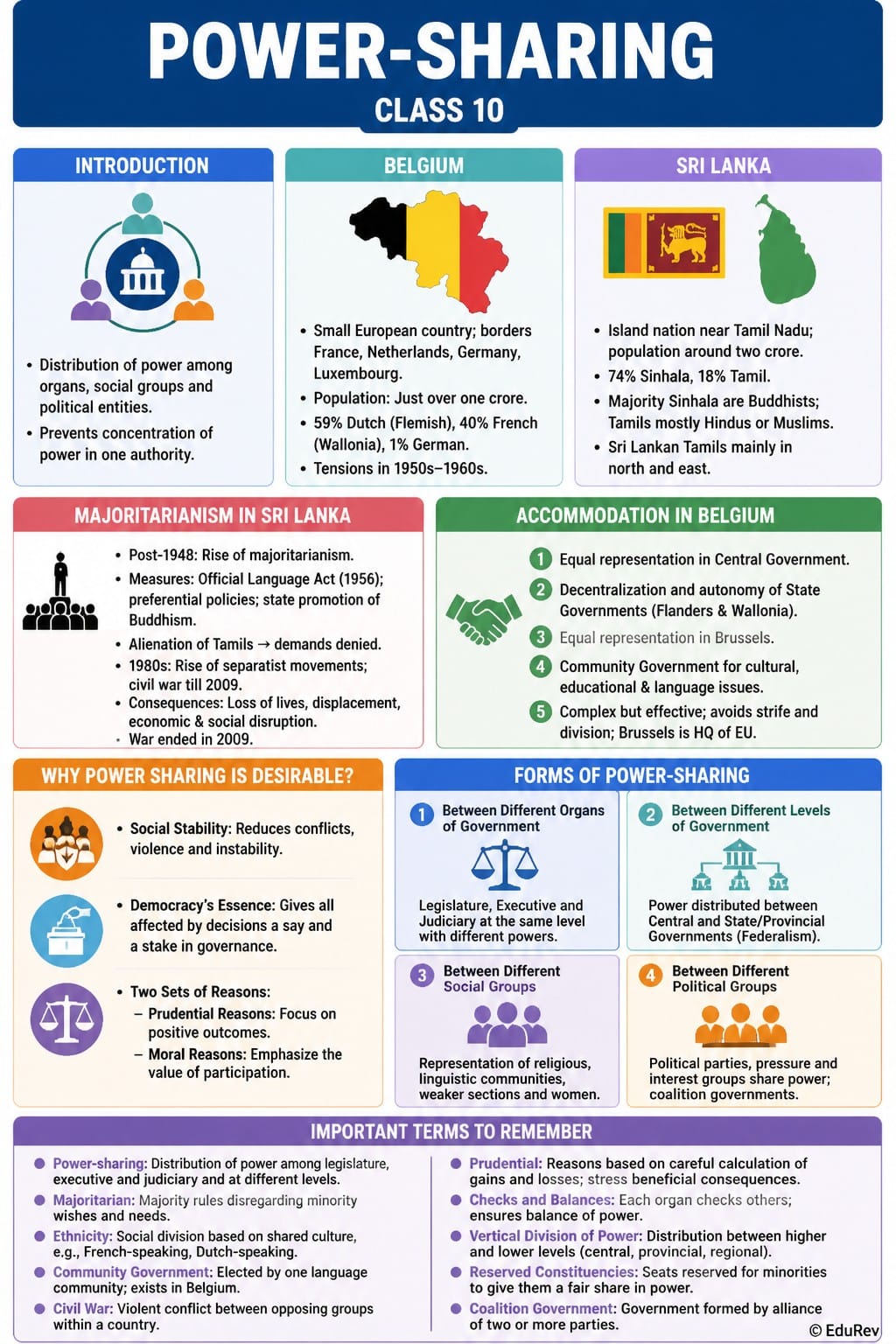
Unit Test (Solutions): Power Sharing
Time: 1 Hour
M.M.: 30
Instructions: Attempt all questions.
- Question numbers 1 to 5 carry 1 mark each.
- Question numbers 6 to 8 carry 2 marks each.
- Question numbers 9 to 11 carry 3 marks each.
- Question numbers 12 & 13 carry 5 marks each.
Q1. What does power-sharing in a democracy aim to prevent? (1 Mark)
a) The concentration of power in a single entity
b) The establishment of a dictatorship
c) The marginalization of minority groups
d) The violation of individual rights
Ans: a) The concentration of power in a single entity
Power-sharing aims to prevent the concentration of power, which can lead to authoritarianism. By distributing power, it ensures that no single entity can dominate, thus promoting democratic governance and protecting minority rights.
Q2. Which of the following is a feature of the Belgian model of power-sharing? (1 Mark)
(a) Only Dutch was declared the official language
(b) French speakers dominated the Parliament
(c) Equal representation of linguistic groups in central government
(d) Sinhala was promoted as the majority language
Ans: (c) Equal representation of linguistic groups in central government
The Belgian model of power-sharing is characterized by the equal representation of linguistic groups in the central government, ensuring that both Dutch and French speakers have a voice. Options (a) and (b) misrepresent the linguistic balance, while (d) refers to a different context.
Q3. What is the term used for a system where power is shared among different levels of government? (1 Mark)
(a) Unitarianism
(b) Authoritarianism
(c) Federalism
(d) Majoritarianism
Ans: (c) Federalism
Federalism is the term that describes a system where power is distributed among various levels of government, allowing for both national and regional governance. The other options do not accurately describe this power-sharing structure.
Q4. What is one consequence of the majoritarian measures adopted in Sri Lanka? (1 Mark)
Ans: The majoritarian measures adopted in Sri Lanka have led to significant consequences for the Tamil community. Key impacts include:
- Discrimination: Policies favoured Sinhala speakers, limiting job and educational opportunities for Tamils.
- Civil War: The growing distrust between communities escalated into a civil war, causing loss of lives and displacement.
Q5. Define 'Community Government'. (1 Mark)
Ans: Community government in Belgium is a form of governance that allows each linguistic community to manage its own cultural, educational and language-related matters. Key features include:
- It is elected by members of one language community: Dutch, French or German-speaking.
- It operates independently of the central government in the areas assigned to it, such as education and culture.
Q6. Give any two prudential reasons for power-sharing in a democracy. (2 Marks)
Ans: Prudential reasons for power-sharing include:
- Conflict reduction: Sharing power reduces the likelihood of inter-group conflict by giving different groups a role in decision-making, which lowers tensions and the risk of violence.
- Political stability: When no single group can dominate, the political system becomes more stable and predictable, which helps national unity and effective governance.
Q7. How does power-sharing help in reducing social conflict? (2 Marks)
Ans: Power-sharing reduces social conflict in the following ways:
- It promotes inclusivity by involving various social groups in decision-making processes.
- By preventing domination by one group, it helps to maintain political stability and public confidence in institutions.
- It lowers the chance of violence and unrest by addressing grievances through negotiation and representation.
- It fosters a sense of belonging among communities, which strengthens social cohesion.
Q8. State the meaning of the term 'Vertical division of power'. Give one example. (2 Marks)
Ans: Vertical division of power means distributing authority among different levels of government, such as central, state and local bodies. This separation ensures that local or regional governments can make decisions on matters that affect their area, while the central government handles national issues. Such arrangements are usually set out in a country's constitution.
An example is the Indian federal system, where powers are shared between the Central Government and the State Governments.
Q9. Describe any three ways in which power can be shared in modern democracies. (3 Marks)
Ans: Power can be shared in modern democracies in several ways:
- Horizontal distribution: Power is divided among different branches of government-legislature, executive and judiciary-so that each branch can check and balance the others, preventing abuse of power.
- Vertical distribution: Power is shared between central and regional or local governments, allowing decisions to be made closer to the people affected by them and accommodating regional diversity.
- Social group representation: Power is shared among different social groups (for example, linguistic, religious or ethnic communities) through measures such as reserved posts, minority representation or community governments, ensuring that diverse groups have a voice in governance.
Q10. Compare any three features of the power-sharing arrangements in Belgium and Sri Lanka. (3 Marks)
Ans: Power-sharing arrangements in Belgium and Sri Lanka differ in important respects:
- Ethnic representation: Belgium ensures equal representation of Dutch and French-speaking ministers at the centre so that both communities share power. In Sri Lanka, the Sinhala majority often dominated political institutions, limiting representation for Tamils.
- Constitutional accommodation: Belgium reformed its constitution repeatedly (from 1970 to 1993) to decentralise power and recognise regional identities. Sri Lanka's system did not provide similar constitutional safeguards for minority groups, which increased tensions.
- Approach to minority rights: Belgium uses formal mechanisms-such as community governments and special majorities-to protect minority interests. In Sri Lanka, majoritarian policies and language laws led to exclusion of minorities rather than protection.
Q11. What were the major causes that led to civil war in Sri Lanka? (3 Marks)
Ans: The civil war in Sri Lanka grew out of several interrelated causes:
- Majoritarianism: Political power was often used to favour the Sinhala majority, which created resentment among Tamils.
- Language discrimination: The 1956 decision to make Sinhala the only official language reduced opportunities for Tamil speakers and heightened their sense of exclusion.
- Political exclusion: Tamils faced denial of fair political representation and access to jobs and education, leading to growing demands for autonomy.
- Ethnic tensions: Long-standing mistrust and cycles of retaliation between communities escalated into armed conflict.
These factors together fuelled a conflict that continued for decades and caused considerable loss of life and displacement.
Q12. Describe the key elements of the Belgian model of power-sharing. How did it help in maintaining unity? (5 Marks)
Ans: The Belgian model of power-sharing includes several key elements that helped hold the country together:
- Equal representation: The constitution requires that Dutch and French-speaking ministers are represented equally in the central government, preventing dominance by one language group.
- Special majorities: Some laws require the support of a majority from each linguistic group, so that one community cannot impose measures on the other.
- Decentralisation: Many powers are transferred to regional and community governments, allowing local control over matters like education and culture.
- Separate institutions for Brussels: Brussels has its own institutions with balanced representation for the communities that live there, promoting cooperation in a bilingual region.
These arrangements helped maintain unity by recognising and protecting cultural and linguistic differences, encouraging cooperation through shared institutions, and preventing unilateral decisions that could alienate any community. By giving groups a real stake in governance, Belgium reduced conflict and strengthened the sense of belonging across communities.
Q13. Explain why power-sharing is desirable. Support your answer with prudential and moral reasons. (5 Marks)
Ans: Power-sharing is desirable for both prudential and moral reasons:
- Prudential reasons: It reduces the chance of conflict by including different groups in decision-making; it enhances political stability by preventing any group from monopolising power; and it improves governance by making policies more acceptable and easier to implement.
- Moral reasons: Power-sharing respects equality and fairness by recognising the rights and identities of minority groups; it upholds democratic values by ensuring broader participation and accountability; and it promotes justice by protecting vulnerable communities from discrimination.
In short, power-sharing helps maintain peace, strengthens democracy and ensures that diverse interests are represented in government, making the political system more legitimate and durable.
Short Questions Answers
Q1. What led to the ethnic tension in Belgium? Why was it more acute in Brussels?
Ans: The ethnic tension in Belgium arose from the dynamics between the French-speaking and Dutch-speaking communities:
- The French-speaking community was relatively wealthy and influential.
- The Dutch-speaking community experienced economic development and education much later, leading to feelings of resentment.
- This tension escalated during the 1950s and 1960s.
In Brussels, the conflict was more pronounced because:
- Although Dutch speakers were a majority in Belgium, they were a minority in the capital.
- This demographic imbalance heightened feelings of marginalisation among Dutch speakers.
Q2. What is the ethnic composition of Belgium? [CBSE Sept. 2011]
Or
Describe the ethnic composition of Belgium. [CBSE 2012]
Ans: The ethnic composition of Belgium is quite complex:
- 59% of the population lives in the Flemish region and speaks Dutch.
- 40% reside in the Wallonia region and speak French.
- The remaining 1% of Belgians speak German.
In the capital city, Brussels:
- About 80% of the population speaks French.
- Approximately 20% are Dutch-speaking.
Q3. What is the ethnic composition of Sri Lanka?
Ans: Sri Lanka has a diverse population with the following ethnic composition:
- Sinhalese: 74% of the population
- Tamils: 18%, primarily located in the north and east
- Muslims: A significant community
Among the Tamils, there are two main sub-groups:
- Sri Lankan Tamils: 13%, the indigenous Tamil population
- Indian Origin Tamils: 5%, descendants of indentured labourers brought from India
Q4. Mention any four steps which were taken by the Sri Lankan government to achieve majoritarianism.
Ans:
In 1956, an Act was passed making Sinhalese the only official language, ignoring Tamil.
The government implemented preferential policies that favoured Sinhalese applicants for university places and government jobs.
A new constitution mandated the state to protect and promote Buddhism.
Citizenship was denied to estate Tamils, further marginalising this community.
Q5. What is a Civil War? Explain with context to Sri Lanka.
Ans: Civil War refers to a violent conflict between opposing groups within a country.
In the context of Sri Lanka, the civil war primarily involved the Sinhalese and Tamil communities. Key points include:
- The conflict resulted in the deaths of thousands from both communities.
- Many families fled the country as refugees, while others lost their livelihoods.
- This civil war caused significant setbacks to the country's social, cultural, and economic life.
- The war lasted until 2009, leading to deep-seated distrust between the ethnic groups.
Q6. What is community government? Explain the concept of community government with context to Belgium.
Ans: A community government is a system where different social groups manage their own community affairs. The aim is to work together for the common good, without favouring any one group.
In Belgium:
- The community government is elected by individuals from one language group: Dutch, French, or German speakers, regardless of their location.
- This government has authority over cultural, educational, and language-related matters.
- It helps maintain peace between the major communities and prevents divisions based on language.
Q7. What is the relationship between democracy and power sharing?
Ans: Democracy gives every citizen the right to make decisions through their elected representatives. Power sharing involves dividing power among various social groups to ensure equal representation in governance.
Key points about the relationship between democracy and power sharing:
- Inclusivity: Power sharing allows individuals, regardless of cultural or language differences, to feel involved in the political system.
- Balance of Power: It prevents concentration of power in one group, promoting fairness and accountability.
- Representation: Different social groups can participate in decision-making, enhancing the democratic process.
Q8. How did the Sri Lankan and the Belgium government try to solve the ethnic problem? Or Explain any two important differences between the power sharing model accepted by Belgium and Sri Lanka.
Ans: Belgium and Sri Lanka approached their ethnic issues differently:
- Belgium leaders focused on respecting the feelings and interests of various communities, while the Sri Lankan government relied on majoritarianism.
- Belgium established a federal structure to share power between the central government and regional units, whereas Sri Lanka adopted a unitary government system.
- The Belgian approach helped avoid civic strife, while the majoritarianism in Sri Lanka led to a civil war.
Q9. "Both Belgium and Sri Lanka are democracies but they follow different systems of power sharing. " Support the statement by giving three points of difference.
Ans: Type of Government: Sri Lanka operates as a unitary system, where the national government holds most powers. In contrast, Belgium has transitioned to a federal system, granting constitutional powers to regional governments.
Religion and Government: To accommodate various ethnic groups, Belgium established a community government. Conversely, Sri Lanka enacted laws to protect and promote Buddhism.
Language and Government: In 1956, Sri Lanka declared Sinhalese as the sole official language, while Belgium sought to protect and promote all languages spoken within its borders.
Q10. What is power sharing? Explain.
Ans: Power sharing refers to the distribution of power among different groups or regions within a government. It aims to ensure that various communities feel included and respected.
- Permanent distribution: Power sharing provides a lasting share of power to different communities.
- Respect for diversity: Leaders and citizens acknowledge the interests and feelings of various groups.
- Importance for democracy: This principle is crucial for the unity and growth of a democratic society.
Long Questions Answers
Q1. Describe the tension that existed between the Dutch and the French speaking people in Belgium.
Or
What were the two main causes of resentment in Belgium in 1960 ? How was the conflict solved?
Ans: The tension between the Dutch-speaking and French-speaking communities in Belgium stemmed from several key issues:
- Economic inequality: The French-speaking community, although a minority, was relatively wealthy and influential.
- Majority vs Minority: The Dutch-speaking majority felt disadvantaged, as they received less economic development and educational opportunities.
- Brussels' unique situation: In the capital, the Dutch-speaking population was a minority, leading to heightened tensions.
To address these issues, the Belgian government made significant constitutional amendments:
- Between 1970 and 1993, the constitution was amended four times.
- These changes aimed to create an arrangement for peaceful coexistence among communities.
Q2. How were the ethnic problems solved in Belgium? Mention any four steps which were taken by the government to solve the problems?
Or
How is the political system in Belgium innovative and different from the other countries of the world? Explain any three points.
Or
Highlight any three measures adopted by the Belgian government to accommodate regional and cultural diversities.
Ans: The Belgian government took several steps to address ethnic problems and accommodate cultural diversities:
- Equal representation in the central government: The Belgian Constitution mandates an equal number of Dutch and French-speaking ministers. Special laws require majority support from both linguistic groups, preventing any community from making unilateral decisions.
- Decentralisation of power: Many powers were transferred from the central government to state governments in different regions. These state governments operate independently and are not subordinate to the central authority.
- Equal representation in Brussels: A separate government was established in Brussels, ensuring equal representation for both communities. This arrangement fosters cooperation and mutual respect.
- Community government: In addition to the central and state governments, a 'community government' was created. This government is elected by members of a specific language community (Dutch, French, or German) and has authority over cultural, educational, and language-related matters.
Q3. Why is Power sharing desirable? Or Why is power sharing necessary in democracy? Explain.
Or
"Power sharing is the very spirit of democracy." Justify this statement with three suitable points.
Or
Why is power sharing desirable? Give any three prudential reasons.
Ans: Power sharing is desirable for several reasons:
- Prudential reasons involve careful calculations of gains and losses. For instance, during the Nepal movement for democracy, even the Maoists were given a share of power, leading to peace.
- These reasons help to reduce conflict between social groups.
- They also promote political stability.
- While the majority imposing its will on the minority may seem appealing short-term, it can harm national unity in the long run. The tyranny of the majority can be detrimental to all.
Q4. Explain the major forms of power sharing in modern democracies.
Or
Explain four forms of participation in government under modern democratic system.
Or
Explain, how power is shared among different organs of government.
Or
Describe with examples the way in which power can be shared among different social and linguistic groups?
Ans: Power sharing among different organs of government (Horizontal power sharing) is a key feature of modern democracies. It involves the distribution of power among various branches of government, specifically:
- Legislature: Responsible for making laws.
- Executive: Enforces laws and manages the day-to-day operations of the government.
- Judiciary: Interprets laws and ensures justice.
This arrangement is known as horizontal distribution of power because it allows these branches, which operate at the same level, to exercise distinct powers. Key aspects include:
- No single organ can wield unlimited power.
- Each organ has the authority to check the powers of the others.
- This creates a balance of power among institutions.
For example, while government officials exercise power, they remain accountable to the Parliament or State Assemblies. Similarly, although judges are appointed by the executive, they can review executive actions and legislative laws, ensuring a system of checks and balances.
Q5. What are the advantages of horizontal power sharing? Explain with the help of examples.
Or
What is meant by the horizontal distribution of power? Explain any two merits of this form of power sharing.
Ans: Horizontal power sharing refers to the equal distribution of power among different branches of government. This system ensures that no single branch can dominate or exercise unlimited authority.
- Equal Level of Government: The three branches-legislature, executive, and judiciary-operate at the same level.
- Checks and Balances: Each branch monitors the others, preventing any one from becoming too powerful.
- Accountability: In India, for instance, ministers and officials must answer to Parliament or state legislatures, while judges, appointed by the executive, can review executive actions and legislative laws.
This arrangement promotes a balanced distribution of power, fostering a more democratic governance structure.
Q6. Explain the power sharing arrangements among the political parties and pressure groups.
Ans: Power sharing arrangements among political parties and pressure groups
- Democracy allows for power to be shared among various political parties and pressure groups.
- Citizens have the choice to select their rulers through elections, ensuring that power does not concentrate in one group.
- Over time, power is distributed among parties representing different ideologies and social groups.
- Parties may form alliances to contest elections, leading to a coalition government if successful.
- Pressure groups, such as those representing traders, farmers, and workers, also influence government decisions.
- These groups participate in committees or sway the decision-making process, contributing to power sharing.
- In some democracies, social groups, including religious and linguistic communities, are represented through legal arrangements.
- Examples include 'reserved constituencies' that ensure representation for socially weaker sections.
Q7. How is a federal government better than a unitary government? Explain with examples of Belgium and Sri Lanka.
Ans: Federalism is a system of government where power is divided between a central authority and various constituent units. In contrast, a unitary government centralises all power within a single authority.
- The leaders in Belgium addressed ethnic tensions by establishing a federal government that respects the interests of different communities.
- In Sri Lanka, the government attempted to resolve issues through majoritarianism, which ultimately failed.
- Belgium's approach helped avoid civil strife, while Sri Lanka's majoritarianism led to a civil war.
Q18. What are some of the basic elements of Belgium model of power sharing ? Write any three.
Or
Explain any three elements of the Belgium model of Power sharing. [CBSE 2013]
Ans: Basic elements of the Belgium model of power sharing:
- Equal representation: The constitution mandates that the number of Dutch and French-speaking ministers in the central government must be equal. This ensures that no single community can make decisions alone.
- Decentralised powers: Many powers of the central government are transferred to the state governments of the two regions. These state governments operate independently and are not subordinate to the central government.
- Brussels' governance: Brussels has its own government, with equal representation for both communities. The French-speaking community accepted this arrangement because the Dutch-speaking community also agreed to equal representation at the central level.
Very Short Questions: Power Sharing
Q1: What do you mean by the word ethnic?
Ans: A social division based on shared culture. People belonging to the same ethnic group believe in their common descent because of similarities of physical type culture or both.
 Ethnic GroupQ2: Which ethnic group in Belgium has the largest population?
Ans: Flemish.
Q3: 'The tension between Dutch-speaking and French-speaking communities was more acute in Brussels'. Give reason.
Ans: The minority French-speaking community was relatively rich and powerful. So the Dutch-speaking community, who got the benefit of economic development and education much later showed resentment between the Dutch-speaking and the French-speaking communities.
Q4: Which are the most important social groups in Sri Lanka?
Ans: (i) Sinhala speaking (ii) Tamil speaking
Q5: Which ethnic group is in the majority in Sri Lanka?
Ans: Sinhala
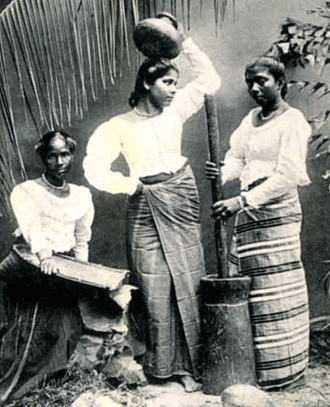 Sinhala Ethnic GroupQ6: Name the two subgroups of Tamils in Sri Lanka.
Ans: (i) Sri Lankan Tamils (ii) Indian Tamils
Q7: When did Sri Lanka emerge as an independent nation?
Ans: 1948
Q8: What is a Civil War?
Ans: It is a violent conflict between opposing groups within a country, for example, the conflict between Sinhalese and Indian Tamils in Sri Lanka.
Q9: Name the ethnic group of Sri Lanka which were involved in a Civil War.
Ans: (i) Sri Lankan Tamils or the Sinhalese (ii) Indian Tamils
Q10: What is majoritarianism? Name a country that has lost peace due to this.
Ans: A belief that the majority community should be able to rule a country in whichever way it wants, by disregarding the wishes and needs of the minority. Sri Lanka.
Q11: Power shared among different organs of government is known as the horizontal distribution of power. Give reason.
Ans: Because it allows different organs of government placed at the same level to exercise different powers.
 Power Sharing
Q12: State one prudential reason and one moral reason for power sharing from the Indian content.
Ans: (i) India is a multicultural society.
(ii) India is a democratic country.
Q13: What is the difference between prudential and moral reasons for power sharing?
Ans: Prudential reasons stress that power-sharing will bring out better outcomes, whereas moral reasons emphasize the very act of power-sharing as valuable.
Q14: Apart from the Central and the State Governments, there is a third kind of government in Belgium. Which is that third kind of government?
Ans: Community government.
Q15: What is the basic principle of democracy?
Ans: The basic principle of democracy is that people are the source of all political power.
Q16: For a long time it was believed that all power of government must reside in one person or group of persons located in one place. Give reason.
Ans: It was felt that if the power to decide is dispersed, it would not be possible to make quick decisions.
Q17: What is a community government?
Ans: A community government is one in which different social groups are given the power to handle the affairs related to their communities. They are expected to work jointly for the benefit of the common masses without undermining any one community.
Q18: Name the most important organs of the government.
Ans: Legislature, Executive, and Judiciary
Q19: What is a federal government?
Ans: It is a government under which two or more than two sets of governments govern the country.
Q20: What is a reserved constituency?
Ans: A reserved constituency is a constituency that is reserved for a particular section of society.