

Mind Map: Life Processes
What is the Respiratory System?
Respiration is defined as a metabolic process wherein, the living cells of an organism obtains energy (in the form of ATP) by taking in oxygen and liberating carbon dioxide from the oxidation of complex organic substances.
Types of Respiration
There are two types of respiration:
- Aerobic respiration
- Anaerobic respiration
Aerobic respiration
- It is a type of cellular respiration that takes place in the presence of oxygen to produce energy.
- It is a continuous process that takes place within the cells of animals and plants.
- This process can be explained with the help of the chemical equation:
Glucose (C6H12O6) + Oxygen (6O2) → Carbon dioxide (6CO2) + Water (6H2O)+ Energy (ATP)
- It is a continuous process that occurs within the cells of animals and plants.
- The chemical equation for aerobic respiration is: Glucose (C6H12O6) + Oxygen (6O2) ? Carbon dioxide (6CO2) + Water (6H2O) + Energy (ATP).
- During aerobic respiration, glucose is broken down in the presence of oxygen, resulting in the release of carbon dioxide, water, and energy in the form of ATP.
- This process is essential for the functioning and survival of living organisms, as it provides the necessary energy for various metabolic activities.
- In contrast, anaerobic respiration occurs in the absence of oxygen and produces less energy compared to aerobic respiration.
Anaerobic respiration
It is a type of cellular respiration that takes place in the absence of oxygen to produce energy. The chemical equation for anaerobic respiration is
Glucose (C6H12O6) → Alcohol 2(C2H5OH) + Carbon dioxide 2(CO2) + Energy (ATP )
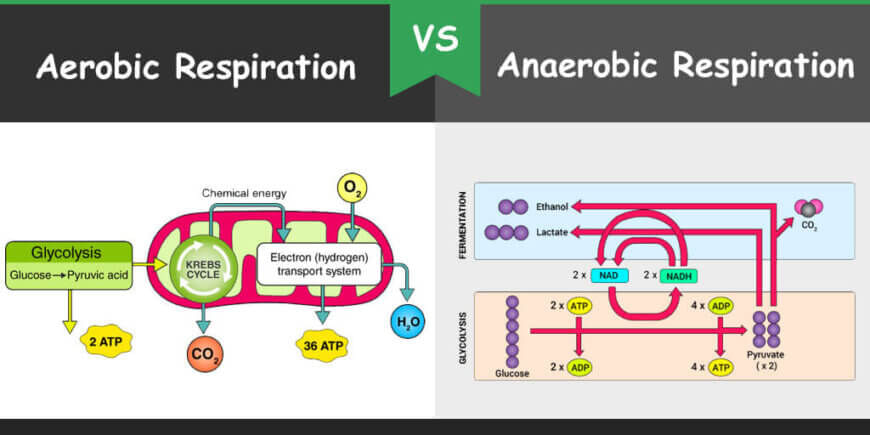 Aerobic and Anaerobic Respiration
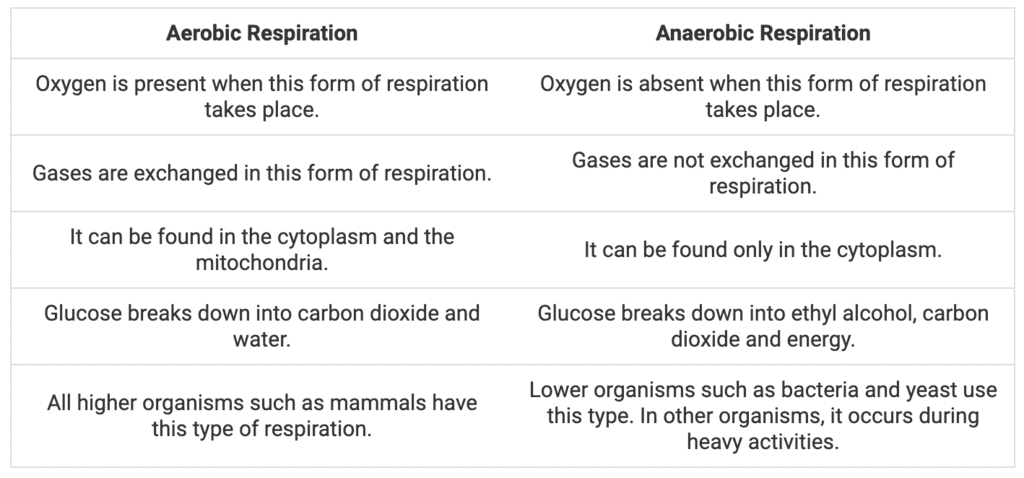 Difference between Aerobic and Anaerobic Respiration
Human Respiratory System
- The human respiratory system consists of a group of organs and tissues that help us to breathe.
- Lungs are the primary organs of the respiratory system which help in the exchange of gases.
- The other main parts of this system include a series of airways for air passages, blood vessels and the muscles that facilitate breathing.
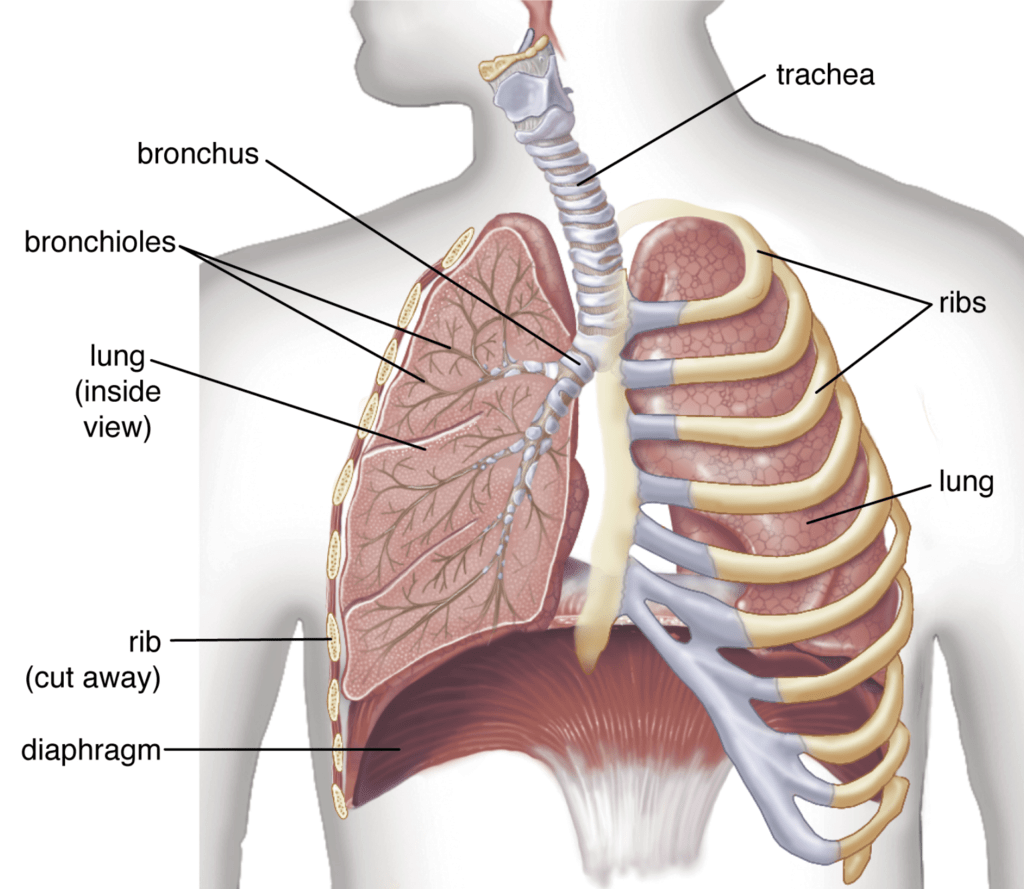
- The human respiratory system involves the nose, nasal cavities, pharynx, larynx, trachea/windpipe, bronchi, bronchioles and alveoli.
Respiratory Tract
External nostrils → Nasal cavity → Pharynx → Larynx → Trachea → Bronchi → Bronchioles → Alveolar sacs.
- The respiratory tract of the human respiratory system begins from a pair of external nostrils situated at the lower end of the nose.
- The air enters through the nostrils and reaches into a pair of nasal cavities.
- The two nasal cavities are separated from each other by a nasal septum. The nasal cavities are separated from the oral cavity by a bony palate. It is due to this reason we can breathe in air while we eat.
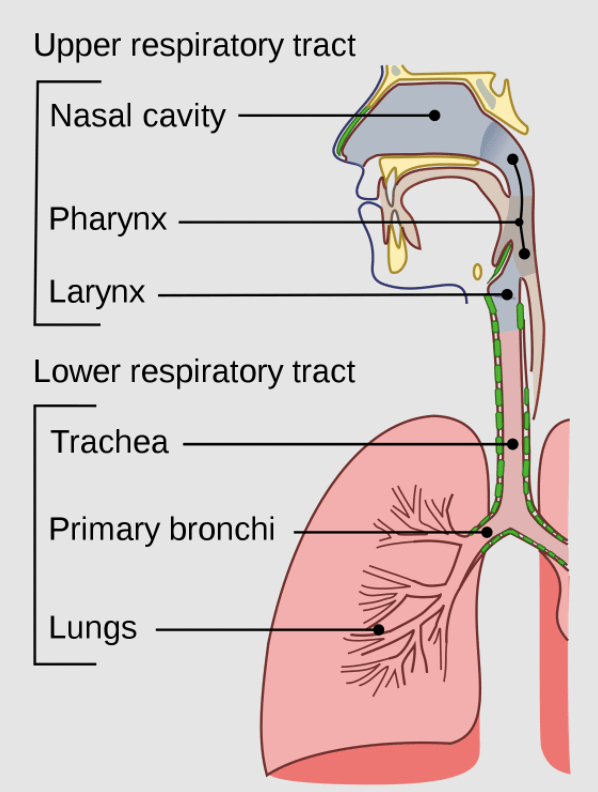
- The nasal passages are lined by ciliated epithelium and mucus-secreting cells so that the inspired air gets warmed, moistened and becomes dust-free. The dust particles are entrapped in the mucus secreted by mucus cells.
- The nasal cavity is also lined with olfactory epithelium which acts as an organ of smell.
- The nasal chambers open into the pharynx through internal nares.
- The pharynx is a short vertical tube located in the head at the back of the buccal cavity. It provides a passage into which the internal nares and buccal cavity both open to pass the air into it.
- The pharynx provides passage into the trachea or windpipe through a slit-like aperture, called the glottis. The glottis always remains open except during swallowing. The glottis bears a leaf-like cartilaginous flap, the epiglottis, at its anterior margin.
- During swallowing, the epiglottis closes the glottis to check the entry of food into it. Entry of food into the respiratory tract can be fatal.
- The trachea is about 11 cm in length and 2.5 cm in diameter. Its wall has incomplete (C-shaped) cartilaginous rings, which prevents the trachea from collapsing even if there is not much air in it.
- The trachea is lined internally by ciliated epithelium and mucus-secreting cells. The mucus and cilia both prevent the entry of dust particles and microbes. The trachea runs down the neck and extends into the thoracic cavity.
- On entering the thoracic cavity, the trachea divides into bronchi (singular: bronchus). On entering the lungs, the right bronchus enters into the right lung and the left bronchus enters into the left lung.
Voice Box
The voice box is also called the larynx. It is an enlarged upper part of the trachea. Before puberty, the larynx is inconspicuous and similar in both sexes.
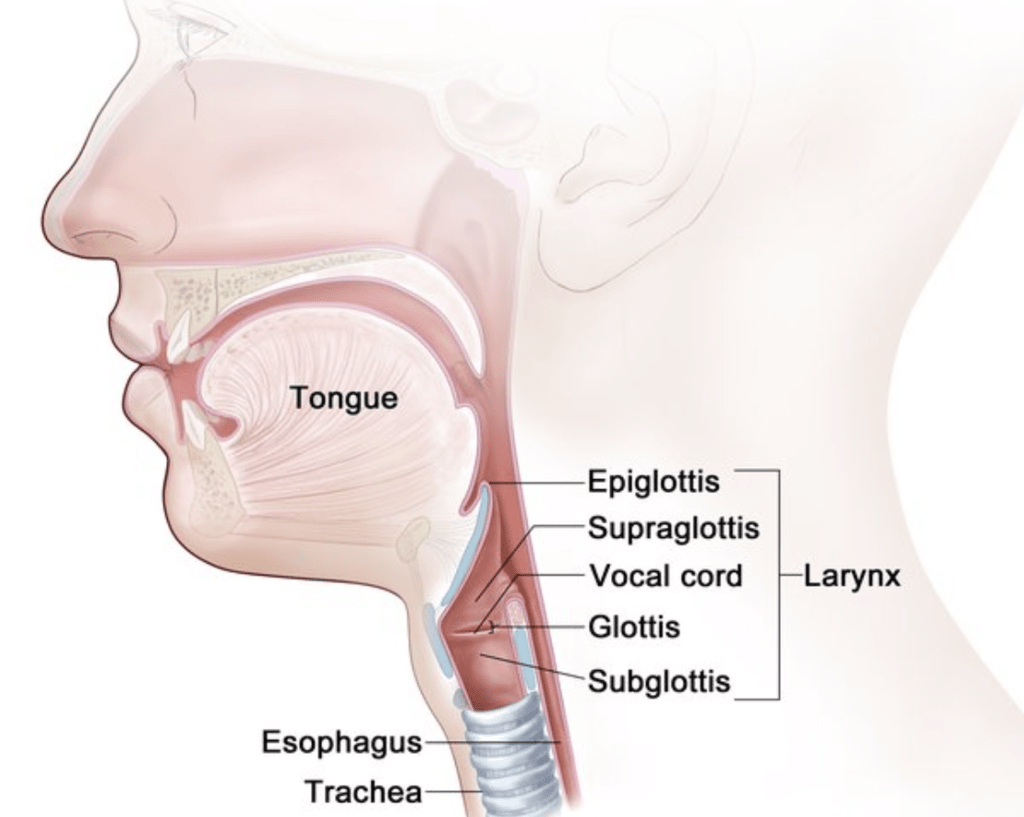
- In males, it often becomes prominent and protrudes out and often called "Adam's apple".
- Inside the larynx are the two vocal cords. These are folds of mucous membrane that extend into the lumen from the sides.
- Vibration in the vocal cords results in the production of sound which is altered and converted into speech with the help of the buccal cavity, soft palate, tongue and lips.
- Lungs are responsible for the exchange of gases, specifically oxygen and carbon dioxide.
- Oxygen from the air we breathe enters the lungs and is transported to the bloodstream, where it is then delivered to the body's cells for energy production.
- Carbon dioxide, a waste product of cellular respiration, is removed from the cells and transported back to the lungs to be exhaled.
- The lungs are located in the thoracic cavity and are protected by the rib cage.
- They are made up of millions of tiny air sacs called alveoli, where the exchange of gases takes place.
- The lungs are also responsible for filtering out dust particles and other harmful substances from the air we breathe.
- Overall, the lungs play a crucial role in the process of respiration, allowing us to inhale oxygen and exhale carbon dioxide.
Lungs
The lungs are a pair of spongy, highly elastic, solid and bag-like organs. They are roughly cone-shaped and situated in the thoracic cavity.
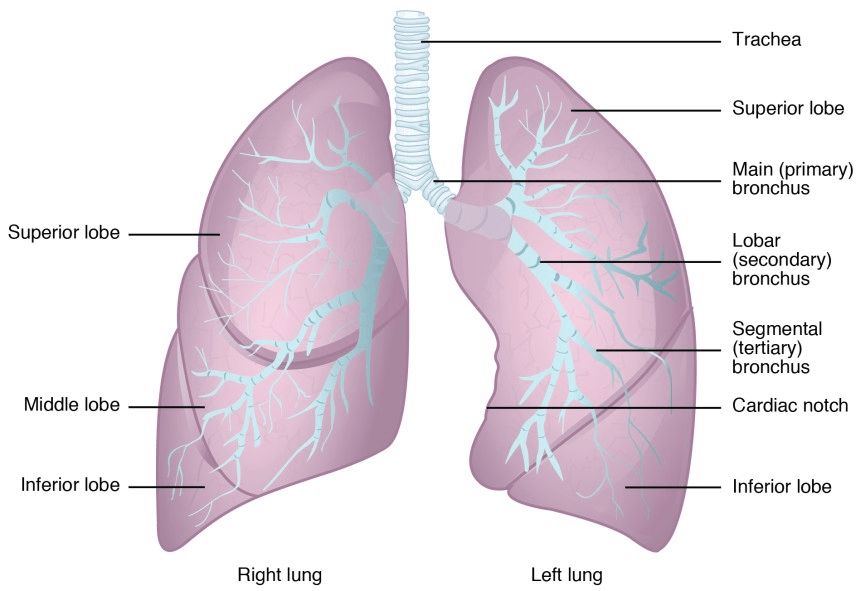
- The lungs are enclosed by a double-layered membrane or covering called pleura.
- The pleural membranes are separated by a thin space filled with pleural fluid which lubricates the membrane to avoid friction.
- Within the lung, each bronchus divides and redivides to form finer branches called bronchioles.
- Each bronchus with all its branches is called a bronchial tree. After repeated divisions, each bronchiole ends into a cluster of tiny air chambers called air sacs or alveoli.
- Alveoli are functional units of the lungs as these are the actual sites of respiratory exchange.
- There are about 750 million alveoli present in the lungs which have a total surface area of about 80 m2. Alveoli are covered with a network of capillaries.
Mechanism of Breathing
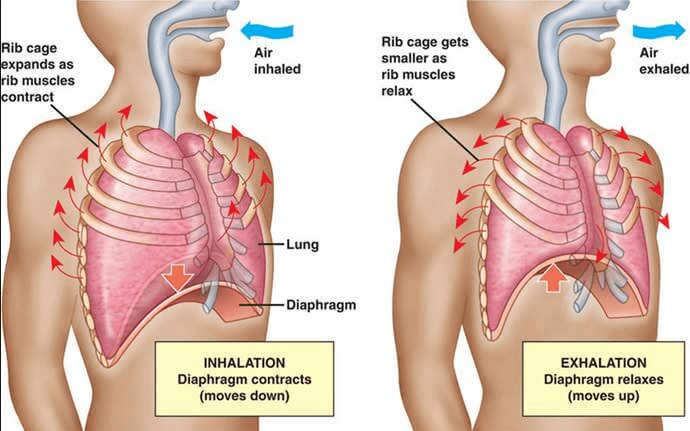
Lungs cannot expand or contract on their own. The contraction and expansion of the lungs are brought about by diaphragm muscles and external intercostal muscles.1. Inhalation (Inspiration)
Inhalation is the intake of fresh air from outside into the alveoli of the lungs. It occurs by the expansion of the lungs which is brought about by enlargement of the thoracic cavity.
Inhalation involves the following steps:
- The diaphragm (a sheet of tissue that separates the thoracic cavity from the abdominal chamber) muscle contracts so that the diaphragm lowers down and becomes flat.
- Lowering of the diaphragm pushes the abdominal viscera downward resulting in the enlargement of the thoracic cavity vertically.
- External intercostal muscles contract so that the ribs and sternum are pulled upward and outward. This causes enlargement of the thoracic cavity.
- Enlargement of the thoracic cavity results in the expansion of lungs.
- Expansion of lungs reduces the pressure of the air inside so that the fresh air is pulled from outside into the lungs passing through nostrils, trachea and bronchi.
- Fresh air has a rich supply of O2 which goes into the blood passing through thin membranes of alveoli and blood capillaries. As a result, the blood in the capillaries becomes loaded with oxygen and expels carbon dioxide into the alveoli for exhalation.
 Breathing Mechanism
2. Exchange of Gases
Breathing is the first step of respiration which involves the exchange of gases between the air in alveoli and the blood capillaries (around the alveoli). - In this exchange, the blood takes up oxygen from the alveolar air and releases CO2 to the alveolar air.
- This exchange of gases is called external respiration and results in the oxygenation of blood. The heart supplies the oxygenated blood to the body tissues.
- The living cells perform the oxidation of simple food (glucose) to release energy. This is the process of aerobic respiration, which utilises O2 and releases CO2.
- The aerobic respiration occurs partly in the cytosol and partly in the mitochondria of cells. This catabolic process is called cellular respiration.
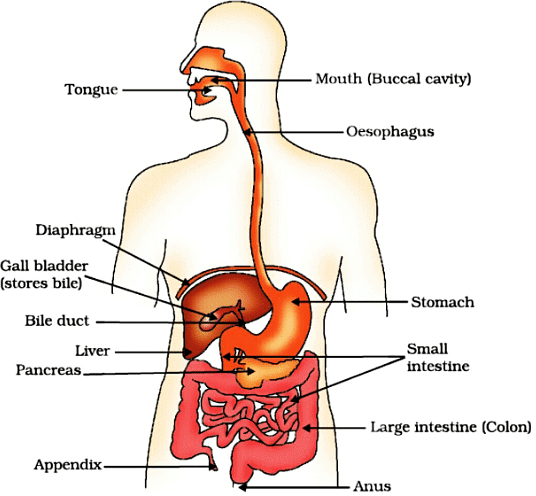
- The concentration of O2 is more in the blood and less in the tissue cells. So, the O2 moves from blood to the tissues by the physical process of diffusion.
- Similarly, CO2 concentration is more in tissues and less in the blood. So, the CO2 moves from tissues to the blood. The oxygenated blood now becomes deoxygenated.
3. Exhalation (Expiration)
The mechanism of breathing out of carbon dioxide is called exhalation.
- During exhalation, the phrenic muscle of the diaphragm relaxes so that the abdominal viscera pushes the diaphragm upward, making it convex.
- The external intercostal muscles also relax, resulting in reduced size of the thoracic cavity and lungs also contract.
- Contraction of lungs raises the air pressure so that the foul air moves out. The average rate of breathing in a normal adult man is 15 to 18 times per minute.
Differences between Inspiration and Expiration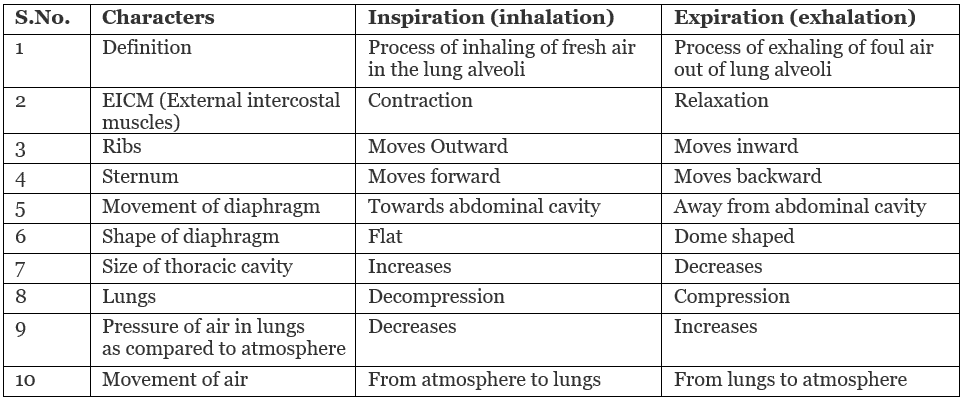
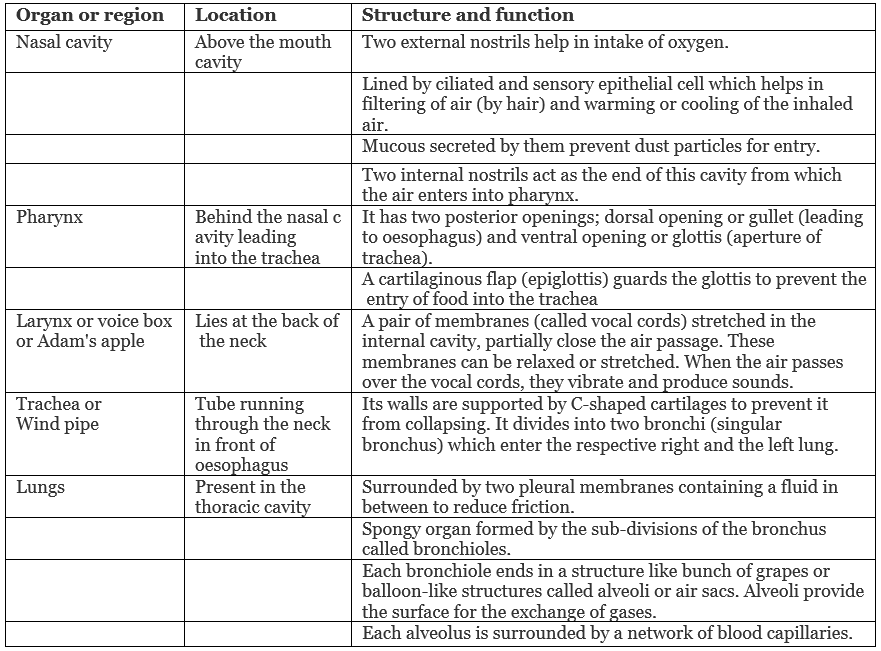
Location, structure and function of the Respiratory System
Respiration in Plants
- The plants do not have any special respiratory system so they have to respire in all of their individual parts like leaf, stem and root.
- The plants also have to exchange gases with the atmosphere by a simple diffusion process. Mode of gaseous exchange (oxygen and carbon dioxide) in plants.
In terrestrial plants, gaseous exchange occurs through:
- Stomata: In leaves and green stem.
- Lenticels: In woody stem and roots.
- Root hairs: In young roots.
1. Respiration through Stomata
Stomata are small apertures found on the surface of the leaf. For the process of respiration, oxygen enters stomata by the process of diffusion and then into other cells of the leaf. When the concentration of CO2 increases inside the cells it is diffused out through stomata.
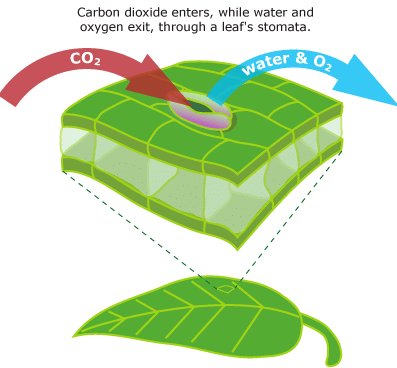 Respiration through Stomata
2. Respiration through Lenticels
Lenticels are the opening in the bark of woody stems. They also serve as a place of gaseous exchange.
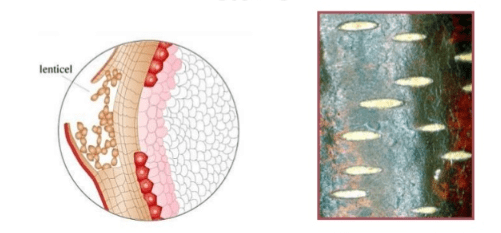 Respiration through Lenticels
3. Respiration through the General Surface of the Roots
Ploughing or tilling of the soil creates small air spaces around soil particles which provides the sources of oxygen for the roots.
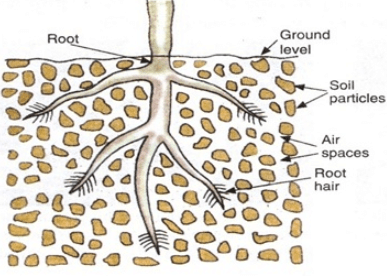 Respiration through Roots
- During inhalation, the diaphragm muscle contracts, causing it to lower down and become flat.
- The lowering of the diaphragm pushes the abdominal viscera downward, resulting in the enlargement of the thoracic cavity vertically.
- This expansion of the thoracic cavity allows the lungs to expand and create more space for fresh air to enter the alveoli.
- Therefore, the function of the diaphragm during inhalation is to expand the thoracic cavity and create a pressure gradient that allows air to be drawn into the lungs.
Respiration through Roots
- This oxygen present between the soil particles diffuses into root hairs (these are the extensions of an epidermal cell of the root), by the process of diffusion.
- From the root hairs, oxygen diffuses into other cells of the root. After the utilisation of oxygen, CO2 is diffused out into the soil.
- In older roots, there are no root hairs present. Instead, they have a layer of dead cells which is protective in nature and encloses small opening (lenticels). These are used for gaseous exchange between the soil and inner living cells.
- Aquatic plants can carry out gaseous exchange by diffusion over their whole surfaces.
- The direction of diffusion depends upon the environmental condition and the requirement of the plant.
- During the daytime, O2 release is a major event.
- During the night, CO2 release is the major event because there is no photosynthesis.
What is the difference between Photosynthesis & Respiration?
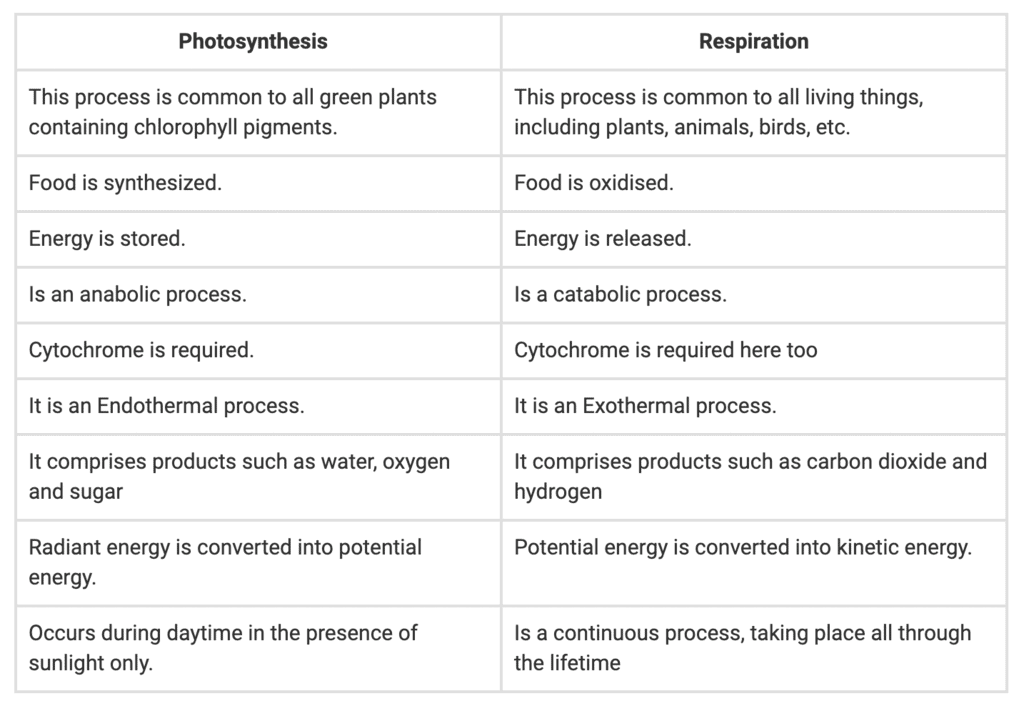
NCERT Exemplar: Life Processes
Multiple Choice Questions
Q.1. Which of the following statements about the autotrophs is incorrect?
(a) They synthesise carbohydrates from carbon dioxide and water in the presence of sunlight and chlorophyll
(b) They store carbohydrates in the form of starch
(c) They convert carbon dioxide and water into carbohydrates in the absence of sunlight
(d) They constitute the first trophic level in food chains
Ans: (c)
Q.2. In which of the following groups of organisms, food material is broken down outside the body and absorbed?
(a) Mushroom, green plants, Amoeba
(b) Yeast, mushroom, bread mould
(c) Paramecium, Amoeba, Cuscuta
(d) Cuscuta, lice, tapeworm
Ans: (b)
Q.3. Select the correct statement
(a) Heterotrophs do not synthesise their own food
(b) Heterotrophs utilise solar energy for photosynthesis
(c) Heterotrophs synthesise their own food
(d) Heterotrophs are capable of converting carbon dioxide and water into carbohydrates
Ans: (a)
Q.4. Which is the correct sequence of parts in human alimentary canal?
(a) Mouth → stomach → small intestine → oesophagus → large intestine
(b) Mouth →oesophagus → stomach → large intestine → small intestine
(c) Mouth → stomach → oesophagus → small intestine → large intestine
(d) Mouth → oesophagus → stomach → small intestine → large intestine
Ans: (d)
Q.5. If salivary amylase is lacking in the saliva, which of the following events in the mouth cavity will be affected?
(a) Proteins breaking down into amino acids
(b) Starch breaking down into sugars
(c) Fats breaking down into fatty acids and glycerol
(d) Absorption of vitamins
Ans: (b)
Q.6. The inner lining of stomach is protected by one of the following from hydrochloric acid. Choose the correct one
(a) Pepsin
(b) Mucus
(c) Salivary amylase
(d) Bile
Ans: (b)
Q.7. Which part of alimentary canal receives bile from the liver?
(a) Stomach
(b) Small intestine
(c) Large intestine
(d) Oesophagus
Ans: (b)
Q.8. A few drops of iodine solution were added to rice water. The solution turned blue-black in colour. This indicates that rice water contains
(a) complex proteins
(b) simple proteins
(c) fats
(d) starch
Ans: (d)
Q.9. In which part of the alimentary canal food is finally digested?
(a) Stomach
(b) Mouth cavity
(c) Large intestine
(d) Small intestine
Ans: (d)
Q.10. Choose the function of the pancreatic juice from the following
(a) trypsin digests proteins and lipase carbohydrates
(b) trypsin digests emulsified fats and lipase proteins
(c) trypsin and lipase digest fats
(d) trypsin digests proteins and lipase emulsified fats
Ans: (d)
Q.11. When air is blown from mouth into a test-tube containing lime water, the lime water turned milky due to the presence of
(a) oxygen
(b) carbon dioxide
(c) nitrogen
(d) water vapour
Ans: (b)
Q.12. The correct sequence of anaerobic reactions in yeast is
(a) 
(b) 
(c) 
(d) 
Ans: (d)
Q.13. Which of the following is most appropriate for aerobic respiration?
(a) 
(b) 
(c) 
(d) 
Ans: (b)
Q.14. Which of the following statement(s) is (are) true about respiration?
(i) During inhalation, ribs move inward and diaphragm is raised
(ii) In the alveoli, exchange of gases takes place i.e., oxygen from alveolar air diffuses into blood and carbon dioxide from blood into alveolar air
(iii) Haemoglobin has greater affinity for carbon dioxide than oxygen
(iv) Alveoli increase surface area for exchange of gases
Choose the correct option:
(a) (i) and (iv)
(b) (ii) and (iii)
(c) (i) and (iii)
(d) (ii) and (iv)
Ans: (d)
Q.15. Which is the correct sequence of air passage during inhalation?
(a) Nostrils → larynx → pharynx → trachea → lungs
(b) Nasal passage → trachea → pharynx → larynx → alveoli
(c) larynx → nostrils → pharynx → lungs
(d) Nostrils → pharynx → larynx → trachea → alveoli
Ans: (d)
Q.16. During respiration exchange of gases take place in
(a) trachea and larynx
(b) alveoli of lungs
(c) alveoli and throat
(d) throat and larynx
Ans: (b)
Q.17. Which of the following statement (s) is (are) true about heart?
(i) Left atrium receives oxygenated blood from different parts of body while right atrium receives deoxygenated blood from lungs
(ii) Left ventricle pumps oxygenated blood to different body parts while right ventricle pumps deoxygenated blood to lungs
(iii) Left atrium transfers oxygenated blood to right ventricle which sends it to different body parts
(iv) Right atrium receives deoxygenated blood from different parts of the body while left ventricle pumps oxygenated blood to different parts of the body
Choose the correct option:
(a) (i)
(b) (ii)
(c) (ii) and (iv)
(d) (i) and (iii)
Ans: (c)
Q.18. What prevents backflow of blood inside the heart during contraction?
(a) Valves in heart
(b) Thick muscular walls of ventricles
(c) Thin walls of atria
(d) All of the above
Ans: (a)
Q.19. Single circulation i.e., blood flows through the heart only once during one cycle of passage through the body, is exhibited by
(a) Labeo, Chameleon, Salamander
(b) Hippocampus, Exocoetus, Anabas
(c) Hyla, Rana, Draco
(d) Whale, Dolphin, Turtle
Ans: . (b)
Q.20. In which of the following vertebrate group/groups, heart does not pump oxygenated blood to different parts of the body?
(a) Pisces and amphibians
(b) Amphibians and reptiles
(c) Amphibians only
(d) Pisces only
Ans: (d)
Q.21. Choose the correct statement that describes arteries.
(a) They have thick elastic walls, blood flows under high pressure; collect blood from different organs and bring it back to the heart
(b) They have thin walls with valves inside, blood flows under low pressure and carry blood away from the heart to various organs of the body
(c) They have thick elastic walls, blood flows under low pressure; carry blood from the heart to various organs of the body
(d) They have thick elastic walls without valves inside, blood flows under high pressure and carry blood away from the heart to different parts of the body.
Ans: (d)
Q.22. The filtration units of kidneys are called
(a) ureter
(b) urethra
(c) neurons
(d) nephrons
Ans: (d)
Q.23. Oxygen liberated during photosynthesis comes from
(a) water
(b) chlorophyll
(c) carbon dioxide
(d) glucose
Ans: (a)
Q.24. The blood leaving the tissues becomes richer in
(a) carbon dioxide
(b) water
(c) heamoglobin
(d) oxygen
Ans: (a)
Q.25. Which of the following is an incorrect statement?
(a) Organisms grow with time
(b) Organisms must repair and maintain their structure
(c) Movement of molecules does not take place among cells
(d) Energy is essential for life processes
Ans: (c)
Q.26. The internal (cellular) energy reserve in autotrophs is
(a) glycogen
(b) protein
(c) starch
(d) fatty acid
Ans: (c)
Q.27. Which of the following equations is the summary of photosynthesis?
(a) 6CO2 + 12H2O → C6H12O6 + 6O2+ 6H2O
(b) 6CO2 + H2O + Sunlight→ C6H12O6 + O2 + 6H2O
(c) 6CO2 + 12H2O + Chlorophyll + Sunlight→ C6H12O6 + 6O2 + 6H2O
(d) 6CO2 + 12H2O + Chlorophyll + Sunlight→ C6H12O6 + 6CO2 + 6H2O
Ans: (c)
Q.28. Choose the event that does not occur in photosynthesis
(a) Absorption of light energy by chlorophyll
(b) Reduction of carbon dioxide to carbohydrates
(c) Oxidation of carbon to carbon dioxide
(d) Conversion of light energy to chemical energy
Ans: (c)
Q.29. The opening and closing of the stomatal pore depends upon
(a) oxygen
(b) temperature
(c) water in guard cells
(d) concentration of CO2 in stomata
Ans: (c)
Q.30. Choose the forms in which most plants absorb nitrogen
(i) Proteins
(ii) Nitrates and Nitrites
(iii) Urea
(iv) Atmospheric nitrogen
Choose the correct option:
(a) (i) and (ii)
(b) (ii) and (iii)
(c) (iii) and (iv)
(d) (i) and (iv)
Ans: (b)
Q.31. Which is the first enzyme to mix with food in the digestive tract?
(a) Pepsin
(b) Cellulase
(c) Amylase
(d) Trypsin
Ans: (c)
Q.32. Which of the following statement(s) is (are) correct?
(i) Pyruvate can be converted into ethanol and carbon dioxide by yeast
(ii) Fermentation takes place in aerobic bacteria
(iii) Fermentation takes place in mitochondria
(iv) Fermentation is a form of anaerobic respiration
Choose the correct option:
(a) (i) and (iii)
(b) (ii) and (iv)
(c) (i) and (iv)
(d) (ii) and (iii)
Ans: (c)
Q.33. Lack of oxygen in muscles often leads to cramps among cricketers. This results due to
(a) conversion of pyruvate to ethanol
(b) conversion of pyruvate to glucose
(c) non conversion of glucose to pyruvate
(d) conversion of pyruvate to lactic acid
Ans: (d)
Q.34. Choose the correct path of urine in our body
(a) kidney → ureter → urethra → urinary bladder
(b) kidney → urinary bladder → urethra → ureter
(c) kidney → ureters → urinary bladder → urethra
(d) urinary bladder → kidney → ureter → urethra
Ans: (c)
Q.35. During deficiency of oxygen in tissues of human beings, pyruvic acid is converted into lactic acid in the
(a) cytoplasm
(b) chloroplast
(c) mitochondria
(d) golgi body
Ans: (a)
Short Answer Type Questions
Q.36. Name the following:
(a) The process in plants that links light energy with chemical energy.
(b) Organism that can prepare their own food.
(c) The cell organelle where photosynthesis occurs.
(d) Cells that surround a stomatal pore.
(e) Organisms that cannot prepare their own food.
(f) An enzyme secreted from gastric glands in stomach thact acts on proteins.
Ans: (a) Photosynthesis
(b) Autotrophs
(c) Chloroplasts
(d) Guard cells
(e) Heterotrophs
(f) Pepsin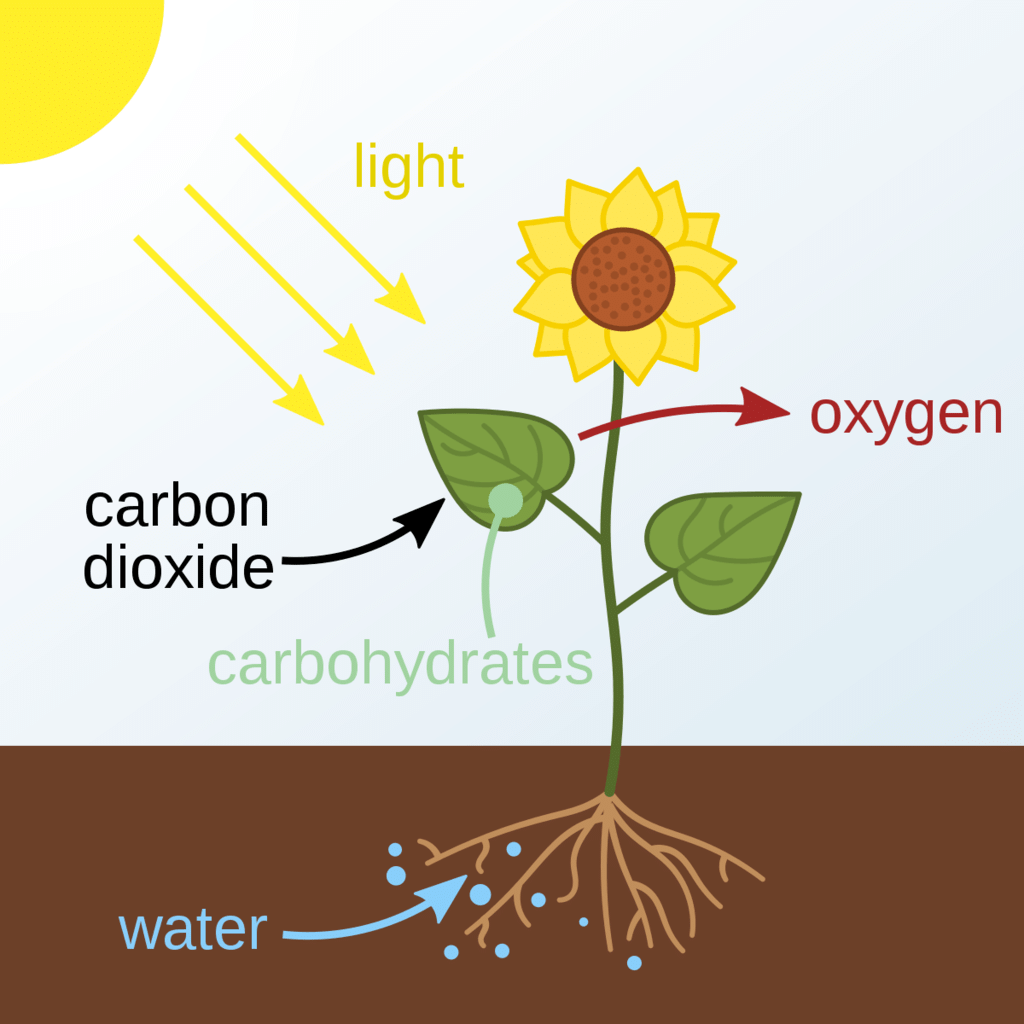 Q.37. "All plants give out oxygen during day and carbon dioxide during night". Do yo agree with this statement? Give reason.
Ans: Yes, respiration takes place throughout day and night but photosynthesis occurs only during the day. During daytime, plants give out oxygen which is a product of photosynthesis. Thus, during night when there is no photosynthesis, plants liberate carbon dioxide.
Q.38. How do the guard cells regulate opening and closing of stomatal pores?
Ans: The swelling of guard cells due to absorption of water causes opening of stomatal pores while shrinking of guard cells closes the pores. Opening and closing of stomata occurs due to turgor changes in guard cells. When guard cells are turgid, stomatal pore is open while in flaccid conditions, the stomatal aperture closes.
Q.39. Two green plants are kept separately in oxygen free containers. One in dark and other in continuous light which one will longer? Give reasons.
Ans: The plant which kept in continuous light will live longer because in light, the plant will be able to undergo photosynthesis and able to convert carbon dioxide into oxygen whereas the plant in dark cannot perform photosynthesis and lack of oxygen will kill the plant.
Q.40. If a plant is releasing carbon dioxide and taking in oxygen during the day, does it mean that there is no photosynthesis occurring? Justify your answer.
Ans: Release of CO2 and intake of O2 gives evidence that either photosynthesis is not taking place or its rate is too low. Normally during day time, the rate of photosynthesis is much more than the rate of respiration. So, CO2 produced during respiration is used up for photosynthesis hence CO2 is not released.
Q 41. Why do fishes die when taken out of water?
Ans: Fishes die when taken out of water because they cannot obtain gaseous oxygen.
They breath through gills, which are richly supplied with blood capillaries and can readily absorb oxygen dissolved in water.
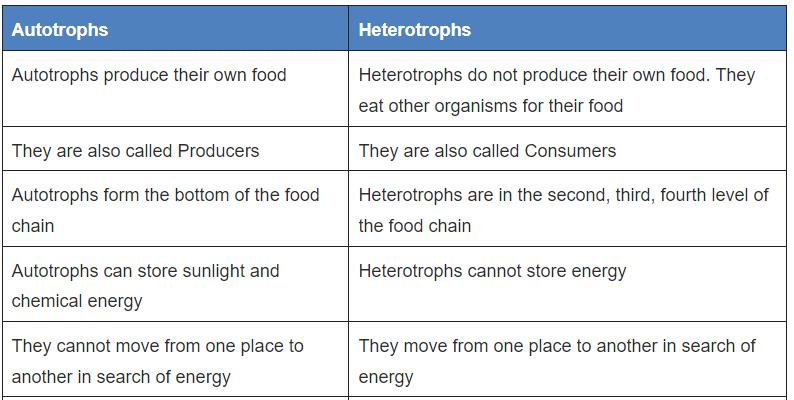
Q.42. Differentiate between an autotroph and a heterotroph.
Ans:
Q.43. Is 'nutrition' a necessity for an organism? Discuss.
Ans. Yes, 'nutrition' is a necessity for an organism because:
- It is required for the growth of new cells and repair of worn out cells.
- It is required to develop resistance against various diseases.
- It gives us energy for various metabolic activities of our body.
Q.44. What would happen if green plants disappear from the earth?
Ans: If green plants disappear from the earth, then the herbivores will die of starvation followed by carnivores and then decomposers.
Q.45. Leaves of a healthy potted plant were coated with vaseline will this plant remain healthy for long? Give reasons for your answer.
Ans:
- The plant will die soon because layer of vaseline will prevent the exchange of gases for respiration.
- It will also close the stomatal openings and plant won't be able to get the necessary raw materials for photosynthesis.
Q.46. How does aerobic respiration differ from anaerobic respiration?
Ans:
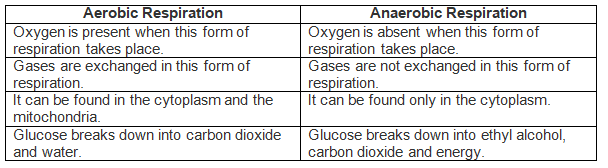
Q.47. Match the words of Column (A) with that of Column (B)
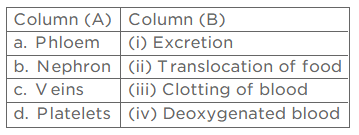
Ans: (a) Phloem - (ii) Translocation of food
(b) Nephron - (i) Excretion
(c) Veins - (iv) Deoxygenated blood
(d) Platelets - (iii) Clotting of blood
Q.48. Differentiate between an artery and a vein.
Ans:
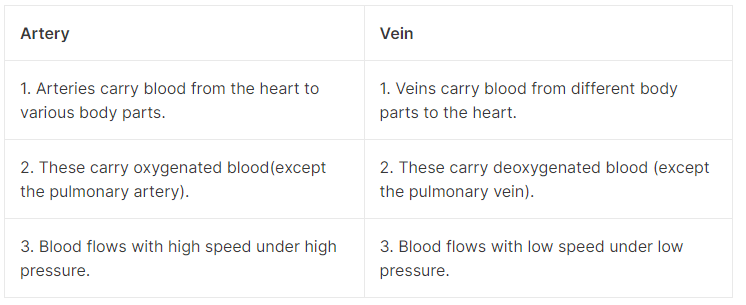
Q.49. What are the adaptations of leaf for photosynthesis?
Ans: The adaptations of leaf for photosynthesis are as follows:
- Leaf has a large surface area to absorb maximum light.
- Arrangement of leaves in order to absorb the optimum amount of light.
- A large number of veins provide mechanical strength and also take part in the quick transport of substances to and from the mesophyll cells.
- The leaf is the site of transpiration which cools the leaf surface for optimum photosynthesis.
- Leaf has numerous stomata for gaseous exchange.
- A large number of chloroplasts are present on the upper surface of leaves.
Q.50. Why is the small intestine in herbivores longer than in carnivores?
Ans: Herbivores eat grass and need a longer small intestine to allow complete digestion of cellulose. But carnivores cannot digest cellulose, and therefore they have a shorter intestine.
Q.51. What will happen if the mucus is not secreted by the gastric glands?
Ans: If the mucus is not secreted by the gastric glands, it will lead to corrosion of the inner lining of the stomach, causing excessive acidity, ulcers, and extreme discomfort as mucus protects the inner lining of the stomach from the action of hydrochloric add and enzyme pepsin.
Q.52. What is the significance of emulsification of fats?
Ans: Fats are present in food in the form of large globules which makes it difficult for enzymes to act on them. Bile salts present in bile break them down mechanically into smaller globules which increases the efficiency of fat digesting enzymes.
Q.53. What causes movement of food inside the alimentary canal?
Ans: The wall of alimentary canal contains muscle layers. Rhythmic contraction and relaxation of these muscles pushes the food forward. This is called peristalsis, which occurs all along the gut.
Q.54. Why does absorption of digested food occur mainly in the small intestine?
Ans: Absorption of digested food occurs mainly in the small intestine because:
(i) Digestion of food is completed in the small intestine.
(ii) Inner lining of the small intestine bears a number of finger-like projections called villi, which increases the surface area for absorption.
(iii) Wall of the intestine has blood vessels for carrying the absorbed food to different parts of the body.
Q.55. Match Group (A) with Group (B)
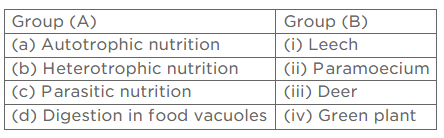
Ans: (a) Autotrophic nutrition- (iv) Green plant
(b) Heterotrophic nutrition - (iii) Deer
(c) Parasitic nutrition - (i) Leech
(d) Digestion in food vacuoles - (ii) Paramoecium
Q.56. Why is the rate of breathing in aquatic organisms much faster than in terrestrial organisms?
Ans: The rate of breathing in aquatic organisms is much faster than in terrestrial organisms because the amount of dissolved oxygen in water is low as compared to the amount of oxygen in the air. Aquatic animals take in water through their mouths and past it to the gills where the dissolved oxygen is taken up by the blood.
Q.57. Why is blood circulation in human heart called double circulation?
Ans: The blood circulation in human heart is called double circulation because the blood passes through the heart twice in one complete cycle of the body - once through the right half in the form of deoxygenated blood and once through the left half in the form of oxygenated blood.
Q.58. What is the advantage of having a four-chambered heart?
Ans: The advantage of having a four-chambered heart is that it prevents oxygenated and deoxygenated blood from mixing, as the left half of the four-chambered heart is completely separated from the right half by septa. This mechanism is useful to animals with high energy needs such as birds and mammals. In this way, a highly efficient supply of oxygenated blood is passed to all parts of the body.
Q.59. Mention the major events during photosynthesis
Ans: The major events during photosynthesis are
(a) absorption of light energy by chlorophyll
(b) conversion of light energy to chemical energy
(c) splitting of H2O into H2, O2 and e-
(d) reduction of CO2 to carbohydrates
Q.60. In each of the following situations what happens to the rate of photosynthesis?
(a) Cloudy days
(b) No rainfall in the area
(c) Good manuring in the area
(d) Stomata gets blocked due to dust.
Ans: (a) On cloudy days, photosynthesis is reduced due to low light intensity.
(b) In case of no rainfall in the area, rate of photosynthesis decreases.
(c) With good manuring in the area, rate of photosynthesis increases, it increases soil fertility.
(d) When stomata gets blocked due to dust, photosynthesis decreases by reducing gaseous exchange.
Q.61. Name the energy currency in the living organisms. When and where is it produced?
Ans: Adenosine triphosphate (ATP) is the energy currency of the living organisms. It is produced during respiration in living organisms and also during photosynthesis in plants.
Q.62. What is common for cuscuta, ticks and leeches?
Ans: All are parasites and they derive their nutrition from their hosts directly without killing them.
Q.63. Explain the role of mouth in digestion of food.
Ans: (a) Food is crushed into small pieces by the teeth.
(b) It mixes with saliva and the enzyme amylase (found in saliva) breaks down starch into sugars
(c) Tongue helps in thorough mixing of food with saliva.
Q.64. What are the functions of gastric glands present in the wall of the stomach?
Ans: Functions of the gastric glands present in the wall of the stomach are as follows:
(i) Secretion of mucus for protection of inner lining of stomach.
(ii) Secretion of HCI which makes the food soft and acidified for pepsin to act upon food.
(iii) Secretion of pepsin enzyme that digests proteins.
Q.65. Match the terms in Column (A) with those in Column (B)
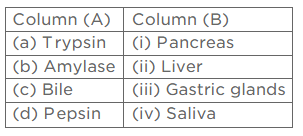
Ans: (a) Trypsin - (i) Pancreas
(b) Amylase- (iv) Saliva
(c) Bile - (ii) Liver
(d) Pepsin- (iii) Gastric glands
Q.66. Name the correct substrates for the following enzymes
(a) Trypsin
(b) Amylase
(c) Pepsin
(d) Lipase
Ans: (a) Trypsin - Protein
(b) Amylase - starch
(c) Pepsin -Protein
(d) Lipase - Fat
Q.67. Why do veins have thin walls as compared to arteries?
Ans: Arteries carry blood from the heart to various organs of the body under high pressure so they have thick and elastic walls. Veins collect the blood from different organs and bring it back to the heart. The blood is no longer under pressure so the walls are thin with valves to ensure that blood flows only in one direction.
Q.68. What will happen if platelets were absent in the blood?
Ans: In the absence of platelets, the process of clotting will be affected.
Q.69. Plants have low energy needs as compared to animals. Explain.
Ans: Plants have low energy needs as compared to animals because plants do not move and most of their body is made up of dead cells like sclerenchyma. But animals move about in search of food, mate and shelter.
Q.70. Why and how does water enter continuously into the root xylem?
Ans: Cells of root are in close contact with soil and so actively take up ions. Ions pass inward increasing osmotic concentration of xylem. Because of it water from the soil continuously pass into the root xylem.
Q.71. Why is transpiration important for plants?
Ans: Transpiration is important because
(a) it helps in absorption and upward movement of water and minerals from roots to leaves
(b) it prevents the plant parts from heating up.
Q.72. How do leaves of plants help in excretion?
Ans:
- In leaves, the waste materials are stored in the vacuoles of mesophyll and epidermal cells. When old leaves fall, the waste materials are excreted along with the leaves.
- Transpiration of gases via stomata helps in removal of gaseous waste of respiration and photosynthesis.
Long Answer Type Questions
Q.73. Explain the process of nutrition in Amoeba.
Ans: Amoeba shows holozoic nutrition which Is comprised of the following steps: Ingestion, Digestion, Absorption. Assimilation and Egestion.
- Ingestion: Amoeba makes fingerlike projections called pseudopodia. Amoeba traps food particles with the help of pseudopodia. After that, Amoeba takes in the food particle along with water.
- Digestion: Amoeba makes food vacuole after ingesting the food particle. Enzymes are released in the food vacuole for digestion.
- Absorption: After digestion, nutrients enter the cytoplasm through osmosis. Assimilation: Nutrients are utilized by the cell for various purposes.
- Egestion: Food vacuole goes near the cell membrane to empty its contents outside the cell. This results in the expulsion of waste materials from the cell.
Q.74. Describe the alimentary canal of man.
Ans: Alimentary canal in man is 9 meters long and consists of the following parts:
- Mouth: It leads into the buccal cavity. The floor of the buccal cavity has tongue-bearing taste buds. Man possesses teeth on both jaws.
There are 32 teeth of four different types: incisors, canines, premolars, and molars. - Pharynx: It is a short, conical region that lies after the mouth cavity.
- Oesophagus: It is a long, narrow, muscular tube that leads to the stomach.
- Stomach: It lies below the diaphragm on the left side of the abdominal cavity and is J-shaped. The food is stored and partly digested in the stomach.
- Small Intestine: It is a convoluted tube and differentiated into three regions, viz., duodenum, which is the first part of the small intestine and is curved C-shaped; jejunum, comparatively longer and more coiled, and ileum, which is the last part of small intestine whose inner surface is folded to form villi, which absorbs the products of digestion.
- Large Intestine. It is much shorter and wider than small intestine and is differentiated into three regions viz., caecum, which is small rounded blind sac from which vermiform appendix arises; colon is the inverted U-shaped tube and the rectum opens to exterior through anus.
Q.75. Explain the process of breathing in man.
Ans: Breathing involves two step, namely. inhalation and exhalation.
- Inhalation: The process of taking in air is called inhalation. During this process, ribs move forward and upward while the diaphragm contracts to form a dome shape . This increases the volume of the thoracic cavity and reduces the pressure in the lungs. As a result, air moves into the lungs.
- Exhalation: The process of giving out air is called exhalation. During this process, ribs go backwards and downwards while the diaphragm relaxes. This reduces the volume of the thoracic cavity and increases the pressure in lungs. As a result, air moves out of the lungs.
Q.76. Explain the importance of soil for plant growth.
Ans: Importance of soil for plant growth:
- It anchors the plant.
- It is the source of water and minerals.
- It helps in symbiotic association with microbes.
- It helps for respiration of root cells due to availability of oxygen of food material.
Q.77. Draw the diagram of alimentary canal of man and label the following parts.
Mouth, Oesophagus, Stomach, Intestine
Ans:
Q.78. How do carbohydrates, proteins and fats get digested in human beings?
Ans:
- Digestion of carbohydrates: Digestion of carbohydrates begins from buccal cavity. Salivary amylase converts starch into sugar. Other complex carbohydrates are convened into glucose in the small intestine.
- Digestion of Proteins: Protein is partially digested in the stomach. For this, stomach secretes the enzyme pepsin. In small intestine, pancreatic juice provides the enzymes trypsin and chymotrypsin. These enzymes complete the digestion of proteins.
- Digestion of Fats: Digestion of fats takes place in small intestine. Bile; from liven emulsifies the fat. Due to this, fat is broken into small globules. This makes it easier for the enzyme to digest fat. Lipase is the enzyme which converts fat into glycerol and fatty acid.
Q.79. Explain the mechanism of photosynthesis.
Ans: Photosynthesis is a process in which the light energy obtained from the sunlight is used in the manufacture of oxygen and sugar molecules in the presence of carbon dioxide and water. The mechanism of photosynthesis involves two processes; the light reaction that takes place in the thylakoid membrane that leads to the production of NADPH and ATP. Another important reaction involves the light-independent reaction also known by the name 'Calvin cycle' that occurs in the stroma of the chloroplasts which is the final step that produces sugar. The NADP and ATP energy-rich molecules play an important role in light-independent reactions to fix the carbon dioxide in order to synthesize glucose molecules.
Q.80. Explain the three pathways of breakdown in living organisms.
Ans: In all organisms, glucose is first converted into pyruvate. Glucose is a 6-carbon molecule, while pyruvate is a 3-carbon molecule. This step is same in all organisms and it happens in the cytoplasm. Further breakdown of pyruvate can happen in any of the following ways:
- In Yeast: In yeast, breakdown of pyruvate take place in absence of oxygen. Due to this, it is called anaerobic respiration. Pyruvate is broken down into ethanol and carbon dioxide.
- In muscle cells: During strenuous physical activity, the energy demand from muscle cells suddenly increases. This is compensated by anaerobic respiration in muscle cells. In such a situation, pyruvate is broken down into lactic acid.
- In mitochondria: In this case, breakdown of pyruvate takes place in presence of oxygen. Due to this, it is called aerobic respiration. Pyruvate is broken down into carbon dioxide and water. Aerobic respiration is found in most of the living beings.
Q.81. Describe the flow of blood through the heart of human beings.
Ans: Flow of blood through heart:
(a) Deoxygenated blood from different organs comes to the right atrium through the vena cava.
(b) From the right atrium, blood goes to the right ventricle. The tricuspid valve between the right atrium and right ventricle prevents the backflow of blood.
(c) From the right ventricle, blood goes to the lungs through the pulmonary artery. Inside the lungs, carbon dioxide is removed from the blood and oxygen enters the blood.
(d) From the lungs, blood goes to the left atrium through the pulmonary vein.
(e) From the left atrium, blood goes to the left ventricle.
(f) From the left ventricle, blood is pumped into the aorta so that it can be supplied to different organs.
Q.82. Describe the process of urine formation in kidneys.
Ans: Urine is formed in the kidneys in the nephron , i.e., the structural and functional unit of kidney. Blood at high pressure travels into these tubules by the tuft of blood capillaries called glomerulus.
The following steps are involved in the process:
(i) Filtration Blood enters the glomerulus through the afferent arterioles, it passes under pressure that results in filtration of blood . Water and small molecules are forced out of glomerular capillary walls and Bowman's capsule. Large molecules remain in the blood of the glomerulus.
(ii) Selective reabsorption Some molecules are selectively reabsorbed into the blood. The glomerular filtrate flows through the proximal convoluted tubule, the U- shaped Henle's loop and distal convoluted tubule. The useful substances present such as glucose , amino acids and salts are reabsorbed by a process , which requires energy . The filtrate now contains urea, some salts and The water is then resbsorbed into blood by osmosis (osmoregulation).
(iii) Tubular secretion Some nitrogenous waste products like creatinine and some other substances like K+ are removed from blood by DCT (Distal convulated tubule), and are added to urine. The urine formed is collection in the urinary bladder.
Aerobic & Anaerobic Respiration
Respiration
- The process of respiration involves taking in oxygen (of air) into the cells, using it for releasing energy by burning food, and then eliminating the waste products (carbon dioxide and water) from the body.
- Or the process of acquiring oxygen from outside the body and using it in the process of break-down of food sources for cellular needs is called Respiration.
C6H12O6(Glucose) + 6O2 → 6H2O + 6CO2 + Energy(in the form of ATP)
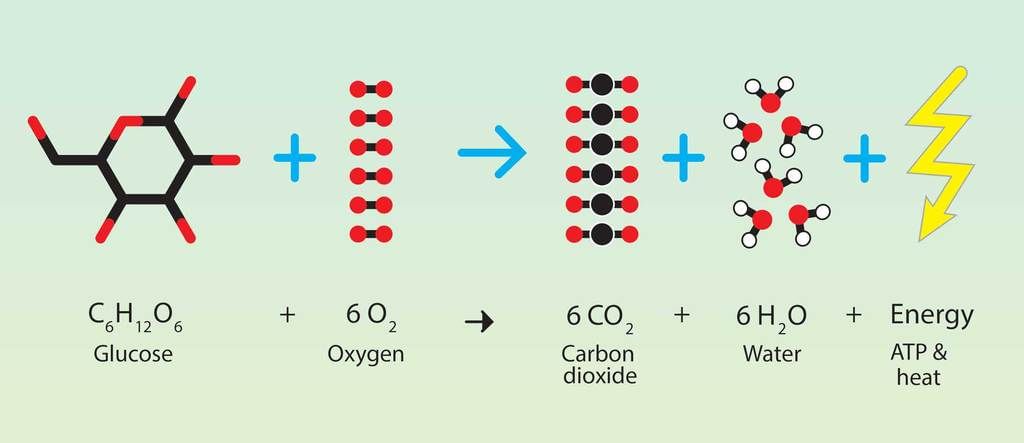 Cellular Respiration
- Respiration is actually a biochemical process that occurs in stages and requires many enzymes.
- In cells, cellular respiration is the pathway of yielding energy in the form of adenosine triphosphate (ATP). Both eukaryotic and prokaryotic cells undergo cellular respiration. Depending upon the oxygen demand, cellular respiration is of two types- aerobic and anaerobic respiration.
Types of Cellular Respiration
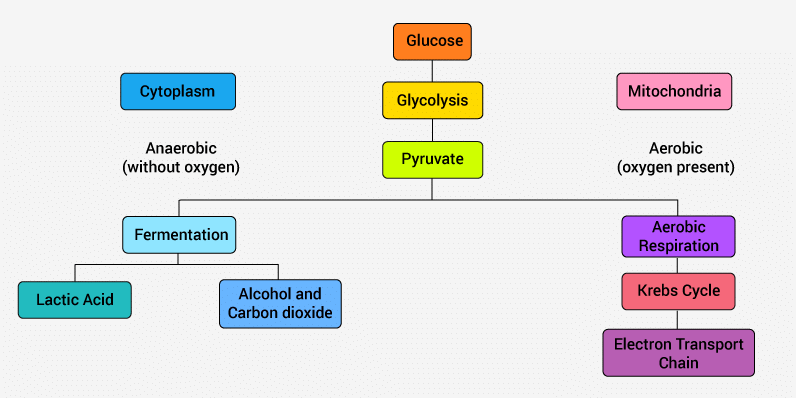
Aerobic Respiration
- Aerobic respiration is the burning or oxidation of glucose in the presence of oxygen to release energy (ATP).
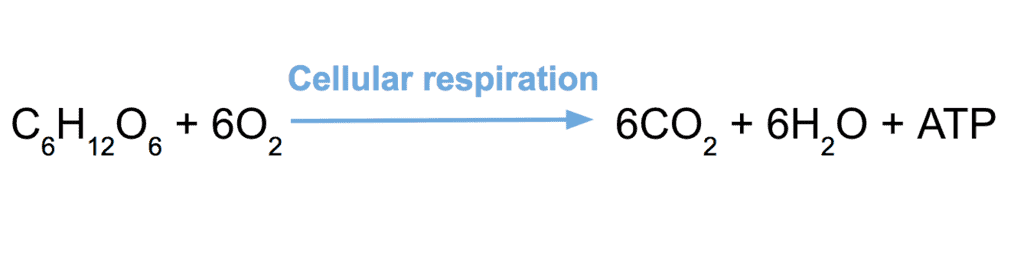
- The whole process of aerobic respiration takes place in three steps: glycolysis, Krebs' cycle, and electron transport system. Sites of respiration are cytoplasm and mitochondria.
Try yourself: Which process involves the burning of glucose in the presence of oxygen to release energy?
- Respiration is the process that involves the burning or oxidation of glucose in the presence of oxygen to release energy in the form of ATP.
- Photosynthesis, on the other hand, is the process by which plants convert sunlight into chemical energy in the form of glucose.
- Fermentation is an anaerobic process that occurs in the absence of oxygen and involves the breakdown of glucose without the production of ATP.
- Digestion is the process of breaking down food into smaller molecules that can be absorbed by the body.
Mechanism of Aerobic Respiration
The mechanism of respiration involves the following two processes:
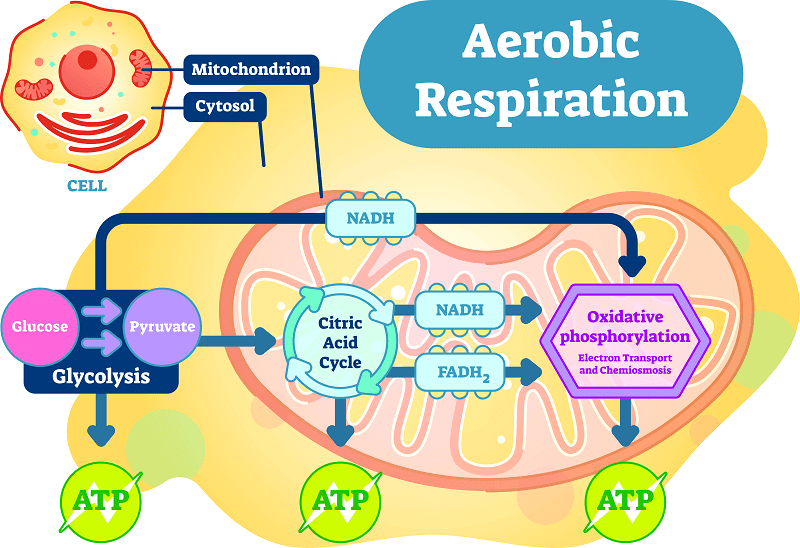
(a) Glycolysis
Series of reactions which does not require oxygen and by which glucose molecule is broken into pyruvic acid.
- Aerobic Respiration involves the stepwise breakdown of glucose by a series of reactions in which the energy is released in some of the exergonic steps.
- Glucose, the most common respiratory substrate, may be broken either aerobically or anaerobically. Both processes start the same way by using the anaerobic reaction pathway called glycolysis.
- Under aerobic conditions, glycolysis products are completely oxidised, and CO2 and H2O are formed as the end products, and under anaerobic conditions, alcohol or lactic acid, CO2 is produced.
(b) Breakdown of Pyruvic Acid Molecules: By aerobic (in the presence of oxygen) or anaerobic (in the absence of oxygen) methods.
- Breakdown of Pyruvic Acid in the Presence of Oxygen: In the presence of oxygen, the pyruvic acid is completely oxidised, and CO2 and H2O are formed as the end products. This oxidation is carried out by a cyclic series of reactions known as the tricarboxylic acid cycle or citric acid cycle or Krebs cycle.
- All reactions of the Krebs cycle occur within mitochondria. Complete oxidation of each pyruvic acid molecule produces 15 ATP molecules, therefore, aerobic oxidation of each glucose molecule produces: 15 × 2 = 30 ATP (from Krebs cycle) + 8 ATP (from glycolysis) = 38 ATP.
Anaerobic Respiration
- When food is oxidised without using molecular oxygen, the respiration is called anaerobic respiration. In this type of respiration incomplete oxidation of food takes place, and in comparison to aerobic respiration, much less amount of energy is produced.
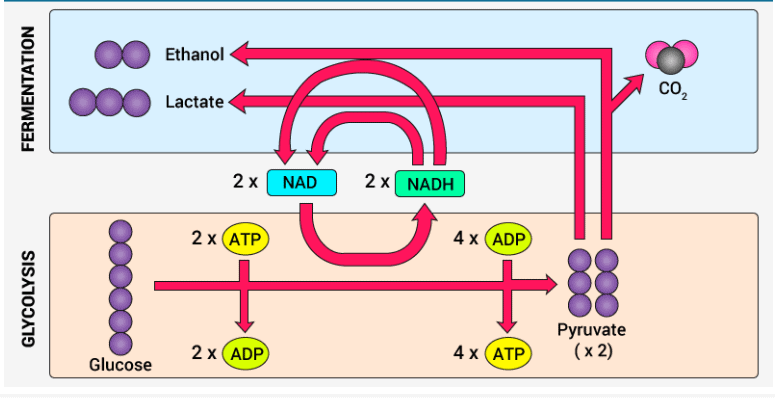
- It also includes glycolysis which takes place in the cytoplasm. During this process, one molecule of glucose is degraded into two molecules of pyruvic acid (pyruvate) and little energy (2 ATP).
- The Pyruvic acid is further oxidised into ethyl alcohol (ethanol) or lactic acid.
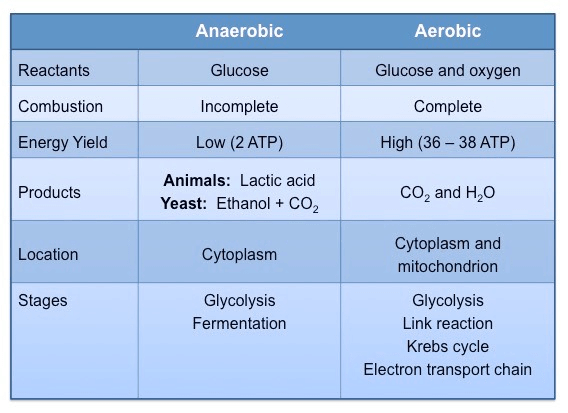
Table: Differences Between Aerobic and Anaerobic Respiration
- The end products of aerobic respiration are carbon dioxide (CO2) and water (H2O).
- In the breakdown of glucose, the process starts with glycolysis, where glucose is converted into pyruvic acid.
- The pyruvic acid then enters the tricarboxylic acid cycle (also known as the Krebs cycle) and undergoes further oxidation.
- Through a series of reactions in the Krebs cycle, the pyruvic acid is completely oxidized, leading to the production of CO2 and H2O.
- Overall, aerobic respiration produces a total of 38 ATP molecules from the oxidation of each glucose molecule.
- Hence, the correct answer is option C, Pyruvic acid and H2O.
Breathing
The process involving intake of air or oxygen [inhalation] and removal of air or carbon dioxide [exhalation] is called breathing. No enzymes are involved in this process.
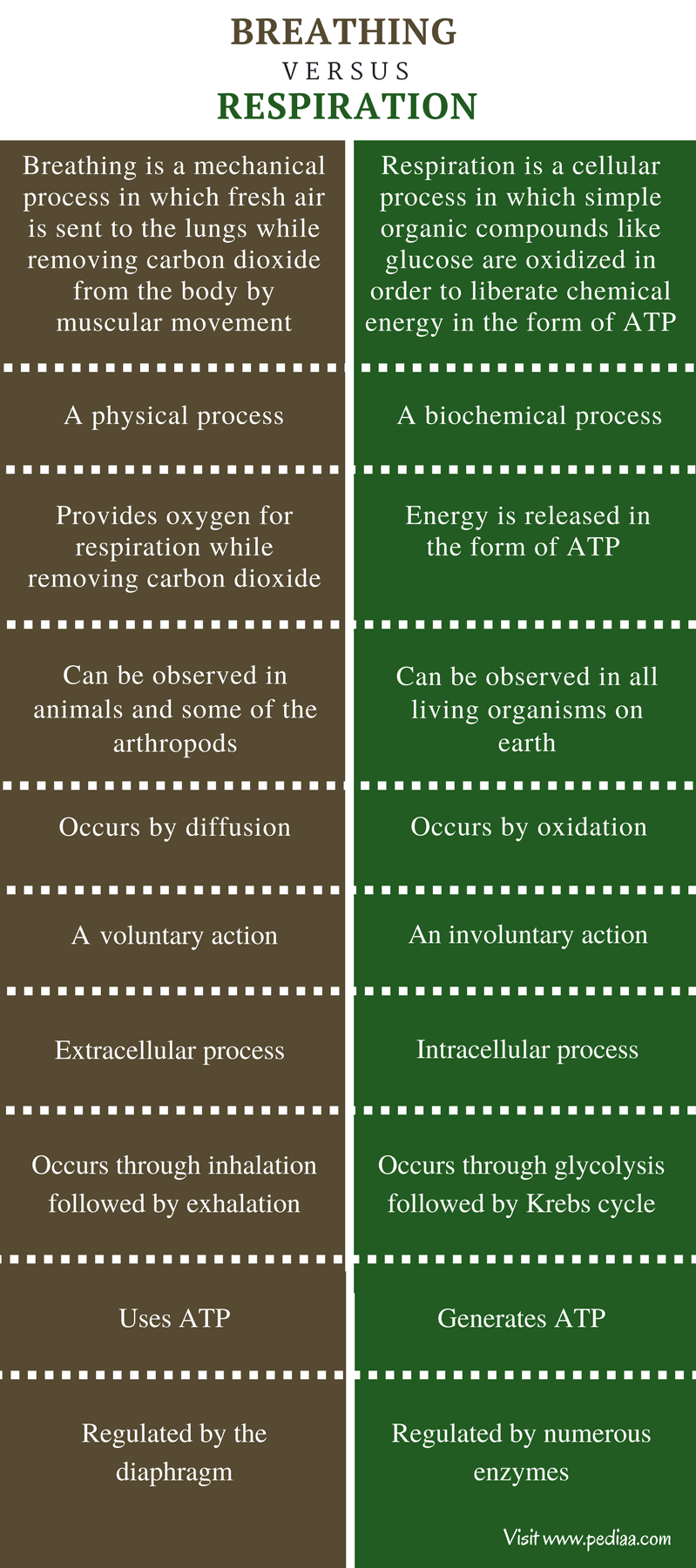
Difference between Breathing and Respiration
Activity
To study the release of carbon dioxide during exhalation.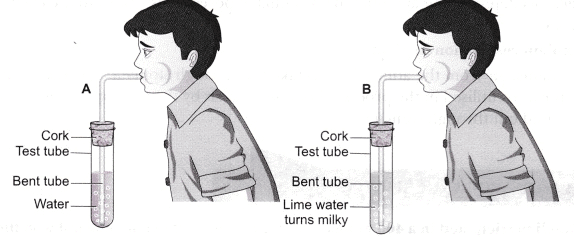
- Take a hard glass test tube.
- Fill 3/4 of this tube with freshly prepared lime water.
- Close the mouth of the test tube with a cork having a thin hole.
- Insert one thin glass tube through cork up to the bottom of the test tube.
- Make the apparatus airtight. Now breathe out air from the mouth in the test tube through the glass tube.
- We will observe that on exhaling through the tube, the lime water turns milky. This proves that exhaled air contains CO2.

Respiratory Substrates
- In respiration, many types of high-energy compounds are oxidised. These are called respiratory substrates and may include carbohydrates, fats and proteins. Of these, carbohydrates such as glucose, fructose (hexoses) sucrose (disaccharide) are the main substrates.
- Hexoses are the first energy-rich compounds to be oxidised during respiration.
- Complex carbohydrates are hydrolysed into hexose sugars before being utilized as respiratory substrates.
- Under certain conditions (mainly when carbohydrate reserves have been exhausted) fats are also oxidised. In the absence of carbohydrates and fats, proteins also serve as respiratory substrates.
- Blackman termed the respiratory oxidation of carbohydrates as floating respiration and that of protoplasmic protein as protoplasmic respiration.
Respiration and Combustion
- Combustion of wood, coal, paper, etc., are also oxidation processes like respiration which also involve the release of energy in the form of heat. But respiration and combustion differ in many fundamental features.
- Oxidation of carbohydrates during respiration is not a single reaction because there is no enzyme that can catalyze the complete oxidation of glucose into carbon dioxide and water in a single step. Instead, the oxidation of glucose consists of a sequence of reactions.
- In such stepwise oxidation, energy is released slowly. It allows cells to capture more energy than would be possible if the energy is released in one big burst.
Table: Differences Between Respiration and Combustion
Fermentation
- Fermentation is a kind of anaerobic respiration, carried out primarily by fungi and bacteria.
- A special feature of fermentation is that the substrate lies outside the cell in a liquid medium. Literally, fermentation refers to a chemical change accompanied by effervescence.
- In fermentation anaerobic breakdown of carbohydrates and other organic compounds occur and form alcohol, organic acids, gases, etc.
Glucose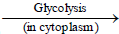

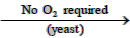 Ethanol+ CO2 +
- In certain bacteria and parasitic worms (Ascaris, tapeworm), glucose is metabolized to lactic acid without the use of O2 and without the formation of CO2.
- In human beings, anaerobic respiration occurs in certain tissues such as RBC's of mammals and skeletal muscles.

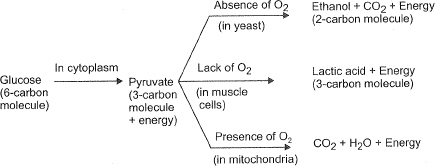 Breakdown of Glucose by Various Pathways (Aerobic and anaerobic respiration)
Table: Differences Between Respiration and Fermentation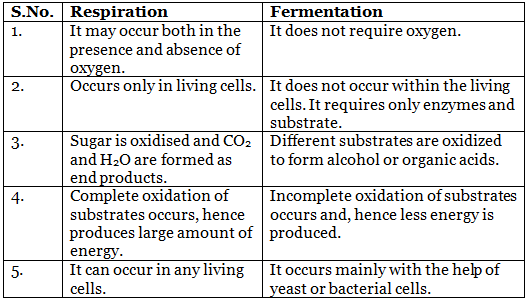
Table: Comparison Between Oxidative Phosphorylation and Photophosphorylation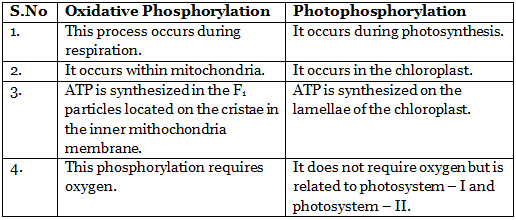
- In respiration, the oxidation of carbohydrates is a stepwise process, consisting of a sequence of reactions. This allows for the slow release of energy, which can be captured by cells more efficiently compared to a single burst of energy.
- On the other hand, combustion is a single reaction that involves the rapid oxidation of a substance without any stepwise process. It releases energy in the form of heat and does not involve the oxidation of respiratory substrates like carbohydrates.
- Therefore, the main difference between respiration and combustion is that respiration is a stepwise oxidation process, while combustion is a single reaction.
Experiment
Aim: To Demonstrate the Process of FermentationMethod:
- Take some fruit juice or sugar solution in a test tube and add some yeast into it.
- Close the opening of the test tube with a one-holed cork.
- Insert a bent glass tube in the cork and dip the other end of the tube into the other test tube containing lime water (solution of calcium hydroxide).
- Observe after few hours.
Observation and Conclusion:
- The lime water turns milky.
- This shows that CO2 is liberated from the mixture of sugar solution and yeast.
Fermentation of sugar results in the production of ethyl alcohol and CO2.
Organs of Respiration
- Skin or general body surface, as in earthworm.
- Air tubes or trachea, as in insects (grasshopper, cockroach, housefly)
- Gills as in aquatic animals like fish and prawn.
- Lungs as inland animals like frog, lizard, birds, rat, humans.
- Frog respires through skin as well as lungs (being amphibious).
- It is worth noting that all respiratory organs, whether skin, trachea, gills or lungs, have these common features.
► All the respiratory organs have a large surface area so as to get enough oxygen.
► All have thin walls for easy diffusion and exchange of respiratory gases.
► The respiratory organs like the skin, gills and lungs have a rich blood supply to transport gases. In the tracheal system, air reaches cells directly, and blood plays no role in the transport of gases. - As a medium, water is less suitable for respiration in comparison to air. Water is denser (about 1000 times) than air, and thus more energy is needed in passing it over the respiratory surface.
- Also, since solubility of oxygen is very low in water, under similar conditions, a given volume of water contains less amount of oxygen in comparison to same volume of air which contains more oxygen.
- Another problem faced in aquatic environments is that less oxygen is available in water as the temperature increases. Warm water contains less oxygen. However, as the temperature increases, the rate of respiration increases and the animal requires more oxygen to meet with the metabolic demand.
- Just as the animals in aquatic habitats have developed adaptations to tide over the problems, the terrestrial animals also have to adapt to the problems such as protection to the respiratory surface from dryness and maintaining the respiratory surface always moist.
- The air has an evaporative power, and the air-breathing land animals lose plenty of water by evaporation from the respiratory surface.
- (a) Respiration through gills - Bronchial respiration
(b) Respiration through skin - Cutaneous Respiration
(c) Respiration through Lungs - Pulmonary Respiration - Respiratory organs in frogs:
(i) Skin
(ii) Bucco-pharyngeal cavity
(iii) Lungs
Table: Differences Between Respiration in Plants And Animals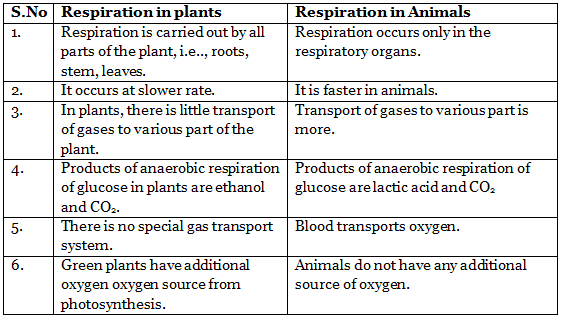
Table: Differences Between Photosynthesis and Respiration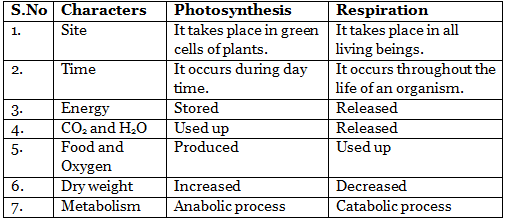
Q.1. What advantage does a terrestrial organism have over an aquatic organism with regard to obtaining oxygen for respiration?
Ans. Terrestrial animals breathe the oxygen in the atmosphere, but animals that live in water such as fishes need to use the oxygen dissolved in water.
Since the amount of dissolved oxygen is fairly low compared to the amount of oxygen in the air, the rate of breathing in aquatic organisms is much faster than that seen in terrestrial organisms.
Q.2. What are the different ways in which glucose is oxidized to provide energy to various organisms?
Ans:
- In all organisms, the first step in which glucose is oxidized is the breakdown of glucose, a six-carbon molecule, into a three-carbon molecule called pyruvate. This process takes place in the cytoplasm.
- The fate of pyruvate depends upon the presence or absence of oxygen. Pyruvate may be converted into ethanol and carbon dioxide in the absence of oxygen. This process takes place in yeast during fermentation. It is called anaerobic respiration.
Q.3. Compare the functioning of alveoli in the lungs and nephrons in the kidneys with respect to their structure and functioning.
Ans. Both alveoli in the lungs and nephrons in the kidneys possess a network of blood capillaries. The exchange of gases takes place in alveoli, where impure blood (deoxygenated blood) is purified into oxygenated blood. Similarly, the nephrons purify the blood by filtering out its waste products in the form of urine.
Q.4. What is the difference between emphysema and asthma?
Ans. Emphysema is caused by the gradual breakdown of the thin walls of the alveoli so that the air spaces become larger and the total gaseous exchange takes place. Asthma is a form of difficult or heavy breathing caused by a spasm of smooth muscle in the walls of the bronchioles.
Short Questions: Life Processes
Q1: State in brief the role of lungs in the exchange of gases.
Ans: Lungs have alveoli which provide a larger surface for exchange of gases and are richly supplied with blood vessels to enable faster exchange. So, lungs help in providing oxygen to various tissues of the body and removal of carbon dioxide from the body.
Q2: What is the basic unit of kidney called? Why is it composed of very thin blood capillaries?
Ans: The basic unit of kidney is called nephron. It is composed of a cluster of very thin blood capillaries as they help in filtration of blood and remove the nitrogenous wastes from the body in the form of urine.
Q3: How does the plant get rid of excretory products?
Ans: Excess oxygen and carbon dioxide removed through stomata.
Plant waste products are also removed by:
- Storage in cellular vacuoles
- Storage in leaves that fall off
- Storing as resins and gums in old xylem
- By excreting into the soil around them.
Q4: Tabulate two differences between renal artery and renal vein.
Ans: Renal Artery:
- Blood in renal artery contains glucose, oxygen and cellular waste products.
- It takes blood towards the kidney.
Renal Vein:
- Blood in renal vein is filtered, and is free from cellular waste and any other impurities.
- It takes blood away from the kidney towards the heart.
Q5: (a) What is the main toxic waste that kidney filters from the blood?
(b) Name any two substances which are selectively reabsorbed from the tubules of a nephron.
Ans: (a) Urea is the main excretory product removed by the kidneys of human beings.
(b) The substances selectively reabsorbed by the kidneys are water, glucose, electrolytes, etc.
Q6: What is excretion? How do unicellular organisms remove their wastes?
Ans: Removal of metabolic wastes from the body is called as excretion. Many unicellular organisms remove metabolic wastes from the body surface into the surrounding water by simple diffusion.
Q7: Write a function of (a) blood vessels (b) blood platelets.
Ans: (a) Blood vessels help in carrying blood to various parts of the body.
(b) Blood platelets help in the clotting of blood at the point of injury to prevent non-stop bleeding.
Q8: How are water and minerals absorbed by the plant?
Ans: The water and minerals in the soil are absorbed by plants with the help of root hairs present on their roots. Root hairs provide a larger surface area for absorption.
Q9: What are capillaries? Sate the function performed by them.
Ans: The capillaries are one-cell thick, small blood vessels which help in the exchange of materials between the blood and the surrounding tissues.
Q10: Mention the two main components of the transport system in plants. State one function of each one of these components.
Ans: The two main components of the transport system in the plants are xylem and phloem. Xylem helps to transport water and minerals to various parts of the plant. Phloem helps to carry food from leaves to the various parts of the plant.
Q11: During one cycle how many times does blood go to the heart of fish and why?
Ans: The blood passes only once through the heart in one cycle in fishes because the two-chambered heart of the fishes pump the blood to gills for oxygenation. The blood from gills is then directly passed to the various parts of the body in the fishes.
Q12: What would be the consequences of deficiency of haemoglobin in our bodies?
Ans: Haemoglobin helps in transport of oxygen to the body parts. Deficiency of haemoglobin will affect transport of oxygen and the person will suffer from improper metabolism, weakness, fatigue and pain.
Q13: Name the following:
(а) The process in plants that links light energy with chemical energy.
(b) Organisms that can prepare their own food.
(c) The cell organelle where photosynthesis occurs.
(d) Cells that surround a stomatal pore.
(e) Organisms that cannot prepare their own food.
(f) An enzyme secreted from gastric glands in stomach that acts on proteins.
Ans: (a) Photosynthesis
(b) Autotrophs
(c) Chloroplast
(d) Guard cells
(e) Heterotrophs
(f) Pepsin
Q14: "All plants give out oxygen during the day and carbon dioxide during night". Do you agree with this statement? Give reason.
Ans: The rate of photosynthesis is higher than the rate of respiration during the daytime, so the net result is the evolution of oxygen. In the absence of photosynthesis at night, only respiration occurs in the plants so carbon dioxide is released at night.
Q15: How do the guard cells regulate opening and closing of stomatal pores?
Ans: The entry of water into the guard cells of the stomata causes an increase in turgor pressure in the guard cells which leads to opening of the stomata. The loss of water from the guard cells results in their shrinking and closes the stomata.
Q16: Two green plants are kept separately in oxygen free containers, one in the dark and the other in continuous light. Which one will live longer? Give reasons.
Ans: Plant kept in continuous light will perform photosynthesis and release oxygen for its respiration. Hence, it will live longer than the plant kept in the dark.
Q17: If a plant is releasing carbon dioxide and taking in oxygen during the day, does it mean that there is no photosynthesis occurring? Justify your answer.
Ans: During the day time the plants take in carbon dioxide and release oxygen as a by product of photosynthesis. Release of carbon dioxide and taking in air during the daytime means that either the rate of photosynthesis is too low or its not occurring at all.
Q18: Why do fishes die when taken out of water?
Ans: Fishes take water from mouth and send it to the gills which are richly supplied with blood capillaries for absorbing the oxygen dissolved in water. But the fishes cannot absorb gaseous oxygen, so they die soon after they are taken out of water.
Q19: Is 'nutrition' a necessity for an organism? Discuss.
Ans: Nutrition (food) is a necessity for an organism as:
- It provides energy for the various metabolic processes in the body.
- It is essential for the growth and repair of various cells and tissues.
- It helps to provide resistance against various diseases.
Q20: What would happen if green plants disappear from the Earth?
Ans: The green plants are the source of energy for the entire organisms on the Earth. Herbivores depend directly on the plants while the carnivores and omnivores depend either directly or indirectly on plants. So, all the organisms will die due to starvation if all the green plants disappear from the Earth.
Worksheet: Life Processes - 2
Assertion Reason Type Questions
Q1: Following questions consists of two statements - Assertion (A) and Reason (R). Answer these questions selecting the appropriate option given below:
Assertion: Kidneys perform a dual function in our body.
Reason: Selective reabsorption occurs in the glomerulus.
(a) Both assertion and reason are true, and reason is the correct explanation of assertion.
(b) Both assertion and reason are true, but reason is not the correct explanation of assertion.
(c) Assertion is true but reason is false.
(d) Assertion is false and reason is true.
Q2: Following questions consists of two statements - Assertion (A) and Reason (R). Answer these questions selecting the appropriate option given below:
Assertion: Tracheal cartilage is present in the throat.
Reason: The larynx plays an important role in human speech.
(a) Both assertion and reason are true, and reason is the correct explanation of assertion.
(b) Both assertion and reason are true, but reason is not the correct explanation of assertion.
(c) Assertion is true but reason is false.
(d) Assertion is false and reason is true.
Q3: Following questions consists of two statements - Assertion (A) and Reason (R). Answer these questions selecting the appropriate option given below:
Assertion: Veins have valves.
Reason: The pressure for the flow is far lesser compared to arteries.
(a) Both assertion and reason are true, and reason is the correct explanation of assertion.
(b) Both assertion and reason are true, but reason is not the correct explanation of assertion.
(c) Assertion is true but reason is false.
(d) Assertion is false and reason is true.
Q4: Following questions consists of two statements - Assertion (A) and Reason (R). Answer these questions selecting the appropriate option given below:
Assertion: The opening and closing of the pore is a function of the guard cells.
Reason: Stomatal pores are the site for exchange of gases by diffusion.
(a) Both assertion and reason are true, and reason is the correct explanation of assertion.
(b) Both assertion and reason are true, but reason is not the correct explanation of assertion.
(c) Assertion is true but reason is false.
(d) Assertion is false and reason is true.
Q5: Following questions consists of two statements - Assertion (A) and Reason (R). Answer these questions selecting the appropriate option given below:
Assertion: Respiration is opposite of Photosynthesis.
Reason: In Photosynthesis food is made from energy and in Respiration food is converted to energy.
(a) Both assertion and reason are true, and reason is the correct explanation of assertion.
(b) Both assertion and reason are true, but reason is not the correct explanation of assertion.
(c) Assertion is true but reason is false.
(d) Assertion is false and reason is true.
Q6: Following questions consists of two statements - Assertion (A) and Reason (R). Answer these questions selecting the appropriate option given below:
Assertion: Kidneys purify blood.
Reason: Renal vein has more Oxygen than renal artery.
(a) Both assertion and reason are true, and reason is the correct explanation of assertion.
(b) Both assertion and reason are true, but reason is not the correct explanation of assertion.
(c) Assertion is true but reason is false.
(d) Assertion is false and reason is true.
Q7: Following questions consists of two statements - Assertion (A) and Reason (R). Answer these questions selecting the appropriate option given below:
Assertion: In plants gaseous exchange takes place by the opening and closing of guard cells.
Reason: The exchange of gases occurs across the surface of stem, roots and leaves.
(a) Both assertion and reason are true, and reason is the correct explanation of assertion.
(b) Both assertion and reason are true, but reason is not the correct explanation of assertion.
(c) Assertion is true but reason is false.
(d) Assertion is false and reason is true.
CCT Questions
Our body needs to remove the wastes that build up from cell activities and from digestion. If these wastes are not removed, then our cells can stop working and we can get very sick. The organs of excretory system consist of a pair of kidneys, a pair of ureters, a urinary bladder and a urethr(a) Each kidney is made up of nearly one million complex tubular structures called nephrons. The formation of urine involves various processes that take place in the different parts of the nephrons. Each nephron consists of a cup- shaped upper end called Bowman's capsule containing a bunch of capillaries called glomerulus. Bowman's capsule leads to tubular structure, proximal convoluted tubule, loop of Henle and distal convoluted tubule which ultimately join the collecting tubule.
Q1: The following substances are the excretory products in animals. Choose the least toxic form.
(a) Urea
(b) Uric acid
(c) Ammonia
(d) All of these
Q2: Glomerular filtrate is first collected by
(a) Distal convoluted tubule
(b) proximal convoluted tubule
(c) Bowman's capsule space
(d) loop of Henle
Q3: The outline of principal events of urination is given below in random order.
I) stretch receptors on the wall of urinary bladder send signals to the CNS.
II) The bladder fills with urine and become distended.
III) Micturition (voiding out urine)
IV) CNS passes on motor messages to initiate the contraction of smooth muscles of bladder and simultaneous relaxation of urethral sphincter.
The correct sequence of the events is
(a) I → II → III→ IV
(b) IV → III → II→ I
(c) II → I→ IV → III
(d) III → II→ I→ IV
Q4: Urine formation occurs through
(a) Ultrafiltration, reabsorption, secretion.
(b) Secretion, osmosis, ultrafiltration and reabsorption.
(c) Only filtration and absorption.
(d) Only osmosis and secretion.
Very Short Answer Questions
Q1: Name the respiratory pigments of human beings.
Q2: In which form is food stored in plants and in animals?
Q3: Why are heterotrophs called consumers?
Q4: Name the watery substance released in our mouth during eating.
Q5: What does saliva contain?
Q6: Name the structure which prevents food from entering the passage to the lungs.
Q7: Why and how does water enter continuously into the root xylem of plants?
Q8: What is the role of following in human digestive system -
(a) mucous
(b) Bicarbonate
(c) Trypsin
Q9: (a)What is translocation? Why is it essential for plants?
(b)Where do the substances in plants reach as a result of translocation?
Q10: What are outside raw materials used for by an organism?
Q11: What processes would you consider essential for maintaining life?
Q12: Where do plants get each of the raw materials required for photosynthesis?
Q13: In artificial kidney, which substance passes from the blood to the dialysis fluid?
(a) Urea
(b) Heart
(c) Uric acid
(d) Creatinine
Q14: What is the role of the acids in our stomach?
Q15: How is small intestine deigned to absorb digested
Q16: What advantage over an aquatic organism does a terrestrial organism have with regard to obtaining oxygen for respiration?
Q17: The breakdown of pyruvate to give carbon dioxide,water and energy takes place in
(a) cytoplasm
(b) mitochondria
(c) chloroplast
(d) nucleus
Q18: What are different ways in which glucose is oxidized to provide energy in various organisms?
Q19: How is oxygen and carbon dioxide transported in human beings?
Q20: (i) Draw a diagram of an excretory unit of a human kidney and label the following:
Bowman's capsule, Glomerulus, Collecting duct, renal artery
(ii)Write the important function of the structural and functional unit of kidney.
(iii)Write any one function of an artificial kidney.
Q21: What are the components of the transport system in human beings? What are the functions of these components?
Q22: Why is it necessary to separate oxygenated and deoxygenated blood in mammals and birds?
Q23: The doctor measured Ravi's blood pressure and said it is normal now. The range of Ravi's blood pressure (systolic/diastolic) is likely to be-
(a)120/80mm of Hg
(b)160/80mm of Hg
(c)120/60mm of Hg
(d)180/80mm of Hg
Q24: What are the components of transport system in highly organized plants?
Q25: How are water and minerals transported in plants?
Q26: The function of the lymph fluid is to
(a) Drains excess fluid from extracellular space back into the blood
(b) Carries digested and absorbed fat from intestine
(c) Circulates around the body and help in clotting of blood
(d) Both (a) and (b)
Q27: How is food transported in plants?
Q28: In birds and mammals the left and right side of the heart is separate(d) Give reasons.
Q29: What are the methods used by plants to get rid of excretory products?
Q30: List two types of the transport system in human being and write the functions of any one of these.
Mnemonics: Life Processes
1. 7 Characteristics of Life
Mnemonic: "MRS GREN"
This acronym is used to help us remember the 7 characteristics of life (Movement, Respiration, Sensitivity, Growth, Reproduction, Excretion, Nutrition) .
2. Heterotrophic Nutrition
Mnemonic: "SHAP"
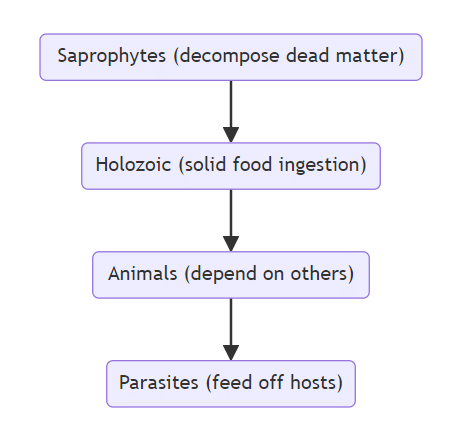
- Saprophytes (decompose dead matter)
- Holozoic (solid food ingestion)
- Animals (depend on others)
- Parasites (feed off hosts)
 | Get additional INR 200 off today with EDUREV200 coupon. | Avail Offer |
3. Photosynthesis
Mnemonic: "ALCO"
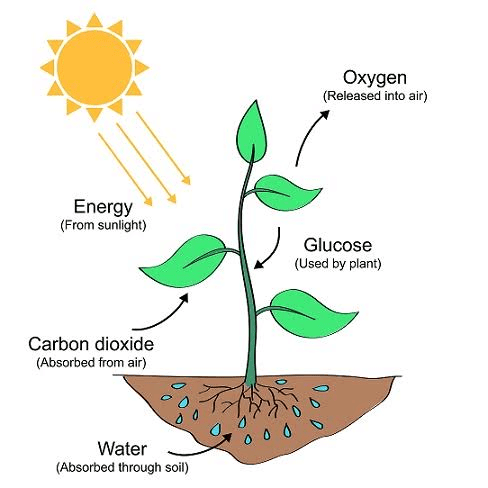
- Absorption of light
- Light energy to chemical energy
- Carbon dioxide to carbohydrates
- Oxygen released
Also read: Visual Worksheet: Let's explore human heart |
4. Autotrophic Nutrition
Mnemonic: "CARB"
- Carbon dioxide + Absorption of sunlight
- Reaction in chlorophyll
- Building carbohydrates
 | Attention! Sale expiring soon, act now & get EduRev Infinity at 40% off! | Claim Offer |
5. Respiration
Mnemonic: "IORE"
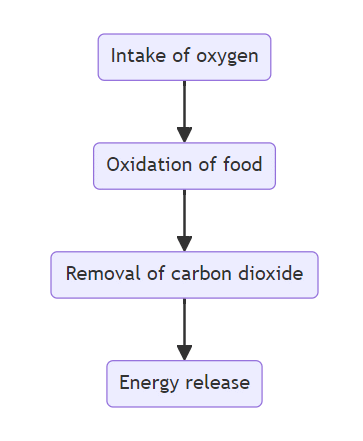
- Intake of oxygen
- Oxidation of food
- Removal of carbon dioxide
- Energy release
Also read: Visual Worksheet: Let's explore human heart |
6. Glycolysis
Mnemonic: "GLOW"
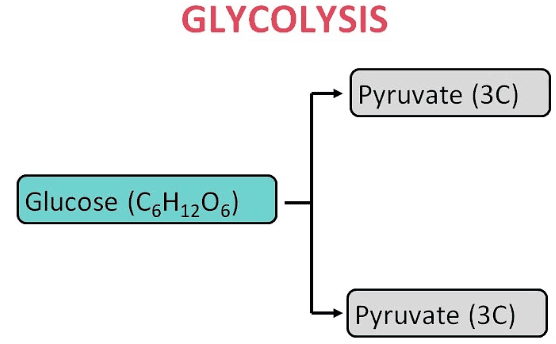
- Glucose breaks down into Low (3-carbon) molecules (pyruvate)
- Oxygen needed for further breakdown in mitochondria
- Without oxygen, energy is released as ATP (powerhouse of the cell)
This mnemonic highlights the process of glycolysis, the role of mitochondria, and the production of ATP.
Important Definitions : Life Processes
Life Processes
"Life Processes" refers to the essential functions that living organisms carry out to maintain their existence and sustain life. These processes are fundamental for the survival and growth of living organisms.
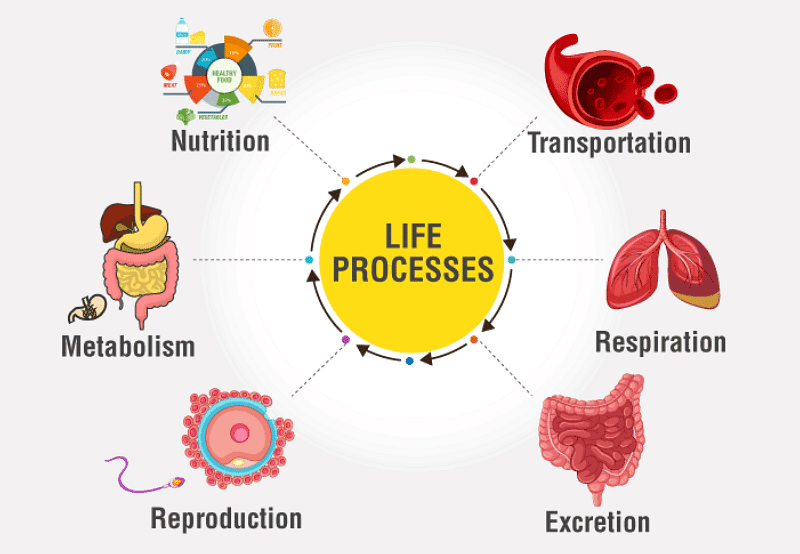
The main life processes taught at this level typically include the following:
- Nutrition: Nutrition is the process by which organisms obtain and utilize food for energy and growth. It involves the following sub-processes:
- Ingestion: The intake of food or organic materials.
- Digestion: The breakdown of complex food molecules into simpler, usable substances.
- Absorption: The uptake of digested nutrients by cells.
- Respiration: Respiration is the process of obtaining energy from the breakdown of nutrients, typically involving the use of oxygen (aerobic respiration) or occurring in the absence of oxygen (anaerobic respiration).
- Transportation: Transportation involves the circulation of substances (e.g., nutrients, oxygen, and waste products) within an organism's body. I
- Excretion: Excretion is the removal of metabolic waste products, such as carbon dioxide and nitrogenous wastes, from the body.
- Synthesis: Living organisms carry out various biochemical reactions to produce complex molecules required for growth and maintenance.
- Growth and Development: Growth involves an increase in size, while development refers to the process of maturing and becoming more complex.
- Reproduction: Reproduction is the process by which living organisms produce offspring, ensuring the continuity of their species. It can be asexual (single parent) or sexual (two parents).
- Response to Stimuli: Living organisms can sense and respond to changes in their environment, which is essential for their survival. This includes actions like movement or altering metabolic activities in response to external factors.
- Adaptation: Over time, living organisms evolve and adapt to their environments through natural selection, ensuring that they are better suited to survive and reproduce.
- It is an essential process for obtaining nutrients from food and converting them into forms that can be absorbed and utilized by cells.
- During digestion, enzymes break down complex carbohydrates, proteins, and fats into smaller molecules that can be absorbed by the body.
- This process takes place in the digestive system, where food is mechanically and chemically broken down.
- The end products of digestion are then absorbed through the walls of the digestive tract and transported to cells for energy production and growth.
- Without digestion, organisms would not be able to obtain the necessary nutrients for survival and growth.
Diagram Based Questions: Life Processes
Q1: Answer the following questions based on the diagram given below:
Cross Section of a Leaf
(i) What are the green dots observed in the cells of a leaf under the microscope?
Ans: The green dots seen in the leaf cells are cell organelles called chloroplasts. They contain the green pigment chlorophyll and are typical of plant cells.(ii) What is the function of chloroplasts in plant cells?
Ans: Chloroplasts are the sites of photosynthesis. They capture light energy and use it, together with carbon dioxide and water, to make glucose (a form of chemical energy) and release oxygen.(iii) How can you demonstrate that chlorophyll is essential for photosynthesis using this experiment?
Ans: Use a leaf that has both green and non-green (variegated) areas or destarch a leaf first. Expose the leaf to light, then boil it in alcohol to remove chlorophyll and finally treat it with iodine solution. Only the areas that originally contained chlorophyll will turn blue-black with iodine, showing they produced starch. This shows that chlorophyll-containing parts perform photosynthesis.(iv) What substance should you use to test for the presence of starch in the leaf sections?
Ans: Use iodine solution. In the presence of starch it changes colour to blue-black; where there is no starch it remains brownish or yellow.
(v) Explain the role of chlorophyll in photosynthesis.
Ans: Chlorophyll is the main pigment that absorbs light energy (particularly red and blue wavelengths). It converts light energy into chemical energy that drives the formation of glucose from carbon dioxide and water, with oxygen released as a byproduct. This energy production is essential for the plant's growth and metabolism.
Q2: Answer the following questions based on the diagram given below:
Opening and Closing of Stomata
(i) What is the function of stomatal pores in plants?
Ans: Stomatal pores are tiny openings on leaf and stem surfaces that allow the exchange of gases - mainly carbon dioxide into the leaf for photosynthesis and oxygen out of the leaf. They also permit water vapour to escape through transpiration.(ii) Describe the image you see that shows open stomatal pores.
Ans: In an image of open stomata the guard cells around each pore appear swollen (turgid), producing a clear gap between them. This open pore permits carbon dioxide to enter and oxygen and water vapour to leave the leaf.(iii) What causes stomatal pores to open and close?
Ans: Stomata open and close because of changes in the water content (turgor) of the guard cells. When guard cells take up water they become turgid and the pore opens; when they lose water they become flaccid and the pore closes. Light, water availability and internal CO2 levels influence this turgor change.(iv) Explain the importance of stomatal regulation for a plant.
Ans: Stomatal regulation lets a plant balance two needs: obtain carbon dioxide for photosynthesis and minimise water loss by transpiration. By opening and closing stomata at suitable times, the plant conserves water while still carrying out gas exchange needed for growth.(v) What happens to stomatal pores during hot and dry conditions, and why?
Ans: During hot and dry conditions stomata generally close to reduce water loss through transpiration. This conserves water but also limits carbon dioxide entry, so the plant must balance conservation with its need for photosynthesis.
Q3: Answer the following questions based on the diagram given below:
Nutrition in Amoeba
(i) Describe the process shown in the diagram related to nutrition in Amoeba.
Ans: The diagram illustrates phagocytosis. Amoeba extends its pseudopodia around a food particle, encloses it to form a food vacuole, and then releases digestive enzymes into the vacuole to break the food down so nutrients can be absorbed.(ii) What is the primary food source for Amoeba, as indicated in the diagram?
Ans: Amoeba mainly feeds on small microorganisms such as bacteria, algae and tiny organic particles that it engulfs using its pseudopodia.(iii) Explain the role of the contractile vacuole in the nutrition process of Amoeba.
Ans: The contractile vacuole removes excess water that enters the Amoeba by osmosis. While not directly digesting food, it maintains the cell's water balance and prevents bursting during feeding and digestion.(iv) What term is used to describe the process of engulfing food particles in Amoeba?
Ans: The process is called phagocytosis, where the cell membrane surrounds and engulfs the food particle to form a food vacuole.(v) How does the diagram illustrate the formation of food vacuoles in Amoeba?
Ans: The diagram shows pseudopodia extending around the food particle and enclosing it inside the cell membrane; this enclosed portion becomes a food vacuole where digestive enzymes act and digestion takes place.
Q4: Answer the following questions based on the diagram given below:
Human Digestive System
(i) What is the function of the mouth in the human alimentary canal?
Ans: The mouth is the beginning of the human alimentary canal and plays a crucial role in the digestion process. Its primary functions are:
- Ingestion: It is where food enters the body.
- Mechanical Digestion: Chewing breaks down food into smaller pieces, increasing its surface area for enzymes to act upon.
- Chemical Digestion: Saliva contains enzymes (amylase) that begin the digestion of carbohydrates.
(ii) Name the three major parts of the small intestine and explain their functions.
Ans: The small intestine consists of three major parts: the duodenum, jejunum, and ileum.
- Duodenum: It receives partially digested food from the stomach and continues digestion. Bile from the liver and pancreatic juice from the pancreas enter here to aid in digestion.
- Jejunum: It is the middle part and is responsible for the absorption of nutrients, such as carbohydrates, proteins, and fats.
- Ileum: This is the final part of the small intestine where further nutrient absorption takes place, especially of vitamins and minerals.
(iii) What is the role of the stomach in the human digestive system?
Ans: The stomach:
- Mixes food with gastric juices to form chyme.
- Begins protein digestion using the enzyme pepsin in an acidic environment.
- Stores food temporarily and controls its release into the small intestine.
(iv) Explain the function of the pancreas in the digestive system.
Ans: The pancreas is a vital organ in digestion. Its functions include:
- Producing digestive enzymes: It releases pancreatic juice into the duodenum, which contains enzymes like amylase (for carbohydrates), lipase (for fats), and trypsin (for proteins).
- Regulating blood sugar: The pancreas also secretes insulin and glucagon, hormones that control blood sugar levels.
(v) What happens in the large intestine, and what is its role in digestion?
Ans: The large intestine, also known as the colon, performs the following functions:
- Absorbs water and electrolytes from undigested food, forming solid faeces.
- Houses beneficial bacteria that ferment some remaining material and produce certain vitamins (for example, vitamin K).
- Stores and eliminates faeces via the rectum and anus.
Q5: Answer the following questions based on the diagram given below:
Human Respiratory System
(i) Name the primary organs involved in the human respiratory system.
Ans: The primary organs are the lungs, together with the airways (nose, pharynx, larynx, trachea and bronchi) and the diaphragm which helps breathing.(ii) What is the main function of the respiratory system?
Ans: Its main function is to exchange gases - take in oxygen (O2) from the air into the blood and remove carbon dioxide (CO2) produced by the body's cells.(iii) How does the diaphragm help in the process of breathing?
Ans: The diaphragm is a dome-shaped muscle that contracts and flattens during inhalation, increasing chest volume and drawing air into the lungs. On relaxation it returns to its dome shape, reducing chest volume and helping push air out during exhalation.(iv) What are alveoli, and why are they important in the respiratory system?
Ans: Alveoli are tiny air sacs at the ends of bronchioles where gas exchange actually occurs. Their thin walls and large combined surface area allow oxygen to diffuse into the blood and carbon dioxide to diffuse out efficiently.(v) Explain the role of cilia and mucus in the respiratory system.
Ans: Cilia are tiny hair-like structures lining the airways that beat in a coordinated way to move mucus upwards. Mucus traps dust, microbes and other particles; the cilia then sweep this mucus out of the lungs to keep the airways clean and reduce infection risk.
Q6: Answer the following questions based on the diagram given below:
Human Heart
(i) Label the four chambers of the heart in the diagram.
Ans: The four chambers of the heart are:
- Right Atrium
- Right Ventricle
- Left Atrium
- Left Ventricle
(ii) What is the function of the valves shown in the heart diagram?
Ans: Heart valves (for example, tricuspid, pulmonary, mitral and aortic valves) ensure unidirectional flow of blood by opening to allow forward flow and closing to prevent backflow between chambers or into vessels.(iii) Which side of the heart pumps oxygenated blood to the body, and which side pumps deoxygenated blood to the lungs?
Ans: The left side of the heart pumps oxygenated blood to the body via the aorta, while the right side pumps deoxygenated blood to the lungs via the pulmonary artery for oxygenation.(iv) Describe the pathway of blood through the heart starting from the right atrium.
Ans: Blood from the body enters the right atrium via the superior and inferior vena cava, passes through the tricuspid valve into the right ventricle, and is pumped through the pulmonary valve into the pulmonary artery to the lungs. Oxygenated blood returns via pulmonary veins to the left atrium, flows through the mitral (bicuspid) valve into the left ventricle, and is then pumped through the aortic valve into the aorta to the body.(v) Why does the left ventricle have a thicker muscular wall compared to the right ventricle?
Ans: The left ventricle must generate a high pressure to pump blood throughout the whole body against greater resistance, so it has a thicker muscular wall. The right ventricle only pumps blood to the nearby lungs and therefore has a thinner wall.
Q7: Answer the following questions based on the diagram given below:
Exchange of Gases
(i) What are the main organs involved in the exchange of oxygen and carbon dioxide as shown in the diagram?
Ans: The main organs are the lungs, where oxygen is absorbed into the blood and carbon dioxide removed, and the body tissues, where oxygen is used and carbon dioxide is produced.(ii) In the diagram, what represents the red blood cells? What is their role in this process?
Ans: The red circles represent red blood cells. They transport oxygen from the lungs to body tissues and carry carbon dioxide from the tissues back to the lungs for elimination.(iii) What does the blue arrow in the diagram indicate?
Ans: The blue arrow in this diagram indicates the flow of oxygen-rich blood from the lungs towards the body tissues, delivering oxygen for cellular activities.(iv) Explain the role of the small blood vessels (capillaries) in the exchange of gases shown in the diagram.
Ans: Capillaries have very thin walls that allow oxygen to diffuse from the blood into tissues and carbon dioxide to diffuse from tissues into the blood. This close contact enables efficient gas exchange between blood and cells.(v) What is the significance of the arrows going in opposite directions between the lungs and body tissues in the diagram?
Ans: The opposite arrows show the two-way movement of gases: oxygen moves from the lungs to tissues, while carbon dioxide moves from tissues back to the lungs. This continuous, opposite flow maintains respiration in the body.
Q8: Answer the following questions based on the diagram given below:
Human Excretory System
(i) What are the main organs of the human excretory system, and what are their functions?
Ans: The main organs are the kidneys, which filter blood to remove wastes and excess substances; the ureters, which carry urine from kidneys to the bladder; the urinary bladder, which stores urine; and the urethra, which expels urine from the body.(ii) What is the role of the nephrons in the kidneys?
Ans: Nephrons are the functional units of the kidney. Each nephron filters blood, selectively reabsorbs useful substances (like glucose, some salts and water), secretes wastes into the filtrate and produces urine.(iii) How does the excretory system help in maintaining the body's internal environment?
Ans: The excretory system maintains internal balance by removing metabolic wastes (for example urea), regulating water and electrolyte levels and helping control blood pressure and pH, thereby keeping internal conditions stable.(iv) What is the importance of the urethra in the excretory system?
Ans: The urethra is a tube that carries urine from the urinary bladder to the outside of the body. It plays a crucial role in the excretory system by allowing the elimination of urine, which contains waste products. In males, the urethra also serves as a passageway for semen during reproduction.(v) How can we keep our excretory system healthy?
Ans: To keep the excretory system healthy, it's essential to drink plenty of water to help flush out waste products. A balanced diet with limited salt and sugar intake is also important. Regular exercise and avoiding tobacco and excessive alcohol can contribute to a healthy excretory system. Additionally, maintaining good hygiene and timely urination can prevent urinary tract infections.
Q9: Answer the following questions based on the diagram given below:
Nephron
(i) What is the main function of a nephron in the human body?
Ans: The main function of a nephron is to filter blood, remove waste products and excess substances, and form urine while conserving useful substances for the body.(ii) Name the two main parts of a nephron and briefly describe their functions.
Ans: A nephron has two main parts:
- Renal corpuscle: Contains the glomerulus and Bowman's capsule; it performs the initial filtration of blood.
- Renal tubule: A long tubular part (including proximal tubule, loop of Henle and distal tubule) that reabsorbs needed substances and water and secretes additional wastes into the filtrate.
(iii) Which specific structure in the nephron is responsible for the initial filtration of blood?
Ans: The glomerulus (a network of capillaries within the renal corpuscle) is responsible for the initial filtration of blood.(iv) What is the role of the loop of Henle in the nephron?
Ans: The loop of Henle reabsorbs water and certain salts (sodium and chloride) from the filtrate, which helps concentrate the urine and conserve water in the body.(v) How does the nephron help in maintaining the body's pH balance?
Ans: The nephron helps regulate pH by selectively reabsorbing bicarbonate ions and secreting hydrogen ions into the filtrate as needed, thereby helping to keep the blood's acid-base balance within normal limits.
Unit Test Solutions: Life Processes
Time: 1 Hour
Maximum Marks: 30
Instructions:
- Attempt all questions.
- Question numbers 1 to 5 carry 1 mark each .
- Question numbers 6 to 8 carry 2 marks each.
- Question numbers 9 to 11 carry 3 marks each.
- Question numbers 12 and 13 carry 5 marks each.
Q1. Why is diffusion insufficient to meet the oxygen requirements of multicellular organisms like humans? (1 Mark)
(a) Oxygen diffuses too slowly
(b) Only lungs can diffuse oxygen
(c) All cells are not in direct contact with the environment
(d) Cells do not require oxygen
Ans: (c)
Explanation: In multicellular organisms many cells are located deep inside the body and are not in direct contact with the external environment. Diffusion is a slow process and can only move gases efficiently over very short distances. Therefore specialised respiratory organs (for example lungs) and a transport system (blood) are required to carry oxygen to all cells and remove carbon dioxide.
Q2. Which enzyme in saliva helps in the digestion of starch? (1 Mark)
(a) Pepsin
(b) Lipase
(c) Amylase
(d) Trypsin
Ans: (c)
Explanation: Saliva contains salivary amylase (also called ptyalin), which begins the chemical breakdown of starch (a complex carbohydrate) into simpler sugars such as maltose. This starts carbohydrate digestion in the mouth before food reaches the stomach.
Q3. The energy currency of a cell is: (1 Mark)
(a) DNA
(b) Glucose
(c) ATP
(d) Protein
Ans: (c)
Explanation: ATP (Adenosine Triphosphate) is the molecule that stores and transfers energy within cells. Energy released from the breakdown of food is used to synthesise ATP, which then provides energy for various cellular processes such as muscle contraction, active transport and synthesis of molecules.
Q4. The site of gaseous exchange in human lungs is: (1 Mark)
(a) Bronchioles
(b) Alveoli
(c) Trachea
(d) Diaphragm
Ans: (b)
Explanation: Alveoli are tiny sac-like structures at the ends of bronchioles. They have very thin walls and are surrounded by a rich network of blood capillaries, which allows rapid exchange of oxygen and carbon dioxide between air and blood. Their large combined surface area and thin barrier make them the main site of gaseous exchange.
Q5. Which of the following statements is true about autotrophic nutrition? (1 Mark)
(a) Organisms depend on others for food
(b) Organisms digest food externally
(c) Organisms prepare food from CO₂ and water using sunlight
(d) Organisms consume complex organic matter only
Ans: (c)
Explanation: In autotrophic nutrition organisms such as green plants and some bacteria prepare their own food by using carbon dioxide and water in the presence of sunlight. Chlorophyll captures light energy which is used to synthesise carbohydrates (for example glucose) by the process of photosynthesis.
Q6. State two differences between autotrophic and heterotrophic nutrition. (2 Marks)
Ans: Differences are:
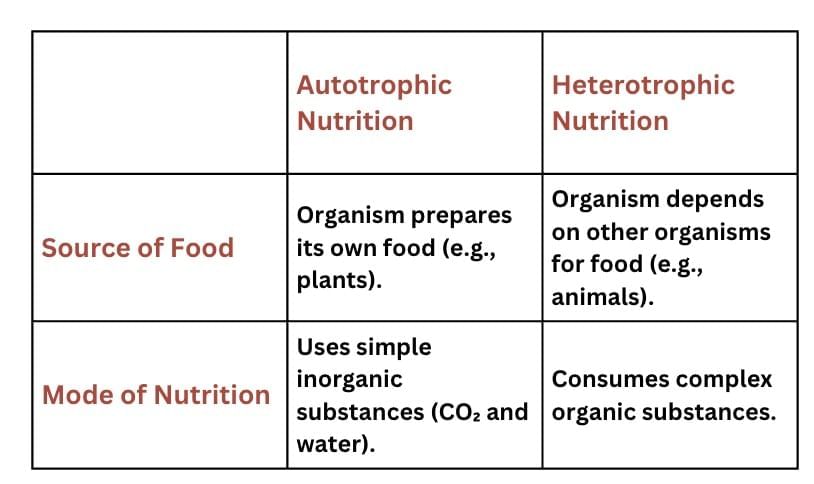
Q7. How is the small intestine designed to absorb digested food efficiently? (2 Marks)
Ans:
- The inner lining of the small intestine has numerous finger-like projections called villi, which greatly increase the surface area available for absorption.
- Each villus contains a dense network of blood capillaries and lymph vessels (lacteals) that transport absorbed nutrients (for example glucose, amino acids, fatty acids) quickly into the bloodstream and lymphatic system.
Q8. What is the role of hydrochloric acid in the stomach? (2 Marks)
Ans:
- Hydrochloric acid creates an acidic environment in the stomach which is necessary for the enzyme pepsin to act and begin the digestion of proteins.
- It also helps to kill or inhibit harmful microbes that enter with food, providing a defence against infection and aiding safe digestion.
Q9. Describe the three main steps involved in the process of photosynthesis. (3 Marks)
Ans: Three main steps involved in photosynthesis are:
- Absorption of light energy: Chlorophyll in chloroplasts absorbs light energy from the Sun, which is the initial energy source for the process.
- Conversion of light energy to chemical energy: Light energy is used to split water molecules into hydrogen and oxygen and to form energy-rich carriers; oxygen is released as a by-product.
- Reduction of carbon dioxide: The hydrogen (from split water) and the chemical energy are used to reduce carbon dioxide to produce carbohydrates (for example glucose) which serve as stored chemical energy for the plant.
Note: In some plants (for example certain desert plants) carbon dioxide fixation may occur at different times (such as at night), but the overall steps remain the same.
Q10. What are the different products formed during aerobic and anaerobic respiration? Give examples. (3 Marks)
Ans:
- Aerobic respiration (in presence of oxygen): Glucose → Carbon dioxide (CO₂) + Water (H₂O) + Energy. Example: Respiration in humans and many animals.
- Anaerobic respiration in yeast: Glucose → Ethanol + Carbon dioxide (CO₂) + Energy. Example: Fermentation by yeast.
- Anaerobic respiration in human muscle cells (during vigorous exercise): Glucose → Lactic acid + Energy. The energy released in aerobic respiration is considerably more than that released in anaerobic respiration.
Flowchart of different types of respiration
Q11. Explain the process of nutrition in Amoeba. (3 Marks)
Ans:
- Amoeba captures food by extending parts of its cell membrane and cytoplasm called pseudopodia, which surround and engulf the food particle to form a food vacuole.
- Digestive enzymes are secreted into the food vacuole where the food is broken down into simpler soluble substances.
- The digested nutrients diffuse into the cytoplasm to be used for energy and growth, and undigested remains are removed from the cell by egestion.
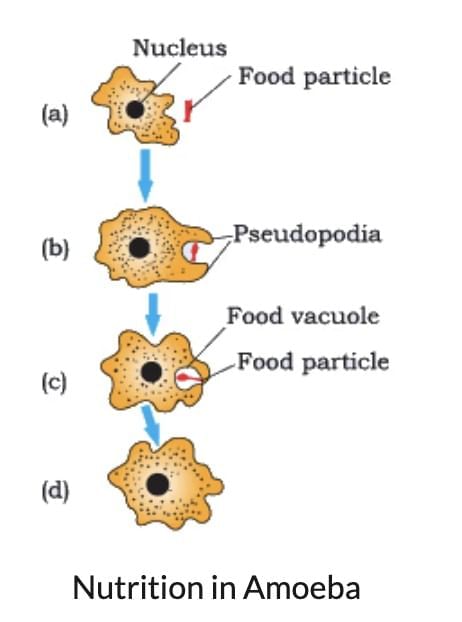
Q12. Describe the human digestive system and explain how digestion occurs in the stomach and small intestine. (5 Marks)
Ans: The human digestive system comprises the alimentary canal (a continuous tube from mouth to anus) and associated digestive glands (salivary glands, liver and pancreas). The main parts and their roles are:
1. Mouth
- Food is chewed by the teeth and mixed with saliva, which contains the enzyme amylase.
- Amylase begins the digestion of starch into simpler sugars, making the food easier to swallow.
2. Oesophagus (Food Pipe)
- A muscular tube that moves the swallowed food to the stomach by rhythmic muscular contractions called peristalsis.
3. Stomach
- The stomach has gastric glands that secrete hydrochloric acid (HCl), pepsin (an enzyme) and mucus.
- HCl creates an acidic medium which activates pepsin and helps kill microbes present in food.
- Pepsin begins the digestion of proteins into shorter polypeptides.
- Mucus protects the stomach lining from being damaged by the acid.
4. Small Intestine
- The small intestine is the longest part of the alimentary canal and is the main site for digestion and absorption.
- It receives bile from the liver, which emulsifies fats into smaller droplets to increase the surface area for enzymes to act.
- It also receives pancreatic juice from the pancreas, which contains enzymes to digest carbohydrates, proteins and fats.
- Intestinal juice completes digestion: carbohydrates → glucose, proteins → amino acids, fats → fatty acids and glycerol.
- The inner wall of the small intestine has many villi which increase surface area and absorb digested nutrients into the bloodstream and lymphatic vessels.
5. Large Intestine
- The large intestine absorbs excess water from undigested food, forming semi-solid waste (faeces), which is stored in the rectum and expelled through the anus.
Q13. Answer the following questions based on the diagram given below: (5 Marks)
Human Heart(i) Label the four chambers of the heart in the diagram.
(ii) What is the function of the valves shown in the heart diagram?
(iii) Which side of the heart pumps oxygenated blood to the body, and which side pumps deoxygenated blood to the lungs?
(iv) Describe the pathway of blood through the heart starting from the right atrium.
(v) Why does the left ventricle have a thicker muscular wall compared to the right ventricle?
Ans:
(i) The four chambers of the heart are:
- Right Atrium
- Right Ventricle
- Left Atrium
- Left Ventricle
(ii) The valves (for example the tricuspid and bicuspid/mitral valves) ensure one-way flow of blood through the heart. They open to allow blood to move forward and close to prevent its backflow, maintaining efficient circulation.
(iii) The left side of the heart (left atrium and left ventricle) pumps oxygenated blood to the body. The right side of the heart (right atrium and right ventricle) pumps deoxygenated blood to the lungs.
(iv) Pathway of blood starting from the right atrium:
Blood from the body (deoxygenated) enters the right atrium via the superior and inferior vena cava → passes through the tricuspid valve into the right ventricle → on contraction the right ventricle pumps blood through the pulmonary valve into the pulmonary artery → blood travels to the lungs and becomes oxygenated → oxygenated blood returns to the heart via the pulmonary veins into the left atrium → passes through the bicuspid (mitral) valve into the left ventricle → left ventricle contracts and pumps blood through the aortic valve into the aorta which distributes it to the body.(v) The left ventricle has a thicker muscular wall because it must generate high pressure to pump blood throughout the entire body. The right ventricle only needs to pump blood a short distance to the lungs, so its wall is thinner.
Very Short Questions: Life Processes
Q1: Why are valves present in heart and the veins?
Ans: Valves present in the heart does not allow the blood to flow backwards when the atria or ventricles contracts. Valves are present in the veins to prevent the back flow of blood in the veins as it travels at very slow rate in the veins.
Q2: When we breathe out, why does the air passage not collapse?
Ans: Rings of cartilage present on trachea prevent it from collapsing during the passage of air.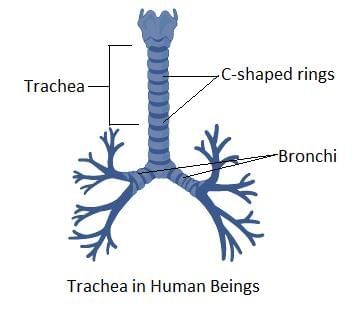
Q3: Give one reason why multicellular organisms require special organs for exchange of gases between their body and their environment.
Ans: Simple diffusion is not sufficient for the exchange of gases in multicellular organisms as all their cells are not in direct contact with the environment. So, they require special organs for exchange of gases between their body and their environment.
Q4: What process in plants is known as transpiration?
Ans: The loss of water in the form of vapour from the aerial parts of the plant is known as transpiration.
Q5: Why is carbon dioxide mostly transported in dissolved form?
Ans: Carbon dioxide is mostly transported in the dissolved form as it is more soluble in water.
Q6: Name the green dot like structures in some cells observed by a student when a leaf peel was viewed under a microscope. What is the green colour due to?
Ans: The green dots like structures seen are the chloroplasts. The green colour is due to the pigment called chlorophyll.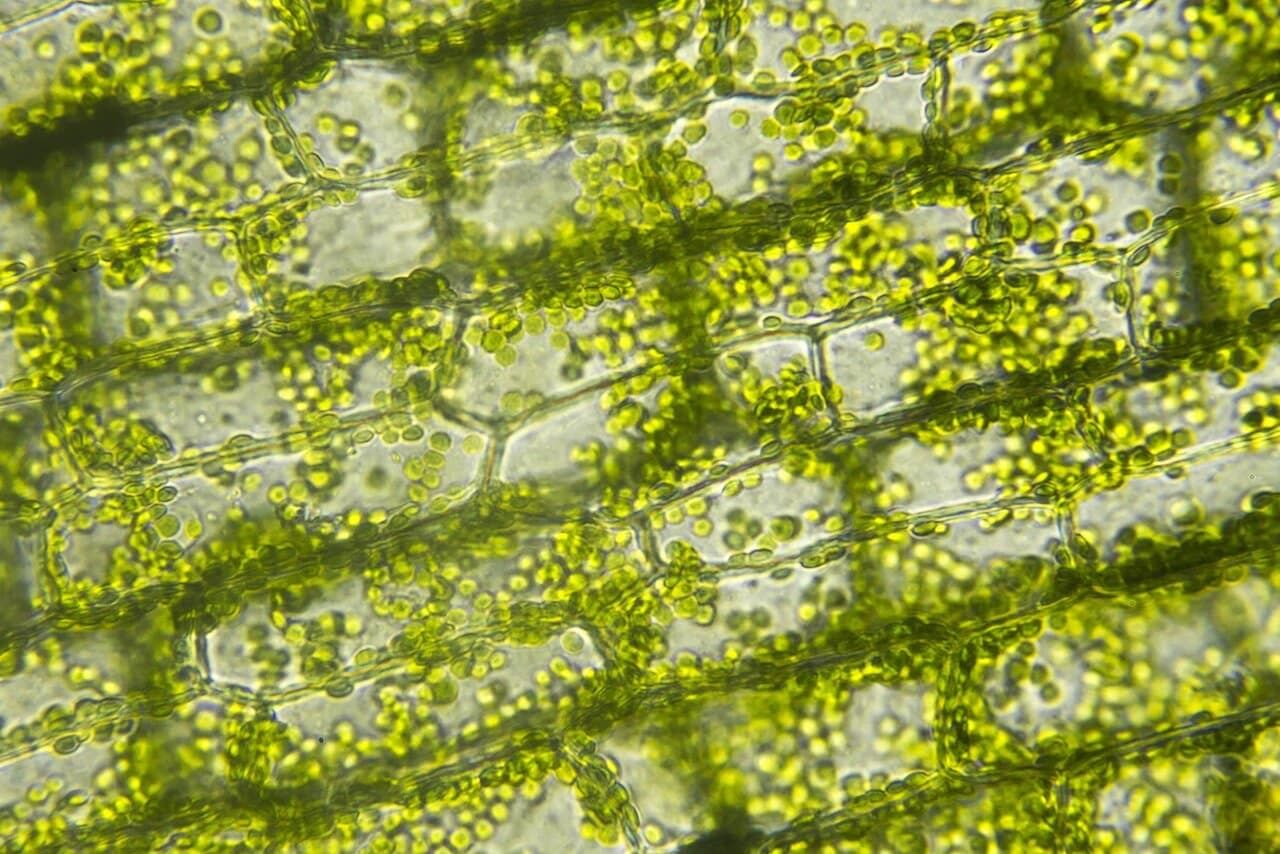
Q7: Herbivores have longer small intestines while carnivores have shorter small intestine. Give reason.
Ans: Herbivores have a longer small intestine compared to the carnivores to allow time for the cellulose present in the grass to get digested.
Q8: Mention the respiratory unit of lungs and excretory unit of kidneys.
Ans: The respiratory unit of lungs are alveoli and excretory unit of kidneys are nephrons.
Q9: Some organisms derive nutrition from plants or animals without killing them. What are these organisms called? Write one example.
Ans: They are called parasites, e.g. Cuscuta and tapeworm are the parasites of plants and animals respectively.
Q10: What are the major constituents of urine?
Ans: Urine is an aqueous solution of water, urea, chloride, sodium, potassium, creatinine and other dissolved ions, inorganic and organic compounds (proteins, hormones, and metabolites).
Q11: Where does the urine produced by the kidneys get stored?
Ans: Urinary bladder.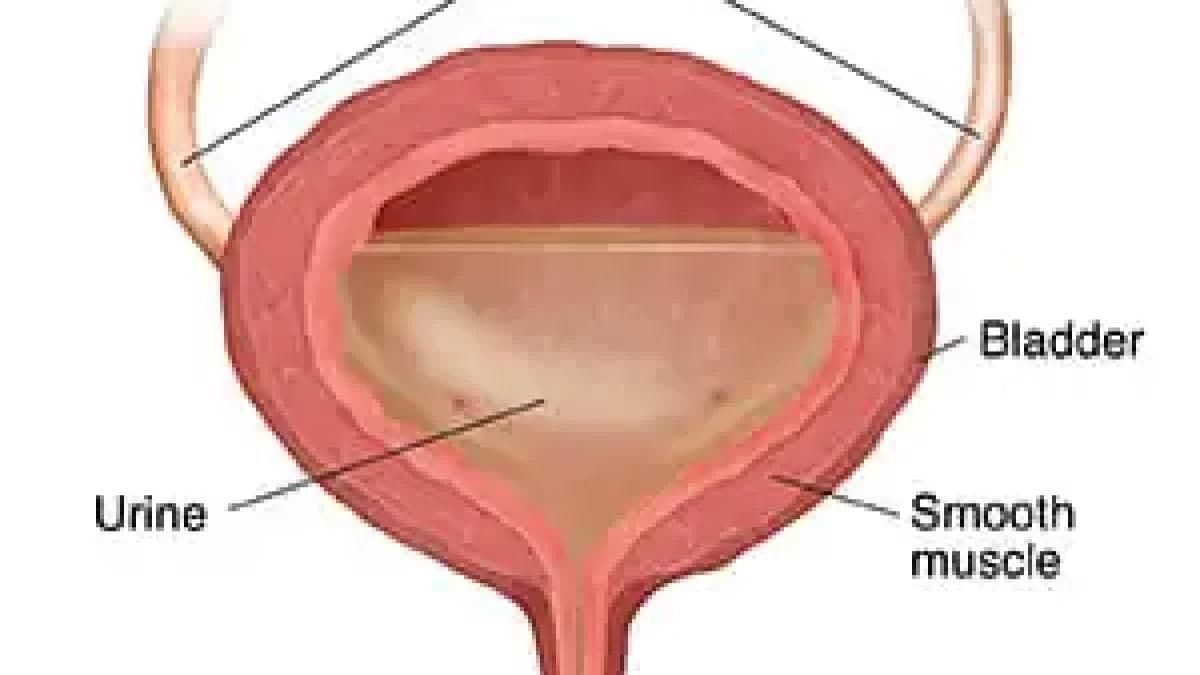
Q12: How does transpiration help in upward transport of substances?
Ans: Transpiration creates a suction pressure which pulls up water along with the minerals through the xylem.
Q13: When the right atrium contract, blood flows from it to which part of the heart?
Ans: Right ventricle.
Q14: State the functions of the following:
(i) Blood
(ii) WBC
Ans: Function of RBC - To carry oxygen to various parts of the body.
Function of WBC - To protect the body against both infectious diseases and foreign invaders.
Q15: Write the functions of the two upper chambers of the human heart.
Ans: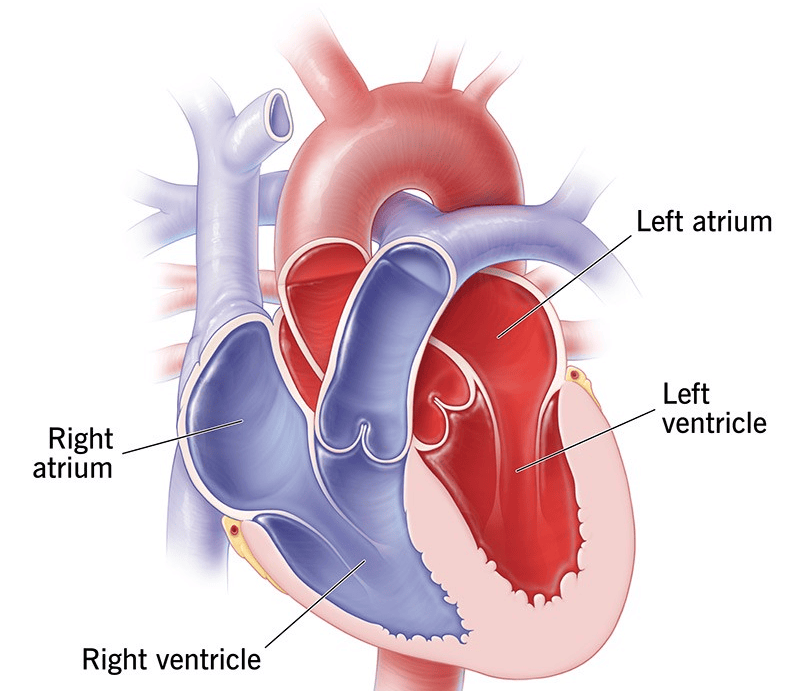 Heart ChambersThe right atrium receives deoxygenated blood from various parts of the body through the vena cava. The left atrium receives the oxygenated blood from the lungs through the pulmonary artery.
Q16: Leakage of blood from vessels reduces the efficiency of pumping system. How is the leakage prevented?
Ans: Leakage is prevented by the blood platelets present in the blood which help in clotting the blood at the site of injury.
Q17: Which mechanism plays an important role in transportation of water in plants
(i) During daytime
(ii) At night?
Ans: During daytime - Transpiration; At Night - Root pressure.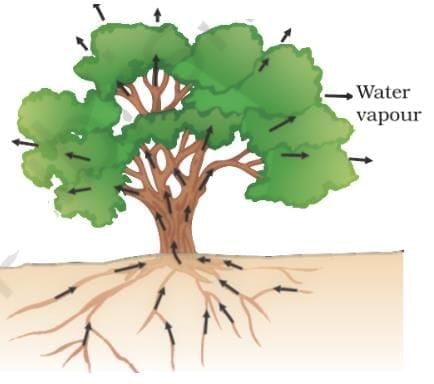
Q18: What will happen to a plant if its xylem is removed?
Ans: Xylem is essential for transporting water and minerals throughout a plant. If the xylem is removed, the following consequences occur:
- Water and minerals cannot reach the plant's parts.
- This disruption leads to wilting and nutrient deficiency.
- Ultimately, the plant will die due to lack of essential resources.
Important Questions:
Autotrophic Nutrition
Q1: Photosynthesis takes place in the leaves and the food prepared by it reaches other parts of the plants. Name the process involved and explain it.
Ans:
- The process is translocation.
- It involves the movement of food, mainly sugars like sucrose, from the leaves (where photosynthesis occurs) to other parts of the plant through the phloem.
- This ensures all parts of the plant receive nutrients for growth, storage, and energy.
Q2: We need to water the soil in plants on a regular basis. But it ultimately reaches the leaves of the plant. Explain how this takes place.
Ans: Water reaches the leaves through the xylem.
- Roots absorb water from the soil by osmosis.
- Water moves upward through the xylem due to transpiration pull, capillary action, and cohesion of water molecules.
This ensures water supply to the leaves for photosynthesis and other processes.
Q3: Design an experiment to demonstrate that carbon dioxide is essential for photosynthesis. Write the observation and conclusion of the experiment.
Ans: (a)
- Take two healthy potted plants, A and B of nearly the same size.
- Keep them in darkness for three days. (Destarch the plant)
- Place a watch glass containing potassium hydroxide by the side of potted plant A but not in potted plant B.
- Cover both the plants with separate bell jars and seal the bottom of the jars with Vaseline.
- Keep both the plants in sunlight for two hours.
- Pluck one leaf each from both the plants and test for the presence of starch with iodine solution.
- Observation: The leaf of the potted plant A with KOH did not turn blue-black, indicating that starch was not present. The leaf of the potted plant B turns blue.
- Conclusion: KOH absorbs CO2 so photosynthesis did not occur in potted plant A.
Q4: List the events that take place during the process of photosynthesis in the proper sequence.
Ans: The three events that occur during the process of photosynthesis are:
(i) Absorption of light energy by chlorophyll.
(ii) Conversion of light energy to chemical energy (in the form of ATP and NADPH) and splitting of water molecules into hydrogen and oxygen.
(iii) Reduction of carbon dioxide to carbohydrates (carbon assimilation).
Q5: Read the following and answer the questions from (i) to (iv).
Take a healthy potted plant with elongated leaves. Select a leaf and insert about one half of this leaf in a test tube containing KOH and make it air tight. Place the set-up in sun for two hours. Take out the leaf from the test tube and dip it in boiling water for a few minutes. Put this leaf in a beaker with alcohol and boil it in a water bath. Wash the leaf with water and then dip the leaf in iodine solution for a few minutes. The portion of the leaf dipped in KOH solution will not show any change when dipped in iodine solution.
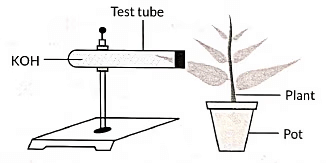
(i) The function of KOH taken in the test tube is to absorb
(a) Released water vapours
(b) Released CO2
(c) Released O2
(d) Chlorophyll.
Ans: (b)
In the given experiment, KOH (Potassium hydroxide) in the test tube absorbs carbon dioxide; thus, due to the absence of CO2, the leaf fails to produce starch which proves that carbon dioxide is necessary for photosynthesis.
(ii) On the basis of this activity, we may conclude that the factor for photosynthesis is
(a) Carbon dioxide
(b) Oxygen
(c) Chlorophyll
(d) Water vapour.
Ans: (a)
The given experiment demonstrates the requirement of carbon dioxide for photosynthesis. When KOH absorbs the available CO2 from the portion of leaf dipped in it, formation of sugar and starch is inhibited and the portion of leaf dipped in KOH did not show any change when dipped in iodine solution. Thus, it is proved that CO2 is necessary for photosynthesis.
(iii) The event that does not occur in photosynthesis is
(a) Absorption of light energy by chlorophyll
(b) Reduction of carbon dioxide to carbohydrates
(c) Oxidation of carbon to carbon dioxide
(d) Conversion of light energy to chemical energy.
Ans: (c)
Following are the three events that occur during the process of photosynthesis
(i) Absorption of light energy by chlorophyll.
(ii) Conversion of light energy to chemical energy and splitting of water molecules into hydrogen and oxygen.
(iii) Reduction of carbon dioxide to carbohydrates.
(iv) Iodine solution gives blue-black colour with
(a) Starch
(b) Proteins
(c) Glucose
(d) Fats.
Ans: (a)
The brown coloured iodine will turn blue-black when it reacts with starch.
Q6: A student was asked to write a stepwise procedure to demonstrate that carbon dioxide is necessary for photosynthesis. He wrote the following steps. The wrongly worded step is
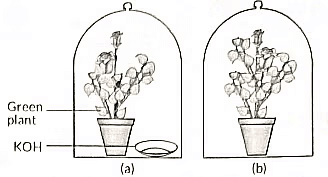
(a) Both potted plants are kept in dark room for at least three days
(b) Bottom of the bell jars is sealed to make them air tight
(c) Both potted plants are kept in sunlight after the starch test
(d) A leaf from both the plants is taken to test the presence of starch.
Ans: (c)
Both potted plants should be kept in sunlight for about two hours before the starch test.
| Get additional INR 200 off today with EDUREV200 coupon. | Avail Offer |
Heterotrophic Nutrition
Q1: State one role of each of the following in the human digestive system:
(i) Hydrochloric acid
(ii) Villi
(iii) Anal Sphincter
(iv) Lipase
Ans:
(i) Hydrochloric acid: Creates an acidic environment that helps enzymes work and kills harmful microorganisms.
(ii) Villi: Increases the surface area of the intestine, enhancing the absorption of nutrients.
(iii) Anal Sphincter: Controls the release of waste from the body through the anus.
(iv) Lipase: Breaks down fats into smaller molecules (fatty acids and glycerol), aiding in their digestion.
Q2: Human digestive system is a tube running from mouth to anus. Its main function is to breakdown complex molecules present in the food which cannot be absorbed as such into smaller molecules. These molecules are absorbed across the walls of the tube and the absorbed food reaches each and every cell of the body where it is utilised for obtaining energy.
(a) Name the glands present in the buccal cavity and write the components of food on which the secretion of these glands act upon.
(b) Two organs have a sphincter muscle at their exit. Name them.
(c) What will happen if:
(i) mucus is not secreted by the gastric glands.
(ii) Villi are absent in the small intestine.
OR
(c) "Bile juice does not contain any enzyme, yet it has important roles in digestion." Justify the statement.
Ans: (a) Salivary glands; Starch / Carbohydrate
(b) Stomach (pyloric sphincter) and anus (anal sphincter).
(c) The consequences of specific conditions are:
(i) If mucus is not secreted by the gastric glands, the inner lining of the stomach will be unprotected from acid, leading to potential damage.
(ii) If villi are absent in the small intestine, the absorption of digested food will be significantly reduced.
OR
(c) Emulsification of fats.
Acidic medium has to be made alkaline for the pancreatic enzymes to act.
Q3: In human beings, when the process of digestion is completed, the (i) proteins, (ii) carbohydrates, and (iii) fats are respectively finally converted into:
(a) (i) Amino acids, (ii) glucose and (iii) fatty acids
(b) (i) Amino acids, (ii) glucose, (iii) fatty acids and glycerol
(c) (i) Glucose, (ii) fatty acids and glycerol, (iii) amino acids
(d) (i) Sugars, (ii) amino acids, (iii) fatty acids and glycerol
Ans: (b)
During digestion in humans:
- Proteins are broken down into amino acids.
- Carbohydrates are converted into glucose.
- Fats are transformed into fatty acids and glycerol.
The correct answer is (b) as it accurately describes the final products of these macronutrients after digestion.
Q4: (i) How does Paramecium obtain its food?
(ii) List the role of each of the following in our digestive system:
(a) Hydrochloric acid
(b) Trypsin
(c) Muscular walls of the stomach
(d) Salivary amylase
Ans: (i) In Paramecium, a unicellular protozoan, the hair-like outgrowth cilia are present on the entire surface and help collect the food. They sweep the food inside the body through the oral groove.
(ii) (a) Role of hydrochloric acid: It helps to maintain the acidic pH in the stomach required for activation of the enzyme pepsin that digests proteins in the stomach.
(b) Role of trypsin in our digestion system: Trypsin breaks down protein into smaller peptides in the duodenum of the small intestine. It helps in digesting dietary protein by breaking the chain of amino acids. It also activates some proenzymes present in pancreatic juice.
(c) Role of muscular walls in the stomach in our digestive system: The muscular walls in the stomach contract periodically and thereby help in the churning and mixing of the food with the digestive enzymes and HCI. It helps in chemical digestion.
(d) Salivary amylase converts starch into simple sugars (maltose).
Q5: (a) With the help of an activity, explain the action of saliva on the food we eat.
(b) Why is bile juice important in the process of digestion?
Ans: (a) The action of saliva on food can be demonstrated through a simple activity:
- Take two test tubes, A and B.
- In test tube A, add one teaspoon of boiled rice.
- In test tube B, add one teaspoon of boiled rice that has been chewed for 3 to 5 minutes.
- Add 3.4 mL of water to both test tubes.
- Add a few drops of iodine solution to each test tube.
Observation:
Test tube A (unchewed rice) turns blue-black with iodine (starch present).
Test tube B (chewed rice) does not turn blue-black (starch absent).
Conclusion: Saliva contains amylase which breaks down starch into sugars.
(b) Bile juice does not contain enzymes but plays an important role in digestion:
It emulsifies fats, breaking large fat globules into smaller droplets.
It makes the medium alkaline, which is necessary for the action of pancreatic enzymes.
Q6: An organism which breaks down the food material outside the body and then absorbs it is:
(a) a plant parasite, Cuscuta
(b) an animal parasite, Tapeworm
(c) a bacteria, Rhizobium
(d) a fungi, Rhizopus
Ans: (d)
(i) Rhizopus is a fungus that performs extracellular digestion. It secretes digestive enzymes outside its body to break down food material into simpler substances, which are then absorbed.
(ii) Cuscuta is a plant parasite that absorbs nutrients directly from the host plant.
(iii) Tapeworm is an animal parasite that lives inside the host's body and absorbs pre-digested nutrients.
(iv) Rhizobium is a nitrogen-fixing bacterium associated with legume roots; it does not break down food outside the body for absorption.
Therefore, (d) a fungi, Rhizopus is correct, as it digests food material outside its body and then absorbs it.
Q7: Consider the following statements about small intestine and select the one which is NOT correct:
(a) The length of the small intestine in animals differ as it depends on the type of food they eat.
(b) The small intestine is the site of complete digestion of food.
(c) The small intestine receive secretions from liver and pancreas.
(d) The villi of the small intestine absorb water from the unabsorbed food before it gets removed from the body via the anus.
Ans: (d)
(a) This statement is correct. The length of the small intestine varies among animals depending on their diet. Herbivores generally have longer small intestines than carnivores to allow more time for digesting plant material.
(b) This statement is correct. The small intestine is the primary site for the complete digestion of food, where nutrients are broken down and absorbed.
(c) This statement is correct. The small intestine receives secretions from the liver (bile) and the pancreas (pancreatic enzymes) that aid in digestion.
(d) This statement is incorrect. The main function of the villi in the small intestine is to absorb nutrients, not water. Water absorption primarily occurs in the large intestine, not the small intestine.
Therefore, the correct answer is (d), as it is the statement that is NOT correct.
Q8: In human alimentary canal, the specific enzyme/ juice secreted in locations (i), (ii) and (iii) are
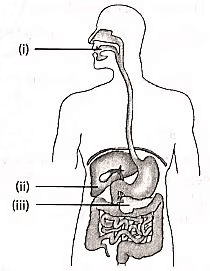 (a) (i) Amylase (ii) Pepsin (iii) Bile
(b) (i) Amylase (ii) Bile (iii) Trypsin
(c) (i) Lipase (ii) Amylase (iii) Pepsin
(d) (i) Trypsin (ii) Bile (iii) Amylase
Ans: (b)
Saliva is secreted in the mouth (i) and contains the enzyme salivary amylase, which helps digest carbohydrates. The liver (ii) secretes bile to emulsify fats, breaking them into smaller globules for easier digestion. The pancreas (iii) produces pancreatic juice, which contains enzymes like trypsin for protein digestion.
Q9: (a) Why is nutrition necessary for the human body?
(b) What causes the movement of food inside the alimentary canal?
(c) Why is the small intestine in herbivores longer than in carnivores?
(d) What will happen if mucus is not secreted by the gastric glands?
Ans: (a)
- Nutrition is necessary for the human body because the human body continuously requires energy for life activities like respiration, circulation, excretion, etc.
- Energy is required even when we are sleeping because a number of biological processes keep on occurring.
- All these processes require energy, and this energy is obtained from nutrition.
- It is also needed for the growth and repair of the human body.
- The wall of the alimentary tract contains muscles that can contract and expand alternately.
- The contraction and expansion movement of the wall of the food pipe is called peristaltic movement.
- The peristaltic movement moves the partially digested food in all the digestive organs throughout the alimentary canal.
- The small intestine in herbivores is longer than in carnivores because:
- Herbivores consume plants rich in cellulose, which takes longer to digest.
- They rely on enzymes from symbiotic bacteria to break down cellulose.
- Carnivores eat flesh, which is easier to digest, resulting in a shorter small intestine.
(d) If mucus is not secreted by the gastric glands:
- The inner lining of the stomach would be exposed to hydrochloric acid and digestive enzymes.
- This could lead to erosion of the stomach lining, causing acidity and potentially ulcers.
Also read: Case Based Questions: Life Processes |
Respiration
Q1: (a) Why is there a difference in the rate of breathing between aquatic organisms and terrestrial organisms? Explain.
(b) Draw a diagram of the human respiratory system and label it - the pharynx, trachea, lungs, diaphragm and alveolar sac on it.
Ans: (a)
- The difference in the rate of breathing between aquatic and terrestrial organisms is primarily due to their oxygen sources:
- Terrestrial organisms breathe in oxygen from the atmosphere, which contains about 21% oxygen.
- Aquatic organisms rely on oxygen that is dissolved in water, which is less than 1%.
- Oxygen diffuses through water much slower than in air.
- As a result, terrestrial organisms can obtain oxygen more easily and quickly.
- Aquatic organisms must work harder to extract the same amount of oxygen, leading to a faster breathing rate.
(b) The labelled diagram of the human respiratory system is as follows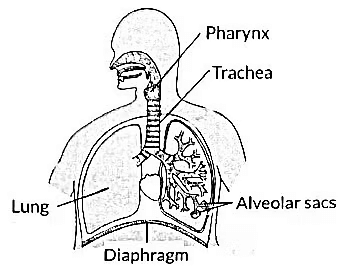
Q2: (i) Why is respiratory pigment needed in multicellular organisms with large body sizes?
(ii) Give reasons for the following:
(a) Rings of cartilage are present in the throat.
(b) Lungs always contain a residual volume of air.
(c) The diaphragm flattens and ribs are lifted up when we breathe in.
(d) Walls of alveoli contain an extensive network of blood vessels.
Ans: (i) In large animals, diffusion alone cannot deliver enough oxygen throughout the body. Instead, respiratory pigments are essential because they:
- Absorb oxygen from the air in the lungs.
- Transport oxygen to tissues that need it.
- Release oxygen where it is required.
In humans, the main respiratory pigment is haemoglobin, found in red blood cells, which has a strong affinity for oxygen. Carbon dioxide is mostly carried in a dissolved form in the blood.
(ii) Reasons:
(a) Rings of cartilage in the throat prevent the air passage from collapsing.
(b) Lungs retain a residual volume of air to allow time for oxygen absorption and carbon dioxide release.
(c) When we breathe in, the diaphragm flattens and the ribs lift, making the chest cavity larger, which draws air into the lungs.
(d) The walls of alveoli contain many blood vessels to facilitate gas exchange.
Q3: In human respiratory system, when a person breathes in, the position of ribs and diaphragm will be:
(a) lifted ribs and curve/dome shaped diaphragm.
(b) lifted ribs and flattened diaphragm.
(c) relaxed ribs and flattened diaphragm.
(d) relaxed ribs and curve/dome shaped diaphragm.
Ans: (b)
The correct answer is (b) lifted ribs and flattened diaphragm. When a person breathes in, the diaphragm contracts and flattens, while the ribs are lifted upward and outward. This movement creates more space in the chest cavity, allowing air to fill the lungs.
Q4: Observe the diagram of an activity given below. What does it help to conclude, when the person exhales into the test-tube?
(a) Percentage of carbon dioxide is more in inhaled air.
(b) Fermentation occurs in the presence of oxygen.
(c) Percentage of carbon dioxide is more in the exhaled air.
(d) Fermentation occurs in the presence of carbon dioxide. 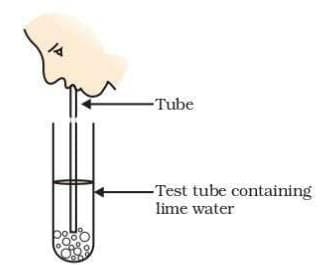
Ans: (c)
- When a person exhales into a test tube containing lime water, the following occurs:
- The lime water turns milky due to the formation of a white precipitate.
- This change indicates that the air we exhale contains a higher level of carbon dioxide.
- The reaction occurs because exhaled air has more carbon dioxide compared to inhaled air.
Q5: Respiratory structures of two different animals-a fish and a human being are shown.
Observe (A) and (B) and select one characteristic that hold true for both of them.
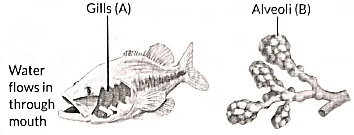
(a) Both are placed internally in the body of animal.
(b) Both have thin and moist surface for gaseous exchange.
(c) Both are poorly supplied with blood vessels to conserve energy.
(d) In both the blood returns to the heart after being oxygenated.
Ans: (b)
- Both fish and humans have respiratory structures that facilitate gas exchange.
- Both possess thin and moist surfaces for efficient gas exchange.
- In fish, this occurs in the gills, while in humans, it takes place in the alveoli.
- This structure allows for the diffusion of oxygen into the blood and the removal of carbon dioxide.
Q6: In living organisms during respiration which of the following products are not formed if oxygen is not available?
(a) Carbon dioxide + Water
(b) Carbon dioxide + Alcohol
(c) Lactic acid + Alcohol
(d) Carbon dioxide + Lactic Acid
Ans: (a)
In aerobic respiration, glucose is completely broken down to CO2 and H2O with the production of a large amount of energy (ATP).

Thus, CO2 and water are formed as a result of aerobic ; respiration and will not be formed in the absence of oxygen (anaerobic respiration).
Q7: Assertion (A): The rate of breathing in aquatic organisms is much slower than that seen in terrestrial organisms.
Reason (R): The amount of oxygen dissolved in water is very low as compared to the amount of oxygen in air.
(a) Both (A) and (R) are true and (R) is the correct explanation of (A).
(b) Both (A) and (R) are true but (R) is not the correct explanation of (A).
(c) (A) is true, but (R) is false.
(d) (A) is false, but (R) is true.
Ans: (d)
The rate of breathing in aquatic organisms is much slower than that seen in terrestrial organisms.The rate of breathing in aquatic organisms is actually much faster than in terrestrial organisms due to the following reasons:
- The amount of dissolved oxygen in water is relatively low compared to the oxygen available in the air.
- Aquatic animals must breathe rapidly to obtain enough oxygen from the water.
- Fish, for example, take in water through their mouths and push it past their gills, where oxygen is absorbed into their blood.
Q8: Which of the following statements are correct in reference to the role of A (shown in the given diagram) during a breathing cycle in human beings?
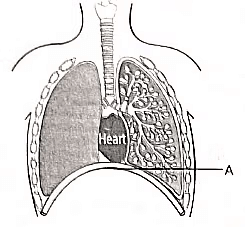
(i) It helps to decrease the residual volume of air in lungs.
(ii) It flattens as we inhale.
(iii) It gets raised as we inhale.
(iv) It helps the chest cavity to become larger.
(a) (ii) and (iv)
(b) (iii) and (iv)
(c) (i) and (ii)
(d) (i), (ii) and (iv)
Ans: (a)
During inhalation, we lift our ribs and flatten our diaphragm (A), which enlarges the chest cavity. This creates a vacuum that pulls air into the lungs, filling the expanded alveoli.When we exhale, our ribs and diaphragm return to their normal positions, causing the chest cavity to shrink. This pushes air out of the lungs.
- The lungs always retain a residual volume of air, ensuring there is enough time for oxygen absorption and carbon dioxide release.
- This residual volume remains constant under normal conditions.
Q9: A stomata closes when:
(i) It needs carbon dioxide for photosynthesis.
(ii) It does not need carbon dioxide for photosynthesis.
(iii) water flows out of the guard cells.
(iv) water flows into the guard cells.
The correct reason(s) in this process is/are:
(a) (i) only
(b) (i) and (iii)
(c) (ii) and (iii)
(d) (ii) and (iv)
Ans: (c)
Stomata are small openings on the surface of leaves that allow gases to enter and exit the plant. They close when the plant doesn't need carbon dioxide for photosynthesis (which is when it's not producing food) and when water flows out of the guard cells (which helps the plant conserve water). Therefore, the correct answers are (ii) and (iii).
| Attention! Sale expiring soon, act now & get EduRev Infinity at 40% off! | Claim Offer |
Transportation
Q1: The separation of the right side and the left side of heart is useful to
(a) Keep oxygenated blood from mixing with deoxygenated blood
(b) Allow a slow supply of oxygen in the body
(c) Supply energy to animals with low energy needs
(d) Often change their body temperature.
Ans: (a)
- The right side handles deoxygenated blood, sending it to the lungs for oxygen.
- The left side manages oxygenated blood, distributing it to the body.
- This separation prevents mixing of the two blood types, ensuring a more efficient supply of oxygen.
- It is particularly beneficial for animals with high energy needs, such as birds and mammals, which require constant energy to maintain their body temperature.
Q2: In spring, sugar stored in root or stem tissue of plants is transported to the buds for
(a) The energy needs of the buds to grow
(b) Temperature regulation
(c) Balancing the storage in different organs
(d) Diffusion process.
Ans: (a)
In spring, new buds are formed. These buds need more energy to grow than other parts of the plant. This energy comes from the sugar stored in root or stem tissue and is transported to the buds by phloem.
Q3: Upward movement of water in tall trees is due to
(a) Translocation
(b) Excretion
(c) Photosynthesis
(d) Transpiration.
Ans: (d)
The upward movement of water in tall trees is primarily driven by transpiration. This process involves:
- Water evaporating from the stomata in the leaves.
- This evaporation creates a negative pressure in the leaves and xylem tissues.
- As a result, water is pulled up from the roots through the xylem.
In summary, transpiration not only aids in the movement of water but also helps regulate the plant's temperature.
Q4: Thin walled blood vessels are called
(a) Aorta
(b) Capillaries
(c) Arteries
(d) Vena cava
Ans: (b)
Capillaries are tiny blood vessels with very thin walls, just one cell thick. They play a crucial role in the body by:
- Allowing the exchange of materials between blood and surrounding cells.
- Facilitating the transfer of oxygen and nutrients to tissues.
- Collecting waste products from cells for removal.
After the exchange, capillaries merge to form veins, which carry blood away from the tissues.
Q5: Consider the following statements in connection with the functions of the blood vessels marked A and B in the diagram of a human heart as shown.
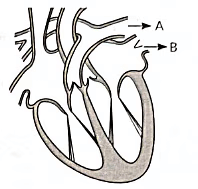
(i) Blood vessel A - It carries carbon dioxide rich blood to the lungs.
(ii) Blood vessel B - It carries oxygen rich blood from the lungs.
(iii) Blood vessel B - Left atrium relaxes as it receives blood from this blood vessel.
(iv) Blood vessel A - Right atrium has thick muscular wall as it has to pump blood to this blood vessel.
The correct statements are
(a) (i) and (ii) only
(b) (ii) and (iii) only
(c) (ii), (iii) and (iv)
(d) (i), (ii) and (iii).
Ans: (d)
Statement (iv) is incorrect because right atrium has thin walls.
Ventricles have thick muscular walls as they pump blood at high pressure.
Q6: Identify the two components of phloem tissue that help in transportation of food in plants.
(a) Phloem parenchyma and sieve tubes
(b) Sieve tubes and companion cells
(c) Phloem parenchyma and companion cells
(d) Phloem fibres and sieve tubes
Ans: (b)
The two components of phloem tissue that assist in the transportation of food in plants are:
- Sieve tubes
- Companion cells
Q7: Which of the following statement(s) is (are) true about human heart?
(A) Right atrium receives oxygenated blood from lungs through pulmonary artery.
(B) Left atrium transfers oxygenated blood to left ventricle which sends it to various parts of the body.
(C) Right atrium receives deoxygenated blood through vena cava from upper and lower body.
(D) Left atrium transfers oxygenated blood to aorta which sends it to different parts of the body.
(a) (A)
(b) (A) and (D)
(c) (B) and (C)
(d) (B) and (D)
Ans: (c)
- (A) is incorrect because the right atrium receives deoxygenated blood from the body through the vena cava, not oxygenated blood from the lungs. The pulmonary artery carries deoxygenated blood from the right ventricle to the lungs, not to the right atrium.
- (B) is correct because the left atrium transfers oxygenated blood to the left ventricle, which then pumps it to various parts of the body through the aorta.
- (C) is correct because the right atrium receives deoxygenated blood through the vena cava from the upper and lower parts of the body.
- (D) is incorrect because it is the left ventricle, not the left atrium, that transfers oxygenated blood to the aorta, which then sends it to different parts of the body.
Therefore, the correct answer is (c) (B) and (C).
Q8: (a) Sometimes while running, the athletes suffer from muscle cramps. Why? How is the respiration in this case different from aerobic respiration?
OR
(b) Write the other name given to lymph. State its two functions.
Ans: (a)
i. The formation of lactic acid in muscles leads to cramps.
ii. Aerobic respiration occurs with oxygen, while cramps result from anaerobic respiration, which happens without oxygen.
iii. End products of aerobic respiration are carbon dioxide, water, and energy, whereas anaerobic respiration produces lactic acid and energy.
OR
(b) Tissue fluid / Extracellular fluid Functions:
i. Carries digested and absorbed fats from the intestine.
ii. Drains excess fluid from extracellular space back into the blood.
iii. Fight against infections.
Q9: Assertion (A) : The walls of atria are thicker than those of the ventricles.
Reason (R) : Ventricles have to pump blood into various organs at high pressure.
(a) Both Assertion (A) and Reason (R) are true and Reason (R) is the correct explanation of the Assertion (A)
(b) Both Assertion (A) and Reason (R) are true, but Reason (R) is not the correct explanation of the Assertion (A)
(c) Assertion (A) is true, but Reason (R) is false.
(d) Assertion (A) is false, but Reason (R) is true.
Ans: (d)
Assertion (A): The walls of atria are thicker than those of the ventricles.
- This statement is false. In reality, the walls of the ventricles are thicker than those of the atria.
- Ventricles have thicker muscular walls because they pump blood out of the heart to the lungs and the rest of the body, which requires more force (pressure).
Reason (R): Ventricles have to pump blood into various organs at high pressure.
- This statement is true. Ventricles indeed pump blood into the arteries and throughout the body at high pressure to ensure blood reaches all organs and tissues.
Therefore, while Reason (R) correctly explains the physiological need for thicker ventricular walls due to high-pressure pumping, Assertion (A) is incorrect because the ventricular walls are thicker than atrial walls, not the other way around.
Also read: Case Based Questions: Life Processes |
Excretion
Q1: Write one specific function of each of the following organs in relation to excretion in human beings:
(i) Renal Artery
(ii) Urethra
(iii) Glomerulus
(iv) Tubular part of nephron
Ans: (i) Renal artery: Carries blood from the aorta to the kidneys for filtration.
(ii) Urethra: Transports urine from the bladder to the outside of the body.
(iii) Glomerulus: Filters blood to initiate the formation of urine.
(iv) Tubular part of nephron: Enables selective reabsorption of essential substances like glucose, amino acids, salts, and water into the blood.
Q2: Explain in brief two ways by which leaves of a plant help in excretion.
Ans: Leaves help in excretion in the following ways:
Excess water is removed through transpiration.
Waste products are stored in leaves which are later shed.
Some wastes are stored in vacuoles or as resins and gums.
Q3: Read the following and answer the questions from (i) to (iv).
The figure shown below represents a common type of dialysis called as haemodialysis- It removes waste products from the blood, such as excess salts, and urea which are insufficiently removed by the kidney in patients with kidney failure. During the procedure, the patient's blood is cleaned by filtration through a series of semi-permeable membranes before being returned to the blood of the patient. On the basis of this answer the following questions.
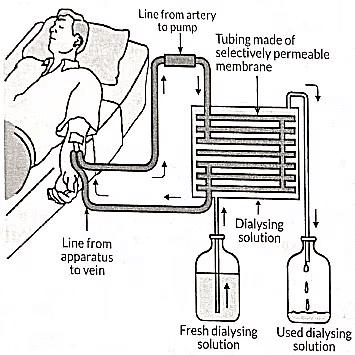
(i) The haemodialyser has semi-permeable lining of tubes which help
(a) To maintain osmotic pressure of blood
(b) To filter nitrogenous wastes from the dialysin solution
(c) In passing the waste products in the dialysing solution
(d) To pump purified blood back into the body of the patient.
Ans: (c)
- The haemodialyser contains tubes with a semi-permeable lining that serve several important functions:
- They help to filter waste products like urea and creatinine from the blood.
- They allow the passage of these waste products into the dialysing fluid.
- This process mimics the kidney's function, although it does not involve re-absorption of substances.
- Finally, the purified blood is pumped back into the patient's body.
(ii) Which one of the following is not a function of artificial kidney?
(a) To remove nitrogenous wastes from the blood
(b) To remove excess fluids from the blood.
(c) To reabsorb essential nutrients from the blood.
(d) To filter and purify the blood.
Ans: (c)
- Artificial kidney removes wastes by diffusion through a semipermeable membrane, but does not perform selective reabsorption like a nephron.
- Its primary functions include:
- Removing nitrogenous wastes from the blood.
- Eliminating excess fluids from the blood.
- Filtering and purifying the blood.
(iii) The 'used dialysing' solution is rich in
(a) Urea and excess salts
(b) Blood cells
(c) Lymph
(d) Proteins.
Ans: (a)
- The used dialysing solution is rich in waste products.
- It contains high levels of urea and excess salts.
- During dialysis, the patient's blood flows through tubes with a semi-permeable lining.
- As blood passes through, waste products diffuse into the dialysing fluid.
- This process helps to purify the blood before it is returned to the patient.
(iv) Which part of the nephron in human kidney, serves the function of reabsorption of certain substances
(a) Glomerulus
(b) Bowman's Capsule
(c) Tubules
(d) Collecting Duct
Ans: (c)
- The tubules of the nephron are responsible for the selective reabsorption of essential substances.
- These substances include: Glucose, Amino acids, Salts, Water
- This process allows these useful substances to return to the blood capillaries.
Q4: (a) Describe the structure and function of the basic filtering unit of the kidney.
(b) List two factors on which the reabsorption of water from urine depends.
Ans: (a) Nephron is the structural and functional unit of the kidney. Its main role is to regulate the concentration of water and soluble substances like sodium and other salts by filtering the blood, reabsorbing the excess water that is needed, and excreting the rest as urine.
(b) Two factors on which the reabsorption of water from urine depends are:
- The amount of excess water which is present in the body.
- The amount of dissolved waste that needs to be excreted out of the body.
Q5: (a) Name the organs that form the excretory system in human beings.
(b) Describe in brief how urine is produced in the human body.
Ans: (a) The Excretory system (urinary system) in human beings consists of a pair of kidneys, a pair of ureters, a urinary bladder and a urethra.
(b)
- In the kidney, the wastes are converted to urine by three processes:
- (i) Ultrafiltration: A large amount of water, along with certain harmful substances like urea, uric acid, K, ammonium salts, creatinine, etc., and certain useful substances like glucose, amino acids, Na, etc., pass through glomerular capillaries and glomerular membrane into the cavity of Bowman's capsule of nephrons under pressure. The filtrate so formed is called nephric filtrate, which is moved towards the ureter.
- (ii) Selective reabsorption: A large amount of water and sodium, a whole of glucose and amino acids, and a small amount of urea are passed back from the nephric filtrate into the blood capillaries. It occurs either by back diffusion (i.e., water and urea) or active transport (i.e., Na, glucose, and amino acids). It generally occurs in the PCT (Proximal convoluted tubule) of nephrons.
- (iii) Tubular secretion: Certain harmful chemicals like uric acid, creatinine, K, etc., are passed from blood capillaries surrounding the nephron into nephric filtrate by active transport. It generally occurs in the DCT (Distal convoluted tubule) of nephrons. Now, the fluid is termed as urine and is excreted out of the excretory organs.