Resources
A resource is defined as anything in our environment that can satisfy our needs, provided it meets three key criteria:
- Technological Accessibility: It must be reachable through existing technology.
- Economic Feasibility: It must be cost-effective to utilize.
- Cultural Acceptability: It must align with cultural norms and values.
The transformation of resources involves a relationship between nature, technology, and institutions. People interact with nature through technology and form institutions to boost economic growth.
- Resources depend on human activities. People play a vital role as resources themselves.
- They change materials from the environment into resources and use them.
Thus, resources come from human actions. People are key to resources because they turn raw materials into useful assets to satisfy their needs. This illustrates the teamwork between the natural world and human creativity.
Classification of Resources
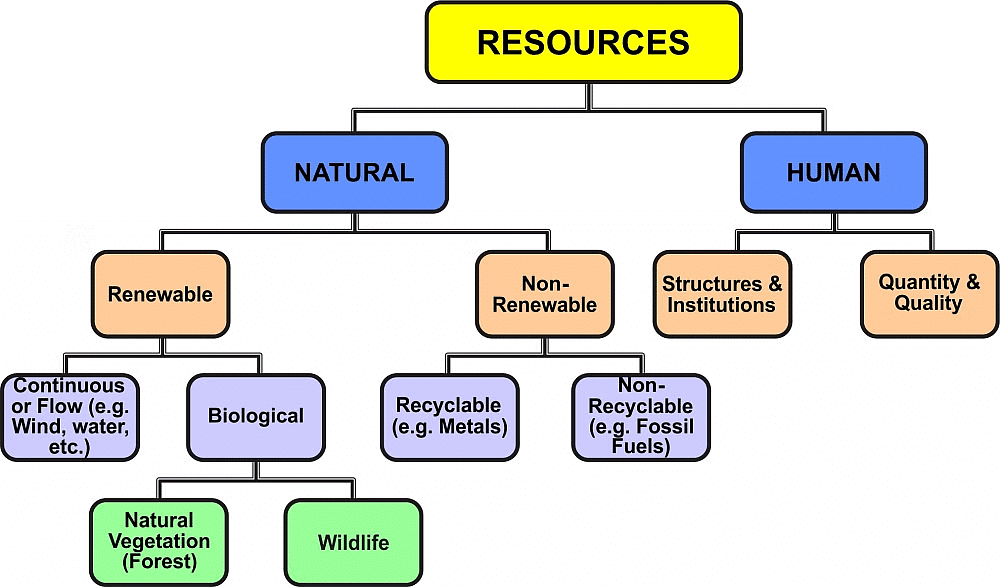
The resources can be classified as
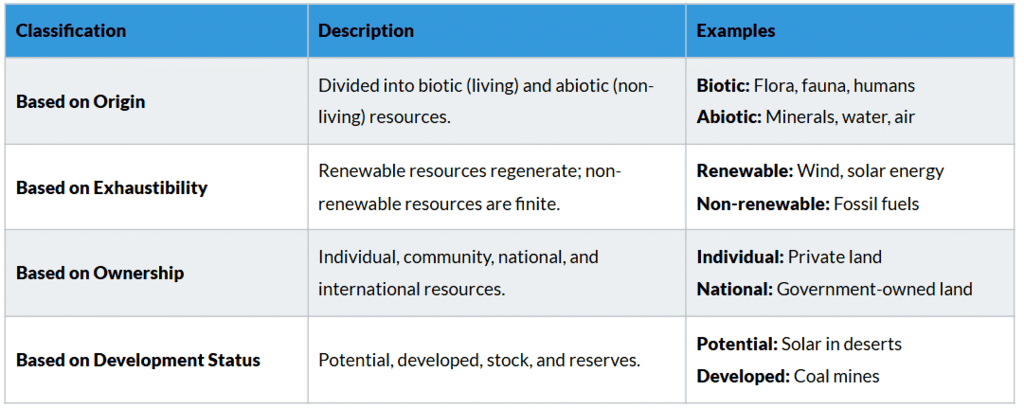
1. On the Basis of Origin
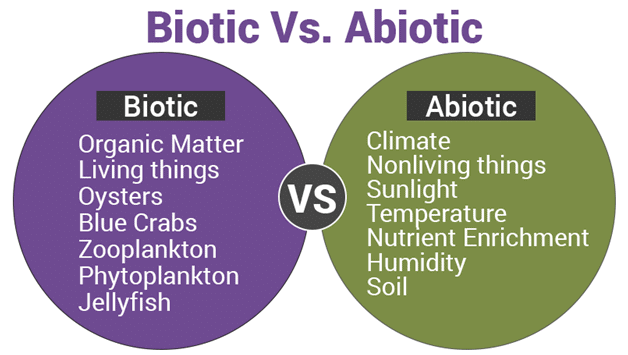
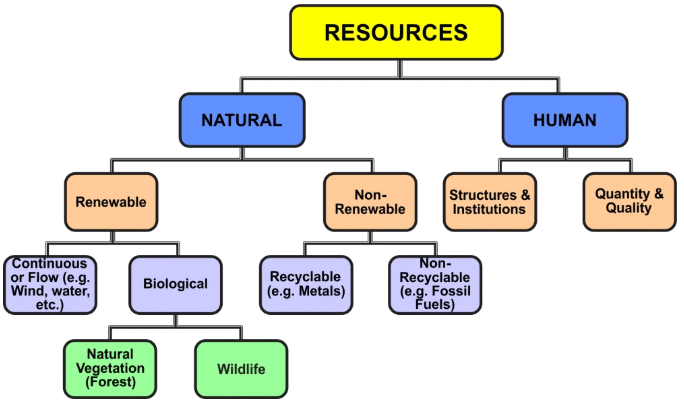
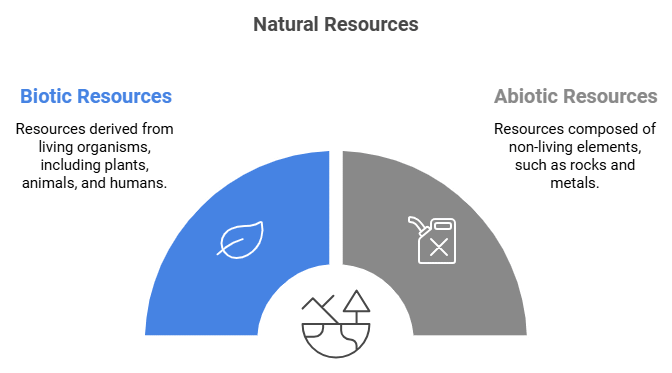
- Biotic Resources: These are obtained from the biosphere and have life, such as human beings, flora and fauna, fisheries, livestock etc.
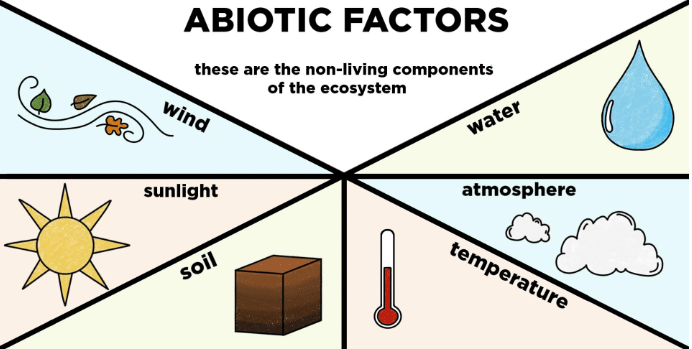
- Abiotic Resources: All those things that are composed of non-living things are called abiotic resources. Example: rocks and metals.
2. On the Basis of Exhaustibility
- Renewable Resources: The resources that can be renewed or reproduced by physical, chemical, or mechanical processes are known as renewable resources.
Example - solar and wind energy, water, forests and wildlife, etc. - Non-Renewable Resources: The resources that, once consumed, cannot be replaced are known as non-renewable resources. These resources take millions of years to form. Non-renewable resources are recyclable, such as metals and non-recyclable.
Example - Fossil fuels.
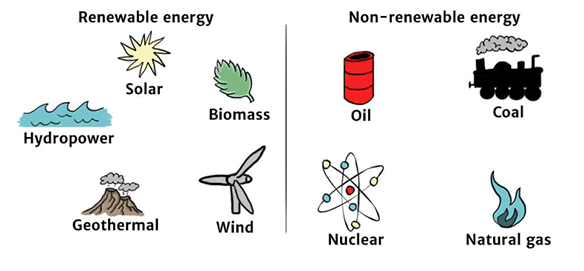 Renewable and Non- Renewable Energy Sources
Try yourself: Which one of the following type of resource is iron ore?
3. On the Basis of Ownership
- Individual Resources: These are owned privately by individuals.
- Community Owned Resources: Resources that are available to all community members.
- National Resources: These belong to the nation as a whole. All resources technically belong to the nation.
- International Resources: Resources found beyond 200 km of the Exclusive Economic Zone in oceans. Accessing these requires permission from international institutions.
4. On the Basis of the Status of Development
- Potential Resources: These are found in a region but are not yet used.
- Developed Resources: Resources that have been assessed for their quality and quantity and are ready for use.
- Stock: Resources that have been identified but cannot be used due to a lack of technology.
- Reserves: These are resources that are assessed and can be used with current technology, but their use has not yet started.
Development of Resources
Resources are vital for human survival. It was believed that resources are free gifts of nature, so, human beings used them indiscriminately, and this has led to the following major problems:
(a) Depletion of resources to satisfy the greed of a few individuals.
(b) Accumulation of resources in a few hands divides society into rich and poor.
(c) Indiscriminate exploitation of resources has led to global ecological crises such as global warming, ozone layer depletion, environmental pollution, and land degradation.
- For a sustained quality of life and global peace, an equitable distribution of resources has become essential.
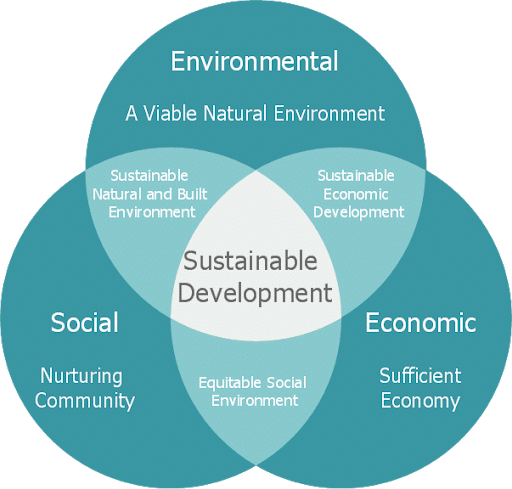
- To use resources judiciously, we need to adopt sustainable economic development.
- Sustainable economic development means development should take place without damaging the environment, and development in the present should not compromise with the needs of future generations.
Rio de Janeiro Earth Summit, 1992
- Took place in June 1992 in Rio de Janeiro, Brazil.
- Addressed global environmental and socio-economic challenges.
- Adopted the Declaration on Global Climatic Change and Biological Diversity.
- Supported global Forest Principles.
Agenda 21
- Approved at the 1992 Earth Summit.
- Concentrated on global sustainable development.
- Aims to achieve worldwide sustainable development.
- A key goal of Agenda 21 is for each local government to create its own local Agenda 21.
Resource Planning
- Resource planning is essential for the efficient and sustainable use of resources.
- India's diverse regions have varying availability of resources-some rich in certain resources but lacking in others.
- Example regions:
- Jharkhand, Chhattisgarh, Madhya Pradesh: Rich in minerals and coal.
- Arunachal Pradesh: Abundant in water resources, but underdeveloped infrastructure.
- Rajasthan: Rich in solar and wind energy, but water-scarce.
- Ladakh: Culturally rich but lacks water, infrastructure, and minerals.
- Balanced resource planning is needed at national, state, regional, and local levels to address these disparities.
Resource Planning in India
- Resource planning is a detailed processthat includes:
1. Identifying and listing resources across different regions. This involves surveying and mapping to assess the quantity and quality of these resources.
2. Establishing a planning system that employs suitable technology, skills, and organisations for resource development.
3. Ensuring that these resource development plans align with the broader national development goals. - Simply having resources isn't enough; we need technological and institutional progress for development.
- Many resource-rich regions are economically backward.
- Historically, the exploitation of these regions shows the need for technology and institutional growth.
- Since Independence, India has focused on resource planning for balanced development, integrating technology, human resources, and historical experiences.
- Resource planning has been a focus since the First Five-Year Plan. Resources alone do not guarantee development; technology and institutions are key.
- For instance, Jharkhand, Chhattisgarh, and Madhya Pradesh are rich in minerals and coal, while some areas with fewer resources are economically developed.
- The cold desert of Ladakh is isolated, rich in culture, but lacks water, infrastructure, and essential minerals.
Conservation of Resources
- Resources are essential for any development activity. Irrational consumption and over-utilization of resources can cause socio-economic and environmental issues. Resource conservation at various levels is crucial to prevent these problems.
- Historical Concern:
- Past leaders, like Gandhiji, highlighted the importance of conserving resources.
- Gandhiji believed there is enough for everyone's needs, but not for greed, and saw greed and exploitative technology as major causes of resource depletion.
- He advocated for production by the masses as a way to ensure sustainable resource use
Land Resources
- Land is a natural resource of great importance. It supports vegetation, wildlife, human life, economic activities, transport, and communication.
- However, land is a limited resource, so careful planning is essential for its various uses.
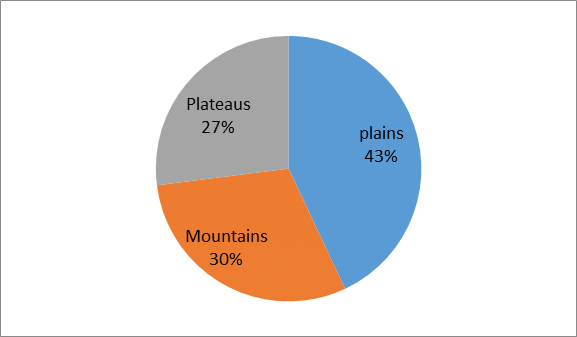 Land under Important Relief Features in India
- About 43 per cent of the land area is plain, which provides facilities for agriculture and industry.
- About 30 per cent of the total surface area of the country is mountainous which ensure the perennial flow of some rivers and provide facilities for tourism and ecological aspects.
- About 27 per cent of the area of the country is the plateau region that possesses rich reserves of minerals, fossil fuels and forests.
Land Utilisation
Land resources are used for the following purposes:
- Forests: Large areas of land are set aside as forests.
- Land not available for cultivation: This includes barren land, wasteland, and land used for buildings, roads, and factories.
- Other uncultivated land (excluding fallow land): This consists of permanent pastures, grazing lands, and land with miscellaneous tree crops and groves, as well as culturable waste land that has remained uncultivated for over 5 years.
- Fallow lands:
- Current fallow: Land that has not been cultivated for up to one year.
- Other than current fallow: Land that has remained uncultivated for 1 to 5 years.
- Net sown area: This refers to the land where crops are sown and harvested.
- Gross cropped area: This is the total area sown, including areas that are sown more than once in a year, plus the net sown area.
Land Use Pattern in India
The use of land is determined by:- Physical factors: include topography, climate, and soil types.
- Human factors: cover population density, technology, culture, and traditions.
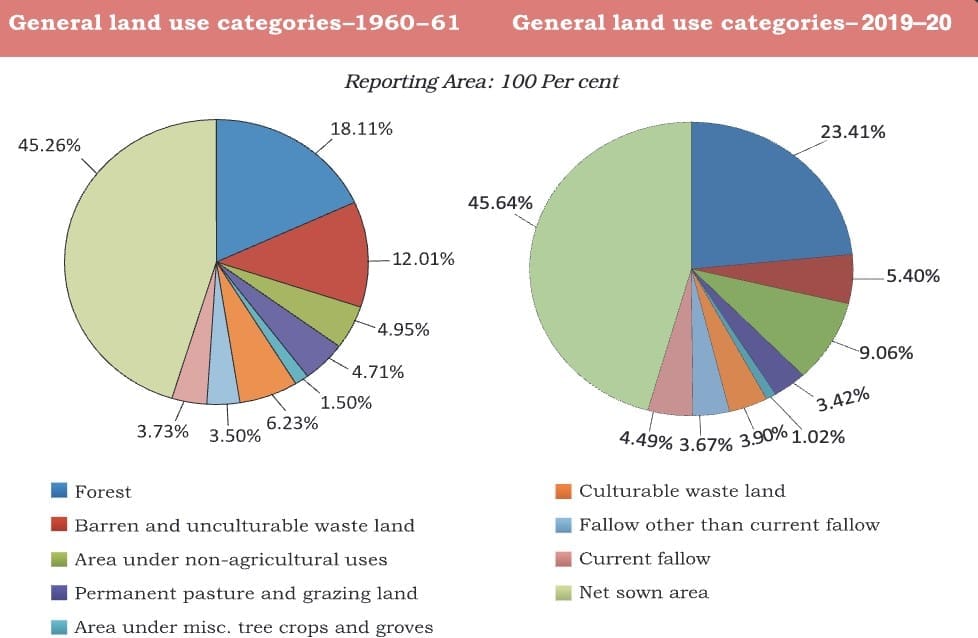
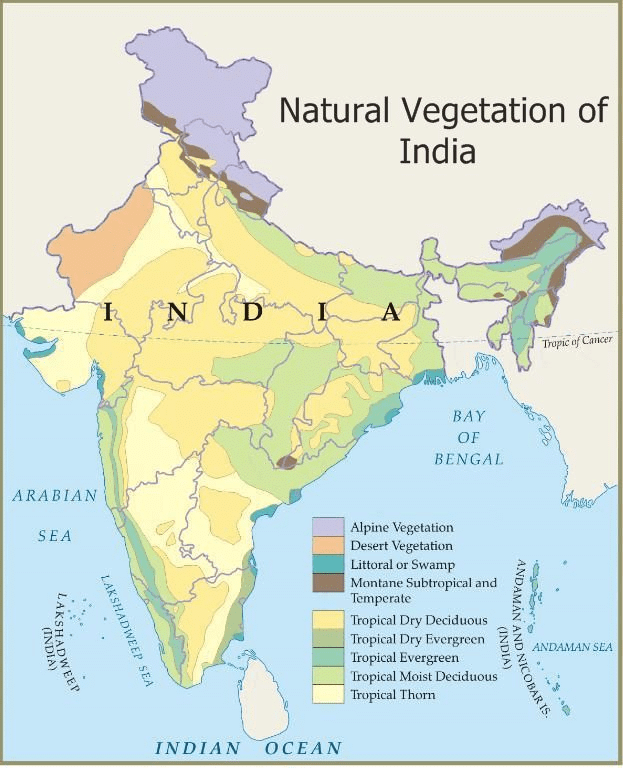
Geographical Overview
- Total area of India: 3.28 million sq km.
- Land use data is available for only 93% of this area, as many northeastern states, except Assam, have not fully reported their data. Additionally, certain regions of Jammu and Kashmir under Pakistan and China remain unsurveyed.
- The area of permanent pasture has decreased, raising concerns about feeding India's large cattle population.
- Most lands classified as current fallow are of low quality or too expensive to cultivate, leading to cultivation only once or twice every two to three years.
- If these lands are included, the Net Sown Area (NSA) in India is about 54%of the total reporting area.
- Net Sown Area varies greatly by state: over 80% in Punjab and Haryana, but below 10% in Arunachal Pradesh, Mizoram, Manipur, and the Andaman & Nicobar Islands.
- Forest area is significantly lower than the desired 33% of geographical area, as stated in the National Forest Policy (1952). Many people rely on forests for their livelihoods.
- Waste land includes rocky, arid, and desert regions; non-agricultural land is used for settlements, roads, railways, and industry.
Land Degradation and Conservation Measures
- Land degradation is a serious problem caused by human activities such as deforestation, overgrazing, mining, and quarrying.
- About 95% of our basic needs for food, shelter, and clothing rely on land, highlighting the importance of conserving it for future generations.
- Human actions have not only led to the degradation of land but have also sped up the damage caused by natural forces.
- In regions like Jharkhand, Chhattisgarh, Madhya Pradesh, and Odisha, mining has resulted in significant land degradation due to deforestation.
- In areas such as Gujarat, Rajasthan, Madhya Pradesh, and Maharashtra, overgrazing is a major contributor to land degradation.
- Excessive irrigation in Punjab, Haryana, and Western Uttar Pradesh causes waterlogging, increasing salinity and alkalinity in the soil.
- Mineral processing, such as grinding limestone for the cement industry and calcite for ceramics, produces a large amount of dust that hampers water absorption into the soil.
- Industrial waste is a significant source of land and water pollution in many regions.
Soil as a Resource
Soil is the most important renewable natural resource. It is the medium of plant growth and supports different types of living organisms on the earth.
Factors responsible for Soil Formation
- It takes millions of years to create just a few centimetres of soil.
- Factors such as relief, parent rock, climate, vegetation, and time play significant roles in soil formation.
- Temperature changes, the movement of water, wind, and glaciers all help shape the soil.
- Chemical and organic changes occurring in the soil are also vital for its development.
Based on these factors, soils in India are classified into different types according to their colour, thickness, texture, age, and chemical and physical properties.
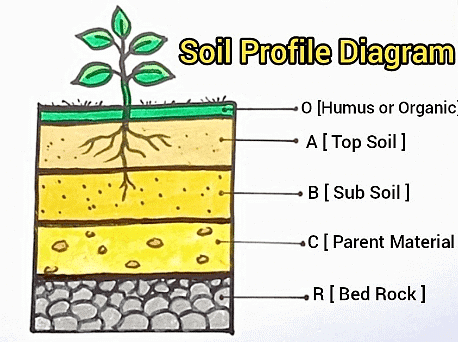
Classification of Soils
On the basis of the factors responsible for soil formation, color, thickness, texture, age, chemical and physical properties, the soils of India can be classified in different types:
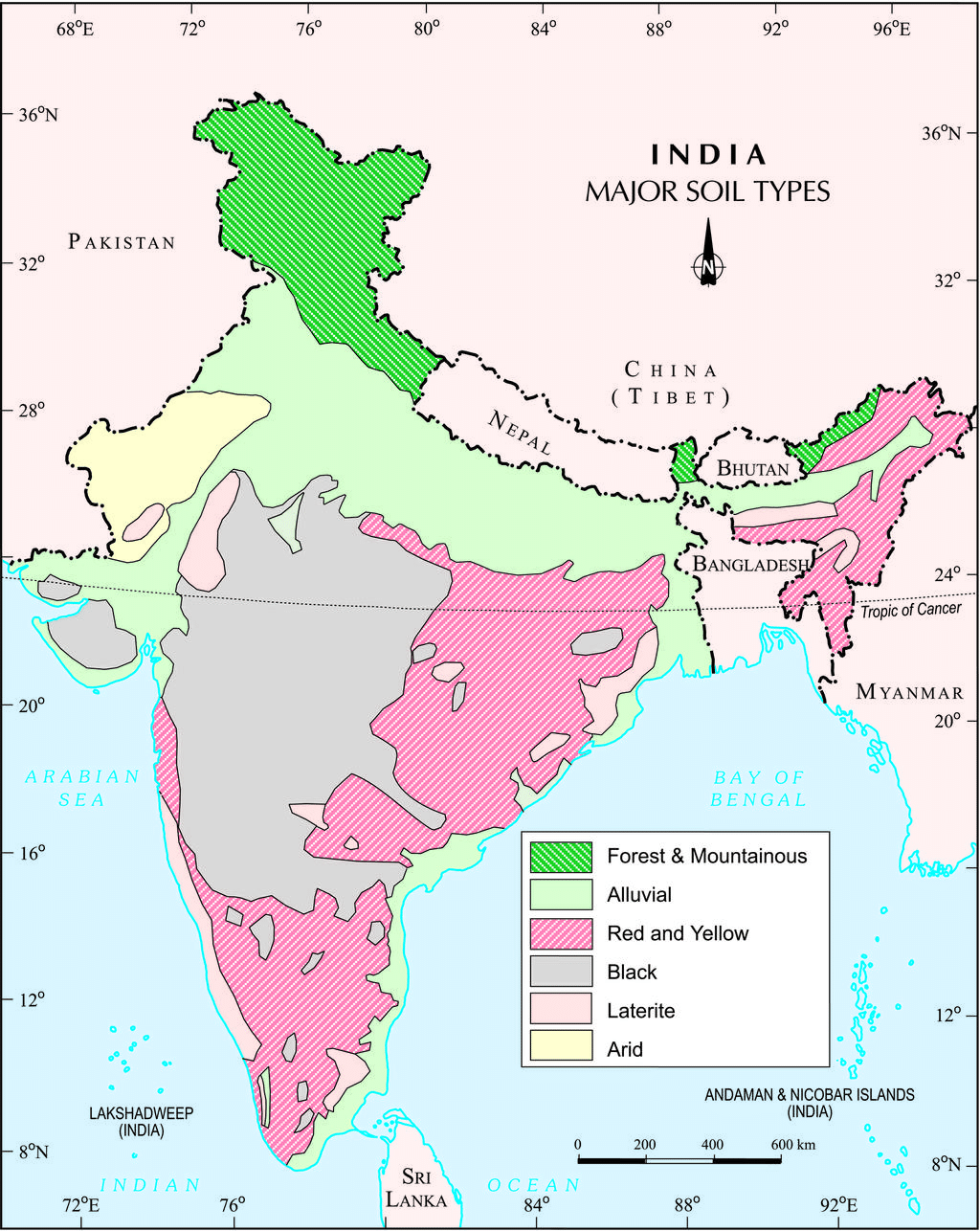 India: Major Soil Types
1. Alluvial Soils
- Alluvial soil is the most widespread and vital type of soil found in India, mainly located in the northern plains.
- It is formed by the deposits from the Indus, Ganga, and Brahmaputra rivers, and is also seen in Rajasthan, Gujarat, and the eastern coastal plains (deltas of Mahanadi, Godavari, Krishna, and Kaveri rivers).
- The soil consists of sand, silt, and clay in different amounts, with coarser particles near the piedmont areas like Duars, Chos, and Terai.
- Alluvial soils are divided by age into old alluvial (Bangar) and new alluvial (Khadar):
- Bangar: Contains more kanker nodules, is coarser, and less fertile.
- Khadar: Finer particles, more fertile, and better suited for farming.
- These soils are very fertile, rich in potash, phosphoric acid, and lime, making them ideal for growing sugarcane, paddy, wheat, and pulse crops.
- Regions with intensive cultivation and high population density often feature alluvial soils.
- Alkaline soils in drier areas can become productive with appropriate treatment and irrigation.
 Alluvial Soil
2. Black Soil
- Black Soil, also known as regur soil, is identified by its black colour.
- This soil is excellent for cultivating cotton, which is why it is often referred to as black cotton soil.
- The formation of black soil is affected by the climate and the parent rock material, primarily derived from lava flows.
- It is commonly found in the Deccan trap region, which includes areas like Maharashtra, Saurashtra, Malwa, Madhya Pradesh, and Chhattisgarh.
- This type of soil extends southeast through the Godavari and Krishna valleys.
- Black soil is made up of clayey material and is known for its ability to retain moisture.
- It is rich in essential nutrients like calcium carbonate, magnesium, potash, and lime, but is typically low in phosphoric content.
- In hot weather, this soil develops deep cracks, which helps with aeration.
- When wet, it becomes sticky and is challenging to work with, unless tilled after the first shower or during the pre-monsoon period.
 Black Soil
Try yourself: In which of the following States is black soil found?
3. Red and Yellow Soils
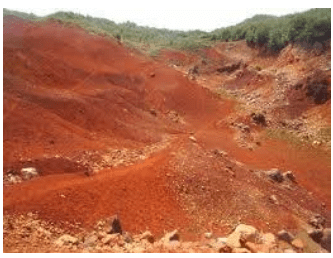 Red Soil
- Red soil develops on crystalline Igneous rocks.
- Found in areas with low rainfall in the eastern and southern parts of the Deccan plateau, as well as in parts of Odisha, Chhattisgarh, the southern parts of the middle Ganga plain, and along the piedmont zone of the Western Ghats.
- These soils acquire a reddish color due to iron diffusion in crystalline and metamorphic rocks, appearing yellow in hydrated form.
4. Laterite Soils
 Laterite Soil
- Laterite Soil derives its name from the Latin word 'later', meaning brick.
- Develops under tropical and subtropical climates with alternating wet and dry seasons.
- Result of intense leaching due to heavy rainfall.
- Typically deep to very deep, acidic (pH < 6.0), and generally deficient in plant nutrients.
- Found predominantly in southern states, Western Ghats region of Maharashtra, Odisha, parts of West Bengal, and North-east regions.
- In areas with deciduous and evergreen forests, lateritic soils are humus-rich; in sparse vegetation or semi-arid environments, they are humus-poor.
- Prone to erosion and degradation due to landscape position.
- Useful for growing tea and coffee, especially in Karnataka, Kerala, and Tamil Nadu with proper soil conservation techniques.
- Red laterite soils in Tamil Nadu, Andhra Pradesh, and Kerala are particularly suitable for crops like cashew nut.
5. Arid Soils
- Arid soils can be red or brown in colour.
- They are mostly sandy and contain salt.
- In certain regions, high salt levels allow common salt to form through evaporation.
- The dry climate and high temperatures lead to quick evaporation, resulting in low levels of humus and moisture.
- As calcium increases, the Kankar layer forms in the lower soil, making it hard for water to seep in.
- These soils tend to have low levels of phosphoric content.
- During hot weather, they develop deep cracks that help aerate the soil.
- With proper irrigation, these soils can support farming, as seen in western Rajasthan.
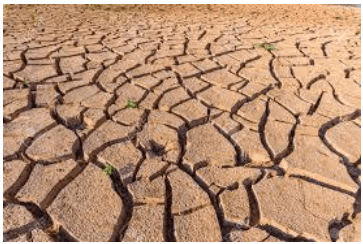 Arid Soil
6. Forest Soils
- These soils are found in hilly and mountainous areas with plenty of rainfall and forests.
- The texture of these soils differs depending on the mountainous region where they develop.
- They are typically loamy and silty on valley sides and coarse-grained on the upper slopes.
- In the snow-covered regions of the Himalayas, these soils undergo denudation and are acidic with low humus content.
- The soils located in the lower parts of the valleys, especially on river terraces and alluvial fans, are quite fertile.
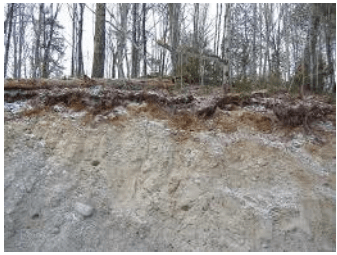 Forest Soil
Soil Erosion and Soil Conservation
- Soil Erosion: This is the process of losing soil cover and having it washed away. Soil formation and erosion usually happen together, keeping a balance. However, this balance can be disrupted by human actions, like deforestation, over-grazing, construction, mining, and natural forces such as wind, glaciers, and water.
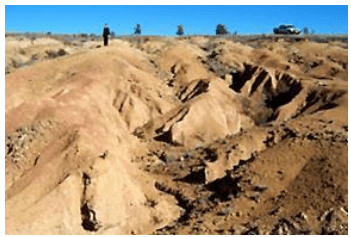
- Gully Erosion: When water flows over clay-rich soils, it cuts deep channels, making the land unsuitable for farming. Such areas are often called bad land or ravines, particularly in the Chambal basin.
- Sheet Erosion: This occurs when water spreads over large areas, washing away the topsoil.
- Wind Erosion: Wind can blow loose soil off flat or sloped land, taking away the top layer of soil.
- Defective Farming Methods: Poor farming practices can lead to soil erosion. For instance, ploughing up and down slopes creates channels that allow water to flow quickly, causing erosion.
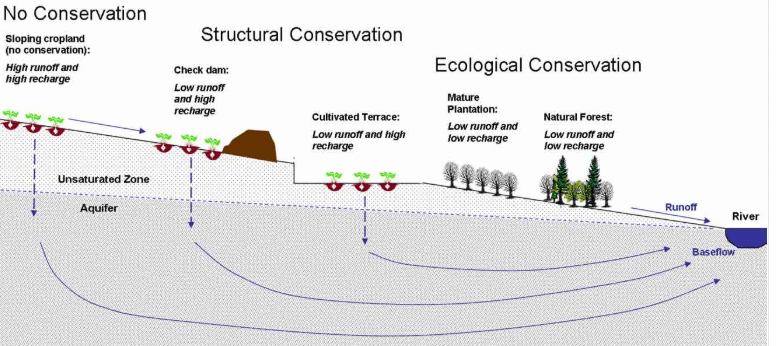
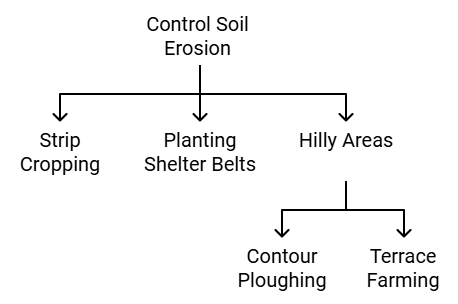
- Contour Ploughing: This method involves ploughing along the contours of the land to slow down water flow and reduce erosion.
- Terrace Cultivation: This technique involves cutting steps into slopes to create terraces, which help to limit erosion. It is commonly found in the Western and Central Himalayas.
- Strip Cropping: This involves dividing large fields into strips with grass sections between them to reduce wind impact and erosion.
- Shelter Belts: Rows of trees are planted to act as barriers, stabilising sand dunes and desert areas. This is especially effective in western India, where these belts have significantly helped in stabilising the landscape.
Try yourself: Materials in the environment which have the potential to satisfy human needs but human beings do not have appropriate technology to access them are called:
Short Answer Questions: Resources & Development
Q1. Distinguish between Potential Resource and Stock with the help of examples.
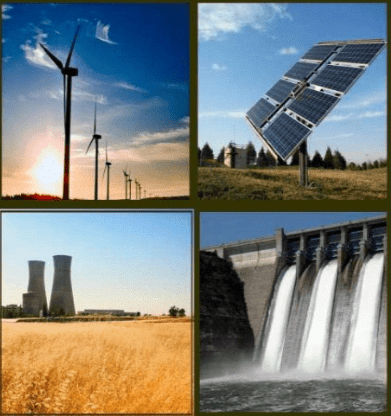 Example of Potential Resources
Ans: Potential Resource: A potential resource refers to resources that exist in a region but are not currently utilised. They may be:
- Not easily accessible
- Not fully developed for present use
Examples of Potential Resources:
- The states of Rajasthan and Gujarat have significant potential for wind and solar energy, yet these resources remain underdeveloped.
- The hot springs in the Himalayan region could provide geothermal energy, but development is lacking. Additionally, mineral deposits are buried in mountains and oceans, awaiting exploitation.
Stocks: Stocks are materials in the environment that can satisfy human needs, but we currently lack the technology to access them.
Examples of Stocks:
- Water is made up of hydrogen and oxygen, which could be a rich energy source. However, we do not yet have the technical knowledge to utilise these gases effectively.
- With advancements in desalination technology, ocean water could become drinkable. Yet, we currently lack the expertise and funding for such projects.
Q2. What does the term 'sustainable economic development' mean? How can we eradicate irrational consumption and over-utilization of resources?
Ans: Sustainable economic development refers to growth that meets the needs of the present without harming the environment or compromising the ability of future generations to meet their own needs.
To eliminate irrational consumption and the overuse of resources, we can:
- Focus on the conservation of resources.
- Recognise that irrational consumption leads to various socio-economic and environmental issues.
- Implement proper management strategies to ensure resources are preserved for future generations.
- Stocks, on the other hand, are materials in the environment that have the capacity to fulfill human needs but are not utilized due to lack of appropriate technology.
- In other words, potential resources have the potential to be utilized in the future with the development of technology and infrastructure, while stocks can be accessed currently but require the right technology to be utilized.
Explanation:
Option A is the correct answer because it accurately describes the difference between potential resources and stocks. It highlights that potential resources are materials that have not been utilized yet due to lack of accessibility or development, while stocks are materials that can be accessed currently but require appropriate technology for utilization. This explanation helps clarify the distinction between the two terms and provides a clear understanding of their differences.
Q3. List the problems caused due to the indiscriminate use of resources by human beings.
Ans: Indiscriminate use of resources by humans has resulted in several significant problems:
- Depletion of resources to satisfy the greed of a few individuals.
- Wealth accumulation in the hands of a few, leading to a divide in society between the rich and the poor.
- Uncontrolled exploitation of resources has caused serious ecological issues, including global warming, ozone layer depletion, environmental pollution, and land degradation.
Q4. Why does the pattern of the net sown area vary from one state to another?
Ans: The pattern of the net sown area varies significantly across different states in India:
- In Punjab and Haryana, over 80% of the total area is cultivated, benefiting from favourable geographical conditions such as climate and soil.
- The Green Revolution has also contributed to increased cultivation in these regions.
- Conversely, states like Manipur, Mizoram, Arunachal Pradesh, and the Andaman and Nicobar Islands have less than 10% of their area under cultivation.
- The low net sown area in these states is due to:
- Topographical constraints
- Unfavourable climate
- Socio-economic factors
Q5. Analyze the four main factors which help in the formation of soil.
Ans: Relief, nature of parent rock, climate, vegetation, and time are key factors in the formation of soil.
These factors contribute to the weathering of parent rocks through:
- Climatic factors: Changes in temperature, wind, frost action, and rainfall.
- Natural forces: Actions of running water, wind, and glaciers.
The four main factors of soil formation are:
- Relief: Influences weathering and erosion.
- Climate: Affects the rate of rock denudation and influences weathering.
- Nature of parent rock: Determines soil colour, texture, and mineral content.
- Time: Influences soil maturity, often taking millions of years to form just a few centimetres.
Q6. What is the main cause of land degradation in Gujarat, Rajasthan and Madhya Pradesh? How can it be checked?
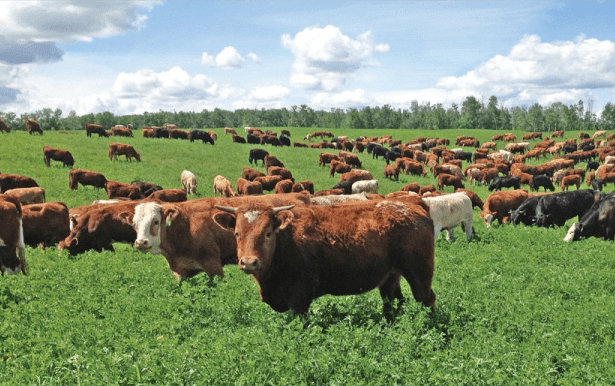
Ans: The main cause of land degradation in Gujarat, Rajasthan, and Madhya Pradesh is primarily due to overgrazing by a large population of cattle. This practice has led to significant damage to the grasslands in these regions.
To address this issue, several measures can be implemented:
- Planting trees and managing grazing areas effectively.
- Implementing controls on grazing by designating specific areas for this purpose.
Q7. Where was Agenda 21 signed? What were the main provisions of Agenda 21?
Ans: Agenda 21 was signed in 1992 at the United Nations Conference on Environment and Development (UNCED) in Rio de Janeiro, Brazil. The main provisions of Agenda 21 include:
- Elimination of poverty and hunger worldwide.
- Improvement of health and education, particularly in literacy.
- Protection and restoration of ecosystems that support life.
Q8. Do you think the future generation may not have sufficient resources as compared to the present generations? Why?
Ans: Yes, the future generation may not have sufficient resources compared to the present generations.
- This is largely due to human activities such as deforestation and increased agriculture and mining.
- These activities lead to the degradation of land and the environment.
- The rapid consumption of fossil fuels may result in their depletion, as they are non-renewable.
- If we continue at this pace, there may not be enough resources left for future generations.
Short Question Answer
Q 1. Distinguish between renewable and non-renewable resources.
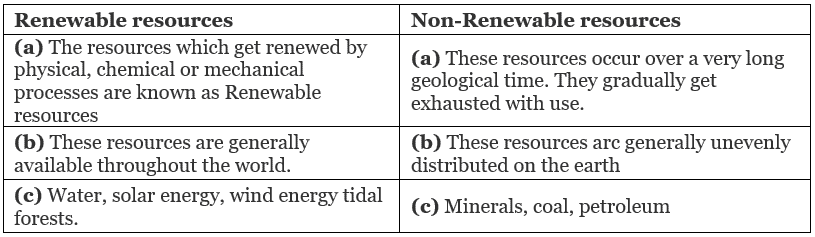
Q 2. Explain the resources on the basis of origin and exhaustibility.
Resources on the basis of origin:
- Biotic: Those resources which are available in the biosphere and have life.
Example: Human beings, flora and fauna etc.- Abiotic: All those things which are non-living are called abiotic resources.
Example: Rocks, soils, and minerals.Resources on the Basis of Exhaustibility:
- Renewable resources: The resources which can be renewed are Renewable resources.
Example: Water, forest, wind, etc- Non-renewable resources: These resources occur over a very long time and get exhausted.
- Example: Minerals and fossil fuels.
Q 3. What is soil erosion? Write two human activities that lead to soil erosion.
The denudation of the soil cover and subsequent washing down is described as soil erosion.
Two human factors leading to soil erosion are:
- Deforestation: Due to heavy deforestation, soil erosion is increasing.
- Overgrazing: In many regions, people still practice grazing cattle, goats, and sheep. Gradually this leads to soil erosion.
Q 4. Explain any three steps that can be taken to solve the problem of land degradation?
(a) Contour Ploughing: Ploughing along the contour lines can decelerate the flow of water down the slopes.
Contour Ploughing(b) Terrace cultivation: Steps can be cut out on the slopes, making terraces. Terrace cultivation restricts erosion.
(c) Strip cropping: Large fields can be divided into strips. Strips of grass are left to grow between the crops. This breaks up the force of the wind reducing its effect.
Q 5. Explain the role of humans in resource development.
- Humans are at the center of resource development. Actually, all resources become resources only when they are put to use by humans.
- It is humans who make natural things usable with help of technology. Had no technology been there, the development would not have been possible.
- There are regions where natural resources are in abundance but the regions are not developed, for example, Africa.
- When humans interact with Nature through technology and create institutions, they accelerate the economic development of the region, for example, Japan.
Q 6. Explain the importance of the conservation of resources.
Conservation of resources is necessary because of the following reasons:
(a) Resources are vital for any developmental activity but irrational consumption and overutilization of resources may lead to socio-economic and environmental problems. To overcome these problems, resource conservation at various levels is important.
(b) If resources are not conserved at this point in time, then our future generations will be left with no resources at all. So it is very important to think about the conservation of resources.
Q 7. Why is it important to raise the land area under forests?
It is very important to raise the area under forest because forests are essential for the maintenance of the ecological balance. The livelihood of millions of people who live on the fringes of these forests depends upon it. Forest also provides a number of goods that are required for industry and medicines etc. Forest also helps in soil conservation and rainfall.
Q 8. Describe any three main characteristics of the arid soil of India.
Characteristics of Arid soils in India are:
- They range from red to brown in colour.
- They are generally sandy in texture and saline in nature.
- In some areas, the salt content is higher and common salt is obtained by evaporation of water.
- Due to the dry climate, high temperature, evaporation is faster and the soil lacks humus and moisture.
Q 9. Highlight any three problems associated with the indiscriminate use of resources by human beings.
Indiscriminate use of resources creates the following problems:
- Global ecological crises such as global warming.
- It has also led to the depletion of the ozone layer.
- It has also caused environmental pollution and land degradation.
The resultant threat to ecology and the environment has put the future of our planet in danger. Natural disasters have become very frequent. Many species of flora and fauna have already become extinct.
Q 10. "Consequences of environmental degradation do not respect national or state boundaries." Justify the statement.
As the environment belongs to the Earth, its impact felt by the whole planet. For example, if carbon dioxide is being released by some rich countries global warming is affecting the lives of all the people on the planet. Air pollution moves along with air and cannot be restricted to any place or country.
Ozone layer depletion has serious consequences for people all over the world.
Q 11. Describe any three types of soil available in India.
Three important soils of India are:
(a) Alluvial Soils
- It is the most important and widespread soil of India. The entire northern plain is made of this soil.
Alluvial soil- Alluvials have been deposited by three important Himalayan rivers- Ganga, Brahmaputra, and Indus.
- These soils consist of various proportions of sand, silt, and clay.
- These are of two types: Khadar and Bangar.
- They contain potash, phosphoric acid, and limestone.
(b) Black Soil:
- These soils are black in colour and are also known as Regur or cotton soils.
- This type of soil is found in the Deccan plateau region and is made up of lava flows.
- They are well known for their capacity to hold moisture.
- They are rich in calcium carbonate, magnesium, potash, and lime.
(c) Laterite Soil:
- Laterite soil develops in areas of high temperature and heavy rainfall. This is the result of intense leaching. The Humus content of the soil is very low.
- These are found in Karnataka, Kerala, Tamil Nadu, Madhya Pradesh, and the hilly areas of Orissa and Assam.
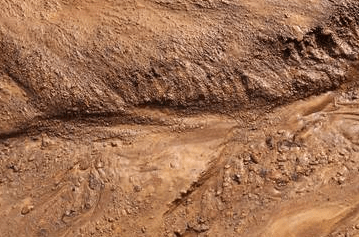
Q 12. What steps can be taken to control soil erosion in hilly areas?
- Ploughing along the contour lines can decelerate the flow of water down the slopes. This is contour ploughing.
- Steps can be cut out on the slopes mapping terraces. Terrace cultivation restricts erosion.
- Strip cropping is a very effective method of soil conservation or controlling soil erosion. Large fields are divided into strips and strips of grass are left to grow between the crops.
Q 13. Mention any three characteristics of black soil.
- The black soils are made of clayey material and are well-known for their capacity to hold moisture.
- They are rich in soil nutrients, such as calcium carbonate, magnesium, potash, and lime. But black soils are poor in phosphoric contents.
- Black soil develops deep cracks during summer which helps in the proper aeration of the soil. These soils are sticky when wet and difficult to work on unless tilted just after the first shower.
Q 14. "India's vast and diverse size is the most important resource." Support the statement.
India has land under a variety of relief features such as plains, plateaus, mountains, and islands. About 43 per cent of land areas are plain, which provides facilities for agriculture and industry. Mountains account for 30 per cent of the total surface area of the country and ensure the perennial flow of some rivers, provide facilities for tourism and ecological aspects. About 27 per cent of the area is the plateau region. It possesses rich reserves of minerals, fossil fuels, and forests.
Q 15. Suggest any three measures of soil conservation.
The three measures of soil conservation are:
(a) Contour ploughing: ploughing along the contour lines can lead to soil conservation.
(b) Terrace cultivation: steps can be cut out on the slopes making terraces. Terrace cultivation leads to soil conservation.
(c) Creating shelterbelts: planting of trees to create shelter. Rows of such trees are called shelterbelts.
Long Answer Type Questions
Q 1. What does the term 'land degradation' mean? Which human activities have contributed significantly to land degradation? Suggest measures to solve the problems of land degradation.
OR
What are the reasons for land degradation? Describe any four measures to conserve land.
Continuous use of land over a prolonged period of time, without taking necessary steps to conserve and manage it, has resulted in land degradation, i.e., qualitative degradation of land. The quality of the land becomes poorer due to gradual loss of fertility due to unplanned use. Unplanned use and over-exploitation by humans have led to the degradation of land and have also aggravated the pace of natural forces to cause damage to the land.
Land Degradation
- Human activities such as deforestation, over-grazing, mining, and quarrying have contributed significantly to land degradation.
- Faulty methods of cultivation and over-irrigation have also caused land degradation in some areas.
- Mineral processing like grinding of limestone for cement industry, industrial effluents, and wastes cause pollution and lead to land degradation.
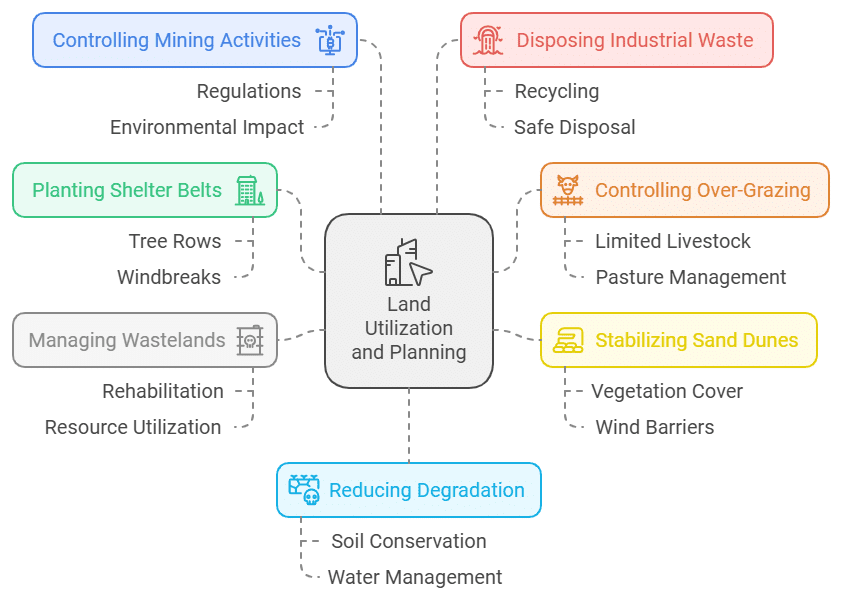
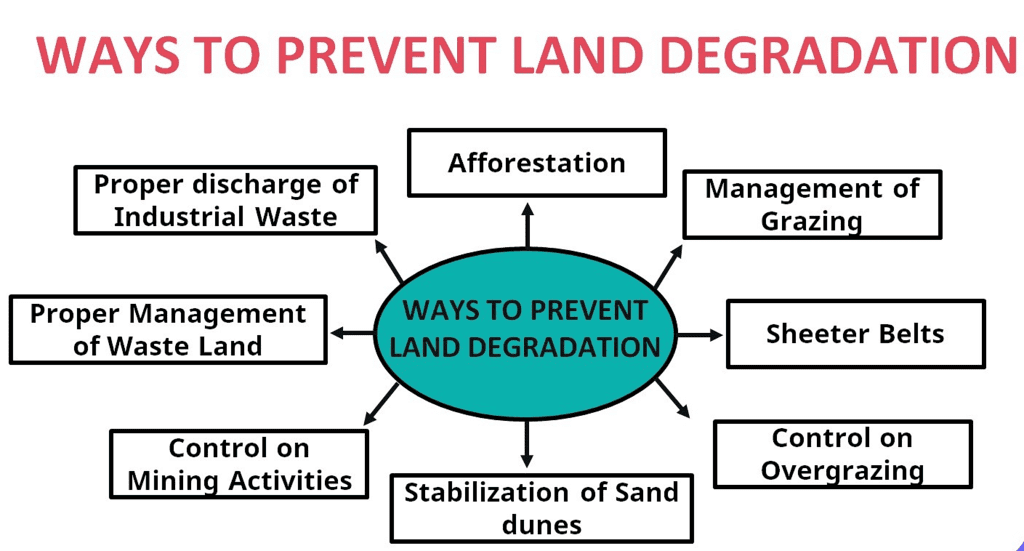
The problem of land degradation may be tackled by adopting certain measures to conserve land:
(a) Afforestation or large-scale plantation of trees and proper management of grazing.
(b) Planting of shelterbelts of plants and stabilization of sand dunes by growing thorny bushes in windy, arid areas like a desert of Rajasthan.
(c) Proper management of wasteland and control of mining activities.
(d) Proper discharge and disposal of industrial effluents and waste after treatment in industrial and suburban areas.
Q 2. What is resource planning? Why is resource planning essential? Explain three reasons.
Resource planning is the widely accepted strategy for judicious use of resources.
It is a complex process that involves:(i) Identification and inventory of resources across the regions of the country through surveying, mapping, and qualitative and quantitative estimation and measurement of resources.
(ii) Evolving a planning structure endowed with appropriate technology, skill, and institutional set-up for implementing resource development plans.
(iii) Matching the resource development plans with overall national development plans.
Resource Planning is essential mainly because of the following reasons:
- Resources are not equally distributed throughout the world. Within a country also some regions may be rich in resources and self-sufficient in terms of availability of resources while some other regions may have an acute shortage of some vital resources. There are regions that are rich in certain types of resources but are deficient in some other resources.
- Some regions in the country that are rich in natural resources may be included among the economically backward regions. On the contrary, there are some regions that have a poor resource base but are economically developed.
- Technology, quality of human resources, and the historical experiences of the people influence resource development. In a country like India which has enormous diversity in the availability of resources, resource planning is indispensable.
Q 3. Explain any four human activities which are mainly responsible for land degradation in India.
Continuous use of land over a prolonged period of time without taking necessary steps to conserve and manage it has resulted in land degradation.
Four human activities responsible for land degradation in India are as follows:
- In states like Jharkhand, Chhattisgarh, Madhya Pradesh and Orissa deforestation due to mining has caused severe land degradation. Mining sites are dug, drilled or quarried, and abandoned after excavation work is over, leaving the land overburdened and in a highly degraded state.
- Mineral processing like grinding of limestone for cement industry and calcite and soapstone for ceramic industry generates the huge quality of mineral dust in the atmosphere which ultimately settles down on the land. It retards the process of infiltration of water into the soil, thus, degrading the land. Discharge of industrial effluents and wastes cause pollution and land degradation in industrial regions.
- In states like Gujarat, Rajasthan, Madhya Pradesh, and Maharashtra overgrazing is one of the main reasons for land degradation.
- In Punjab, Haryana, and Western Uttar Pradesh over-irrigation is responsible for land degradation. It leads to waterlogging which in turn increases salinity and alkalinity in the soil and reduces its fertility.
Q 4. Give the importance of soil. Explain any three factors responsible for soil formation.
Soil is the medium of plant growth and supports different types of living organisms, including animals and human beings, by providing them with food for their survival. Human existence and settlement are determined by soil fertility as it determines the agricultural productivity of an area. Soil determines the natural vegetation and type of crop production of an area. It also influences the land use of an area. Areas of fertile soil are agriculturally productive and densely populated. It is one of the most important renewable natural resources. Relief, nature of parent rock or bedrock, climate, vegetation, and other forms of life (especially decomposers), and time are important factors in the formation of soil.
The three most important factors of soil formation are:
- Nature of parent rock. It influences the colour and texture of the soil. The mineral content of the soil also depends on the parent rock from which it is formed.
- Climate influences the rate and types of weathering and erosion of the rocks. Weathering of the parent rocks due to climatic factors and natural forces leads to the disintegration of rocks which leads to the formation of soil.
- Time determines the maturity of the soil. The soil is a living system. It takes millions of years to form soil up to a few centimetres in depth.
Q 5. Classify resources on the basis of ownership into four categories. Mention the main features of each.
On the basis of ownership, resources can be classified into the following categories:
(a) Individual resources are owned privately by individuals or groups of individuals. Plots of lands owned by farmers, pasture lands, ponds, orchards, water in wells, are examples of resources owned by individuals in the villages. Plots of land, houses, cars and other property are some examples of individual resources in urban areas. Plantations are also individual resources. Its plot of land, management, revenue, products, and profits are under individual ownership.
(b) Community-owned resources are accessible to all members of the community. These resources can be used by all people living in the area. Picnic spots, maidans, village ponds, grazing grounds, burial grounds, etc., in villages; playgrounds, public parks, markets, etc in urban areas are examples of community-owned resources.
(c) National Resources mean all resources owned by a nation. All the forests, wildlife, minerals, water resources, land within the political boundaries of a nation, and oceanic area up 12 nautical miles, i.e., 19.2 km, from the coast termed as territorial water, and resources therein belong to the nation and are termed as national resources.
(d) International Resources are under the jurisdiction and regulation of international organizations. The oceanic resources beyond 200 km of the Exclusive Economic Zone belong to open oceans and no individual country can utilize these without the concurrence of international institutions, e.g. manganese nodules in the bed of the Indian Ocean.
NCERT Solutions: Resources & Development
Q1. Multiple-Choice Questions
(i) Which one of the following is the main cause of land degradation in Punjab?
(a) Intensive cultivation
(b) Deforestation
(c) Over irrigation
(d) Overgrazing
Ans: (c) Over irrigation
Excessive irrigation in Punjab, Haryana, and western Uttar Pradesh causes waterlogging and increases soil salinity and alkalinity.
(ii) In which one of the following states is terrace cultivation practised?
(a) Punjab
(b) Plains of Uttar Pradesh
(c) Haryana
(d) Uttarakhand
Ans: (d) Uttarakhand
Terrace cultivation is practiced in hilly areas to reduce water runoff and soil erosion.
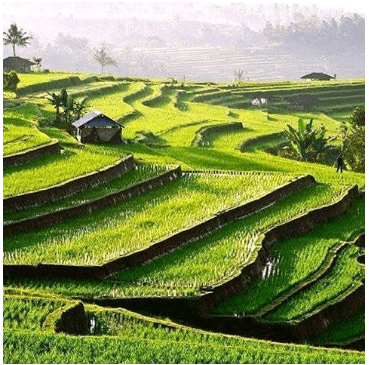 Terrace Cultivation
(iii) In which of the following states is black soil predominantly found?
(a) Uttar Pradesh
(b) Rajasthan
(c) Maharashtra
(d) Jharkhand
Ans: (c) Maharashtra
Black soil is found in Maharashtra, Madhya Pradesh, Gujarat, and Chhattisgarh, and extends along Godavari and Krishna valleys. It is ideal for cotton cultivation.
Q2. Answer the following questions in about 30 words.
(i) Name three states having black soil and the crop which is mainly grown in it.
Ans: The three states are
- Maharashtra
- Madhya Pradesh
- Gujarat
It is clayey, retains moisture, and is nutrient-rich. Cotton is the main crop grown in these soils due to their fertility.
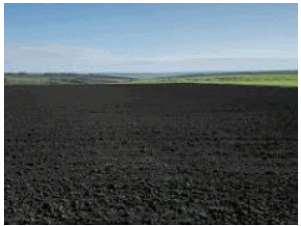 Black Soil
(ii) What type of soil is found in the river deltas of the eastern coast? Give three main features of this type of soil.
Ans: Alluvial soil occurs in the deltas of the Mahanadi, Godavari, Krishna, and Kaveri rivers. Its main features are-
- Alluvial soil is rich in potassium and phosphoric acid, and lime.
- It has a high water retention capacity.
- It is highly fertile soil.
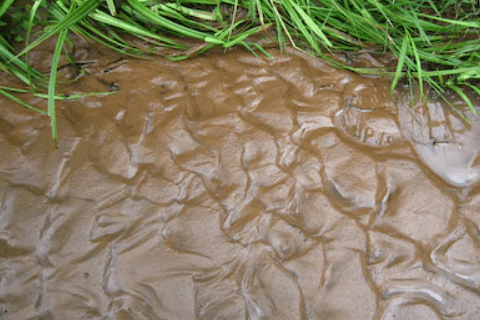 Alluvial Soil
(iii) What steps can be taken to control soil erosion in the hilly areas?
Ans: Some steps that can be followed to prevent soil erosion in hilly areas include:
- Terrace cultivation
- Contour ploughing
- Planting shelter belts and trees
- Strip cropping
Q3. Answer the following questions in about 120 words.
(i) Explain the land use pattern in India and why has the land under forest not increased much since 1960-61?
Ans:
(a) The land use pattern in India in 1960-61 and 2008-09 is given in the figure given below:
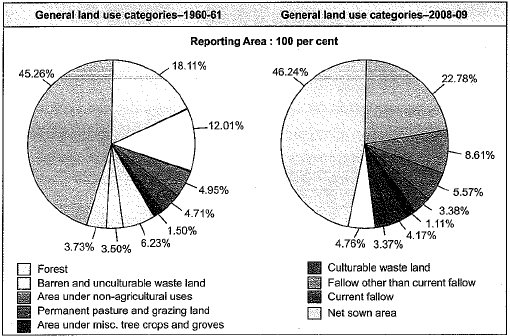 Source: Directorate of Economics and Statistics, Ministry of Agriculture, 2008 - 09
(b) From above it is clear that in 2008-09, the main uses are as mentioned below:
- Net sown area - 46.24%
- Forest - 22.78%
- The rest is used for other purposes such as non-agricultural uses, tree crops, groves, etc.
(c) The land under forest has shown only a marginal increase (0.98%). This is due to increasing population, industrialisation and urbanisation.
(ii) How have technical and economic development led to more consumption of resources?
Ans: (a) As technology improves with development, more resources are needed for production.
(b) According to Gandhi, the misuse of modern technology is a major cause of resource depletion worldwide.
(c) The advanced technology of colonial powers allowed them to exploit resources and dominate the countries they colonised.
(d) Resources only help in development if there is suitable technology and the right changes in the institutions of the country. India went through these stages during colonisation.
Example: In Punjab and Haryana, water resources are heavily used to increase irrigation and farming during dry seasons. This has led to a drop in water levels, causing problems for farmers.
Long Answer Questions: Resources & Development
Q.1. What are the steps involved in the complex process of resource planning? Why is resource planning important in the context of a country like India?
Ans. Resource planning is a complex process which involves:
(a) Identification of resources across the country through surveying, mapping and preparation of an inventory of resources through their quantitative and qualitative estimation and measurement.
(b) Develop a planning structure for resource development, taking into account technology, skill and infrastructure available for implementing the plans.
(c) Matching the resource development plans with overall national development plans. This involves systematic planning of the exploitation of resources. Resource planning is important in a country like India, which has enormous diversity in the availability of resources. While some regions are rich in certain types of resources, they may be deficient in some other types of resources. For example, a mineral-rich region may be poor in infrastructure or maybe socio-culturally backward and included in economically backward regions.
Some regions are self-sufficient in terms of availability of resources, while, on the other hand, there are regions that face an acute shortage of resources. Thus, for proper development, distribution, sharing, and utilization of resources, taking into consideration the technology, quality of human resources and historical experiences of the people, resource planning is essential for development. India has made concerted efforts to achieve the goals of resource planning right from the First Five-Year Plan launched after Independence.
Q.2. What are the main types of soil found in India? Which type of soil is the most widespread and important soil of India? Describe in detail about this soil type.
Ans. The main types of soil found in various parts of India are as follows:
(a) Alluvial soil.
(b) Black soil.
(c) Red and yellow soil
(d) Laterite soil
(e) Arid or Desert soil.
(f) Forest and Mountainous soil.
Alluvial soil is the most fertile, widespread and important soil of India.
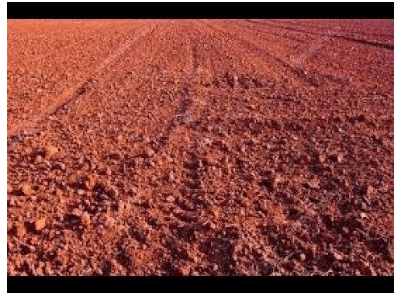 Laterite soil
They are riverine soil transported and deposited by the three great river systems - the Indus, the Ganga and Brahmaputra - which have formed the entire Northern Plains. They are also found in the deltas of the Mahanadi, the Godavari, the Krishna and the Kaveri rivers along the Eastern Coastal plains. They also extend in a narrow corridor to Rajasthan and Gujarat.
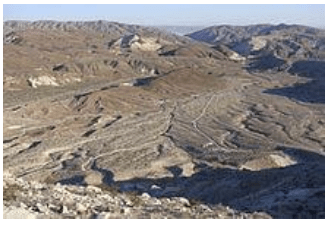
The fertility of the alluvial soil has made the Northern Plains and the Eastern Coastal Plain the most productive agricultural regions of India, with a high-density population. The alluvial soil contains an adequate proportion of potash, phosphoric acid and lime, which are ideal for the cultivation of paddy, wheat, other cereals, pulses and sugarcane. The alluvial soil consists of various proportions of sand, silt, and clay. The soil near the floodplain is more or less fine and in the deltas, they are finest.

They are coarse in the upper reaches of the river valley, especially near breaks of slope and in pediment plains like Duars, Chos and Terai. Alluvial soils are renewed every year during annual floods. The new, fertile, light-colored and fine alluvial deposited near the river is called khadar. The old alluvial deposited earlier are found at about 30 meters above the flood level of the rivers. They are clayey, dark in color, coarse with kanker nodules and less fertile.
Q.3. What is soil erosion? How do human activities and natural forces cause soil erosion? Suggest measures of soil conservation in hilly and mountainous areas and in desert areas.
Ans. The denudation or destruction of the soil cover and their subsequent natural removal is termed as soil erosion. Human activities, as well as natural forces, cause denudation of the topsoil. The soil nutrients are subsequently washed away by running water or blown away by wind. Human activities like deforestation, overgrazing, construction and mining, and faulty farming methods lead to soil erosion.
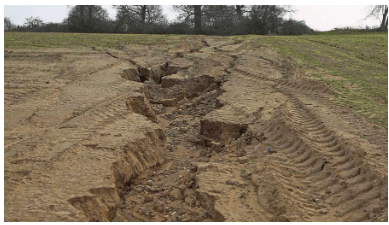 Eroded soil
Natural forces like wind, water and glaciers can cause soil erosion. Surface runoff leads to the formation of gullies, badlands and ravines by cutting out channels in the soil. Entire topsoil may be washed off under the impact of sheet erosion caused by large water flows down a slope. Loose soil may be blown away by wind easily. In hilly and mountainous areas, the following measures can help to control soil erosion:
(a) Contour ploughing or ploughing along the contour lines of a highland can decelerate the flow of water down the slopes.
(b) Terrace cultivation or cutting of steps around the slopes to provide land for agriculture also checks the downhill flow of water and controls soil erosion, e.g. as in the Western and Central Himalayan regions.
(c) Afforestation can help in soil conservation in hilly areas. In dry desert areas, planting of rows of trees known as shelter belts to check the velocity of wind can control soil erosion. These shelter belts have contributed significantly to the stabilization of sand dunes and checking the spread of desert in Western India.
Q.4. What is the need for 'conservation of resources'? Elucidate in the light of Gandhiji's view.
Ans. Irrational consumption and over-exploitation of resources without consideration for future generations have led to grave socio-economic and environmental problems. Social and economic distinctions on the basis of haves and have-nots and global ecological problems like global warming, ozone layer depletion, environmental pollution and land degradation are all consequences of uncontrolled exploitation of resources. To overcome these problems and to preserve resources for future generations, the conservation of resources is essential.
Gandhiji expressed his concern about resource conservation through these words, "There is enough for everybody's need but not for anybody's greed." According to Gandhiji, greedy and selfish individuals and the exploitative nature of modern technology are the root causes of resource depletion at the global level. He advocated production by the masses and was against mass production, which led to the uncontrolled exploitation of resources.
Accumulation of resources in a few hands due to indiscriminate exploitation of resources has divided society into rich and poor. An equitable distribution of resources has become essential for sustained quality of life and global peace. This can reduce tension between countries and lead to planned and judicious use of resources. Similarly, the conservation of resources can also help tackle ecological crises of the global level.
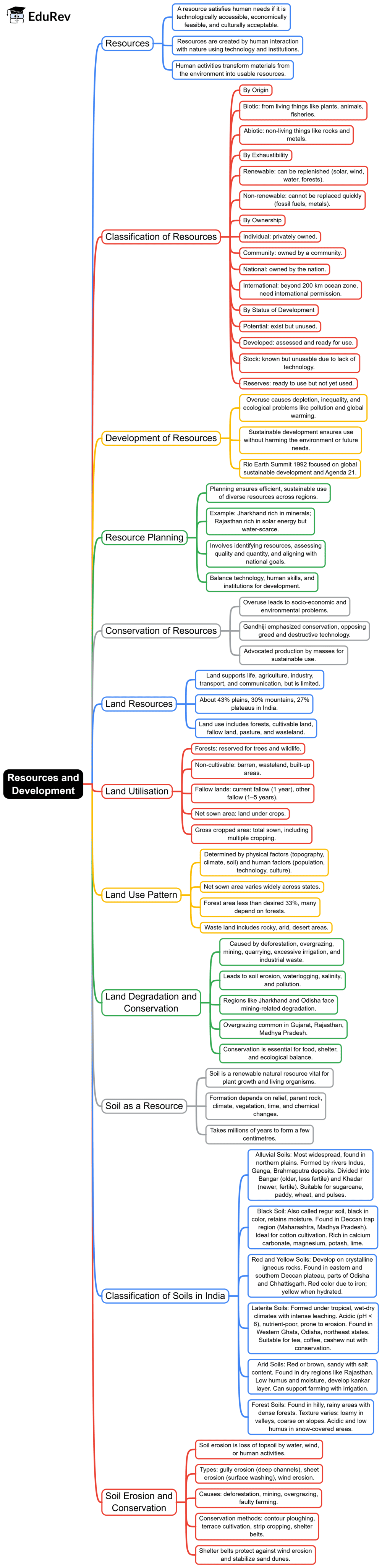
Mind Map: Resources & Development
NCERT Summary: Resources & Development
Resources
Everything available in our environment which can be used to satisfy our needs, provided, it is technologically accessible, economically feasible and culturally acceptable can be termed as 'Resource'.Classification of Resources
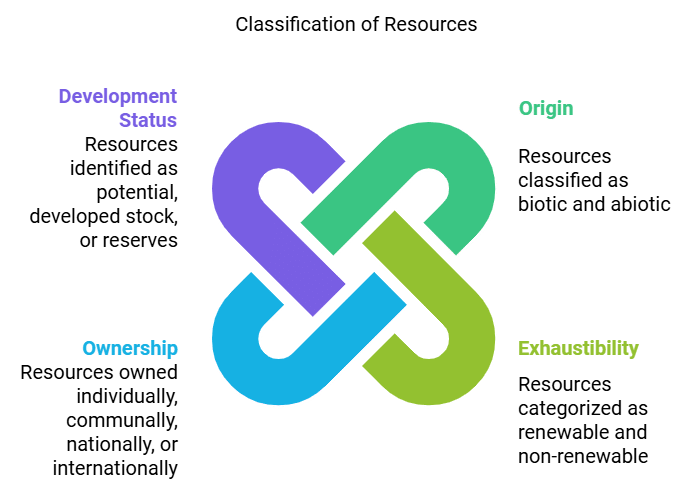
On the Basis of Origin
On the Basis of Exhaustibility
- Renewable Resources: The resources which can be renewed or reproduced by physical, chemical or mechanical processes are known as renewable resources. For example, solar and wind energy, water, forests and wildlife, etc.
- Non-Renewable Resources: The resources once consumed cannot be replaced are known as non-renewable resources. These resources take millions of years in their formation.For example: Oil, Coal etc.
On the Basis of Ownership
- Individual Resources: The resources owned privately by individuals are called Individual resources. For example: Plot, houses etc. owned by a person.
- Community Owned Resources: The resources which are accessible to all the members of the community. For example: Public parks, picnic spots owned by a community.
- National Resources: The resources which come under nation are known as National Resources. Technically, all the resources belong to the nation.
- International Resources: The resources lying beyond 200 kms of Exclusive Economic Zone in the oceans are called International Resources. No one can use these resources without the permission of international institutions.
- Individual resources are privately owned by individuals, such as plots and houses.
- Renewable resources can be renewed or reproduced by physical, chemical, or mechanical processes, such as solar and wind energy, water, forests, and wildlife.
- Abiotic resources, on the other hand, are composed of non-living things, such as rocks and metals.
- Therefore, the correct answer is Option C: Abiotic Resources.
On the Basis of the Status of Development
- Potential Resources: Resources which are found in a region, but have not been utilised. For example: the regions Rajasthan and Gujarat have enormous potential for the development of wind and solar energy.
- Developed Resources: Resources which are surveyed and their quality and quantity have been determined for utilisation.
- Stock: The resources that have been surveyed, but cannot be used due a lack of technology. For example: water is a compound of two inflammable gases; hydrogen and oxygen, which can be used as a rich source of energy but we don't have technical know-how to use them.
- Reserves: The resources that have been surveyed and we can use them with present technology but their use has not been started are known as Reserves. For example: the water in the dams, forests etc.
 | Get additional INR 200 off today with EDUREV200 coupon. | Avail Offer |
Development of Resources
- Resources are vital for human survival.
- It was believed that resources are free gifts of nature so, human beings used them indiscriminately and this has led to the following major problems:
- Depletion of resources for satisfying the greed of few individuals.
- Accumulation of resources in few hands which divides the society into rich and poor.
- Indiscriminate exploitation of resources has led to global ecological crises such as, global warming, ozone layer depletion, environmental pollution and land degradation.
- For a sustained quality of life and global peace, an equitable distribution of resources has become essential.
- For using resources judiciously, we need to adopt sustainable economic development.
- Sustainable economic development means development should take place without damaging the environment, and development in the present should not compromise with the needs of the future generations.
Resource Planning
Resource planning is a complex process which involves :- Identification and inventory of resources across the regions of the country. This involves surveying, mapping and qualitative and quantitative estimation and measurement of the resources.
- Evolving a planning structure endowed with appropriate technology, skill and institutional set up for implementing resource development plans.
- Matching the resource development plans with overall national development plans.
Resource Planning in India
Resource planning in India is a comprehensive process aimed at efficiently utilizing the nation's resources for balanced development. It involves:
- Identifying and listing resources: This includes surveying, mapping, and measuring the quantity and quality of natural resources across different regions.
- Creating a planning system: Effective resource management requires the use of advanced technology, skilled workforce, and well-structured organizations.
- Aligning with national goals: Resource development must be in harmony with broader national development objectives to ensure sustainable and equitable growth.
Conservation of Resources
Resources are essential for sustainable development, but their over-consumption and mismanagement can lead to socio-economic and environmental challenges. Conservation is key to preventing depletion.
Historically, leaders like Gandhiji emphasized resource conservation, criticizing exploitative technologies and advocating for sustainable, localized production systems. He believed in using resources for everyone's needs, but not for greed, which was a primary cause of depletion.
Also watch: Audio Notes: Resources and Development |
Land Resources
Land is a natural resource of utmost importance.
- It supports natural vegetation, wild life, human life, economic activities, transport and communication systems.
- Land is present in limited size so we must use them effectively.
Land Resources in India
- About 43 percent of the land area is plain, which provides facilities for agriculture and industry.
- About 30 percent of the total surface area of the country are mountains which ensure perennial flow of some rivers and provide facilities for tourism and ecological aspects.
- About 27 per cent of the area of the country is the plateau region that possesses rich reserves of minerals, fossil fuels and forests.
Land Use Pattern in India
The use of land is determined by:
- Physical factors such as topography, climate, soil types
- Human factors such as population density, technological capability and culture and traditions etc.
Land use data, however, is available only for 93 per cent of the total geographical area because the land use reporting for most of the north-east states except Assam has not been done fully.
- Also, some areas of Jammu and Kashmir occupied by Pakistan and China have also not been surveyed.
 | Attention! Sale expiring soon, act now & get EduRev Infinity at 40% off! | Claim Offer |
Land Degradation and Conservation Measures
- Human activities such as deforestation, over grazing, mining and quarrying contributed in land degradation.
- Measures to control land degradation:
- Afforestation
- Planting of shelter belts of plants
- control on over grazing
- stabilisation of sand dunes by growing thorny bushes
- Proper management of waste lands
- control of mining activities
Soil as a Resource
- Soil is the most important renewable natural resource.
- It is the medium of plant growth and supports different types of living organisms on the earth.
Also watch: Audio Notes: Resources and Development |
Classification of Soils
On the basis of the factors responsible for soil formation, colour, thickness, texture, age, chemical and physical properties, the soils of India can be classified in different types: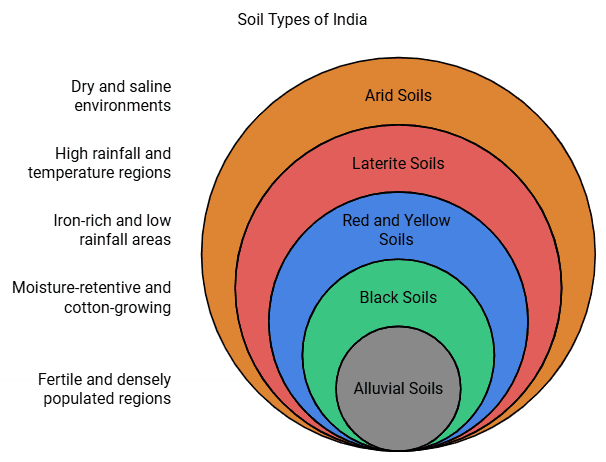
- These resources have not undergone any development or exploitation.
- An example of potential resources is the enormous potential for the development of wind and solar energy in regions like Rajasthan and Gujarat.
- These resources have the potential to contribute to the development and growth of a region or country.
Soil Erosion and Soil Conservation
- Natural ways of Soil erosion: Wind, glaciers and water lead to soil erosion.
- Human activities: Deforestation, over-grazing, construction and mining etc., contributes in soil erosion.
- Measures to control Soil erosion:
For a more detailed explanation of the above topics, check out this video:
Resources: Classification and Conservation
Resources are materials from the environment that meet human needs, provided they are technologically accessible, economically feasible, and culturally acceptable.
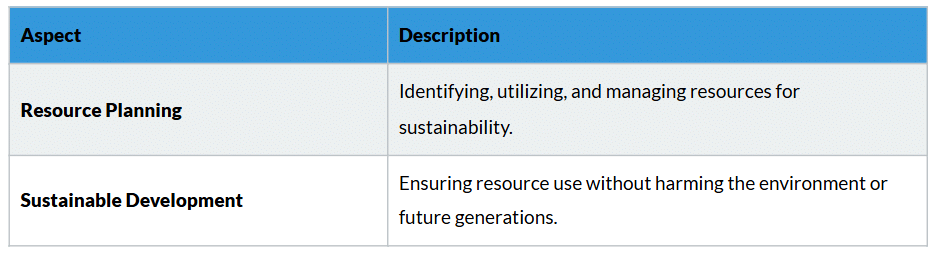
Resource Planning and Sustainable Development
Resource planning ensures efficient use of resources, while sustainable development balances current needs with future generations' well-being, focusing on economic, environmental, and social harmony.
| Get additional INR 200 off today with EDUREV200 coupon. | Avail Offer |
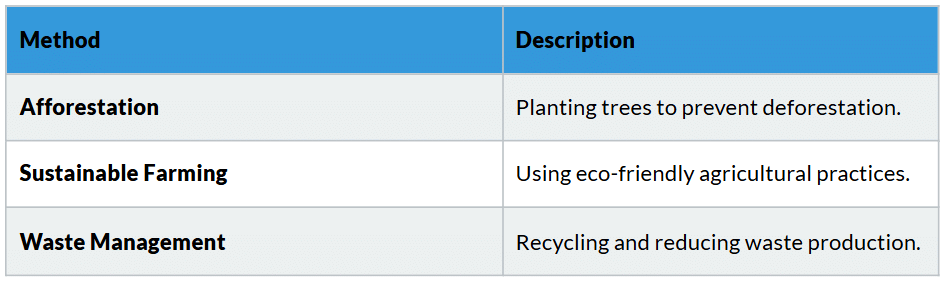
Conservation of Resources
Conservation of resources involves the careful management and protection of natural resources like water, energy, soil, and forests to ensure their availability for future generations and to maintain ecological balance.
Also read: Very Short Questions: Resources and Development |
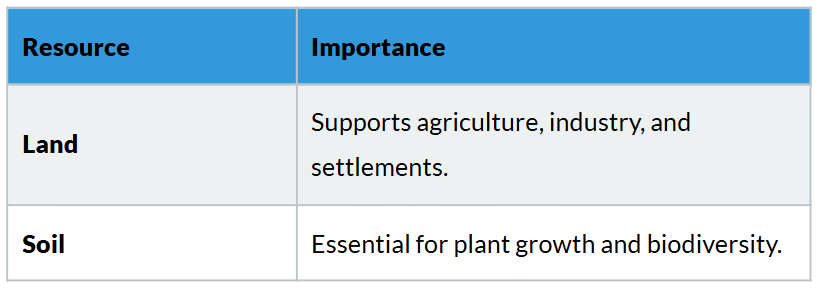
Land and Soil Resources
Land and soil resources are natural assets that support agriculture, industry, and ecosystems. Proper management is essential for sustainability and food security.
 | Attention! Sale expiring soon, act now & get EduRev Infinity at 40% off! | Claim Offer |
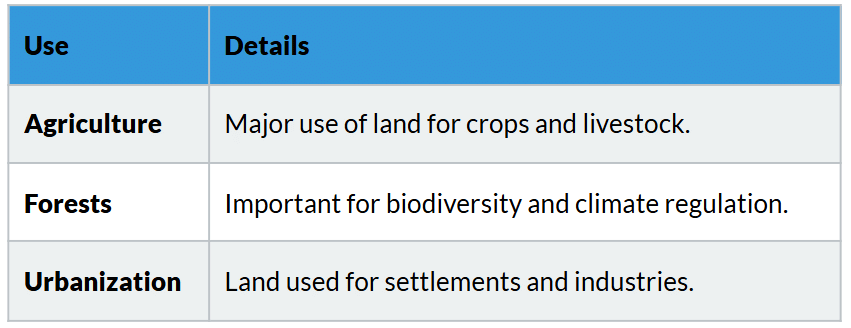
Land Use Patterns in India
Land use patterns in India refer to the way land is utilized for various purposes such as agriculture, forestry, urban development, industry, and transportation, with a significant portion dedicated to agriculture and forest cover, while urbanization is rapidly increasing.
Also read: Very Short Questions: Resources and Development |
Conclusion
Resources are vital for human development. Proper planning and conservation efforts can ensure sustainable use, balancing economic growth and environmental protection.
Very Short Questions: Resources and Development
Q1: What is a Resource? Give two examples.
Ans: Everything available in our environment which can be used to satisfy our needs, provided, it is technologically accessible, economically feasible and culturally acceptable can be termed as a resource. Coal, water, air, minerals etc. are some examples of resources.
Q2: What is the role of humans in resource development?
Ans: (i) Human beings interact with nature through technology and create institutions to accelerate their economic development.
(ii) Human beings transfer material available in our environment into resources and use them.
Q3: How can the resources be classified on the basis of origin?
Ans: Biotic and Abiotic.
- Resources obtained from the biosphere, like forests, wildlife, fisheries, livestock, human beings, etc., which have life, are called biotic resources.
- Resources which are obtained from non-living things are called abiotic resources. Iron, copper, gold and lead are abiotic resources.
Q4: What are abiotic resources?
Ans: All those things which are composed of non-living things are called abiotic resources.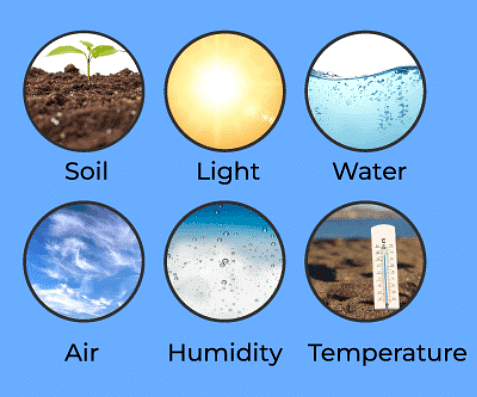 Q5: A gas reserve has been discovered in an Ocean. The reserve is 19 km from the coast of the nation. Will it be considered an international resource or a national resource?
Ans: Resources within 12 nautical miles (22.2 km) from a nation's coast are considered national resources. Since the gas reserve is 19 km (approximately 10.3 nautical miles) from the coast, it is a national resource.
Q6: "There is enough for everybody's need and not for anybody's greed". Who said these words?
Ans: Mahatma Gandhi
Gandhi believed that Mother Nature offers enough resources for everyone, but human greed leads to unequal distribution, causing socio-economic disparities. He suggested that sharing resources equally could eliminate hunger and thirst for all.
Q7: It is important to use the available land for various purposes with careful planning". Give reason.
Ans: It is important to use the available land for various purposes with careful planning because land is an asset of a finite resource.
Q8: How can the resources be divided on the basis of exhaustibility?
Ans: Renewable and Non-renewable.
Renewable resources: These resources are unlimited. They are not going to get exhausted, for example, air, light, and wind. These resources get renewed quickly.
Non-renewable resources: The resources which have a limited stock and which take thousands of years to renew or replenish are called non-renewable resources.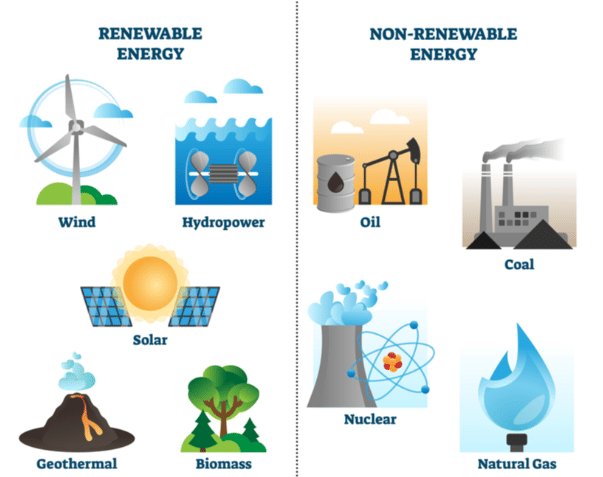 Q9: Classify the following resources as biotic and abiotic.
(i) Metals
(ii) Fauna
Ans: (i) Metals - abiotic (ii) Fauna - biotic
Q10: Give a single word for the following :
(i) Materials which have the potential to satisfy human needs but human beings do not have the appropriate technology.
(ii) The resources which can be renewed or reproduced by physical, chemical or mechanical processes.
Ans: (i) Stock
(ii) Renewable
Q11: Name any two states of India which are well endowed with solar energy.
Ans: Gujarat and Rajasthan.
Q12: Name any two factors on which resource development depends.
Ans: (i) Technology
(ii) Quality of human resources.
Q13: What is the total geographical area of India?
Ans: 3.28 million s km.
Q14: Mention any two factors which determine the land use pattern of a nation.
Ans: (i) Topography (ii) Population
Others can be Soil type, Climate
Q15: What is wasteland?
Ans: An unused area of land, like rocky, arid and desert areas.
Q16: What is net sown area?
Ans: The Area sown once a year is known as the net sown area.
Q17: What is gross sown area?
Ans: This represents the total sown area once/or more than once in a particular year, i.e. the area is counted as many times as there are sowings in a year.
Q18: Name any two states which have a high percentage of net sown area.
Ans: Punjab and Haryana
Q19: Name any two states Which have a very low percentage of net sown area.
Ans: Arunachal Pradesh and Mizoram
Q20: How much degraded land is present in India ?
Ans: 130 million hectares.
Objective Type Questions
Q1: Which of the following is an example of a community resource?(a) A privately owned farm
(b) Village grazing land
(c) National highway
(d) High seas
Q2: On the basis of its origin, resources can be classified into:
(a) renewable and non-renewable
(b) continuous and biological
(c) biotic and abiotic
(d) recyclable and non-recyclable
Q3: The ocean resources beyond 200 nautical miles is classified under which zone?
(a) Exclusive Economic Zone
(b) Export-processing Zone
(c) Special Economic Zone
(d) None of these
Q4: Everything available in our environment to satisfy our needs is termed as:
(a) technology
(b) resource
(c) natural vegetation
(d) none of these
Q5: Which one of the following is the main cause of land degradation in Punjab?
(a) Intensive cultivation
(b) Deforestation
(c) Over irrigation
(d) Overgrazing
Q6: Which of the following is not classified on the basis of status of development?
(a) Potential resource
(b) Developed stock resource
(c) Reserves resource
(d) Renewable resource
Q7: What percentage of land in India consist of fertile plains?
(a) 70%
(b) 38%
(c) 61%
(d) 43%
Q8: Under which of the following type of resource can tidal energy be put?
(a) Replenishable
(b) Human-made
(c) Abiotic
(d) Non-recyclable
Q9: The land which is left uncultivated for more than five agricultural years is called ______?
(a) grazing land
(b) fallow land
(c) culturable wasteland
(d) barren and waste land
Q10: Which soil is also known as regur soil?
(a) Black soil
(b) Red soil
(c) Alluvial soil
(d) Laterite soil
| Get additional INR 200 off today with EDUREV200 coupon. | Avail Offer |
True/False
Direction : Read each of the following statements and write if it is true or false.
Q1: Judicious use of resources is generally called the Development of Resources.
Q2: Fallow land is the land put to agricultural use and for grazing.
Also read: Worksheet Solutions: Resources and Development |
Assertion And Reason
Direction : In the following questions, a statement of assertion is followed by a statement of reason. Mark the correct choice as :
Q1: Assertion : The availability of resources is not the only necessary condition for the development of any region.
Reason : Not only availability of resources but also corresponding change in technology is necessary for development of any region.
(a) If Both assertion and reason are true and reason is the correct explanation of assertion.
(b) If Both assertion and reason are true but reason is not the correct explanation of assertion.
(c) If Assertion is true but reason is false.
(d) If Both assertion and reason are false.
Q2: Assertion : Land is a natural resource of utmost importance.
Reason : Land can be used for various purposes.
(a) If Both assertion and reason are true and reason is the correct explanation of assertion.
(b) If Both assertion and reason are true but reason is not the correct explanation of assertion.
(c) If Assertion is true but reason is false.
(d) If Both assertion and reason are false.
Q3: Assertion : Soil is the most important renewable natural resource.
Reason : Soil supports different types of living organisms on earth.
(a) If Both assertion and reason are true and reason is the correct explanation of assertion.
(b) If Both assertion and reason are true but reason is not the correct explanation of assertion.
(c) If Assertion is true but reason is false.
(d) If Both assertion and reason are false.
Q4: Assertion : Arid soil is unsuitable for cultivation.
Reason : Arid soil is generally sandy in texture and saline in nature. It restricts the filtration of water.
(a) If Both assertion and reason are true and reason is the correct explanation of assertion.
(b) If Both assertion and reason are true but reason is not the correct explanation of assertion.
(c) If Assertion is true but reason is false.
(d) If Both assertion and reason are false.
Q5: Assertion : Terrace cultivation does not restrict erosion.
Reason : Running water cuts through the clayey soils and makes deep channels as gullies. This helps to cultivate crops.
(a) If Both assertion and reason are true and reason is the correct explanation of assertion.
(b) If Both assertion and reason are true but reason is not the correct explanation of assertion.
(c) If Assertion is true but reason is false.
(d) If Both assertion and reason are false.
Q6: Assertion : A country that was extremely rich in natural resources has mainly relied on oil extraction for revenue generation for several centuries. However, the scientists predict that the country may become poor in the future if other means of generating income are not devised.
Reason : Oil is a non-renewable resource, and it is likely to get exhausted if not used judiciously.
(a) If Both assertion and reason are true and reason is the correct explanation of assertion.
(b) If Both assertion and reason are true but reason is not the correct explanation of assertion.
(c) If Assertion is true but reason is false.
(d) If Both assertion and reason are false.
Q7: Assertion : The crude oil reserves are going down for the entire world, and the countries need to find substitute fuel for crude oil.
Reason : A country that is dependent on imports for crude oil will demand more crude oil in the future.
(a) If Both assertion and reason are true and reason is the correct explanation of assertion.
(b) If Both assertion and reason are true but reason is not the correct explanation of assertion.
(c) If Assertion is true but reason is false.
(d) If Both assertion and reason are false.
| Attention! Sale expiring soon, act now & get EduRev Infinity at 40% off! | Claim Offer |
Very Short Answer Type Questions
Q1: Give one difference between renewable and nonrenewable resources.
Q2: What are resources which are found in a region but have not been utilised called?
Q3: Give examples of abiotic resources.
Q4: Which relief features of India has 30 percent of the total surface area of country?
Q5: Which regions of India have well developed terrace farming?
Also read: Worksheet Solutions: Resources and Development |
Short Answer Type Questions
Q1: What is Agenda 21? List its two principles.
Q2: In India, some regions are rich in certain types of resources but deficient in some other resources". Do you agree with the statement? Support your answer with any three examples.
Q3: Which is the main cause of land degradation in Gujarat, Rajasthan and Madhya Pradesh? How can it be checked? Explain.
Q4: Mention any three features of arid soils.
Q5: Indiscriminate use of resources had led to numerous problems.' Justify this statement.
Q6: Distinguish between the renewable and nonrenewable resources.
Long Answer Type Questions
Q1: Provide a suitable classification for resources on the basis of ownership. Mention main features of any three types of such resources.
Q2: List the problems caused due to indiscriminate use of resources by human beings.
Q3: 'Consumption of energy in all forms has been rising all over the country. There is an urgent need to develop a sustainable path of energy development and energy saving'. Suggest and explain any three measures tosolve this burning problem.