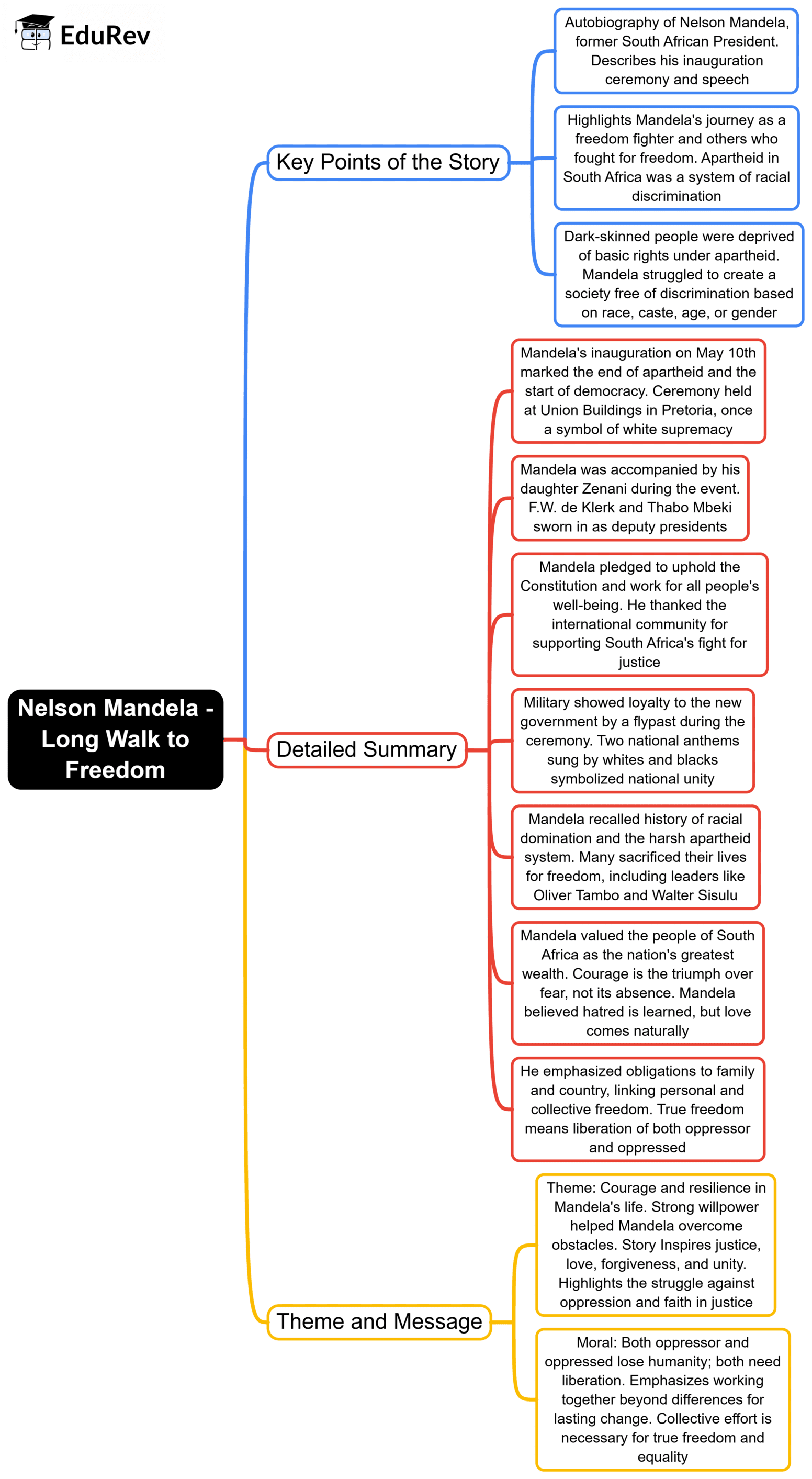
Key Points of the Story

  • The extract is taken from the autobiography of Nelson Rolihlahla Mandela and highlights the long struggle against apartheid in South Africa.
  • On 10 May 1994, Mandela assumed office as South Africa's first Black President.
  • The inauguration marked the formal end of prolonged white rule and the beginning of representative democracy in the country.
  • The ceremony at the Union Buildings in Pretoria was attended by many international leaders and dignitaries.
  • Mandela pledged to uphold equality, justice and to prevent discrimination on the basis of caste, colour, creed or race.
  • Two national anthems were sung at the inauguration - "Nkosi Sikelel' iAfrika" and "Die Stem" - as a symbol of the nation's unity in transition.
  • Mandela recalled the deep suffering of black South Africans under the system of racial domination and exploitation.
  • He stated that hatred is learned and that love is more natural to human beings, so people can be taught to love as well as to hate.
  • True courage was described as the ability to recognise fear and yet to overcome it.
  • Every person has duties both to their family and to their country, and fulfilling these is an important moral responsibility.
  • Before democracy, freedom for black South Africans was largely an illusion because of systemic oppression and discrimination.
  • Mandela emphasised that freedom is indivisible: the oppressor is also constrained by the system and must be liberated from the chains of inhumanity as well as the oppressed.

MULTIPLE CHOICE QUESTION
Try yourself: What was the main objective of Nelson Mandela's struggle?
A

To become the President of South Africa

CORRECT ANSWER
B

To fight against apartheid and discrimination

C

To establish a new political party

D

To achieve economic independence for South Africa

Correct Answer: B
- Nelson Mandela's main objective was to fight against apartheid and discrimination.
- He wanted to create a society where people were not discriminated against based on their race, color, caste, age, or gender.
- Mandela believed in equality and fought for the rights of all individuals, especially those who were marginalized and oppressed.
- His struggle was centered around dismantling the oppressive system of apartheid and promoting freedom and equality for all South Africans.
- Through his leadership and perseverance, Mandela played a pivotal role in ending apartheid and becoming a symbol of hope and inspiration for people around the world.
Report a problem

Detailed Summary

Nelson Mandela: Long Walk to Freedom is an extract from the autobiography of Nelson Rolihlahla Mandela that describes the decades-long struggle of black South Africans against racial segregation and injustice. The extract culminates in the historic moment when, on 10 May 1994, Mandela took the oath of office and became South Africa's first Black President following the country's first truly democratic elections. His political movement secured a decisive mandate-winning 252 out of the 400 seats in the new national assembly-ushering in a new era of democratic governance.
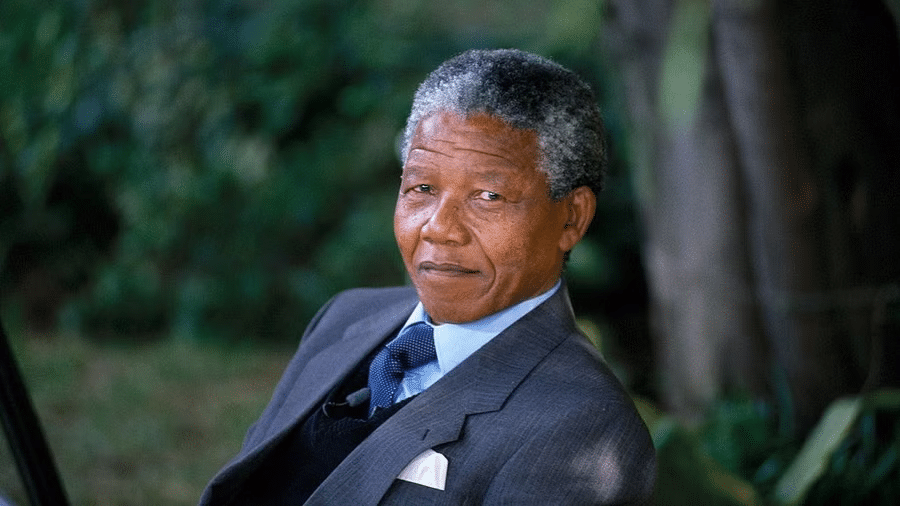
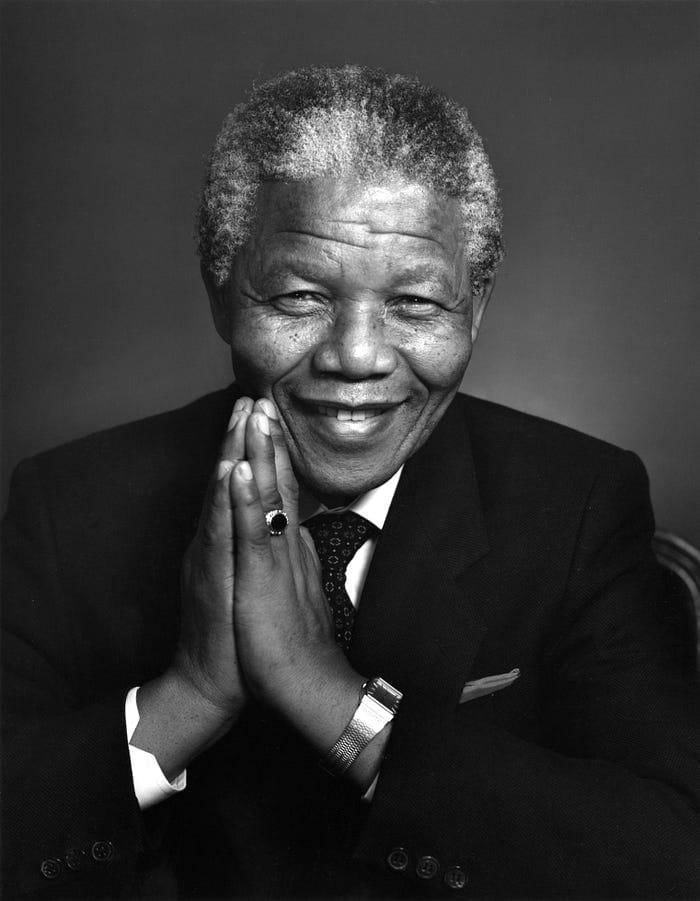
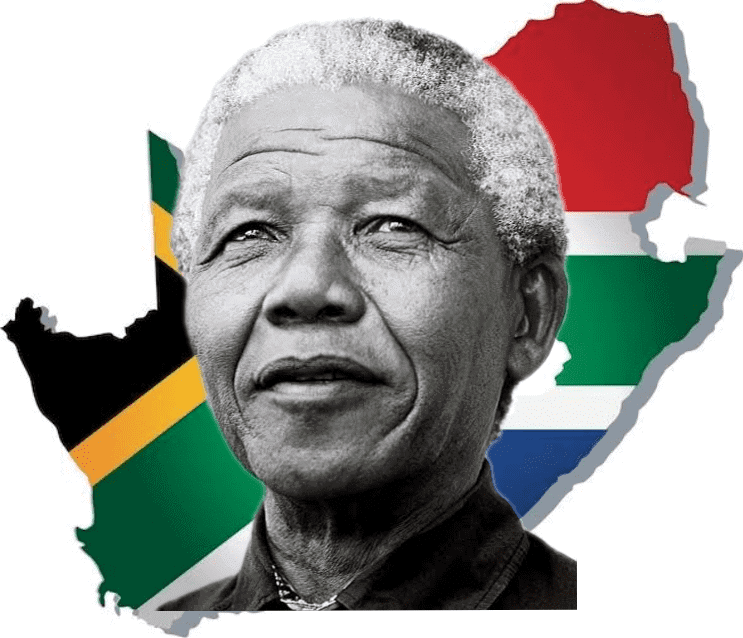
Nelson Mandela

The inauguration took place at the amphitheatre of the Union Buildings in Pretoria, where leaders and representatives from many countries were present. In his inaugural speech Mandela addressed both local citizens and international guests with dignity and restraint. He made a solemn promise that the new government would not repeat the suppression of one group by another, and that discrimination on grounds of caste, colour, creed or race would no longer be the basis of public policy. By taking the oath, Mandela formally established the principle that the state would treat all its citizens with equal respect and dignity under the new constitutional order.

Symbols and Remembrance

The ceremony was full of symbolic gestures intended to show national unity. One such symbol was the singing of two anthems-"Nkosi Sikelel' iAfrika" and "Die Stem"-which together reflected both the necessity of acknowledging history and the desire to build a shared future. The music and the gathering reminded Mandela of the deep injustices endured by black people under apartheid. He expressed the pain and indignation felt by those who had been exploited and dispossessed, describing the system of racial domination as one of the most inhumane societies the world had seen.

Beliefs about Hatred, Love and Courage

Mandela emphasised a humane view of human nature. He argued that no person is born to hate another because of his skin colour, background or religion; hatred is acquired through socialisation and circumstance. Because hatred is learned, it can be unlearned, and people can be taught to love. For Mandela, love was a more natural human response than hate. He also reflected on the nature of courage: a brave person is not one who never feels fear, but one who recognises fear and finds the strength to overcome it.

MULTIPLE CHOICE QUESTION

Try yourself: What historic event did Nelson Mandela reflect on during his inauguration as the first black President of South Africa?

A

End of colonial rule

CORRECT ANSWER
B

End of apartheid

C

End of civil war

D

End of dictatorship

Correct Answer: B

Apartheid was a system of racial segregation and discrimination enforced by the white minority in South Africa. Mandela spent 27 years in prison for his fight against apartheid. When he was released and became president, his inauguration speech emphasized the importance of overcoming apartheid and unifying the country. 

Obligations, Freedom and the Oppressor

Mandela spoke of two principal obligations that every individual carries. The first obligation is to one's family-to parents, spouse and children-and the second is to one's country, community and fellow citizens. People fulfil these duties according to their own circumstances, skills and inclinations. Before the advent of democracy these obligations were extremely difficult for black South Africans to fulfil because of systemic barriers and discrimination.
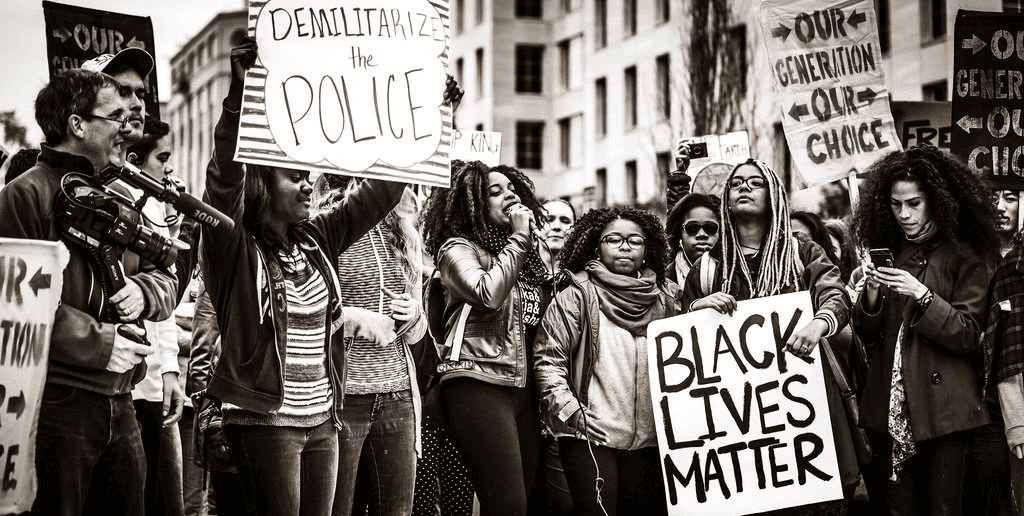
Racial Domination

Mandela described how, for black people under apartheid, freedom was often only a temporary illusion. They were treated as second-class citizens, subjected to exploitation and injustice. He introduced an important moral insight: freedom is indivisible. The oppressor who denies freedom to others is also trapped by the system of oppression. Thus, both the oppressed and the oppressor are dehumanised by injustice, and true liberation requires freeing all people from the chains of inhumanity.

Theme

The central theme of the chapter is the struggle for justice through sustained courage and resilience. Mandela's life is presented as an example of steadfast willpower and moral determination in the face of long-term adversity. Related themes include the transformative power of forgiveness and reconciliation, the need for national unity, and the conviction that personal suffering can be converted into collective action for freedom and equality. The chapter stresses that courage, moral strength and collaborative effort are essential to confronting institutional wrongs and building a just society.

MULTIPLE CHOICE QUESTION
Try yourself: Which quality is highlighted in Mandela's life story as essential for overcoming challenges?
CORRECT ANSWER
A

Perseverance

B

Humility

C

Laziness

D

Indecisiveness

Correct Answer: A
- Perseverance is the quality highlighted in Mandela's life story as essential for overcoming challenges.
- It emphasizes the importance of staying determined and persistent in the face of obstacles.
Report a problem

Message

The extract carries a strong moral message: systems of injustice dehumanise everyone involved. The oppressed suffer pain and loss of dignity, while the oppressor becomes morally impoverished and, in another sense, enslaved by hatred and fear. Therefore, the genuine goal of liberation is not the replacement of one form of domination by another, but the mutual freeing of people from prejudice, fear and hatred. Lasting social change depends on collective, peaceful action grounded in forgiveness, moral courage and a willingness to work together across past divides.

Glossary

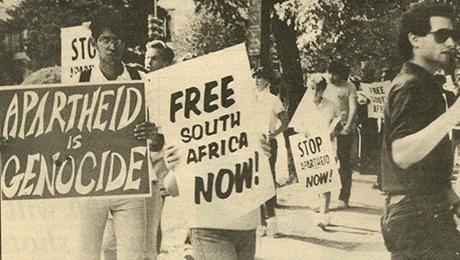
  • Apartheid - A policy or system of segregation or discrimination on grounds of race, implemented as law in South Africa until the early 1990s.
  • Inauguration - The formal ceremony in which a person is sworn into public office.
  • Oppression - Prolonged cruel or unjust treatment or control of a person or group.
  • Tyranny - Cruel, unreasonable, or arbitrary use of power or authority.
  • Discrimination - Unfair treatment of people based on characteristics such as race, religion, gender or caste.
  • Indivisible - Not capable of being divided; here used to stress that freedom for one group cannot be complete while another remains unfree.
  • Reconciliation - The process of making consistent or compatible different people or groups after conflict; restoring friendly relations.
  • Dehumanise - To deprive a person or group of positive human qualities, dignity, or individuality.
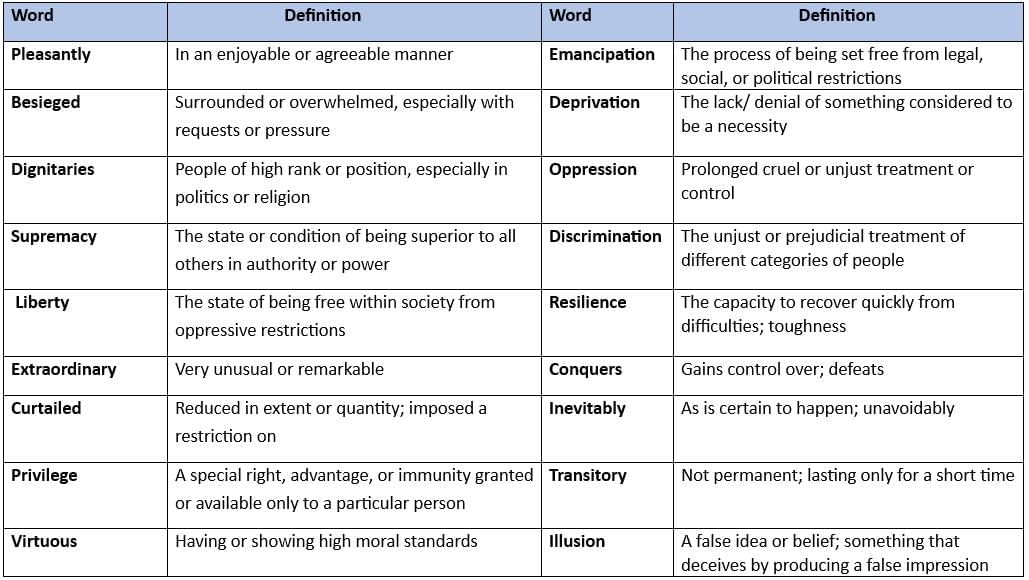
Very Short Questions: Nelson Mandela - Long Walk to Freedom
Q1: What was the occasion?
Ans: It was the occasion of the installation of South Africa's first democratic government.

Q2: Where did the ceremony take place?
Ans: The ceremony took place in the Union Buildings of Pretoria.

Q3: Who was Zenani?
Ans: Zenani was the daughter of Nelson Mandela.

Q4: Who accompanied Mandela?
Ans: Mandela's daughter Zenani accompanied him.

Q5: Who was sworn in as the first Deputy President of South Africa?
Ans: Thabo Mbeki was sworn in as the first Deputy President of South Africa.

Q6: Who was sworn in as the second Deputy President?
Ans: Mr. de Klerk was sworn in as the second Deputy President of South Africa.
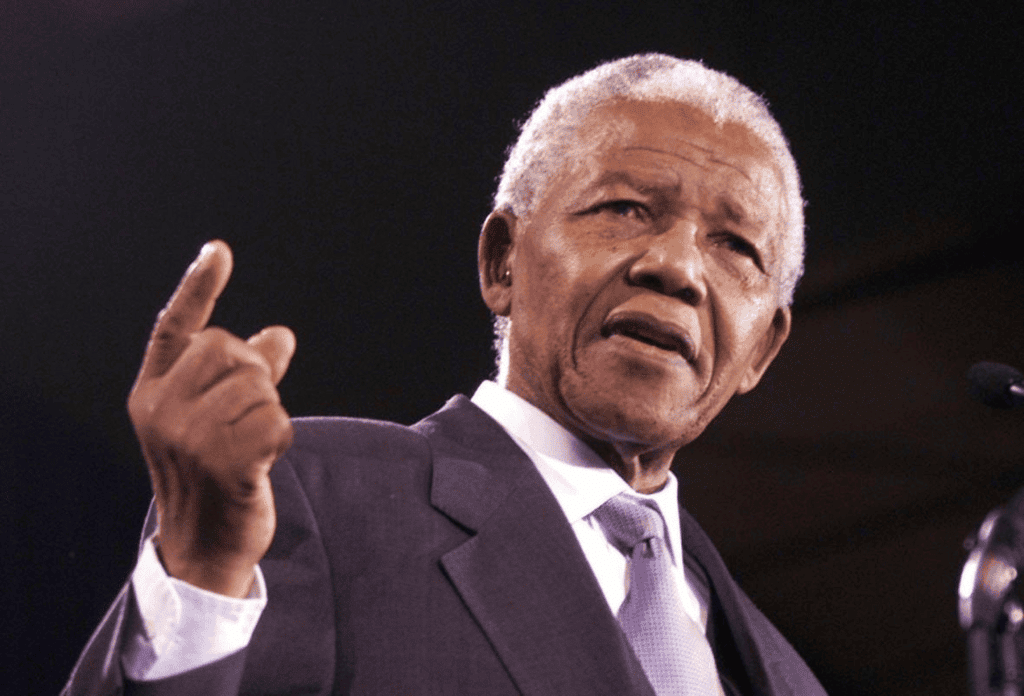
Nelson Mandela

Q7: How was the new system different?
Ans: The new system recognized the rights and freedom of all people.

Q8: What was specific about the previous system?
Ans: The system was based on one of the harshest and most inhumane societies the world has ever known.

Q9: When was that system eradicated?
Ans: The system was overturned in the last decade of the twentieth century.

Q10: What promises did Mandela make in his oath-taking speech?
Ans: Mandela promised that the country would not again experience the oppression of one by another.

Q11: What did Mandela want as a student?
Ans: Mandela wanted freedom for himself as a student.

Q12: What did Mandela realize?
Ans: Mandela realized that there was no freedom in South Africa for anyone who looked like him.

Q13: Why did Mandela join the African National Congress?
Ans: He joined the African National Congress to achieve freedom for all his people.

African National Congress

Q14: What did Mandela think about freedom?
Ans: He thought that freedom is indivisible.

Q15: What does courage mean to Mandela?
Ans: To Mandela, courage means the triumph over fear.

Q16: What must people learn?
Ans: People must learn to hate. If they can learn to hate, they can be taught to love.

Q17: What was Mandela not unmindful of?
Ans: Mandela was not unmindful of apartheid.

Q18: Why was Mandela pained?
Ans: Mandela was pained because the people who laid down their lives for this day could not be present to see it.

Q19: What roared in perfect formation over the Union Buildings?
Ans: South African jets, helicopters, and troop carriers roared in perfect formation over the Union Buildings.

Q20: What did the smoke trail of Impala jets symbolize?
Ans: The smoke trail of Impala jets symbolized the South African flag.

Q21: What did Mandela thank international leaders for?
Ans: Mandela thanked international leaders for their support for the people of South Africa.

Q22: What did Mandela think was natural, to love or to hate?
Ans: Nelson Mandela thought that to love is natural because it comes naturally in our hearts.

Q23: What did Mandela consider "true freedom"?
Ans: True freedom means the freedom to live a lawful life without obstruction.

Q24: Who wrote the autobiography "Long Walk to Freedom"?
Ans: Nelson Mandela wrote his autobiography "Long Walk to Freedom."

Q25: How many years did Nelson Mandela spend in prison?
Ans: Nelson Mandela spent twenty-seven years in prison.

Short Answer Questions:

Q1: What pained Nelson Mandela in becoming the President of South Africa?
Ans: Nelson Mandela was sad for not being able to thank those African patriots who had fought for independence and sacrificed their lives for it. This pained him that they were not able to see what their sacrifices had brought.

Q2: When did Mandela's hunger for self turn into a hunger for freedom for all his people?
Ans: Mandela gradually realized that freedom was curtailed for those people who looked like he did, but not for the whites. Consequently, he joined the African National Congress, and that was when his "hunger for freedom" became a "greater hunger."

Q3: Why is 27th April 1994 important for South Africa? 
Ans: 27th April 1994 is important for South Africa because the first democratic non-racial government elections were held on this day in the country. Nelson Mandela became the first black president of the country.

Q4: What ideals does Mandela set out for the future of South Africa in his speech?
Ans: The ideal Mandela set out for the future of South Africa in his speech was to liberate the people of South Africa from the continuing bondage of poverty, deprivation, suffering, gender and other discriminations.

Q5: What did Nelson Mandela pledge when he was sworn in as President?
Ans: Nelson Mandela pledged to uphold the Constitution of his country and devote himself to liberating his people from the bondage of poverty, deprivation, suffering, gender and other discriminations. There would be freedom and justice for all.


Q6: What did Nelson Mandela remember on the day of the Inaugural Ceremony?
Ans: He remembered the history - the birth of Apartheid, its effect on his people and the long fight for freedom. He remembered the freedom fighters who suffered and sacrificed for freedom. He also remembered what freedom meant to him at different stages of life and his hunger for freedom.

Q7: Why was the 10th of May, 1994 a red-letter day in the history of South Africa?
Ans: The 10th of May, 1994 was a red-letter day in the history of South Africa. It was the day when the hated regime of apartheid came to an end. A new democratically elected non-racial government under Nelson Mandela was to be sworn in. Many international leaders and dignitaries came to pay their respects to the new government.

Q8: Where did the ceremonies take place? What had it been for decades?
Ans: The ceremonies of the inauguration of the new government took place at the lovely sandstone amphitheatre in the Union Buildings in Pretoria. The same place had remained the seat of white supremacy for decades.

Q9: How was that site a rainbow gathering of different colours and nations?
Ans: The end of the apartheid regime was a common victory for peace, justice and human dignity. Leaders and dignitaries of all nations, irrespective of their colour, race and religion, had gathered there to celebrate that victory. So, the site presented a rainbow gathering of different colours and nations.

Q10: Who were the persons sworn in on the 10th of May? What did Mandela pledge to obey?
Ans: Mr. de Klerk was first sworn in as the second Deputy President. Then, Thabo Mbeki was sworn in as first Deputy President. Then, in the end, Mr Nelson Mandela was sworn in as the President of the Republic of South Africa. He pledged to obey and uphold the constitution and devote himself to the well-being of the Republic and its people.

Q11: What was born out of the experience of an extraordinary human disaster? Why should humanity be proud of it?
Ans: The apartheid regime was an extraordinary human disaster for the blacks of South Africa. The end of the apartheid laid down the foundation of a non-racial democratic regime in South Africa. This government based on human equality and dignity would be an ideal one of which all humanity will be proud.

Q12: Who was given the rare privilege to be host to the nations of the world on their soul?
Ans: Those who were outlaws not so long ago were given the rare privilege. They had the privilege of hosting and welcoming nations of the world on their soul. The blacks were no more outlaws now but enjoyed equality and human dignity.

Nelson Mandela
Q13: What did the display of jets and military salute symbolise?
Ans: There was a spectacular show of South African jets and troop carriers over the Union Buildings. The highest generals of the military and police saluted President Mandela. It was a clear demonstration of the military's loyalty to democracy, to a free and fairly elected government.

Q14: Why did the same generals salute Mandela, who would have arrested him not so many years ago?
Ans: In the apartheid regime, Nelson Mandela was a rebel and was in prison for many years. After the end of the apartheid, he was the head of the non-racial democratically elected government of South Africa. The same generals who would have put him in prison not so long ago were obliged to salute the president of the new Republic of South Africa.


Q15: What did the playing of two national anthems symbolise?
Ans: On the historic day of the inauguration ceremony of the Republic of South Africa, two national anthems were played. The whites sang `Nkosi Sikelel-i-Africa', and the blacks sang 'Die Stem'. Neither group knew the lyrics of the anthem they once despised. They would soon know the words by heart.

Q16: Why was Mandela overwhelmed with a sense of history and what bad thing happened in the first decade of the 20th century?
Ans: Mandela is overwhelmed with a sense of history and remembers when the hated apartheid policy was introduced in South Africa. After the Boer War, the white people of South Africa patched up their differences. They set up a system of racial domination against the black people of their race.

Q17: Why was the apartheid regime in South Africa one of the harshest and most inhuman systems in the world?
Ans: The apartheid regime was based on the racial discrimination and exploitation of blacks in South Africa. The fundamental rights were only for the whites and the blacks were deprived of these freedoms. Oppression, torture and exploitation of the blacks were common features of the apartheid regime.

Q18: Why does Nelson Mandela call himself simply the sum of those African patriots who had gone before him?
Ans: Nelson Mandela gratefully acknowledges the sacrifices of thousands of his people who fought against the apartheid regime. Their suffering and courage can never be cemented. Mandela humbly believes that he was simply the sum of all those African patriots who had gone before him.

Q19: How did the policy of apartheid and deep oppression produce patriots of extraordinary courage, wisdom and generosity?
Ans: The policy of apartheid unleashed a reign of terror and oppression on the black people, but they could not break their resolution and determination. The deep oppression produced patriots of extraordinary courage, wisdom and generosity. It produced thousands of Tambos, Sisulus, Dadoos, Fischer's and Sobukwes of their time.

Q20: What is the greatest wealth of a country, according to Nelson Mandela?
Ans: South Africa is rich in minerals and gems. But minerals and gems are not the greatest wealth of a nation. Mandela thinks that the greatest and real wealth of a nation is its people. They are finer and truer than the purest diamonds.

Q21: How does Mandela define courage, and from where did he learn the meaning of courage?
Ans: Nelson Mandela learnt the meaning of courage from great patriots and comrades in the struggle. They risked their lives and stood up to the attacks and tortures of the apartheid regime. He learned that courage was not the absence of fear but the triumph over it. The brave man is not a man who doesn't feel afraid but one who conquers that fear.

Q22: How can people be taught to love? Which comes naturally to the human heart - love or hate?
Ans: No one is born hating another person because of his colour or race. People are taught to hate. And if they learn to hate, they can be taught to love. Love comes more naturally to the human heart than hatred.

Q23: What are the twin obligations every man has in life?
Ans: Mandela thinks that every man has twin obligations in life. The first is his obligation to his family, to his parents, to his wife and children. The second duty is his duty to his people, his community and his country. Each man has to fulfil these two obligations according to his position and abilities.

Q24: Why was it impossible for a man of Mandela's birth and color to fulfil the twin obligations?
Ans: In South Africa, no black could fulfil the twin obligations if a black who tried to live as a human being was punished and isolated. A person who tried to fulfil his duty to his people was separated from his family and was forced to live in secrecy and rebellion.

Q25: Was Mandela born with a hunger to be free? What did freedom mean to him in childhood?
Ans: Nelson Mandela was not born with a hunger to be free. In childhood, freedom has a very limited concept. He felt that he was free to run in the fields, free to swim in the stream near his village and ride the broad backs of slow-moving bulls. As long as he obeyed his father and the customs of his life, he was a free man.

Q26: What were the transitory freedoms that Nelson Mandela yearned for as a young man? Why did he feel that his boyhood freedom was an illusion?
Ans: Nelson Mandela felt that his boyhood freedom was an illusion. His freedom had already been taken from him. Then, he began to hunger for it. At first, he wished for the transitory freedom of staying out. Later on, he yearned for the basic needs of earning, marrying and having a family.

Q27: When and how did Mandela's hunger for his freedom become the greater hunger for the freedom of his people?
Ans: Mandela realised that not only was he not free, but his people were not free. When he joined the African National Congress, his hunger for freedom became a greater hunger for the freedom of his people.

Q28: What, according to Mandela, is 'true freedom'?
Ans: When Mandela was a boy, freedom meant running freely in the fields and swimming in the streams. As a young man, he wanted basic and honourable freedoms, e.g. to earn his living and to have a family. According to Mandela, true freedom means freedom not to be obstructed in leading a lawful life.

Q29: Freedom is "indivisible", said Mandela. How were the chains on anyone were the chains on all of his people?
Ans: Mandela thought that he was not more virtuous than the others. He thought that "freedom is indivisible". The chains on any one of his people were chains on all of them. The chains on all of his people were the chains on him.

Q30: Why did Nelson Mandela feel that both the oppressor and the oppressed are robbed of their humanity, and hence, both of them must be liberated?
Ans: Nelson Mandela rightly believes that both the oppressor and the oppressed are robbed of their humanity. A man who takes away another's freedom is a prisoner of hatred. He is locked behind bars of prejudice and hate. A person can never be free if his freedom is taken away. Hence, the oppressed and the oppressor alike are robbed of their humanity.

Long Answer Questions:

Q1. How was Mandela's concept of freedom was different in boyhood and youth than what it was in his mature age? How were 'transitory freedoms' changed into his hunger for the freedom of his people?
Ans: Nelson Mandela did not start life with a strong desire for freedom. In his boyhood, he experienced a sense of freedom, which was limited to simple pleasures like running in the fields, swimming in the local stream, and riding on the backs of slow-moving bulls. This feeling of freedom was tied to obeying his father and the customs of his tribe. As he grew older, Mandela realised that his boyhood freedom was an illusion. He discovered that his freedom had already been taken away. As a youth, he began to crave transitory freedoms, such as staying out late, reading freely, and going wherever he wished. It was only when he joined the African National Congress that his personal desire for freedom transformed into a deeper hunger for the freedom of his people. Mandela's desire shifted from seeking personal freedoms to wanting his people to live with dignity and self-respect. This profound hunger for freedom compelled him to become a rebel, leading him to live in secrecy and away from his family.

Q2. What were the difficulties faced by Nelson Mandela in achieving freedom for his people?
Ans: In his quest for freedom from the rule of Apartheid, Nelson Mandela faced numerous challenges and endured significant hardships. This remarkable patriot sacrificed the comfort of his home and the love of his family. He was labelled an outlaw for advocating equality for his fellow black Africans. As a result, he was punished, isolated, and imprisoned. Alongside his comrades, he experienced severe oppression and torture. Despite suffering from hunger, injustice, and oppression, he kept the spirit of independence alive in his heart. His unwavering courage, relentless struggle, and unparalleled sacrifices ultimately led to the liberation of South Africa from Apartheid on 10 May 1994.


Q3. Give the character-sketch of Nelson Mandela.
Ans: Nelson Mandela was a remarkable figure in the fight against apartheid in South Africa. He is celebrated as one of the greatest black heroes who faced immense suffering and torture during his imprisonment. Despite these hardships, he played a crucial role in establishing the country's first democratically elected government. Mandela's journey began when he was a child, believing he was free, only to later realise that this freedom was an illusion. Initially, his understanding of freedom was limited to personal liberty. However, after joining the African National Congress, his desire for freedom transformed into a broader quest for the freedom of all his people. This change turned him from a timid young lawyer into a courageous fighter.

As a devoted husband, Mandela lived a life of secrecy, akin to that of a monk. He recognised and appreciated the sacrifices made by countless black heroes in the struggle for freedom. With humility, he acknowledged that freedom is indivisible; he could not be truly free while his people remained oppressed. His vision of humanity was expansive, as he believed that freedom is a fundamental right that cannot be divided.

Q4. The inauguration ceremony symbolised a common victory for justice, for peace, for human dignity against the most hated apartheid regime based on racial discrimination. Comment.
Ans: The inauguration ceremony marking the establishment of a democratically elected government in South Africa was historically significant. Following the Boer War, the white population united to impose a system of racial domination known as apartheid. This ceremony drew global attention, with leaders and dignitaries from over 140 countries gathering at the amphitheatre of the Union Buildings in Pretoria. It was celebrated as a collective victory for justice, peace, and human dignity. The struggle of black South Africans against the oppressive apartheid regime culminated in this momentous event. A spectacular display of jets and a salute from decorated generals to President Mandela showcased the military's commitment to democracy. The performance of both national anthems represented a new era of equality, transcending race and colour.

Q5. Why was Nelson Mandela overwhelmed with a sense of history? Give the birth and finally the burial of the apartheid regime in South Africa.
Ans: On the day of his inauguration, Nelson Mandela was deeply moved by a sense of history. This feeling was natural for a man who had fought against the oppressive regime for decades. Following the Boer War, white groups in South Africa united to establish a system of racial domination over the majority population. The birth of apartheid marked the beginning of one of the most brutal and inhumane regimes in history, rooted in racial discrimination and oppression. This deep-seated injustice led to the rise of countless black patriots who were willing to sacrifice their lives for freedom. Their determined struggle ultimately resulted in victory, culminating in the establishment of a democratically elected government led by President Mandela on 10th May 1994.


Q6. Which twin obligations does Nelson Mandela mention in the lesson? Why were he and the rest of the blacks able to fulfil those obligations?
Ans: Nelson Mandela discusses that every man has twin obligations in life. The first is to his family, including parents, spouse, and children. The second obligation is to his people, community, and country. In a just society, individuals can fulfil these duties according to their strengths and circumstances. However, in South Africa, it was nearly impossible for someone like Mandela or other black individuals to meet these obligations. If a man sought to live with dignity, he faced punishment and isolation. Those who tried to serve their communities were often forcibly separated from their families and homes. This led to a life shrouded in secrecy and rebellion. Mandela prioritised his people over his family, and in his quest to serve them, he found himself unable to fulfil his roles as a son, brother, father, and husband.

Key Questions

Q1: When and where did Nelson Mandela become the President of South Africa?

Solution:
Nelson Mandela became the President of South Africa on 10 May 1994 at the Union Buildings amphitheatre in Pretoria. It was a historic occasion because it marked the end of apartheid and white minority rule in South Africa.

Q2: Why was the inauguration ceremony important?

Solution:
The inauguration ceremony was important because it marked the establishment of the first democratic and non-racial government in South Africa. It symbolised freedom, equality and the victory of justice over racial discrimination.

Q3: What is apartheid? How did it affect South Africa?

Solution:
Apartheid was a system of racial discrimination practiced in South Africa where black people were denied basic rights and freedoms. It created injustice, inequality and suffering among the black population for many years.

Q4: Why were two national anthems sung at the inauguration ceremony?

Solution:
Two national anthems were sung to represent unity and reconciliation between black and white South Africans. It showed respect for both communities and symbolised the beginning of a new democratic nation.

Q5: What ideals did Nelson Mandela set for the future of South Africa?

Solution:
Nelson Mandela wanted South Africa to become a country free from poverty, discrimination and oppression. He believed in equality, justice, peace and equal opportunities for all citizens regardless of race or colour.

Q6: What does Mandela mean by 'an extraordinary human disaster'?

Solution:
Mandela referred to apartheid as an extraordinary human disaster because it caused immense suffering, racial discrimination and denial of freedom to millions of black South Africans for several decades.

Q7: What twin obligations does Mandela mention?

Solution:
Mandela says every person has twin obligations. One obligation is towards family, parents, wife and children, while the second obligation is towards society, community and nation.

Q8: How did Mandela's understanding of freedom change with age?

Solution:
As a child, Mandela believed freedom meant playing and living freely. As he grew older, he realised true freedom meant freedom from discrimination, injustice and oppression for himself and his people.

Q9: According to Mandela, what is courage?

Solution:
According to Mandela, courage is not the absence of fear but the triumph over it. A brave person is one who overcomes fear and continues fighting for what is right.

Q10: Why does Mandela say that both the oppressor and the oppressed are robbed of their humanity?

Solution:
Mandela believes oppression destroys humanity on both sides. The oppressed lose freedom and dignity, while the oppressor becomes cruel, selfish and morally weak due to hatred and discrimination.

Q11: Describe Nelson Mandela's character.

Solution:
Nelson Mandela was courageous, determined and compassionate. He dedicated his life to fighting against apartheid and worked selflessly for equality, justice and peace in South Africa.

Q12: What does Mandela mean by 'freedom is indivisible'?

Solution:
Mandela means that freedom cannot exist for one group while others remain oppressed. True freedom exists only when all people enjoy equal rights, dignity and opportunities.

Q13: How did Mandela's hunger for freedom change his life?

Solution:
Mandela's desire for freedom inspired him to join the struggle against apartheid. He sacrificed his personal comfort and dedicated his life to achieving equality and justice for his people.

Q14: What message does the chapter convey?

Solution:
The chapter conveys the importance of courage, equality, forgiveness and human dignity. It teaches that determination and sacrifice can overcome injustice and bring positive social change.

Q15: Why is Nelson Mandela considered a great leader?

Solution:
Nelson Mandela is considered a great leader because he fought fearlessly against racial discrimination and worked for unity and peace. His leadership helped transform South Africa into a democratic nation.
Multiple Choice Questions

Q1: What realizations did Mandela have of his boyhood freedom?
(a) Freedom was meant for kids
(b) He was born free
(c) It is just an illusion
(d) He had no realizations
The correct Answer is Option (c)

Q2: Nelson Mandela's wish for the country was _________.
(a) to unite all his people together
(b) to push away the enemies
(c) to remain free forever without an oppressor ruling them
(d) none of these
The correct Answer is Option (c)

Q3: According to Mandela, what is the greatest wealth of a nation?
(a) minerals
(b) gems
(c) diamonds
(d) people
The correct Answer is Option (d)

Q4: What unintended effect did the decades of oppression and brutality have?
(a) created men of extraordinary courage, wisdom, and generosity
(b) Poverty and suffering
(c) Boycotts from foreign nations
(d) both 2 and 3
The correct Answer is Option (a)

Q5: What change brought international leaders to South Africa?
(a) End of Apartheid
(b) humanity
(c) peace
(d) trade negotiations
The correct Answer is Option (a)

Short Answer Type Questions

Q6: What were Nelson Mandela's views on the policy of Apartheid?
Ans: Nelson Mandela says that Apartheid created a deep and lasting wound in his country. It cast a shadow on the people of South Africa - deep wounds that would take many years to heal. The oppression and brutality that the people of the nation had been subjected to had no parallel. This situation aroused a spirit of aggression in the minds of men and produced men of extraordinary courage, wisdom, and generosity. Mandela believed that the greatest wealth of South Africa are the people of the nation. The more the oppression rained on them the more the spirit to fight back was triggered in the minds of the people. In the end victory for the people of South Africa prevailed and they attained Independence on 10th May 1994.

Q7: What were the difficulties Nelson Mandela encountered while fighting for freedom?
Ans: Nelson Mandela underwent extreme hardships and suffering. He was a true patriot and sacrificed his comfort and that of his family while demanding freedom and equality for all his countrymen. He and his comrades were oppressed, punished, and imprisoned for resisting the white rule. He was imprisoned for almost thirty years. His persistence and sacrifice culminated in the independence of South Africa.

Q8: How did 'hunger for freedom' change Mandela's life?
Ans: At the beginning of his life, Mandela was not aware of freedom. Later, Mandela found that his freedom had been taken away from him. As a student, he wanted freedom only for himself but slowly his own freedom became the greater hunger for the freedom of his people. This changed him completely.

Q9: What are the 'twin obligations' referred to by Nelson Mandela?
Ans: According to Nelson Mandela, every man has two obligations in life. The first obligation is to his family, to his parents, wife, and children. Secondly, he has an obligation to his country, people, and community.

Q10: What was unique in the inauguration ceremony?
Ans: The inauguration ceremony took place in the amphitheater formed by the Union Buildings in Pretoria. For decades, this had been the seat of white supremacy. Now it was the oath-taking ceremony day for South Africa's first democratic, non-racial government. It was a unique occasion.

Long Answer Type Questions

Q11: Describe the views of Mandela for the black people who fought and sacrificed their lives for the country's political independence.
Ans: Mandela consistently emphasized that the attainment of political freedom was a consequence of the sacrifices made by numerous black individuals who fought for it. According to him, this debt of gratitude could never be fully repaid. Mandela saw himself as the embodiment of all those African patriots and expressed regret that he could never personally thank them. He condemned the apartheid policy, recognizing its deep wounds on his countrymen, wounds that would take centuries to heal.

Moreover, Mandela acknowledged that the oppression and brutality inflicted by the white population gave rise to remarkable freedom fighters such as Oliver Tambo, Walter Sisulu, Luthuli, Dadoo, Fischer, Sobukwe, and many others. These individuals, characterized by their courage, wisdom, and generosity of spirit, endured significant suffering in their quest for the political freedom of the country.

Q12: What were the difficulties faced by Nelson Mandela in achieving freedom for his people? 
Ans: In his quest to secure freedom for his countrymen from the oppressive rule of Apartheid, Nelson Mandela faced numerous hardships and endured significant suffering. This devoted patriot had to forego the comforts of his home and the companionship of his loving family. Declared an outlaw for advocating equality for all fellow black Africans, Mandela experienced punishment, isolation, and imprisonment.
He, along with his comrades, endured oppressive measures and torture beyond endurance. Despite facing hunger, oppression, and injustice, Mandela kept the flame of independence burning in his heart. Through his unwavering courage, persistent struggle, and unparalleled sacrifices, he eventually achieved success. South Africa gained freedom from the grip of Apartheid on May 10, 1994.

Q13: Summarise the chapter 'Nelson Mandela -Long Walk to Freedom.  
Ans: This chapter is extracted from Nelson Mandela's autobiography, 'Long Walk to Freedom,' where he reflects on a significant event in his life-the inauguration as the first Black President of South Africa. The ceremony unfolded at the Union Buildings amphitheater in Pretoria and drew politicians and dignitaries from over 140 countries worldwide. Following an era of White dominance, South Africa marked its transition to a democratic republic. Mandela hailed this as a collective triumph for justice, peace, and human dignity, describing it as a glorious human achievement.
During his address, Mandela committed to freeing his people from the enduring shackles of poverty, deprivation, suffering, and various forms of discrimination. His struggle was rooted in opposing the British rulers' apartheid policy, which segregated Black and White populations, deeming it an extraordinary human disaster. Mandela held the conviction that the deeper the oppression, the stronger one's character becomes. Drawing inspiration from his comrades, he learned that courage was not the absence of fear but the triumph over it.
For Mandela, every individual bore twin obligations-to family and to the nation. He saw no distinction between oppressors and the oppressed, referring to both as prisoners. One group was confined behind physical bars, while the other was imprisoned by the bars of hatred. Mandela, once an enthusiastic young boy yearning for freedom, envisioned a perpetual dawn of freedom shining upon his country and its people.

Extract Based Questions

Q14: In life, every man has twin obligations- obligations to his family, to his parents, to his wife and
children; and he has an obligation to his people, his community, and his country. In a civil and humane society, each man is able to fulfill those obligations according to his own inclinations and abilities. But in a country like South Africa, it was almost impossible for a man of my birth and color to fulfil both of those obligations. In South Africa, a man of color who attempted to live as a human being was punished and isolated.
(a) What are the obligations that every man has in his life?
Ans: Family and  Friends.
(b) Why was it impossible for a colored man to discharge his obligations in South Africa?
Ans: Because he would be punished and isolated. 
(c) What does it mean by the phrase 'a man of my birth'?
Ans: It means that the person was born into a poor and humble family. 
(d) What is the adjective form of 'punished'?
Ans: punishment.
Q15: On the day of the inauguration, I was overwhelmed with a sense of history. In the first decade of the twentieth century, a few years after the bitter Anglo-Boer war and before my own birth, the white-skinned people of South Africa patched up their differences and erected a system of racial domination against the dark-skinned people of their own land. The structure they created formed the basis of one of the harshest, most inhumane societies the world has ever known. Now, in the last decade of the twentieth century, and my own eighth decade as a man, that system had been overturned forever and replaced by one that recognized the rights and freedoms of all people, regardless of the color of their skin. 
(a) What made the author overwhelmed?
Ans:  The sense of gratitude. 
(b) Which system was created by white-skinned people of South Africa?
Ans: social discrimination against the dark-skinned people. 
(c) What did the new system recognize?
Ans:  the rights and freedom of all people, regardless of the color of their skin. 
(d) Which word in the passage means the same as 'submerged'? 
Ans: Overwhelmed 

NCERT Solutions: Nelson Mandela - Long Walk to Freedom

Oral Comprehension Check - Page 18
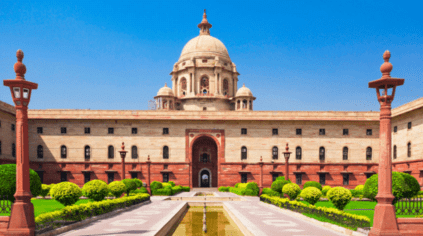
Q1. Where did the ceremonies take place? Can you name any public buildings in India that are made of sandstone?
Ans: The ceremonies took place in the lovely sandstone amphitheatre formed by the Union Buildings in Pretoria, which were attended by dignitaries and world leaders of several nations. In India, the Rashtrapati Bhavan and Red Fort are two public buildings that are made of red sandstone.

Rashtrapati Bhavan
Q2. Can you say how 10 May is an 'autumn day' in South Africa?
Ans: South Africa lies in the Southern Hemisphere. Hence, in Southern Africa the autumn season falls in May. 10 May was the day of South Africa's largest gathering, with many international leaders in attendance to witness the installation of the country's first non-racial democratic government.


Oral Comprehension Check - Page 19

Q3. At the beginning of his speech, Mandela mentions "an extraordinary human disaster". What does he mean by this? What is the "glorious ... human achievement" he speaks of at the end? 
Ans: In Mandela's speech 'an extraordinary human disaster', he wanted to express his strong feelings against the practice of Apartheid in South Africa. Under Apartheid, there was racial segregation of people based on colour, and the blacks suffered the most as they were discriminated against by the rest. They could not enjoy the right to freedom. Mandela was jailed for 18 years on the infamous 'Robben Island' where he was mistreated by the authorities. He considered it a "great glorious human achievement" that he became the first Black President of South Africa, where the blacks were deprived of basic needs and suffered different kinds of discrimination, and were treated badly.


Q4. What does Mandela thank the international leaders for?
Ans: Mandela felt extremely privileged to welcome the dignitaries and international leaders at the swearing-in ceremony because it was not too long ago when the South Africans were considered outlaws. He therefore, thanked all of them for having come from far and wide to witness the historical oath-taking ceremony of the first Black President of South Africa. This was a wonderful gesture of international recognition to a newly born free democratic nation. This event could be considered as a common victory for justice, peace and human dignity.
Nelson Mandela

​​Q5. What ideals does he set out for the future of South Africa?

Ans:Mandela set the ideals of liberating the people of South Africa from the continuing bondage of poverty, deprivation, suffering, gender and other discrimination. He wanted the people of the country to enjoy the right to freedom from all forms of bondage and prejudice

Oral Comprehension Check - Page 21

1. What do the military generals do? How has their attitude changed, and why? 
Ans: The highest generals of the South African defence force and police saluted Mandela and pledged their loyalty. Their attitude changed because only a few years earlier they would not have saluted him but arrested him.

Q2. Why were two national anthems sung?
Ans: On the auspicious occasion of the inauguration ceremony, two national anthems were sung. 'Nkosi Sikelel iAfrika', which was once the anthem of the black people who suffered under apartheid, and 'Die Stem', which was the anthem of the old Republic and was associated with the white community. Singing both anthems symbolized the unity and equality of all South Africans, regardless of race.

Q3. How does Mandela describe the systems of government in his country
(i) in the first decade, and 
(ii) in the final decade, of the twentieth century?
Ans:
(i) In the first decade of the twentieth century, the white-skinned people of South Africa patched up their differences and erected a system of racial domination against the dark-skinned people of their own land, thus creating the basis of one of the harshest and most inhumane societies the world had ever known.
(ii) In the final decade of the twentieth century, the previous system had been overturned forever and replaced by one that recognized the rights and freedoms of all peoples, regardless of the colour of their skin.

Q4. What does courage mean to Mandela?
Ans: For Mandela courage does not mean the absence of fear but a victory over fear. According to him brave men need not be fearless but should be able to conquer fear.

Q5. Which does he think is natural, to love or to hate?
Ans: Mandela thought that love comes more naturally to the human heart rather than hate.

Oral Comprehension Check - Page 24

1. What "twin obligations" does Mandela mention?

Ans: Mandela mentions that every man has twin obligations. The first is to his family, parents, wife and children; the second obligation is to his people, his community and his country.

Q2. What did being free mean to Mandela as a boy, and as a student? How does he contrast these "transitory freedoms" with "the basic and honourable freedoms"?
Ans: Like any other kid for Mandela also freedom meant the freedom to make merry and enjoy a blissful life. Once anybody becomes an adult, the antics of childhood looks transitory because most of the childish activity is wasteful from an adult's perspective. Once you are an adult then someday you have to earn a livelihood to bring the bacon home, then only you get an honorable existence in the family and in the society.

Q3. Does Mandela think the oppressor is free? Why/Why not?
Ans: Mandela does not feel that the oppressor is free because according to him an oppressor is a prisoner of hatred, who is locked behind the bars of prejudice and narrow-mindedness. He feels that both the oppressor and the oppressed are robbed of their humanity.

Thinking about the Text (Page 24)

Q1. Why did such a large number of international leaders attend the inauguration? What did it signify the triumph of?
Ans: To be the part of the inauguration, international leaders showed a gesture of solidarity from international community to the idea of end of apartheid. It was the significance of the victory of good over evil and triumph of a tolerant society without any discrimination.

Q2. What does Mandela mean when he says he is "simply the sum of all those African patriots" who had gone before him?
Ans: By saying that he is "simply the sum of all those African patriots", Mandela offers his tribute to all the people who had sacrificed their lives in favour of the struggle for freedom. He says that he shall always remain grateful and thankful to those who had gone before him because those freedom fighters had paved the path of cooperation and unity for him. Therefore, Mandela felt that when he came to power, he would bring equality among his people with their support and cooperation.

Q3. Would you agree that the "depths of oppression" create "heights of character? How does Mandela illustrate this? Can you add your own examples to this argument?
Ans: Yes, I agree with the statement that "depths of oppression" do create 'heights of character". Nelson Mandela illustrates this by citing examples of great heroes of South Africa such as Oliver Tambo, Walter Sisulu, Chief Luthulis, Yusuf Dadoos, Bram Fischers, and Robert Sobukwes, among others who inspired others by sacrificing their lives in the long struggle for freedom.

In India's pre-Independence era, there was a galaxy of great leaders who didn't bend their knees to the oppression of British rule, such as Netaji Subhash Chandra Bose, Mahatma Gandhi, Sardar Vallabhbhai Patel, Lala Lajpat Rai, Chandra Shekhar Azad, Bhagat Singh and many more. Nelson Mandela seems to be absolutely right, if we compare them with the quality of political leaders that came later. It seems that great leaders are created in the crucible of oppression and suffering.


Q4. How did Mandela's understanding of freedom change with age and experience?
Ans: With age and experience, Mandela understood the real meaning of freedom. As a young boy, he thought that he was born free and believed that as long as he obeyed his father and abided by the customs of his tribe, he was free in every possible manner. As he grew older, freedom to raise a family and freedom to earn livelihood started dominating his thoughts. Gradually he realised that he was selfish during his boyhood. He slowly understood that it was not just his freedom that was being curtailed, but the freedom of all blacks. It was the freedom from fear and prejudice. Age and experience widened his perspective of freedom.

Q5. How did Mandela's 'hunger for freedom' change his life?
Ans: During his youth, Mandela realised that it was not just his freedom alone that was being curtailed, but the freedom of all Black people. The hunger for his own freedom became the hunger for freedom for all his fellow brothers and sisters. In the process, this changed the fearful man into a bold rebel. Mandela sacrificed the comforts of a settled family life to fight for the freedom of his countrymen. He joined the African National Congress, and this transformed him from a frightened young man into a fearless person who fought against racial prejudice and colour discrimination.

Thinking about Language 

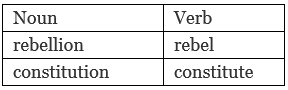
I. There are nouns in the text (formation, government) which are formed from the corresponding verbs (form, govern) by suffixing - (at)ion or ment. There may be a change in the spelling of some verb-noun pairs: such as rebel, rebellion; constitute, constitution.
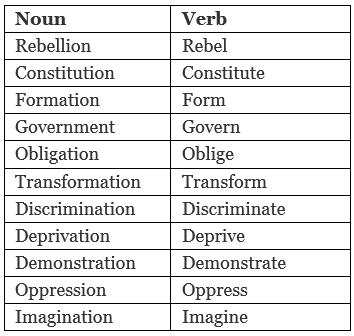
Q1. Make a list of such pairs of nouns and verbs in the text.

Ans:


Q2. Read the paragraph below. Fill in the blanks with the noun forms of the verbs in brackets.
Martin Luther King's __________ (contribute) to our history as an outstanding leader began when he came to the __________ (assist) of Rosa Parks, a seamstress who refused to give up her seat on a bus to a white passenger. In those days American Blacks were confined to positions of second class citizenship by restrictive laws and customs. To break these laws would mean __________ (subjugate) and __________ (humiliate) by the police and the legal system. Beatings, __________ (imprison) and sometimes death awaited those who defied the System. Martin Luther King's tactics of protest involved non-violent __________ (resist) to racial injustice.
Ans: Martin Luther King's contribution (contribute) to our history as an outstanding leader began when he came to the assistance(assist) of Rosa Parks, a seamstress who refused to give up her seat on a bus to a white passenger. In those days American Blacks were confined to positions of second class citizenship by restrictive laws and customs. To break these laws would mean subjugation (subjugate) and humiliation (humiliate) by the police and the legal system. Beatings, imprisonment (imprison) and sometimes death awaited those who defied the System. Martin Luther King's tactics of protest involved non-violent resistance (resist) to racial injustice.

Page No. 25

II. Here are some more examples of 'the' used with proper names. Try to say what these sentences mean. (You may consult a dictionary if you wish. Look at the entry for 'the')
1. Mr Singh regularly invites the Amitabh Bachchans and the Shah Rukh Khans to his parties.
2. Many people think that Madhuri Dixit is the Madhubala of our times.
3. History is not only the story of the Alexanders, the Napoleons and the Hitlers, but of ordinary people as well.

Ans:
1. This means that Mr Singh regularly invites famous personalities such as Amitabh Bachchan and Shah Rukh Khan to his parties.
2. This means that Madhuri Dixit is compared to a landmark in acting in the form of legendary actress Madhubala.
3. This means that history is not only the story of the great fighters and leaders such as Alexander, Napoleon and Hitler, but also of ordinary people.


Page No. 26 

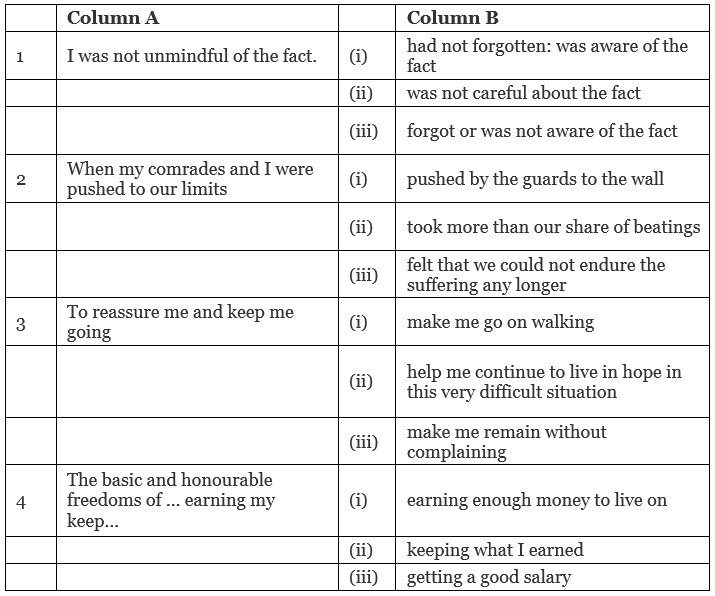
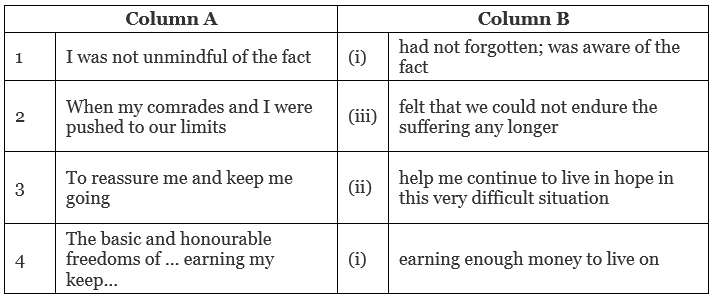
III. Match, the italicised phrases in Column A with the phrase nearest meaning in Column B. (Hint: First look for the sentence in the text in which the phrase in column A occurs.)

Ans:

Character Sketch of Nelson Mandela

A character sketch briefly describes a person's most important traits, beliefs and actions with supporting examples. This sketch focuses on Nelson Mandela, drawing on his life and on his autobiography, Long Walk to Freedom. It highlights the qualities that made him a global symbol of resistance to oppression, reconciliation and moral leadership.

Overview of Life and Public Role

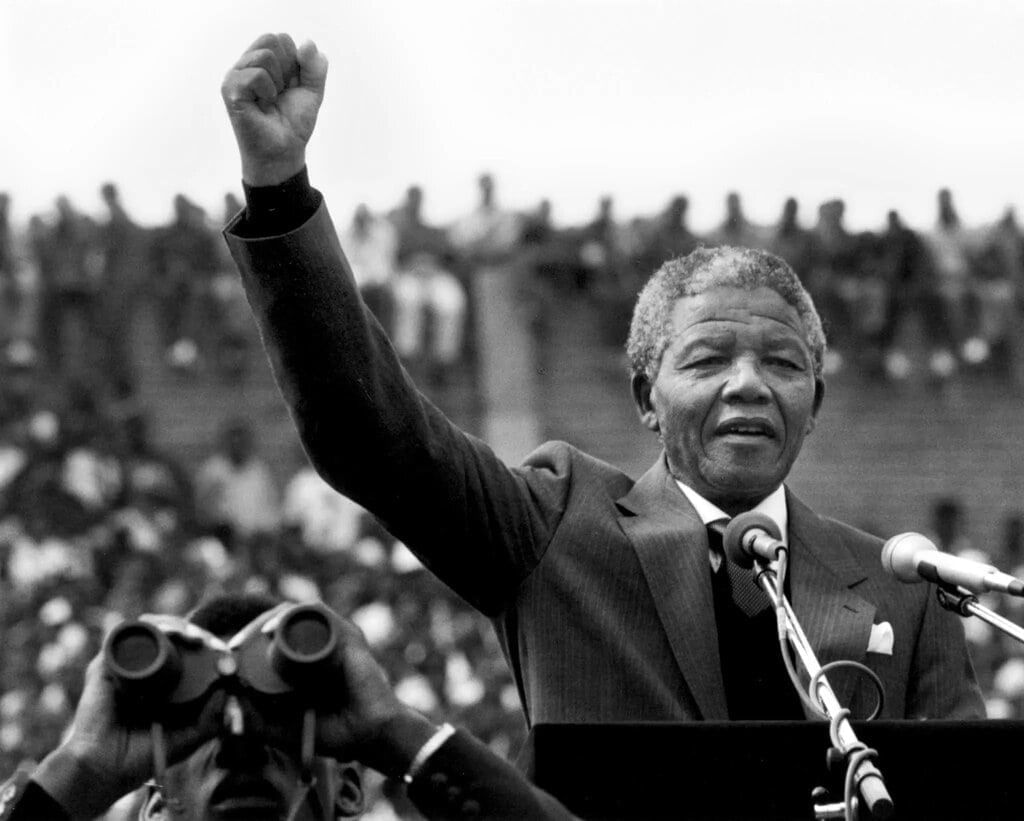
Nelson Mandela was born on 18 July 1918 in the village of Mvezo in the Eastern Cape of South Africa. He became a lawyer and a leading activist in the struggle against the system of racial discrimination known as apartheid. He was arrested, tried and convicted for his political activities; he spent 27 years in prison and was released in 1990. After negotiated transitions away from apartheid he became South Africa's first black President, serving from 1994 to 1999. His life story and beliefs are recorded in Long Walk to Freedom, which explains the moral ideas and experiences that formed his character.
Core Qualities and Beliefs

Intelligence and Moral Clarity: Mandela combined an astute understanding of law and politics with a deep moral clarity. He organised and analysed problems carefully, but his decisions were guided by ethical concerns - especially respect for human dignity and equality.

Courage and Perseverance: He believed that true courage was not the absence of fear but the ability to master it: the document emphasises the idea that courage is the "triumph over fear." This conviction helped him face decades of hardship without abandoning his purpose. His willingness to sacrifice personal freedom for a principle shows remarkable perseverance.

Generosity and Forgiveness: Mandela practised generosity of spirit. After his release he chose reconciliation rather than revenge, inviting former foes to work together to build a democratic nation. He treated others with respect even when they had been his opponents, demonstrating that forgiveness can be a tool for political and social healing.

Honesty and Sense of Duty: He believed that every person has obligations to family, community and country. His public life was characterised by a strong sense of honesty, accountability and responsibility to the common good.

Belief in Universal Freedom: Mandela insisted that freedom is indivisible. He argued that restricting liberty for any group undermines the liberty of the whole society. This belief underpinned his campaign against apartheid and his later policies as a national leader.

Empathy, even for Oppressors: Unusually, Mandela often expressed sympathy for those who had supported or enforced apartheid, seeing them also as victims of hatred and prejudice. He held that the dehumanising effects of bigotry harmed both the oppressed and the oppressor by robbing them of their full humanity.
Principal Achievements and Public Impact

Mandela's major achievements include sustained leadership of the anti-apartheid movement, enduring imprisonment without abandoning peaceful goals, helping to negotiate a transition to majority rule, and presiding over a new constitution and democratic elections. As president he emphasised reconciliation, nation-building and the protection of human rights. Globally, he became an emblem of non-violent moral leadership and the possibility of social renewal through justice and forgiveness.

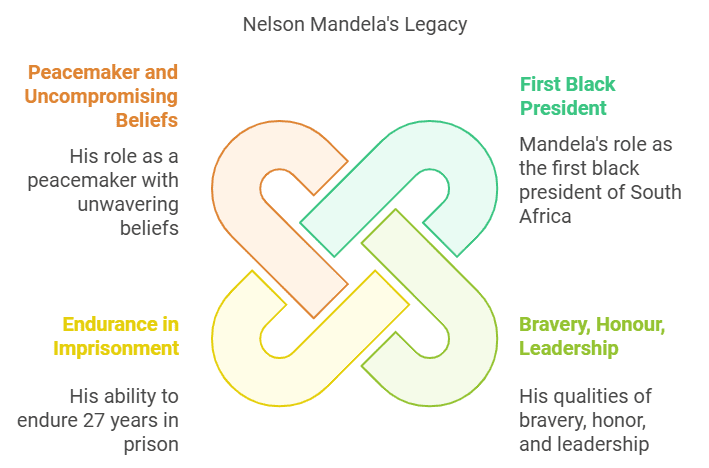
  • First Black President: Nelson Mandela became South Africa's first black president after the end of formal apartheid and the first fully democratic elections in 1994.
  • Bravery, Honour, Leadership: He is widely admired for his courage, personal dignity and leadership during both the struggle and the transition to democracy.
  • Endurance in Imprisonment: He endured 27 years in prison, maintaining his principles and becoming a symbol of resistance to racial oppression.
  • Peacemaker and Uncompromising Beliefs: While steadfast in his belief in equality and justice, he worked as a peacemaker who chose reconciliation over vengeance.