
Previous Year Questions 2025
Q1: Read the following extract and answer the questions: (5 Marks)
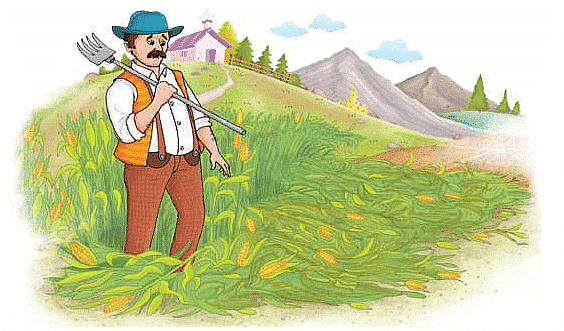
"Not a leaf remained on the trees. The corn was totally destroyed. The flowers were gone from the plants. Lencho's soul was filled with sadness. When the storm had passed, he stood in the middle of the field and said to his sons, 'A plague of locusts would have left more than this. The hail has left nothing. This year we will have no corn.' 'That night was a sorrowful one. All our work, for nothing.' 'There's no one who can help us.' 'We'll all go hungry this year.'"
(i) Why were there no leaves left on the trees? (1 Mark)
(a) The locusts ate them up.
(b) An earthquake had occurred.
(c) There was a hailstorm.
(d) The animals grazed on them.
Ans: (c)
Explanation: A severe hailstorm battered the valley, tearing leaves from branches and destroying plants and crops. The extract states that not a leaf remained, which indicates the violent hailstones stripped the vegetation completely.
(ii) Fill in the blank with the correct word from the brackets. Lencho felt __________ (jubilant/devastated) when he saw his destroyed corn fields. (1 Mark)
Ans: devastated
(iii) When Lencho says, "All our work, for nothing," what does he refer to? Explain in about 40 words. (2 Marks)
Ans: He means that all the family's hard labour throughout the year - planting, tending and caring for the crop - had been wasted because the hailstorm destroyed the corn. Their efforts produced nothing, leaving them without food or income for the year.
Q2: Why would Lencho have preferred a plague of locusts to a hailstorm? (1 Mark)
Ans: Lencho would have preferred locusts because, in his view, locusts would have eaten only part of the crop and left something behind. The hailstorm, by contrast, destroyed every plant, leaving nothing for the family.
Q3: Analyse and evaluate the role of faith in 'A Letter to God' and 'The Sermon at Benares'. (Answer in 100-120 words) (6 Marks)
Ans:
In "A Letter to God," faith plays a central role. Lencho's deep trust in God makes him believe that divine help will come after the hailstorm destroys his crops. His unwavering faith moves the postmaster and his colleagues to act kindly and send him money, showing how faith can inspire goodness in others.
In "The Sermon at Benares," faith is shown through the Buddha's teachings. He encourages Kisa Gotami to have faith in the truth of life - that death is inevitable and suffering can end only through understanding and acceptance.
Thus, while Lencho's faith is simple and personal, Buddha's faith is spiritual and based on wisdom; both highlight how faith gives strength in times of loss and despair.
Q4: Comment on the reactions and feelings of Lencho and Nelson Mandela when they faced challenges in their lives. (Answer in 100-120 words) (6 Marks)
Ans: Lencho and Nelson Mandela faced hardship differently but both showed strength born of conviction. After the hailstorm, Lencho reacted with unshaken faith; he turned to God, believing divine help would come and acting simply and directly by writing a letter. His response reflects trust and hope in a higher power. Nelson Mandela faced oppression and long imprisonment while fighting apartheid. He responded with determination, patience and a steadfast belief in justice and reconciliation. Rather than seeking revenge, he emphasised forgiveness and unity to rebuild society. Both men demonstrate that belief - whether religious or moral - can give courage and guide actions in the face of serious trials.
Q5: In what manner did Lencho's cornfield suffer damage? Did he hold any expectations of receiving assistance? (Answer in about 30-40 words) (3 Marks)
Ans: A violent hailstorm, accompanied by rain and wind, smashed the cornfield, stripping leaves and flowers and destroying the crop completely. Yes, Lencho expected help - he had firm faith that God would provide the money needed to feed his family and sow again.
Q6: Analyse the similarities and differences between the young seagull from "Two Stories about Flying" and Lencho from "A Letter to God", and provide a rationale for the significant role faith plays in challenging and adverse situations in life. (100-120 words) (6 Marks)
Ans: Both the young seagull and Lencho face fear and crisis but overcome them through faith. The seagull fears flying yet, encouraged by his family and trusting his instincts, he gradually gains confidence and learns to fly. Lencho, after losing his crop, trusts God completely and asks for help, finding comfort in belief. The main difference is the object of faith: the seagull's confidence grows from within and from family support, while Lencho's hope is directed towards a divine helper. In both cases faith-whether in oneself, others or in God-provides strength, reduces despair and helps individuals act and endure during adversity.
Q7: What were the problems that made Lencho write a letter to God? (Answer in about 30-40 words) (3 Marks)
Ans: A sudden hailstorm utterly destroyed Lencho's cornfield, removing all crops and leaving his family with nothing to eat or sell. In deep distress and convinced that only divine help could save them, he wrote a letter to God asking for one hundred pesos.
Q8: Why did Lencho not trust the post office employees? (Answer in about 30-40 words) (3 Marks)
Ans: When Lencho received only seventy pesos instead of the hundred he had asked God for, he assumed the rest had been stolen. Because he could not imagine the post office staff helping him, he accused them of being dishonest and called them "a bunch of crooks."
Q9: Faith is like a ray of hope in a distressful situation. Discuss A Letter to God with reference to Lencho's unflinching faith in God. (Answer in about 40-50 words) (3 Marks)
Ans: In A Letter to God, Lencho's unshakable faith becomes his only source of hope after the hail destroys his crops. Instead of despairing completely, he writes to God for help, showing how deep belief can provide comfort and the courage to seek aid in desperate times.
Previous Year Questions 2024
Q1: What idea does the Postmaster come up with? What did he do to stick to his resolution? (2 Marks) (CBSE 2024)
Ans: The postmaster decides to preserve the farmer's simple faith in God by replying as though from God and sending him money. To keep this resolution, he collects contributions from his colleagues in the post office, gathers seventy pesos, places the amount in an envelope and prepares to give it to Lencho.
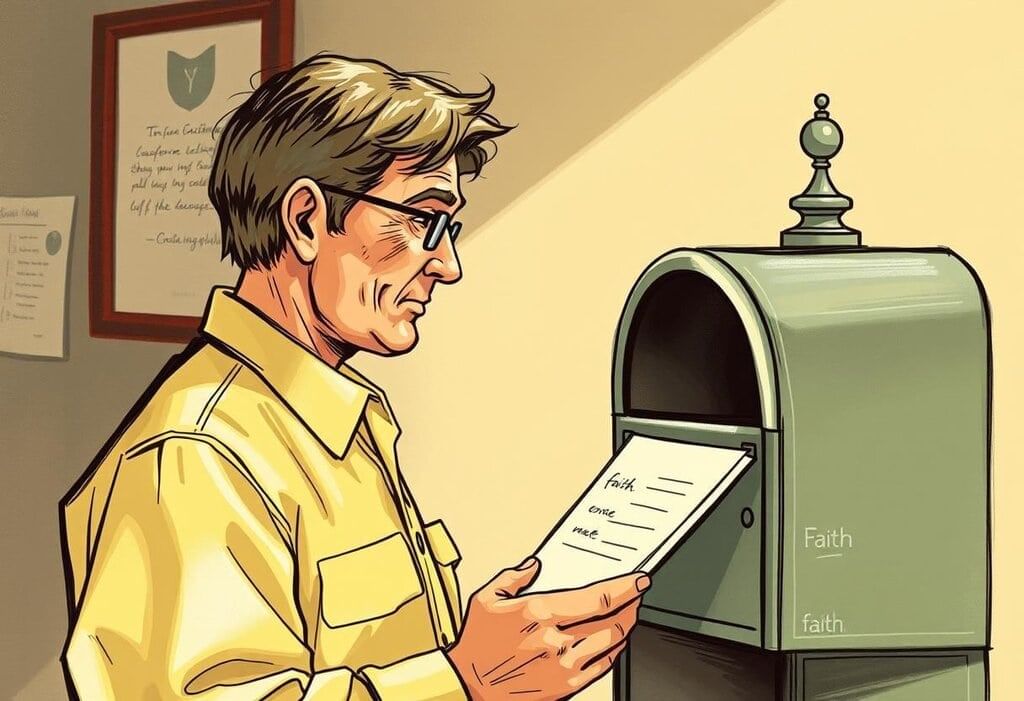
Q2. Explain the irony in the chapter, "A Letter to God". (2 Marks) (CBSE 2024)
Ans: The irony lies in Lencho's blind faith and his reaction to human kindness. Although Lencho trusts God absolutely and believes God will help him, he fails to recognise that the post office staff have actually collected money to help him. Instead he suspects them of stealing the missing amount. Thus, those who tried to help are suspected, while faith in an unseen God is unquestioned.
Q3. How far would you agree that one's positivity can bring in a spark of brightness even in adverse circumstances? (2 Marks) (CBSE 2024)
Ans: Positivity can bring hope and motivate action in difficult times. Lencho's faith and positive expectation led him to write to God asking for help rather than giving in to despair. This hopeful attitude encouraged others to act kindly and provided emotional strength despite material loss.
Q4: Grief or sadness is an emotion natural to all types of loss or significant change. You have been asked to present an analysis of the approaches of Lencho and Kisa Gotami in dealing with their respective losses. Write this presentation draft including your insights, and comparing the approaches of both.
You may begin like this : One acknowledges that Lencho had unwavering faith in God whereas Kisa Gotami in her grief, believed that her son ...........however ......... .
(Reference - A Letter to God and The Sermon at Benares) (3 Marks) (CBSE 2024)
Ans: One acknowledges that Lencho had unwavering faith in God, whereas Kisa Gotami in her grief believed that her son could be brought back to life; however, she later learns a universal truth. Lencho's loss is material - the crop - and he responds by placing his hope in divine help. His faith gives him comfort and prompts a concrete action: writing a letter. Kisa Gotami's loss is the death of her child, an irreversible sorrow. Her search for a cure leads her to the Buddha, who teaches her about the universality of death. Through this teaching she moves from denial to acceptance. While Lencho's faith restores hope and prompts others to help, Kisa Gotami's experience leads to insight and inner transformation.
Previous Year Questions 2023
Q5: The postmaster had mixed emotions while opening the letter. Explain. (3 Marks) (2023)Ans: On reading Lencho's letter, the postmaster first laughed at the simplicity and strong faith expressed in a letter addressed to God. He then became serious and moved; he admired Lencho's trust and felt sympathy for him. This mixture of amusement, respect and compassion led him to collect money from his colleagues and send it to Lencho signed as 'God'.
Q6: Why did the night after the rains turn sorrowful for Lencho? (3 Marks) (2023)
Ans: The night was sorrowful because the hailstorm had ruined the entire crop and vegetation. Lencho realised that there would be no harvest to feed his family; all the year's labour seemed lost, and he feared hunger for the coming months.
Q7: Who read the letter sent by Lencho? What did he do then? (3 Marks) (CBSE 2023)
Ans: The postman found the letter addressed to God and showed it to the postmaster. Deeply touched by the writer's faith, the postmaster collected money from his staff and sent seventy pesos to Lencho in an envelope, signing the letter as if it were from God, so that Lencho's faith would be preserved.
Previous Year Questions 2021
Q8: What is ironic about the post office staff helping Lencho? (2021 C)Ans: The irony is that the post office staff donate money to help Lencho, yet he accuses them of being crooks for the missing twenty pesos. Those who tried to help are therefore wrongly suspected by the man whose faith they respected.
Q9: With a satisfied expression, he regarded the field of ripe corn with its flowers, draped in a curtain of rain. But suddenly a strong wind began to blow and along with the rain, very large hailstones began to fall. These truly did resemble new silver coins. (2021C)
(i) Who is 'he'?
(ii) What satisfied him?
(iii) What is ironic about 'silver coins'?
(iv) How did the 'silver coins' affect the cornfield?
(v) 'draped in a curtain of rain' - Which part of speech is 'draped'?
Ans: (i) Lencho.
(ii) He was pleased to see his field of ripe corn and flowers being well watered by the rain, promising a good harvest.
(iii) The phrase is ironic because the hailstones look like valuable silver coins yet they cause destruction rather than bringing wealth.
(iv) The hailstones destroyed the cornfield by stripping leaves and flowers and breaking the plants, leaving the crop ruined.
(v) 'Draped' is a past participle used adjectivally to describe the field.
Q10: Read the passage given below and answer the questions that follow: (Term I, 2021-22)
All through the night, Lencho thought only of his one hope: the help of God, whose eyes, as he had been instructed, see everything, even what is deep in one's conscience. Lencho was an ox of a man, working like an animal in the fields, but still he knew how to write. The following Sunday, at daybreak, he began to write a letter which he himself would carry to town and place in the mail. It was nothing less than a letter to God.
I. Study the following statements:
(i) Lencho decided to write a letter to God
(ii) All through the night he thought of his only one hope.
Choose the correct option:
(a) (i) is the cause and (ii) is the effect.
(b) (ii) is the cause of (i).
(c) (ii) preceded (i).
(d) Both (i) and (ii) happened at the same time.
Ans: (b)
Explanation: Lencho spent the night thinking only of his one hope, the help of God; this preoccupation led him to decide to write the letter asking for aid.
II. 'Lencho was an ox of a man' means:
(a) He was very hard-working.
(b) He owned an ox.
(c) He ploughed his field with an ox.
(d) His ox could work like a man.
Ans: (a)
Explanation: The phrase compares Lencho to an ox to emphasise his strength and tireless hard work in the fields.
III. 'But still he knew how to write' implies that:
(a) Lencho could write as he was a farmer.
(b) Ordinarily, a farmer did not know how to write.
(c) All farmers knew how to write.
(d) A farmer cannot know how to write.
Ans: (b)
Explanation: The line suggests that, unlike what might be expected, Lencho - a simple farmer - had the uncommon ability to write, so the statement highlights this contrast.
IV. Why did he write the letter on Sunday?
(a) Sunday is a holy day for the Christians.
(b) God listens to people only on Sunday.
(c) Lencho was busy rest of the week.
(d) The Post office would open on Monday.
Ans: (a)
Explanation: Writing the letter on a Sunday reflects Lencho's religious feeling and the special significance of the day in Christian practice.
V. Find a suitable word from the passage to complete the following:
Loss: Gain :: Despair:___ .
(a) Help
(b) Hope
(c) Deep
(d) Carry
Ans: (b)
Explanation: "Hope" is the opposite of "despair" and completes the analogy appropriately.
Previous Year Questions 2020
Q11: How was Lencho's cornfield destroyed? Had he any hope of help? (2020C)
Ans: The field was devastated by a violent hailstorm accompanied by heavy rain and strong winds; the hailstones smashed plants, leaves and flowers, leaving the crop ruined. Yes, Lencho still had hope - he believed that God would help him and therefore wrote a letter asking for money.
Q12: Did the letter reach God? Why did the postmaster send a reply to Lencho? (2020)
Ans: No, the letter did not reach God. The postman took it to the postmaster, who was moved by Lencho's faith. To preserve that faith and to help the man, the postmaster collected money from his colleagues and sent seventy pesos with a reply signed as 'God'.
Q13: What were Lencho's feelings when the hail stopped? (2020)
Ans: When the hail stopped, Lencho felt deep sadness and despair. Standing in his ruined field, he realised that the hail had left nothing for a harvest and feared that his family would have no food for the year.
Q14: Why did Lencho's happy mood change into concern? (2020)
Ans: His mood changed because the gentle rain turned into a sudden hailstorm. The hailstones damaged the crop completely, so what had seemed a promising harvest became a disaster, filling Lencho with worry about his family's survival.
Previous Year Questions 2015
Q15: Describe Lencho's qualities in light of his faith in God. Do you have faith in God like Lencho? Was Lencho's reaction towards the post office employees right? (Answer the following question in 100-120 words) (CBSE 2015)Ans: Lencho is a simple, hardworking and sincere man whose faith in God is absolute. When disaster strikes his crop, he does not lose courage but turns to God with confidence that help will come. This quality shows his hopefulness and reliance on faith in times of need. Personally, one may or may not share Lencho's exact degree of faith, but his trust teaches the value of hope during crisis. Lencho's reaction towards the post office employees was not right; they had shown kindness by collecting money to help him, yet he suspected them of stealing the missing amount. His distrust of those who helped him reflects his limited view rather than their actions.